Emergency Vehicle Decon Cost: What Drives the Price
What agencies really pay for when a unit goes out of service
An ambulance, fire engine, or patrol car may come back contaminated. The cost to get it back in service depends on far more than the size of the vehicle. This guide explains what a cleanup vendor charges for and what widens the price range. It shows how to compare itemized proposals and where hidden costs show up. It also covers which budget or policy usually pays.
Get an email reply about emergency vehicle decontamination
Send a short message to the follow-up inbox. A coordinator can reply by email. This form does not send emergency help; call 911 first if anyone is in danger.
What published figures say about cost
- 8 hours annually
Workers covered by HAZWOPER must receive eight hours of refresher training every year.
Read with care: Refresher may be shorter if combined with documented equivalent training.
Source: OSHA (2024)United States, 1910.120(e)(8)
- 1,814
Eye and Face Protection (1926.102) drew 1,814 OSHA citations in fiscal 2024, ninth on the most-cited list.
Read with care: Construction-standard citation; general industry PPE cited separately.
Source: OSHA (via Safety+Health) (2024)United States federal OSHA citations, FY2024
- $16,550
OSHA's maximum penalties are $16,550 per serious violation and $165,514 per willful or repeated violation.
Read with care: Amounts adjust annually for inflation.
Source: OSHA (2024)United States federal OSHA, 2024 inflation-adjusted amounts
- every 3 years
Hazmat employees must receive recurrent DOT training at least once every three years.
Read with care: Records must be kept for the prior three years plus 90 days after employment ends.
Source: DOT PHMSA (49 CFR via Cornell LII) (2024)United States, all hazmat employees
- 10 working days
Employers must offer the hepatitis B vaccine within 10 working days of assigning an employee to a job with occupational blood exposure.
Read with care: Employees may decline; the vaccine must be at no cost.
Source: OSHA (2024)United States employers with occupationally exposed employees
- 29
OSHA approves 29 State Plans, 22 covering private and public workers and 7 covering only state and local government employees.
Read with care: State plans must be at least as effective as federal OSHA but may differ in detail.
Source: OSHA (2024)United States states and territories
These figures are public research and agency data, not this network's own job records. Keep each number with its population, year and limits; none of them predicts cost, timing or outcome at a specific property.
What goes into the price of a full deep clean of a vehicle?
A full deep clean after contamination is often called a terminal clean. The proposal usually has five or six parts. Labor covers workers in protective gear who clean the patient area or cab. Much of their time depends on how long the disinfectant must stay wet on each surface. Sealing off the area is small compared with a building job. It can still include a staging area, a covered bay, and keeping clean and dirty gear apart. Removal covers mattress covers, bench cushions, seat belt straps, or flooring that cannot be proven clean.
Disposal covers packing and hauling regulated medical waste. Many vendors handle this through their own licensed setup. Testing may include a quick swab test that shows leftover organic residue (it does not detect germs). It is used on spots people touch often, like grab handles, monitor mounts, and door latches. Replacement is the vehicle version of a rebuild. It is often the biggest single line. That happens when foam cushions, stretcher pads, or cloth seats are soaked and must be swapped for new parts. The parts come from the maker or from the company that built out the vehicle.
- Worker labor, with hours driven by disinfectant wet times
- Staging, a covered bay, and keeping clean and dirty gear apart
- Removing soft seats, pads, and flooring
- Regulated medical waste handling
- Swab tests or other checks on spots people touch often
- Replacement parts and putting them in
Which vehicle conditions push the range up or down?
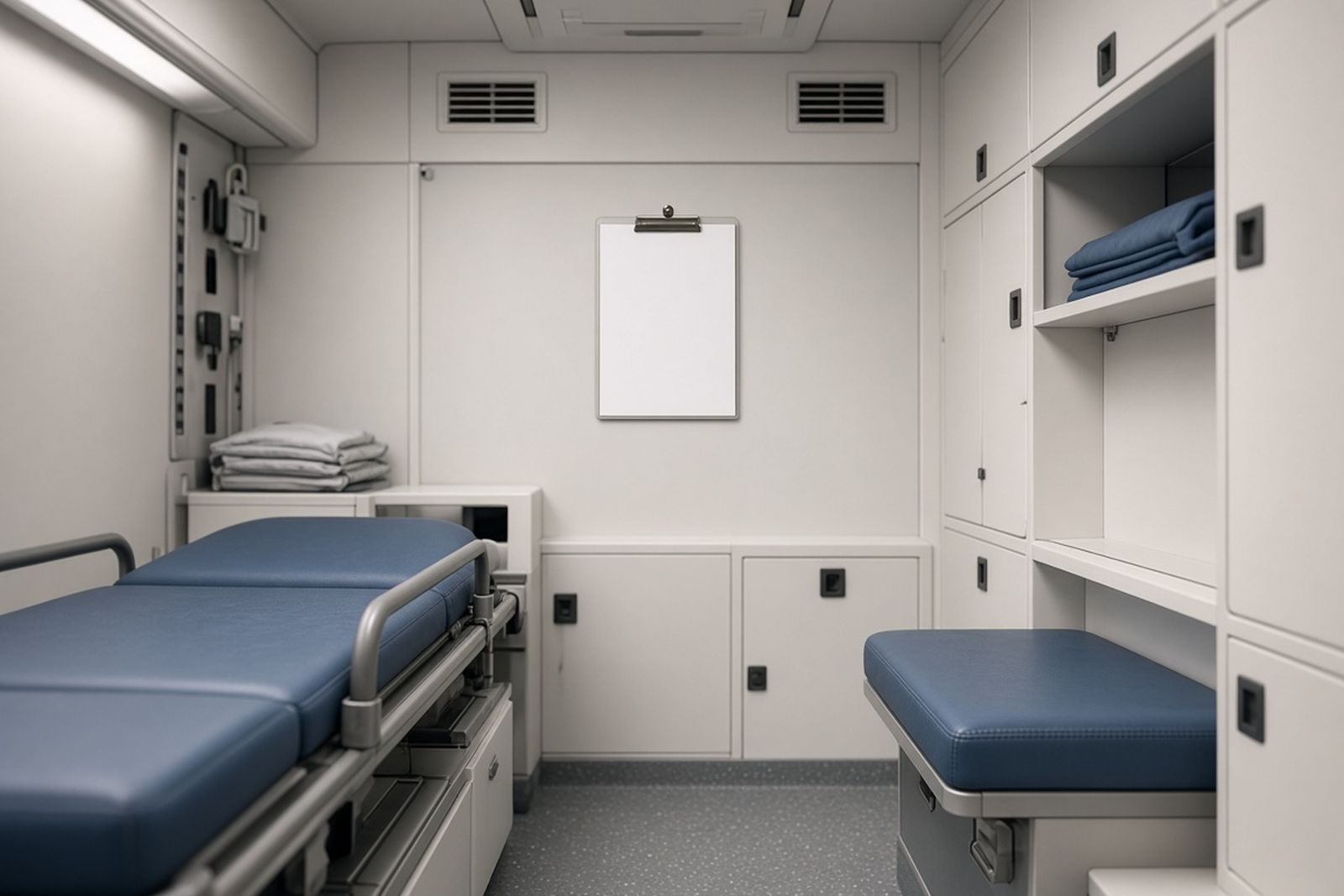
Soft goods, like cushions and pads, are the biggest variable. A spill that stays on sealed flooring and cabinet fronts is fairly quick to clean. But blood may soak into a bench cushion, a stretcher mattress with a split seam, or seat belt straps. Then the job shifts from cleaning to replacing. Waiting for parts can add both cost and time out of service. Fluid that reaches floor seams, wheel wells under the flooring, or air vents also adds hours.
Vehicle type matters too. An ambulance box has many cabinets, straps, and mounted devices that each need attention. A patrol car's back cage and molded seat may be simpler, but it is harder to reach behind them. Fire engine cabs that store turnout gear raise questions about cleaning that gear, which is a separate service. Other things shift the price too. These include whether cleaners are safe for the electronics, after-hours timing, and whether the unit goes to the vendor or is cleaned on site.
Are national biohazard averages useful for fleet budgeting?
Few price figures are published just for fleet vehicles. So many agencies use general biohazard numbers as a rough guide. Fixr's 2025 guide puts biohazard cleanup at a national average of about $4,000, with a typical range of $3,000 to $5,000. That figure blends many home and business jobs, not vehicles. Treat it as background, not a benchmark for one unit.
A routine deep clean of a lightly soiled area may cost well below a general average. That is more likely under a contract with set prices. A badly contaminated unit may need several soft goods replaced, after-hours service, and testing. That can cost more. Your own history is usually the better guide. Track what each cleanup cost, what drove the cost, and how long the unit was out of service. Then budget from that record.
How do you compare decon quotes from different vendors?
Send every vendor the same description of the unit and the contamination. Include the records you need before the unit can go back in service. Then ask for itemized answers. Look for the names of the disinfectants and how long each must stay wet. Look for a statement that they are safe for monitors, radios, and stretcher parts. Check whether the vendor lists which soft goods will be replaced and which will be cleaned. Check whether replacement parts are included or billed separately.
Look at the report the vendor offers. A useful report lists each surface and item cleaned and the products and wet times used. It includes test results, if any, and waste handling details. It should be in a format your infection-control officer can file. Check what is left out, like after-hours charges, travel fees, parts markup, and repeat visits. If you run a fleet program, compare per-event prices with a scheduled contract. A standing agreement may offer faster turnaround and more steady costs.
- The same job description sent to every vendor
- Products, wet times, and safety for equipment
- Soft goods: replace or clean, and who supplies parts
- Report format for your infection-control file
- Extra charges, travel, and markup shown as lines or exclusions
What hidden costs come with an out-of-service unit?
The biggest hidden cost is often covering for the missing unit. While a unit is out of service, the agency may need to move a unit from a nearby station. It may call in mutual aid or pay overtime to staff a backup vehicle. Backup units have their own upkeep and readiness costs that are easy to miss. Some agencies also pay to move the contaminated unit to the vendor's shop.
Other surprises include parts on back order and electronics that need checking after strong cleaning. Crew uniforms or personal gear may be contaminated and need washing or replacing. If a crew member was exposed, the follow-up medical exam is handled separately. But the agency still pays for it. Ask vendors which of these they often see. That helps finance and operations plan for the full picture.
Who usually pays for emergency vehicle decontamination?
For public agencies, cleanup is usually paid from the operating or fleet budget. Some have a line just for infection control. City self-insurance programs or risk pools may pay back major contamination events. It depends on their rules and deductibles. Private ambulance and patient-transport companies usually treat it as an operating cost. Their business auto or property coverage pays only in certain cases.
If a vehicle is leased, the lease may say who pays for contamination and replacing soft goods, so check it. In rare cases, you may be able to get costs back from someone else. One example is contamination caused by a crime. But that path is slow and uncertain. Keep every bill and report with the unit's records. Then the right budget or program can be charged.
What might a typical decon event look like from start to finish?
Picture a suburban fire department's rescue ambulance coming back from a bad motorcycle crash. There is blood on the floor, the equipment wall, the stretcher mattress, and the crew-side belt straps. The captain takes the unit out of service. A backup ambulance is staffed for the rest of the shift. The fleet officer takes photos of the patient area and calls the department's contracted vendor.
The vendor's itemized quote lists hard-surface cleaning with named products and wet times. It includes new mattress covers and belt straps, swab checks on spots people touch often, and waste handling. The officer compares it with past events and approves it the same day. The unit goes back in service. Its report goes in the infection-control file. After a quick check with the risk pool, the fleet budget pays the cost.
Estimate your range
Emergency Vehicle Decontamination cost range estimator
Educational only. Real pricing needs an on-site assessment and a written scope. Insurance coverage is decided by your carrier, not by this tool.
Educational range: $3,000 – $5,000
Scaled from a published reference range (typical biohazard cleanup project, national) reported by Fixr (2025). Your region, provider and the actual findings on site can move the real number outside this range.
Cost level: Mid range.
None of the big cost multipliers are selected. Minimum service charges, travel and waste fees still apply.
Ask every quote to itemize labor, containment, product, waste disposal, verification sampling, and any rebuild, and to state what is excluded.
Open the full tool page for a worked example and more answers.
Costs questions about emergency vehicle decontamination
Can our crews do full deep cleans themselves to save money?
Many agencies train crews for routine cleaning between calls, and that work matters. Heavier contamination, soaked soft goods, and fluid in seams or under flooring often need a dedicated vendor. The vendor has time, equipment, and waste setups a crew cannot easily manage between calls. Compare the true cost of doing it in-house first. Include overtime and backup coverage. Then decide which events you handle yourselves.
Why do soft goods replacements cost so much?
Stretcher mattresses, bench cushions, and belt straps are often made for one maker or build-out company. Replacement parts may need to be ordered and put in. Foam that soaked up fluid cannot be reliably disinfected, so replacing it is usually safer. Ask vendors to show parts and labor separately. Then you can see what drives the cost.
Is a fleet contract cheaper than paying per event?
It can be. It depends on how often your units need deep cleans and how fast you need them back. A standing contract may offer steady prices, faster response, and the same kind of report every time. Paying per event may suit smaller fleets that rarely have contamination. Look at your recent history of cleanups and time out of service to see which fits your agency.
Should we pay extra for swab testing?
A swab test shows leftover organic residue, but it does not detect germs. Still, it gives an objective check that dirt and fluids were removed from spots people touch often. Many infection-control officers find that record useful for audits. It can also give crews confidence. Whether the extra cost is worth it depends on your policy and record needs. Ask your infection-control lead before you approve or turn it down.
How long does a terminal clean usually take?
Time depends on the amount of contamination, the layout, wet times, parts replacement, and whether the vendor comes to you. A light event may be quick. A unit that needs parts can be out much longer. Ask each vendor for an estimated turnaround in writing. Plan backup coverage to match, but do not assume a set timeline. Update dispatch once the vendor confirms.
Does the price change if the unit is a police car rather than an ambulance?
Usually, yes, because the surfaces and layout differ. Patrol cars often have molded back seats and cages. These are easier to clean but harder to reach behind. Ambulances have many cabinets, mounts, and soft goods. Fire engine cabs add questions about gear storage. Give vendors the exact unit type and photos. Then the quote reflects what they will really find.
What records should we keep after each decon event?
Keep the vendor's report and the bill, along with photos. The report should list what was cleaned, the products and wet times, test results, replaced parts, and waste handling. Add the call that caused the contamination and the out-of-service times. These records help with budgeting, audits, and any request for repayment. They also help with yearly reviews that show which units or call types cost the most.
What other visitors said
Every count is a real visitor vote; nothing is seeded or padded. One vote per poll per device, and you can change your answer.
After a bloody transport, what usually decides whether your unit gets a full deep clean?
Who performs terminal cleans on your fleet most of the time?
More on emergency vehicle decontamination
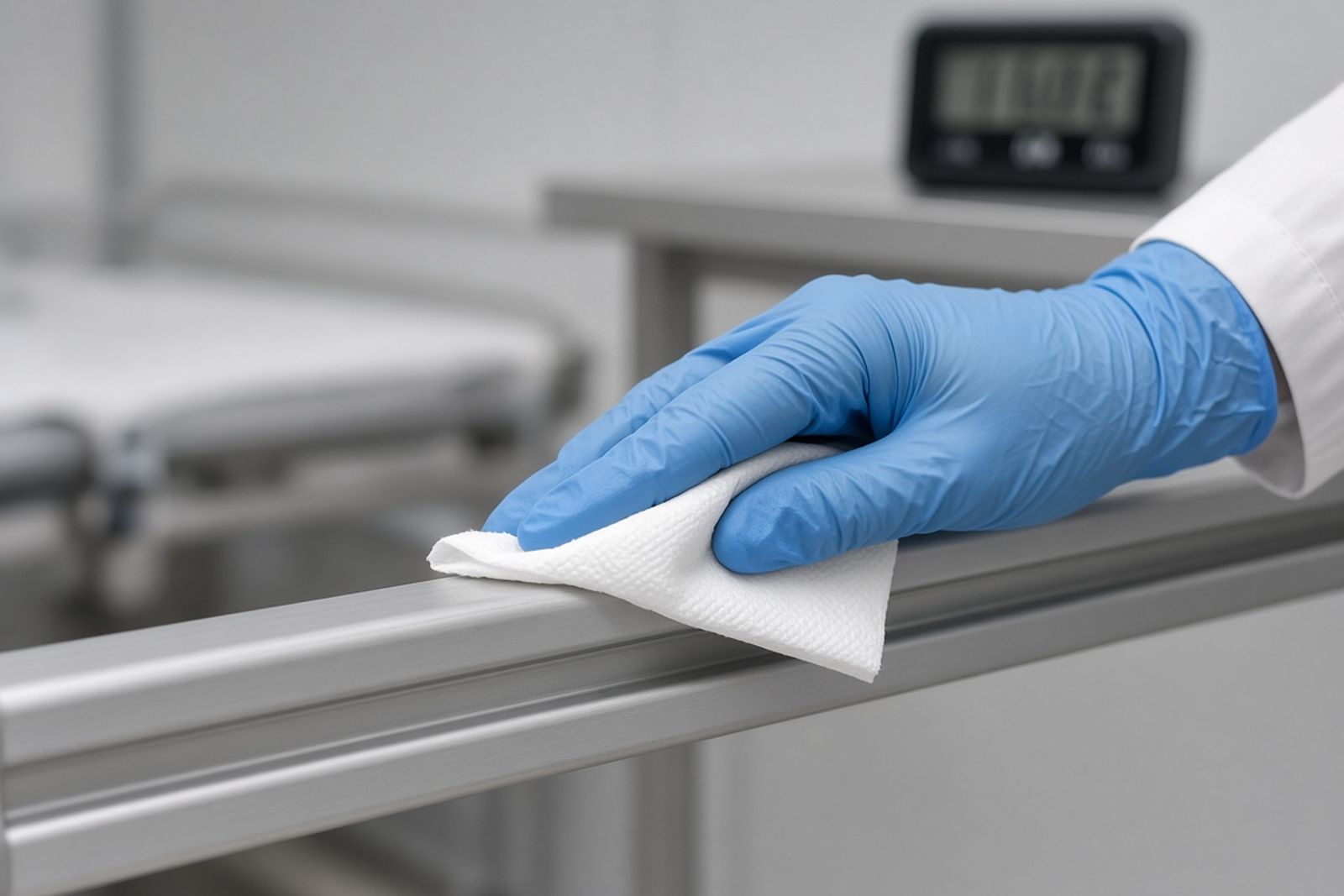
Emergency Vehicle Decontamination services
Learn how deep cleans of ambulances, fire trucks, and police cars are planned. See needle sweeps, choices about soft items, and records by unit number.
Insurance and payment
Which policies may respond, how to document a claim, and what to do if coverage is denied.
Planning tools
Guided planners for fleet managers. Get cost ranges, vendor checks, insurance steps, first-day actions, waste sorting, and in-house versus vendor risk.
Community polls
See how other EMS, fire, and police fleets handle time pressure, new soft items, records, and product choices in their own bays.
Knowledge quiz
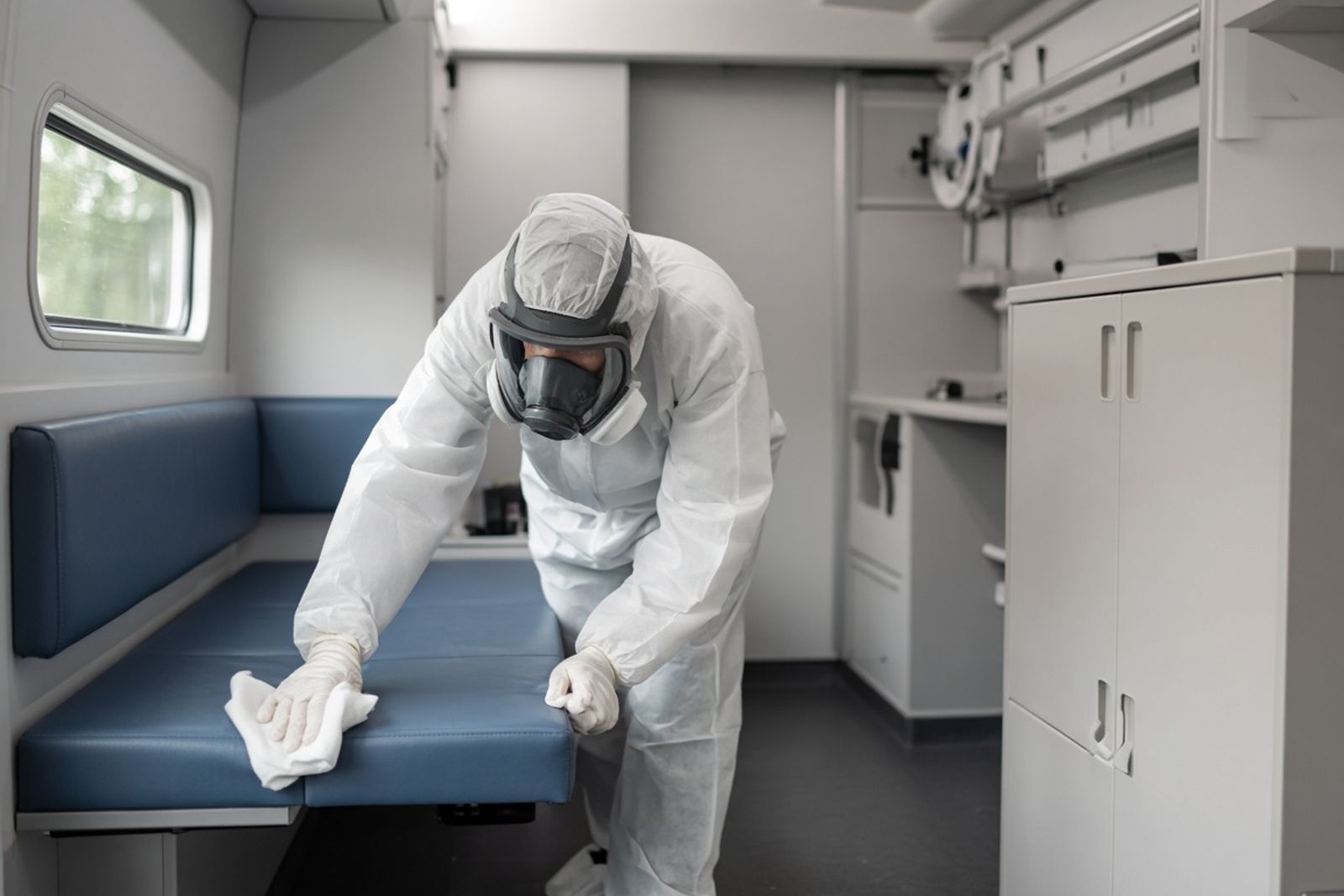
Test what you know about cabin hazards, who pulls a unit from service, containment, contact time, waste, and cleaning records before the next hard call.
Articles and resources
Articles on fleet infection-control plans and picking products that are safe on electronics and seats. Read about turnaround planning, evidence in patrol cars, and records that pass an audit.