Emergency Vehicle Decontamination community polls
See how other people handled the same decisions, then add your own answer.
Cleaning emergency vehicles happens in station bays late at night, between calls, while crews try to keep coverage. The people who do it rarely compare notes with other agencies. The polls on this page gather what EMS supervisors, fire officers, and police fleet staff have seen. They also include infection-control leads and the contractors who help them. The answers do not set standards. But they show how agencies really balance speed against doing it right. They show what agencies replace and what they clean, how they keep records, and where their programs feel weakest. Seeing how similar agencies answered can help you judge your own practice. Is it typical, careful, or due for a review? It also gives you words for talks with command staff and the buying office.
Get an email reply about emergency vehicle decontamination
Send a short message to the follow-up inbox. A coordinator can reply by email. This form does not send emergency help; call 911 first if anyone is in danger.
Vote on the questions that matter here
Every count is a real visitor vote; nothing is seeded or padded. One vote per poll per device, and you can change your answer.
After a bloody transport, what usually decides whether your unit gets a full deep clean?
Who performs terminal cleans on your fleet most of the time?
How do you decide whether a stretcher mattress or seat cushion is replaced rather than cleaned?
Which cost has surprised your agency most in vehicle cleaning?
How sure are you that between-call wipes stay wet for the full label time?
How does your agency record each deep clean?
Why opinions matter in emergency vehicle decontamination
Fleet managers face choices that home cleanup advice never covers. Should a unit with a soaked bench cushion stay in service until a new one arrives? Or should it go down for the shift? Is a between-call wipe enough after a bloody trauma run, or does the unit need a full deep clean? Who clears the unit to return, and what happens when call volume pushes back? Which disinfectant is safe on the heart monitor and the radio face? Each of these is a judgment call. Each one affects safety, budget, and coverage. Community polls show the range of choices agencies have made. They also show what agencies regret and what they would suggest to a peer.
Use poll results to start a talk within your agency, not as a goal to hit. Your mix of calls, unit design, state health rules, and infection-control plan all shape what fits. None of those show up in a poll. Compare what people report with the sourced numbers elsewhere on this site. Also compare them with your own records for each unit. When a result surprises you, dig into why before you change anything. Your own vote helps the next fleet manager see a clearer picture. So answer from real experience, be honest about gaps, and skip questions that do not fit your agency.
How to read poll results
Polls on this page record what people remember, prefer, or believe about their own agencies. Every answer is shaped by the person's role and recent experience. A paramedic who just finished a hard deep clean may answer one way. A fleet coordinator looking over bills may answer another way. Results shift as more votes come in. Early results with few votes can look clear when they are not. Look at the spread across all the options. Notice when answers are close. An even split usually means sensible agencies disagree for good reasons.
Sourced numbers come from published studies, agency injury data, and industry reports. Each figure on this site links back to where it came from. These numbers measure what happens across many fleets, not what one person recalls. Sometimes a poll and a sourced figure seem to disagree. Usually the number shows what happens broadly, while the poll shows what people think happens. Both have a place in your thinking. But budget requests, policy changes, and product choices should rest on sourced data and your own unit records. They should not rest on a visitor vote.
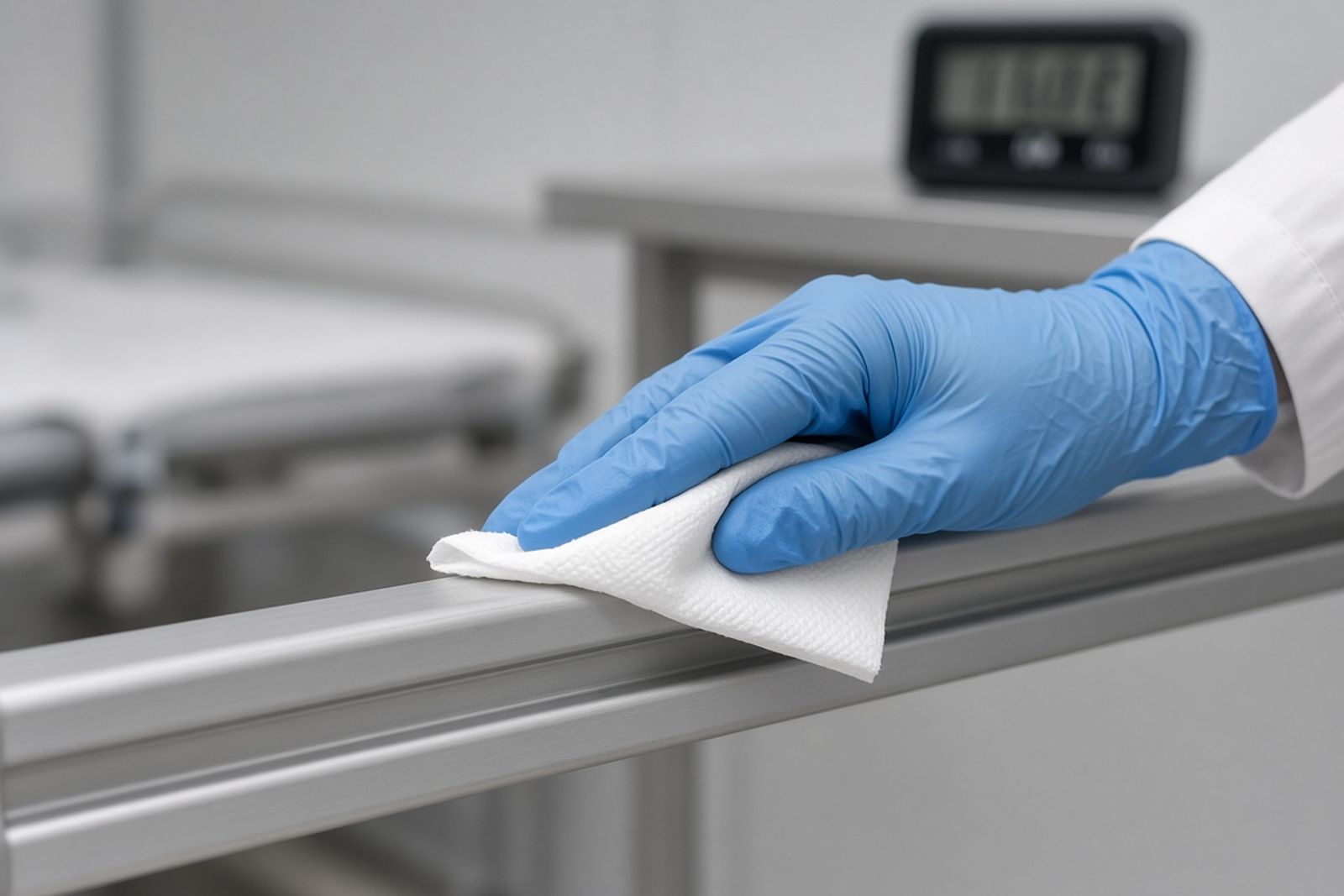
How voting works
One vote per poll per device; you can change your answer. Votes are stored as anonymous counts with a salted, hashed identifier and never linked to a name, email or form submission.
Opinion versus observation
Findings from published studies of people and properties in situations like this one. They describe what researchers observed in a specific group; they are not predictions for your case.
The intervention significantly reduced measured viral loads.
Methicillin-sensitive Staphylococcus aureus was the most common targeted organism detected.
Sourced numbers next to the opinions
Polls show what visitors think. These figures come from published research and agency data, so you can compare perception with evidence.
- 1.1%-34%
Observed hand-hygiene compliance among EMS providers before patient contact ranged from 1.1% to 34% across studies reviewed.
Read with care: Most included studies relied on self-report; observed rates are lower than reported ones.
Source: Antimicrobial Resistance & Infection Control (PMC) (2025)16 studies (8 USA), published 2010-2024
- 32%
Sixteen of 50 EMS stethoscopes tested were colonized with MRSA, and 32% of providers could not recall when they last cleaned theirs.
Read with care: Secondary compilation of abstracts; original study sample is small.
Source: New Jersey Department of Health (research abstract compilation) (2015)Single U.S. study of 50 EMS stethoscopes, compiled by NJ DOH
- 7.4 per 100 FTE
Ambulance services (NAICS 62191) recorded 7.4 total recordable injury and illness cases per 100 full-time workers in 2023, about three times the private-industry rate of 2.4.
Read with care: Employer-reported; many EMS agencies are public and excluded from private-industry rates.
Source: BLS (2023)United States private ambulance services, 2023
- 58%
Of the annual mean 29 fatal ambulance crashes from 1992 to 2011, 58% occurred while the ambulance was in emergency use.
Read with care: Percentages do not account for share of time spent in emergency mode.
Source: NHTSA (presented via NAEMT) (2014)United States, FARS 1992-2011
These figures are public research and agency data, not this network's own job records. Keep each number with its population, year and limits; none of them predicts cost, timing or outcome at a specific property.
Questions about emergency vehicle decontamination polls
Who typically responds to these fleet polls?
The people who answer are visitors to this site. They include EMS and fire supervisors, police fleet staff, and infection-control officers. Buying staff and vendors who serve public safety fleets visit too. No one is checked or asked to prove their role. The results are a snapshot of interested readers. They help you see how peers think about the same choices. They are not a scientific survey of the field.
Can poll results help me justify a fleet decon program to command staff?
They can add color to a proposal by showing what similar agencies say they do and regret. But they should not be the base of your case. Build your case on your own unit records and exposure reports. Add your history of replacing soft items and the sourced numbers on this site. Use the polls to guess what objections might come up. They also show that the pull between speed and doing it right is a common problem.
Why do some polls ask about cleaning products and electronics?
Cleaning products can damage monitors, radios, and seats. This is a common hidden cost, and it rarely comes up in infection-control talks. Asking the community how they picked products and what damage they have seen brings out practical know-how. Makers and vendors do not always share this on their own. Compare the answers with your equipment guidance before you change anything.
Do the polls address police vehicles or only ambulances?
Both. The polls also cover fire trucks and patient vans. Patrol cars and prisoner vans get dirty in different ways. They have rear seats, dividers, and restraints instead of stretchers and benches. The questions are written so people from any type of fleet can give a useful answer. When a question applies to only one type of vehicle, it says so.
Can I vote once per poll and see results immediately?
Yes. Each poll takes one answer from your browser and then shows the current results. If you change your mind, the overall total is what matters, and one vote will not throw it off. Voting over and over from many devices would throw it off. So the site asks you to answer once, based on your real experience.
What if my agency does things differently from most people who answered?
That is not unusual, and it may be just right. Call volume, unit design, state rules, and your infection-control plan can all justify a different approach. Use the gap as a reason to write down why you do things your way. Then the reasoning lasts through changes in leadership. You can also defend it in an audit or a complaint.
Are poll results ever presented as statistics on other pages?
No. Poll results stay on this page. Numbers in guides, on the home page, and in tool notes come from published sources, and we cite them. Keeping opinion and measurement apart matters most in public safety. A misread number there can sway policy, staffing, and crew safety choices. Each poll page says this plainly at the top.
More on emergency vehicle decontamination
Emergency Vehicle Decontamination services
Learn how deep cleans of ambulances, fire trucks, and police cars are planned. See needle sweeps, choices about soft items, and records by unit number.
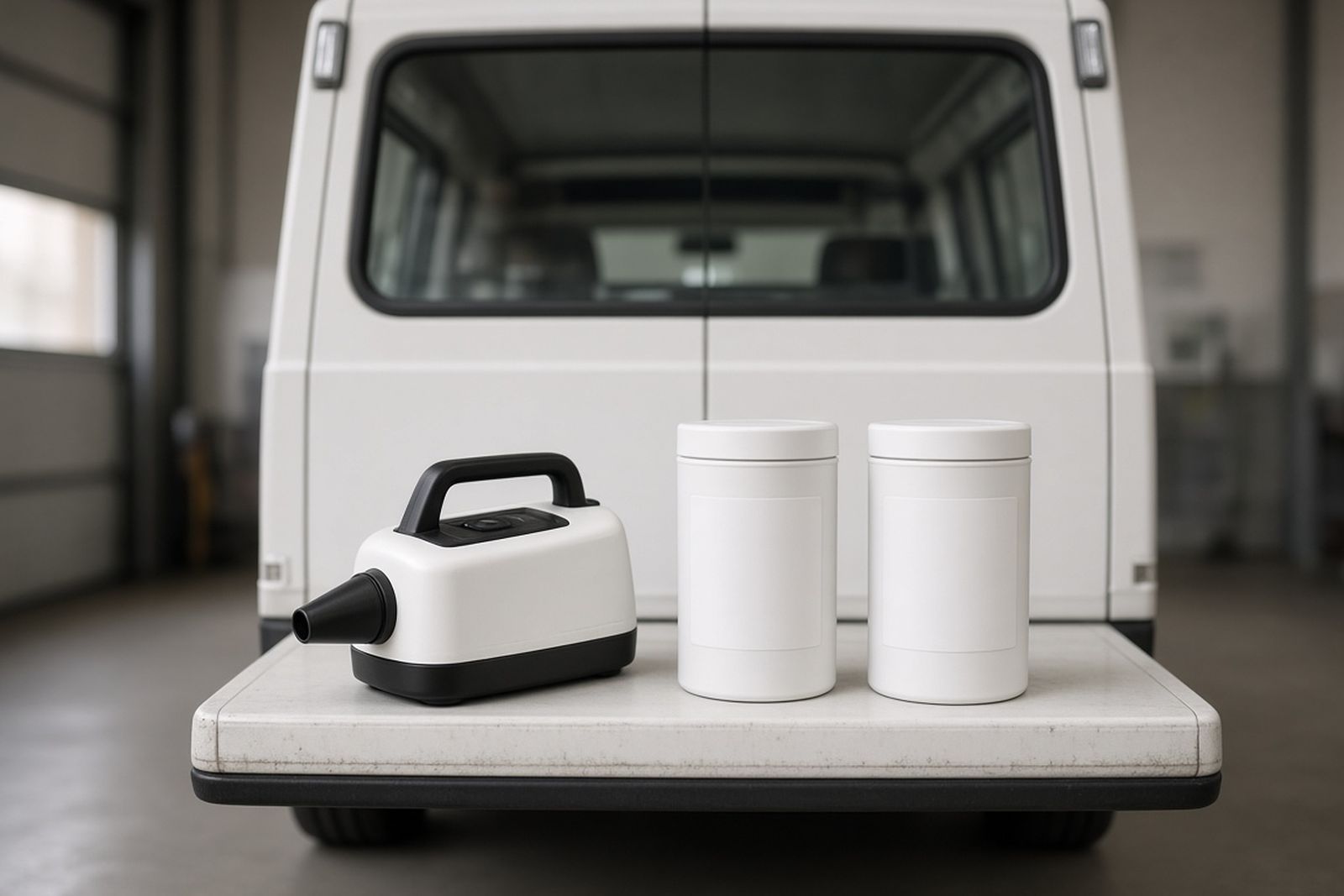
Costs explained
What drives the price, published cost ranges, and how to read a written quote line by line.
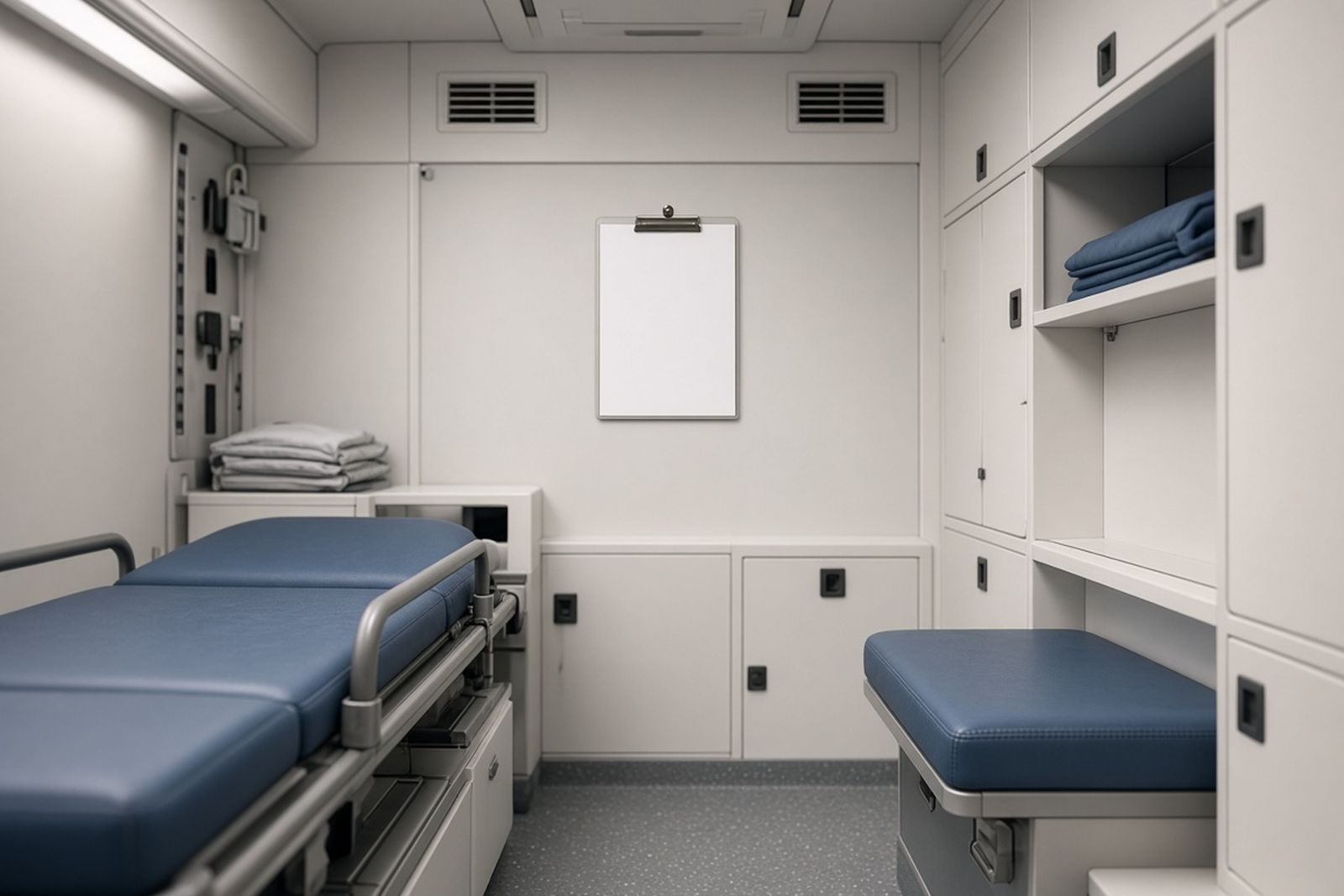
Insurance and payment
Which policies may respond, how to document a claim, and what to do if coverage is denied.
Planning tools
Guided planners for fleet managers. Get cost ranges, vendor checks, insurance steps, first-day actions, waste sorting, and in-house versus vendor risk.
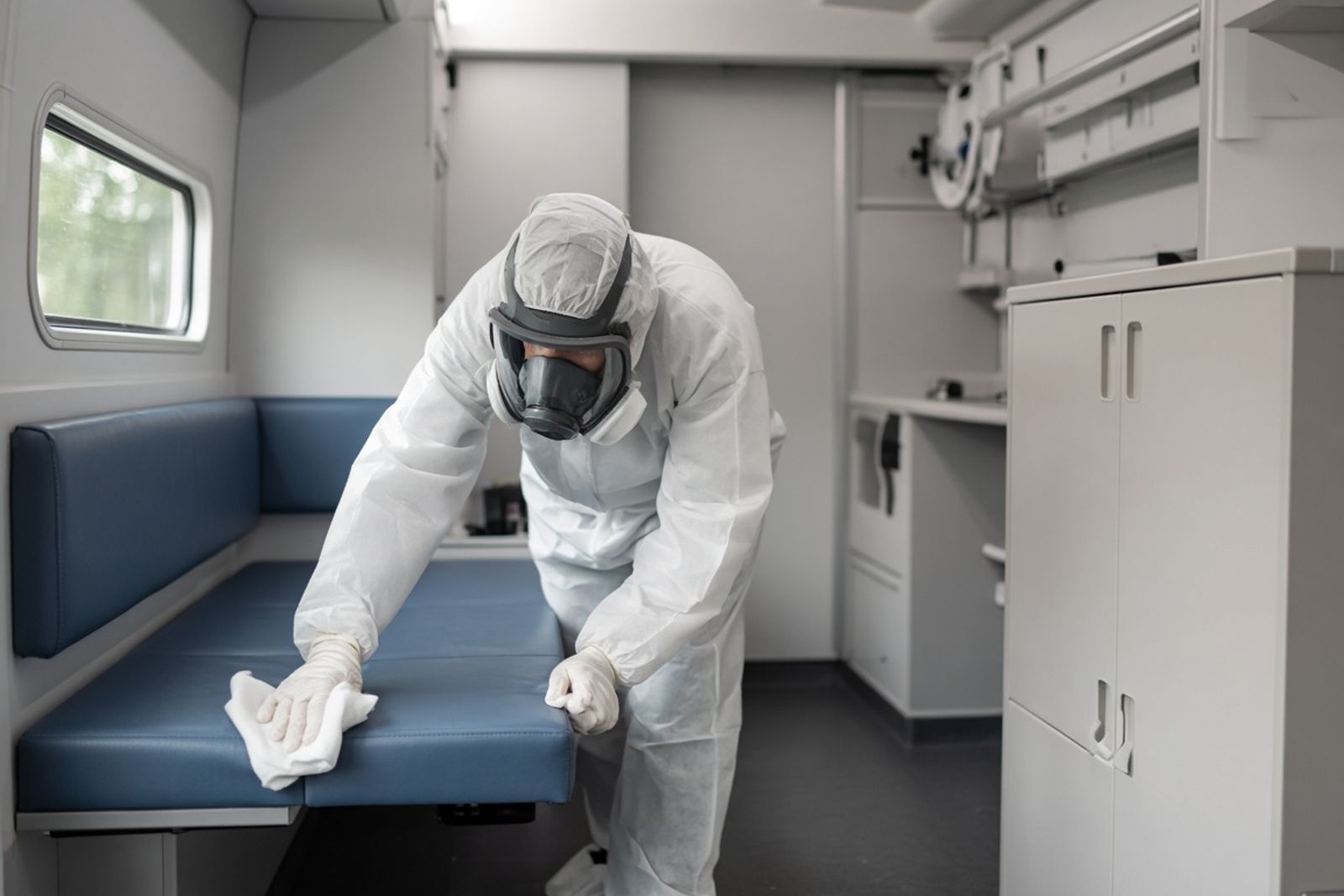
Knowledge quiz
Test what you know about cabin hazards, who pulls a unit from service, containment, contact time, waste, and cleaning records before the next hard call.
Articles and resources
Articles on fleet infection-control plans and picking products that are safe on electronics and seats. Read about turnaround planning, evidence in patrol cars, and records that pass an audit.