Emergency Vehicle Decontamination location coverage standards
Why a city name alone is not local expertise.
We have not published city pages for this specialty yet. Pages stay unpublished until they contain researched local context and useful decision support. Use the form to ask about your area.
Get an email reply about emergency vehicle decontamination
Send a short message to the follow-up inbox. A coordinator can reply by email. This form does not send emergency help; call 911 first if anyone is in danger.
Research before reach
A location is published only when its page includes meaningful local property, access, climate, jurisdiction, or documentation considerations.
Everything for one city on one page
Planning, safety, insurance, provider questions, sources, and documentation for each city sit together on a single guide.
No invented local offices
A city guide does not claim a storefront, parked crew, guaranteed arrival, job count, rating, or credential that has not been independently verified.
Use the national service guidance
The service and article libraries explain hazard controls, documentation, insurance questions, and provider verification without pretending those requirements are identical in every jurisdiction.
Not sure where to start?
Send a short message about your situation. Your request is sent to the follow-up inbox. A coordinator can reply by email.
Your request is sent to the follow-up inbox. A coordinator can reply by email.
If anyone is hurt or in danger, call 911 first.
Why location matters for emergency vehicle decontamination
Cleaning an ambulance, engine, or patrol car looks much the same from one town to the next. But the rules around it do not. State EMS offices set their own rules for how clean vehicles must be and how they are inspected. Some regional medical directors add infection-control steps on top. State and county medical waste programs decide how waste from the unit is sorted and who may haul it away from the station. Climate plays a quiet role too. Humid areas invite mildew in stretcher pads and door seals. Freezing winters limit how and where wet cleaning can happen outside a heated bay. Fleets differ as well. Busy city systems may rotate many units through a central garage. In a rural volunteer department, one truck out of service may leave the whole district short.
Several offices can shape how emergency vehicle cleaning is handled where you are. Your state EMS office usually licenses ambulance services and inspects units. So its published standards are a main reference. The county or city health department may step in after exposure to a disease that must be reported. It may also help when a crew member needs follow-up care. Your agency's infection control officer is your inside link to both. The state medical waste program decides how dirty soft items and throwaways leave the station. It often sits inside an environmental or health agency. Fire departments may also answer to a state fire marshal for truck standards. Find each office through your state government website, your regional EMS council, or your medical director. Do not rely on vendor summaries.
Directory badges rarely tell you whether a vendor understands patient areas, cot parts, or the fabrics in fire truck cabs. Ask how the company confirms that its disinfectants fit the vehicle maker's advice. Ask whether they match your agency's approved product list too. Ask for a sample of the job log it would give your infection control officer, with names and details removed. Confirm who hauls the regulated waste it creates. Check that the hauler is registered with your state medical waste program. Ask whether the vendor can follow your station's security rules. This matters for units that carry controlled drugs or evidence that must be tracked. Finally, check with nearby agencies and your regional EMS council. Peers who share mutual aid areas often know which local vendors have met their standards.
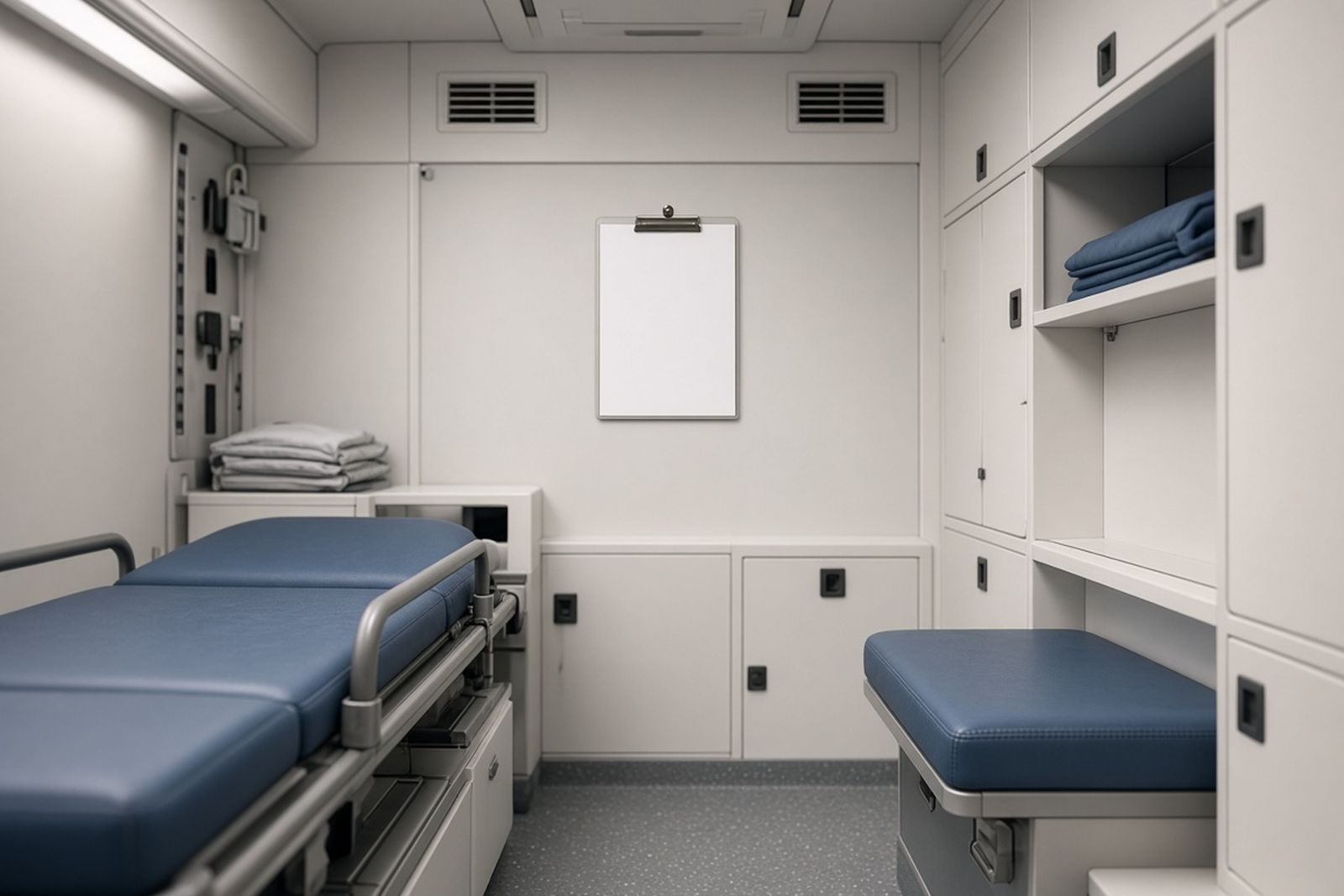
What to verify locally
- Whether your state EMS office publishes cleaning or inspection standards that a contractor's deep clean must meet before a unit returns to service.
- Which disinfectants your medical director or infection control officer has approved, and whether the vendor will use only those products in your units.
- How your state sorts dirty cot pads, restraint straps, and throwaway linens, and which registered haulers may take them from the station.
- Whether the vendor can work in your bay under your security rules. This includes locked drug boxes, radios, and any evidence left in patrol cars.
- Who in your agency signs off on a unit's return to service after an outside clean, and what record that person needs to see.
- Whether a regional EMS council, mutual aid group, or nearby department already uses a checked vendor you could ask about or share.
National figures for context
These are national or research figures, not data for any one city.
- 4,500 per year
NHTSA estimated an annual mean of 4,500 crashes involving ground ambulances from 1992 to 2011, with 33 deaths and 2,600 injured persons per year.
Read with care: Older 20-year average; NASS GES estimates carry sampling error.
Source: NHTSA (presented via NAEMT) (2014)United States, police-reported ambulance crashes, 1992-2011
- 173
NHTSA identified 173 fatal ground-ambulance crashes from 2012 to 2018; 45.7% happened during emergency use and only 8.8% of clinicians were properly restrained.
Read with care: Restraint figures come from a small investigation subset.
Source: NHTSA (via U.S. Fire Administration) (2023)United States, fatal ambulance crashes 2012-2018; restraint data from 27 special crash investigations
- 7.4 per 100 FTE
Ambulance services (NAICS 62191) recorded 7.4 total recordable injury and illness cases per 100 full-time workers in 2023, about three times the private-industry rate of 2.4.
Read with care: Employer-reported; many EMS agencies are public and excluded from private-industry rates.
Source: BLS (2023)United States private ambulance services, 2023
These figures are public research and agency data, not this network's own job records. Keep each number with its population, year and limits; none of them predicts cost, timing or outcome at a specific property.
Local questions about emergency vehicle decontamination
Does my state require outside companies to be licensed to clean ambulances?
Some states regulate the ambulance service, not the cleaning vendor. They put the duty for vehicle cleaning on the licensed agency itself. Other states may have health or waste rules that shape who can remove dirty materials. Check with your state EMS office and your state medical waste program to see what applies. Rules vary by state and county. So check with the local authority and keep the answer in your infection-control file.
Who should our agency call locally if a crew is exposed to a disease that spreads during a transport?
Your agency's infection control officer should be the first person you contact inside the agency. That person usually works with the receiving hospital and the local health department. The health department can advise on follow-up care for crew members. It can also say whether the vehicle needs any special handling beyond your usual deep clean. Keep current contact details for your county or city health department in the unit. Put them in your exposure control plan too. Then crews are not searching for them after a call.
Can a volunteer or rural department use a vendor from another county?
Often it can, but distance changes the planning. A unit may be out of service longer while you wait for the vendor to arrive. So rural agencies sometimes arrange coverage through mutual aid or keep a spare unit ready. Confirm that the out-of-county vendor is allowed to remove waste from your area. Make sure its hauler is registered where your station is. Talk through travel plans, bay access, and after-hours contacts before you need them.
Are police cars treated differently from ambulances under local rules?
Police vehicles usually are not covered by EMS vehicle standards. Their cleaning rules come from the department's own exposure control plan, job safety rules, and any evidence-handling policies. That means the department largely decides when a patrol car is ready for service. A cruiser may also hold seized items or evidence. If so, work with your property and evidence unit before anything is cleaned or removed. Write down that you did so.
How does winter weather affect vehicle cleaning at our station?
Cold can slow how well disinfectants work and can freeze rinse water. It can also make cleaning outside impractical. So cleaning usually needs to happen inside a heated bay with good airflow. Check whether your products list a lowest temperature for use. If your station has no indoor space, ask whether a vendor can bring a heated tent. Or ask whether a nearby station could host the work. Plan this before the season starts, not during a storm.
Which local office decides how dirty soft items from our units are thrown away?
Getting rid of blood-soaked pads, straps, and linens is usually covered by your state's medical waste program. That program may sit inside an environmental agency or a health department. Some counties add their own rules. Some require local permits to store or transport the waste. Your contractor and waste hauler should know these rules, but check directly with the program office. Keeping a copy of the rules in your exposure control plan makes audits and inspections easier.
What should an agency with many stations confirm when picking one vendor for all its units?
Confirm that the vendor can reach every station you serve. Make sure its waste setup is valid in each county you cover, especially if your district crosses county lines. Ask how it will keep the same kind of job records across stations, so your infection control officer can review them in one place. Make clear how planned deep cleans and surprise exposure cleans will be ranked when requests overlap. Put these terms in writing before you sign any agreement.
More on emergency vehicle decontamination
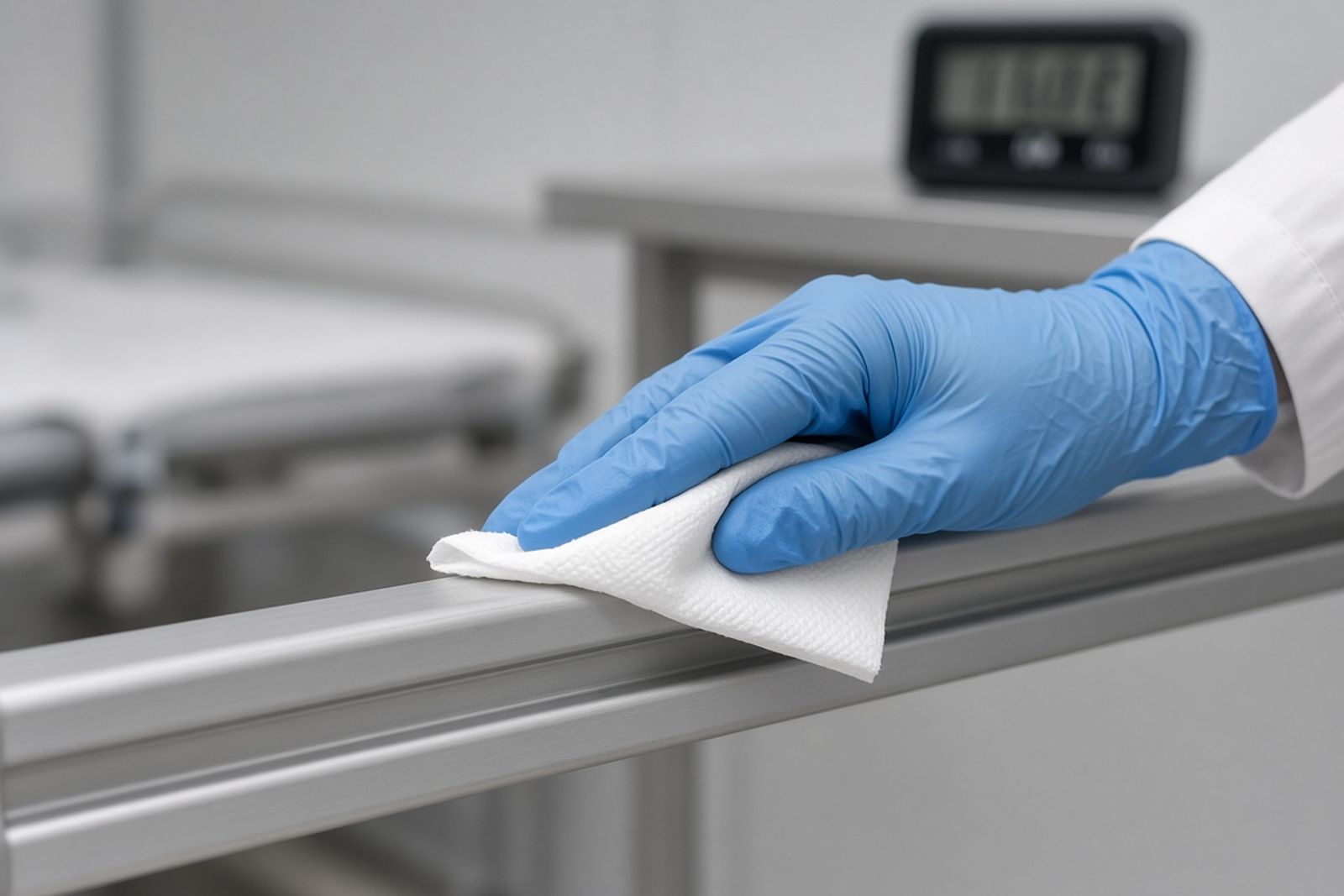
Emergency Vehicle Decontamination services
Learn how deep cleans of ambulances, fire trucks, and police cars are planned. See needle sweeps, choices about soft items, and records by unit number.
Costs explained
What drives the price, published cost ranges, and how to read a written quote line by line.
Insurance and payment
Which policies may respond, how to document a claim, and what to do if coverage is denied.
Planning tools
Guided planners for fleet managers. Get cost ranges, vendor checks, insurance steps, first-day actions, waste sorting, and in-house versus vendor risk.
Community polls
See how other EMS, fire, and police fleets handle time pressure, new soft items, records, and product choices in their own bays.
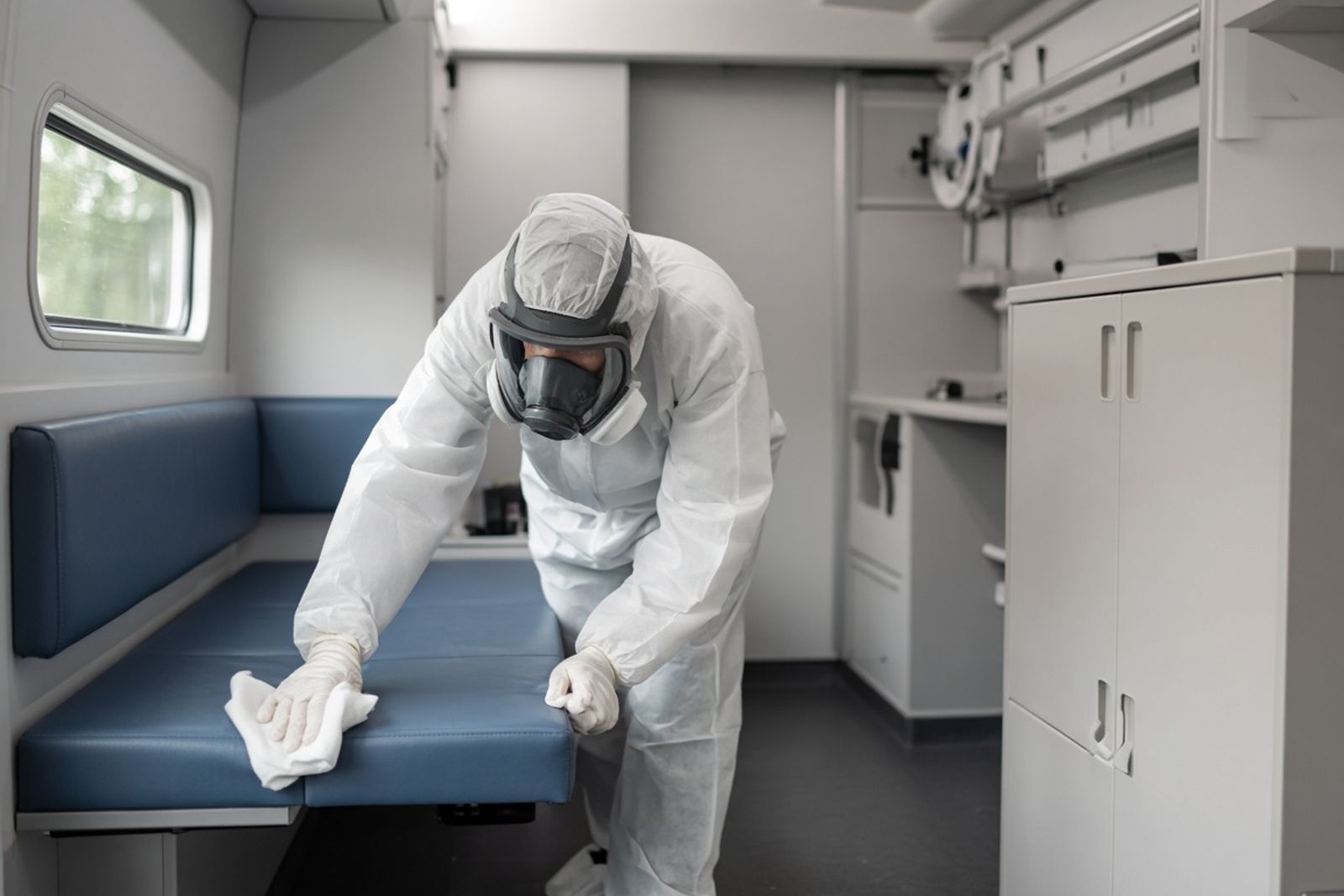
Knowledge quiz
Test what you know about cabin hazards, who pulls a unit from service, containment, contact time, waste, and cleaning records before the next hard call.
Articles and resources
Articles on fleet infection-control plans and picking products that are safe on electronics and seats. Read about turnaround planning, evidence in patrol cars, and records that pass an audit.