1Recognizing hazards inside a vehicle interior
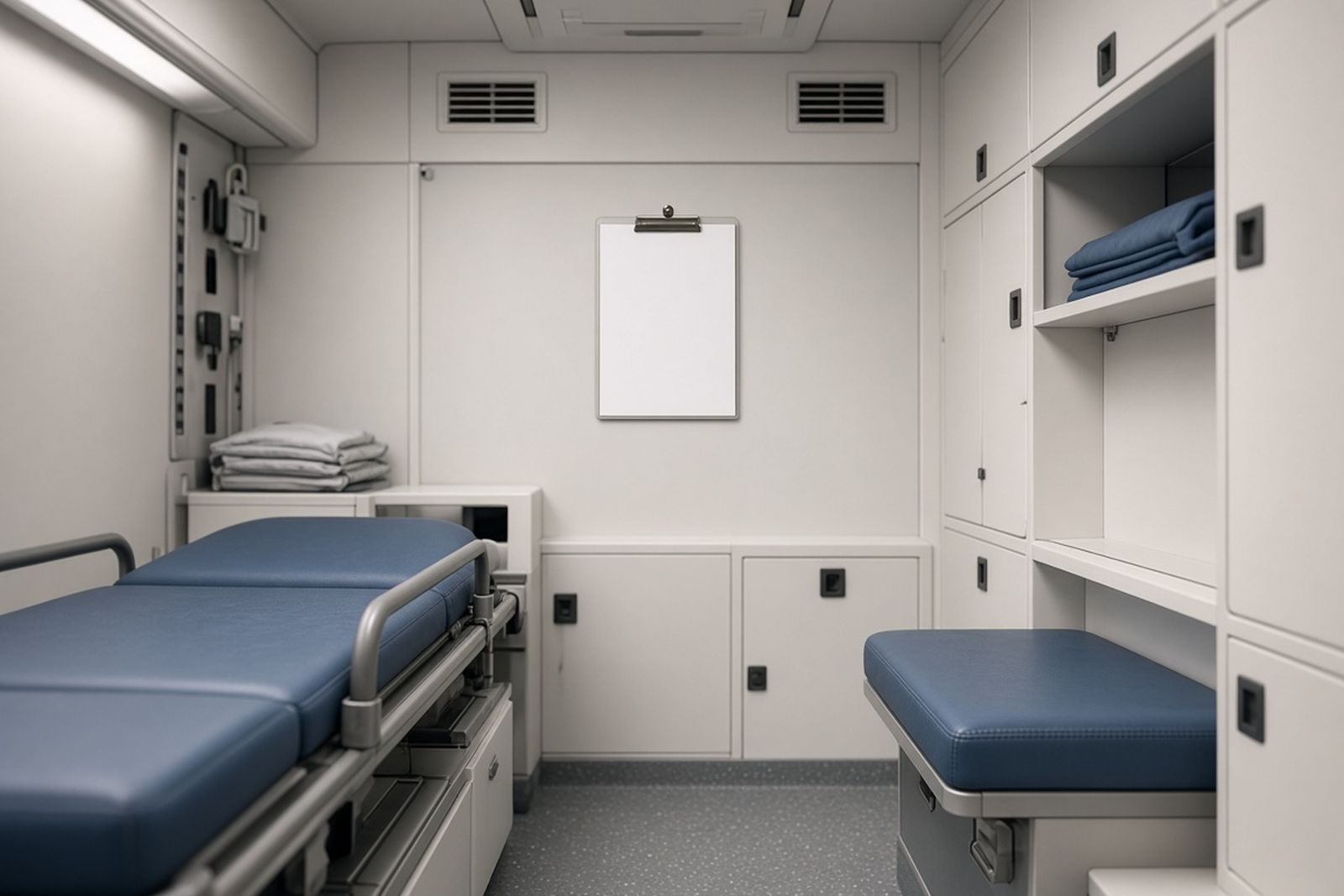
A patient area or the back seat of a patrol car packs many hazards into a small, closed space. Blood and other body fluids that can carry disease may be easy to see on the floor. They may also hide under mats, in bench seams, inside cabinet edges, on belt straps, and in foam under a torn mattress cover. Needles may be loose under seats after a chaotic call. Tiny droplets from suction or a coughing patient can settle on vents and controls. In fire trucks, smoke residue on cab surfaces adds a chemical layer. Germs follow hands, gravity, and airflow. They do not stay where the patient was. Knowing this is the base of a deep clean that truly protects the next crew.
2Who controls the unit and its status
The agency owns the choice about whether a unit is in service. The crew does not, and the vendor does not. That authority should be written into the infection-control plan. The plan should say which events call for an out-of-service deep clean and who tags the unit. It should say who can override for coverage reasons, and when. It should also name who signs to return the unit to service. Police vehicles add evidence concerns. When a rear seat area may hold evidence, the rules for handling evidence come before cleaning. The supervising officer decides when cleanup may start. Clear authority prevents a common failure. That is when a visibly dirty unit is pushed back into service because nobody felt free to say no.
3Containment in a confined compartment
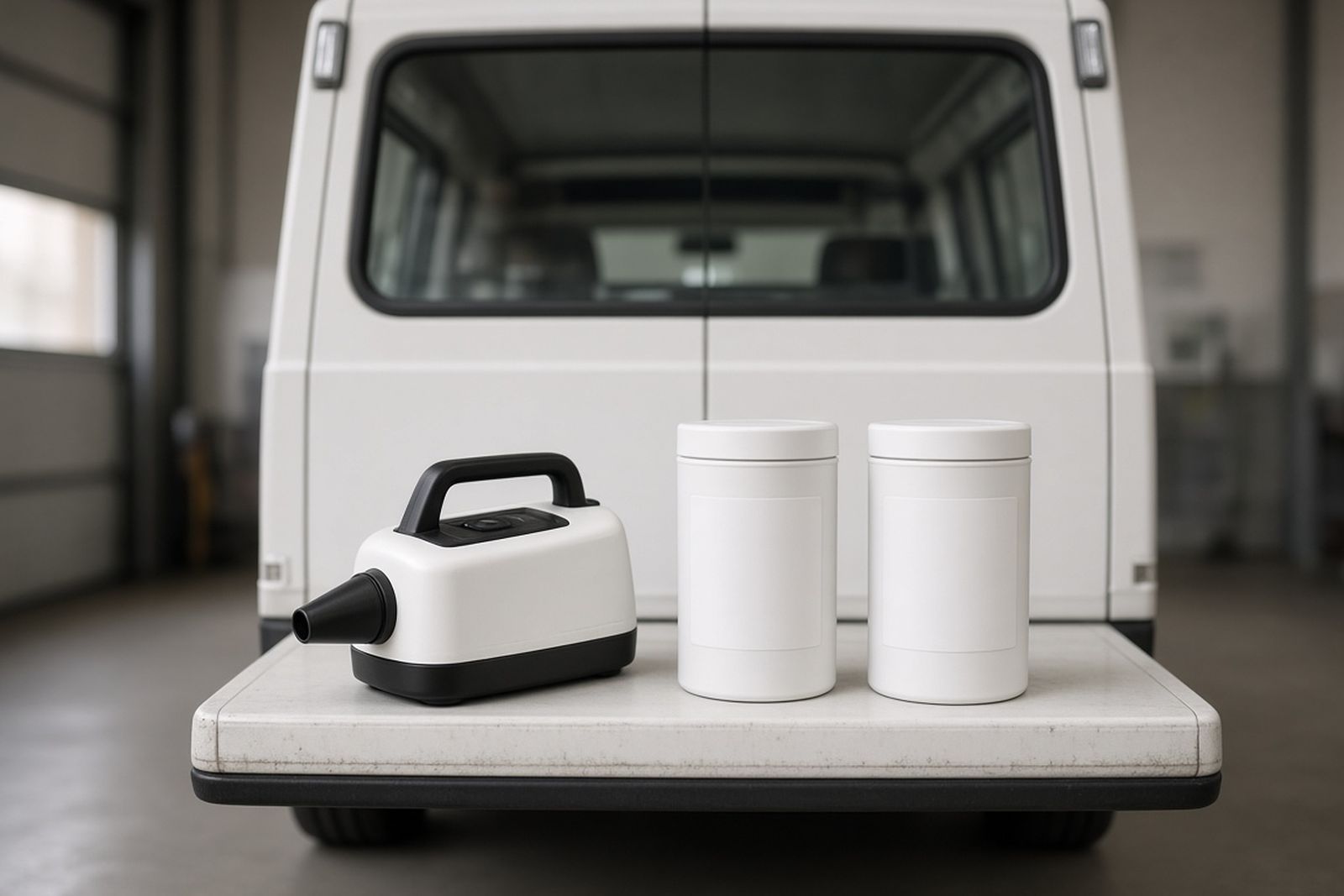
Containment in a vehicle means keeping germs from spreading. You want to keep them out of the cab, the station bay, other units, and the crew's gear. Tag the unit and park it where waste can be staged. Pick a spot where other crews will not walk through the work area. Remove medical supplies and personal items as the agency directs before cleaning starts. Bag dirty disposables and linens right where you remove them. Do not carry them across the bay. Keep the cab door closed if only the patient area was affected. Do not use compressed air or dry sweeping. These push debris into vents and seams. If you use odor or mist treatments, make sure the unit and bay are empty and aired out as the product label says.
4Cleaning first, then disinfection
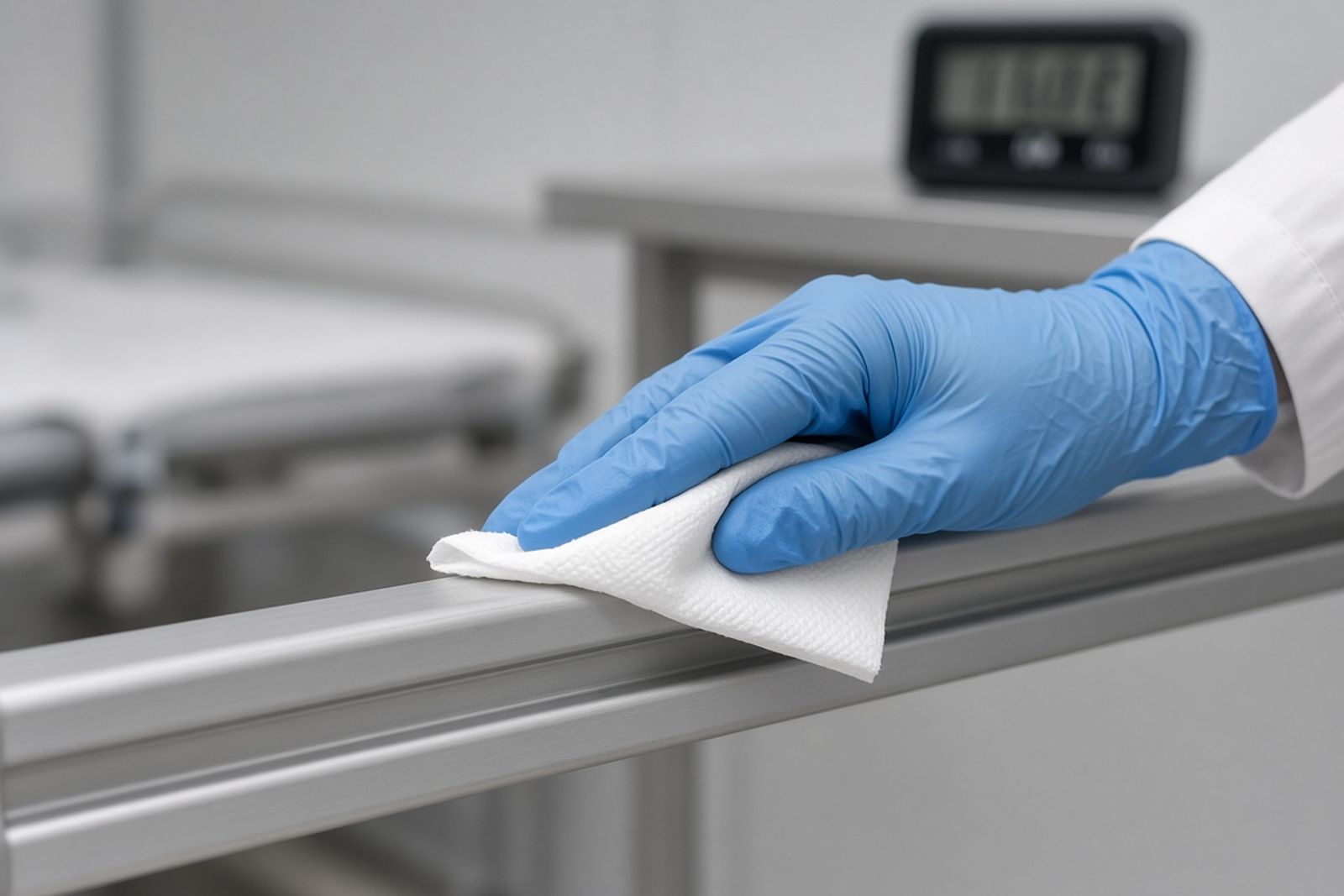
Disinfectants are tested on clean surfaces. If you spray them over blood, mud, or body fluid, the dirt soaks them up. They never reach the surface below, so the label claim does not apply. That is why a deep clean starts with removing heavy dirt. Use soap and throwaway materials for this step. Then disinfect with a registered product and keep it wet for its full contact time. Contact time is how long the disinfectant must stay wet on the surface. A wipe that dries in seconds does not meet it. On soft items, cleaning only reaches the surface. That is why soaked foam gets replaced. On electronics and screens, the product and method must match the maker's guidance. If not, the cleaning can break equipment.
5The waste path from the bay
Some waste usually goes in the regulated medical waste stream. This includes bloody disposables, dirty linens that will not be washed, soaked foam, and used absorbents. It goes in labeled containers and is picked up by a licensed hauler. Needles found during the sweep go in puncture-proof containers, never in bags. Do not pour suction canister contents or other collected liquids down a bay floor drain until you confirm local sewer rules. Reusable linens go to a laundry that handles dirty fabrics. Packaging, clean disposables, and barrier materials that never touched fluids are regular trash. Rules vary by state and county. So check the right path for each type of waste with the local authority. Keep hauler receipts with the unit's cleaning record.
6Recording the cycle so it can be audited
A cleaning record is the only proof that a deep clean happened and how it was done. It should list the unit number, the call that led to it, and the times the unit left and returned to service. It should name the products and contact times used. It should list each soft item and whether it was cleaned or replaced. Add any test, such as a swab reading on a set of high-touch spots. Include the worker or crew name and the supervisor who cleared the unit. Photos of replaced items help with both buying and the infection-control file. Records kept by unit show patterns. An ambulance that keeps needing new mattresses may have a design problem. A station with thin records may have a training problem. Audits, exposure reviews, and complaints all reach for the same file.