Emergency Vehicle Decontamination: Choosing a Company
Evidence to request from emergency vehicle decontamination providers: business identity, applicable training, insurance, scope assumptions, waste routing, verification, availability, and responsibility for subcontractors.
This category helps agencies judge outside vendors who clean vehicles. That may be for planned deep cleans or surprise exposures. Posts include questions to ask about their work in patient areas, fire truck cabs, and patrol cars. They also list red flags, such as vague product claims or unwillingness to follow your rules. You will also find tips on reviewing training records and job records. Other posts compare local vendors who know your area with regional or national vendors who serve large fleets with many stations. Posts on credentials explain which training records and insurance papers you can fairly ask for.
Get an email reply about emergency vehicle decontamination
Send a short message to the follow-up inbox. A coordinator can reply by email. This form does not send emergency help; call 911 first if anyone is in danger.
Picking the right vendor protects crews, patients, and the equipment your community relies on. A qualified company adjusts to your rules. It respects station security and the rules for tracking evidence. It gives records your infection control officer can file without rewriting them. Checking vendors before an urgent need lets your agency set expectations calmly and test how well you communicate. It also helps you avoid signing a rushed deal while a unit sits out of service. A short trial on one spare unit shows how a vendor talks, keeps records, and cleans up after itself. You see this before you commit your whole fleet.
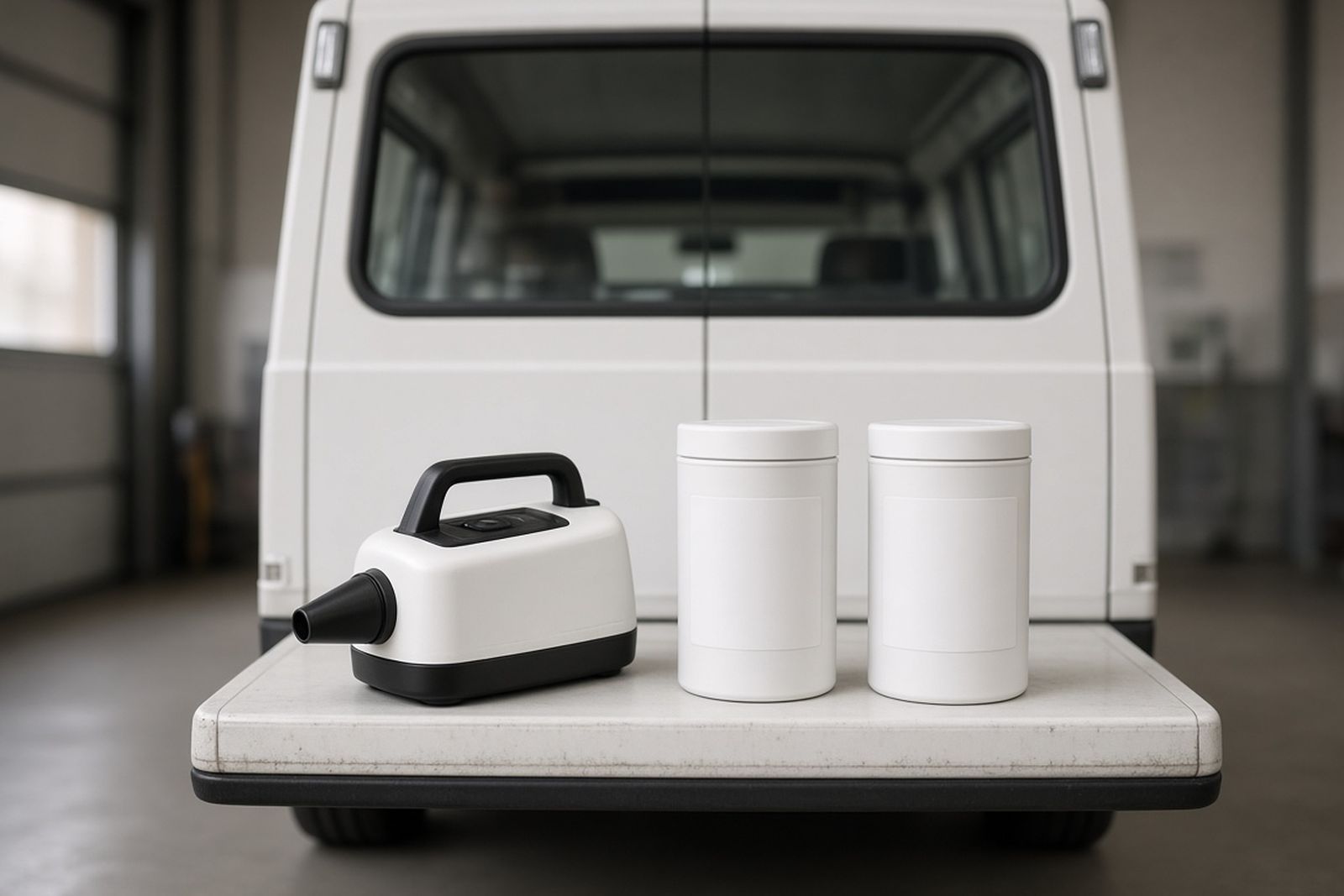
10 Questions to Ask Before Hiring an Emergency Vehicle Decontamination Company
Ten questions fleet managers and infection control officers should ask a company that cleans ambulances, fire trucks or patrol cars before signing a deal.
Before you hire a company to decontaminate (decon) your emergency vehicles, ask ten things. Ask about its work with your vehicle types and how it searches for needles. Ask which registered products it uses and how long it keeps them wet. Ask how it decides about soft items like mattresses and straps, and how it cleans portable gear. Ask how fast it can return units and how it records each decon. Ask how its workers are trained and protected, and how it reports problems it finds. Clear answers that you can check matter most.
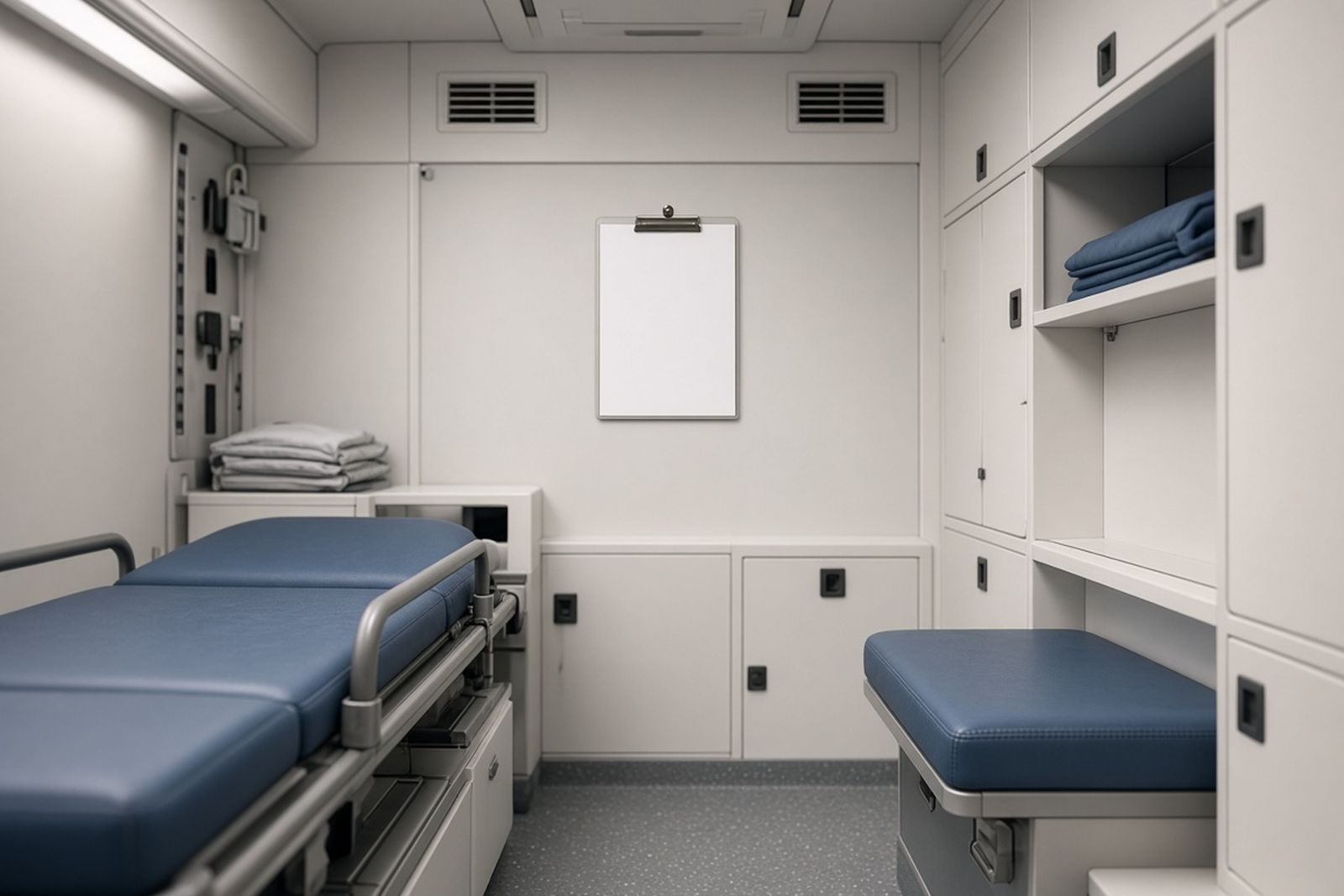
Red Flags When Hiring Emergency Vehicle Decontamination Services
Warning signs fleet managers should catch when hiring an ambulance or patrol car decon vendor, from fog-and-go pitches to missing soft-goods and device plans.
Red flags in an emergency vehicle decontamination vendor include fogging without pre-cleaning, no touch map of the patient compartment, disinfectants that ignore equipment manufacturer guidance, no plan for straps, cushions, and other soft goods, vague turnaround promises, and no per-unit completion record. A qualified vendor asks about the exposure, the unit's equipment, and your infection-control policy before touching the vehicle.
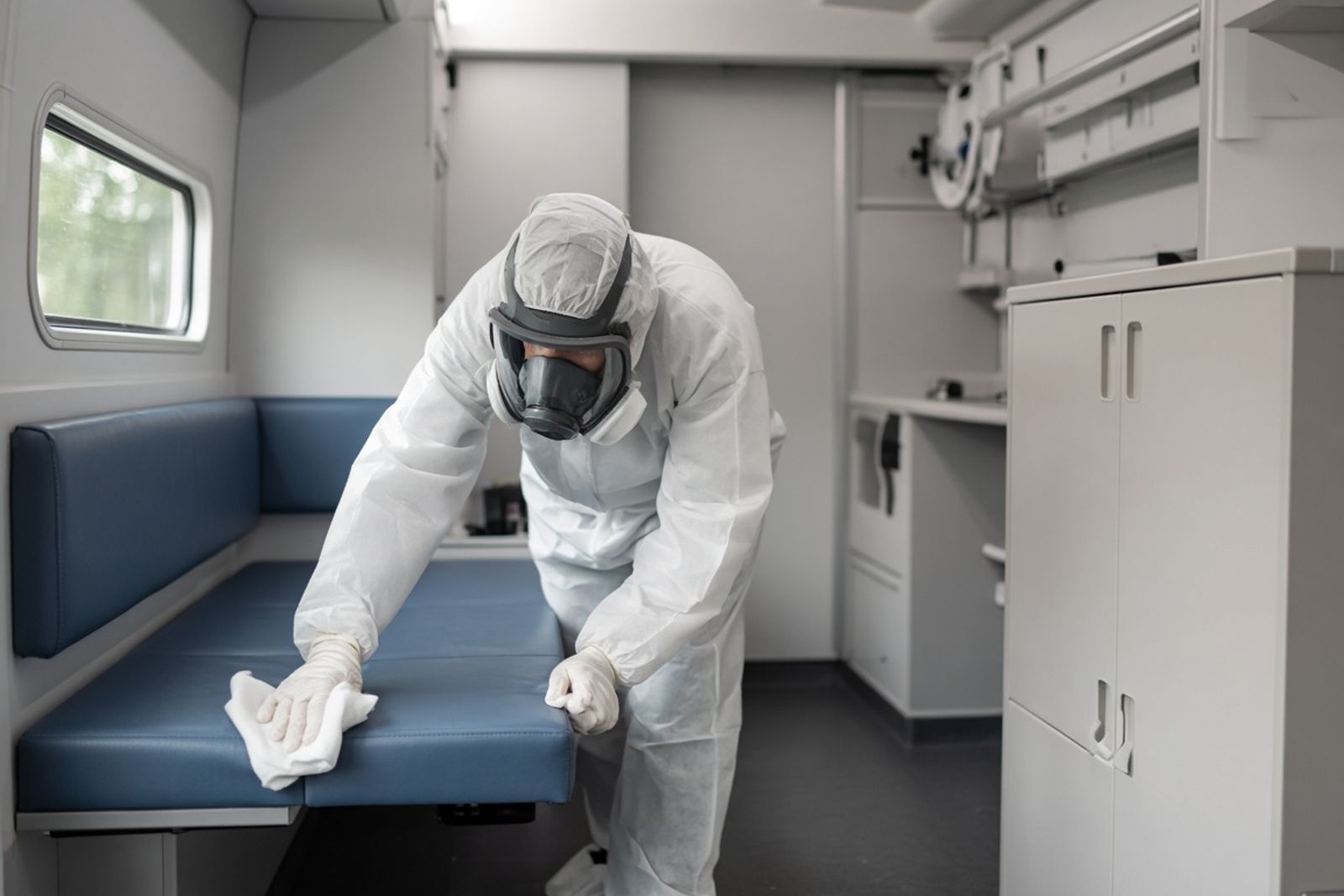
Training, Documentation, and Credentials for Emergency Vehicle Decontamination
The training, per-unit records and company credentials that fleet managers and infection control officers should expect from ambulance or patrol car cleaning.
For emergency vehicle decontamination (decon), these are the credentials that count. Look for written training on bloodborne germs and breathing protection. Workers should know your agency's written safety plan. They should know product labels and what equipment makers say about cleaning. Look for the right insurance and any local registration that is required. Just as important is a record for each unit. It shows what was treated, which products were used and whether surfaces stayed wet long enough.
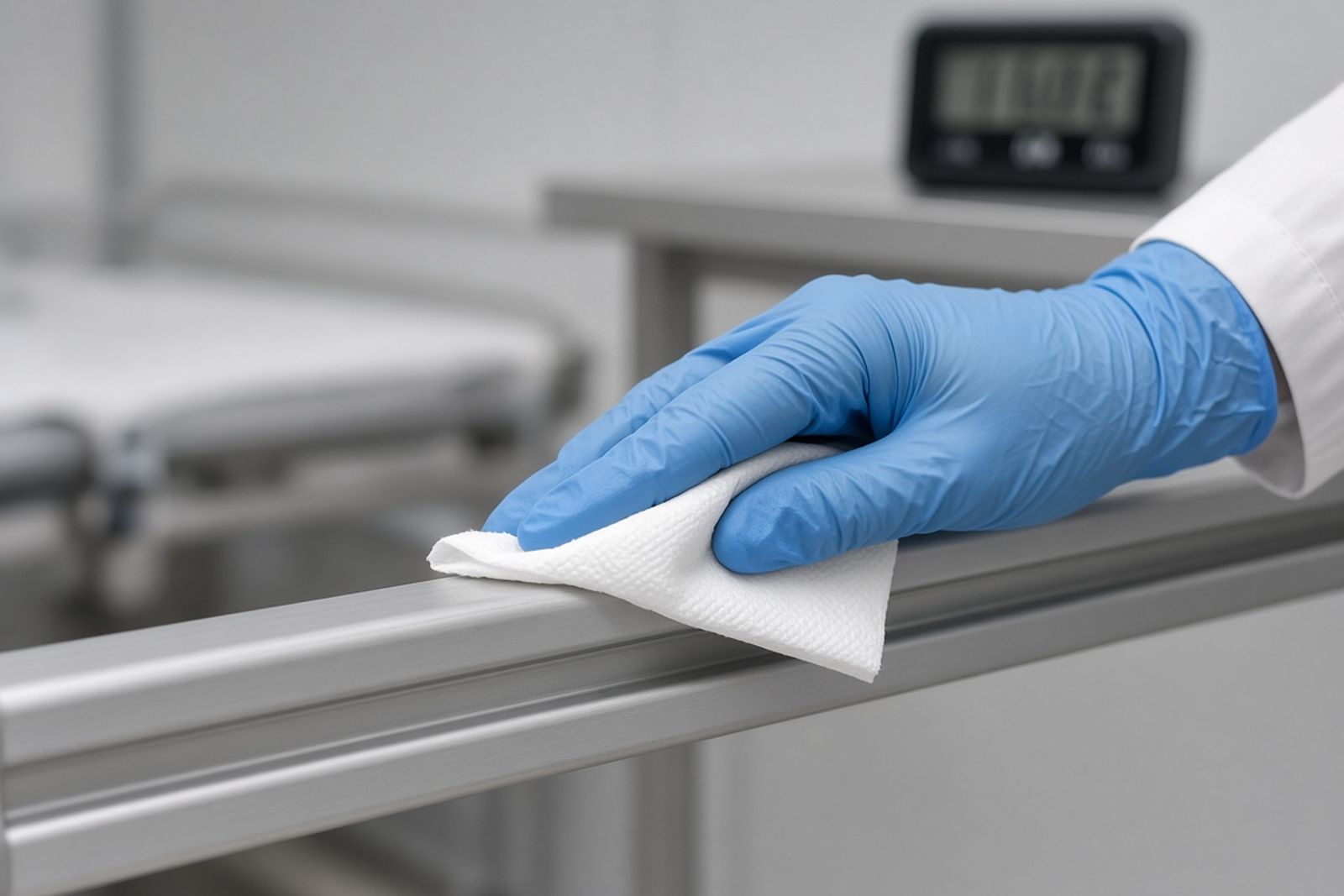
How to Compare Local and National Emergency Vehicle Decontamination Providers
Choosing between a local decon shop and a national network for your ambulance fleet comes down to reach, consistency, subcontracting, and paperwork.
Local emergency vehicle decontamination providers often offer faster on-site response, familiarity with local waste rules, and direct access to the people doing the work. National providers can offer standardized procedures, broad geographic coverage, and capacity during surges, but may subcontract. Compare both on the same terms: who actually shows up, what products and procedures they use, how they document work, and how they fit your medical director's requirements.
Sourced figures on choosing a company
- 56%
A tracer study found a surrogate virus spread to 56% of ambulance sites after a call, and current decontamination practices reduced that only to 54%.
Read with care: Tracer study, not a real pathogen; hydrogen peroxide wipe protocol reduced spread to 40%.
Source: New Jersey Department of Health (research abstract compilation) (2015)Fire-based EMS units, 48 sampled sites, bacteriophage tracer
- 35%
In a Danish study of 80 ambulances, crews adhered to thorough-cleaning guidelines only 35% of the time, though between-patient moderate cleaning adherence was 100%.
Read with care: Danish EMS practices may not reflect U.S. protocols.
Source: BMC Infectious Diseases (PMC) (2018)Denmark, 80 ambulances, sampled Aug-Nov 2016
- $357.5 million
IBISWorld counted nearly 600 U.S. crime-scene cleanup firms with revenues of $357.5 million and profits over $99 million in 2015.
Read with care: Decade-old figure reported secondhand; IBISWorld no longer publishes this niche report publicly.
Source: IBISWorld (reported by The Philadelphia Inquirer) (2015)United States, crime scene cleanup industry, 2015
These figures are public research and agency data, not this network's own job records. Keep each number with its population, year and limits; none of them predicts cost, timing or outcome at a specific property.
What research has found
Findings from published studies of people and properties in situations like this one. They describe what researchers observed in a specific group; they are not predictions for your case.
All sampled equipment categories showed significantly lower contamination after treatment.
Residual bacteria remained on an oxygen-saturation sensor and stretcher handle.
Choosing a Company: common questions
What should we ask a vendor about its work with emergency vehicles?
Ask which types of vehicles it has cleaned. Ask how it handles cot parts, electronics, and seats, and whether it will use your approved disinfectants. Ask for a sample job record with names and details removed. Ask how it works with station staff. Also ask how it handles locked drug boxes or evidence left in a vehicle.
What are warning signs when hiring a vehicle cleaning vendor?
Be careful if a vendor claims one product or device handles everything. Be careful if it will not name its waste hauler or brushes off the maker's cleaning instructions. The same goes if it cannot describe how it records its work. Pressure to sign a long contract without a trial job is another reason to slow down and compare other choices.
Should we hire one vendor for both planned and emergency cleaning?
One vendor can make records and communication simpler. But confirm it can handle surprise exposures without disrupting planned work. Decide how urgent requests are ranked, what happens after hours, and how records are delivered. Some agencies keep a backup vendor for busy periods or remote stations.
Should we visit a vendor's shop before we sign?
If the vendor cleans units at its own shop, a visit is worth it. Look at the bay, drains, airflow, waste storage, and how vehicles are kept secure. Ask how they keep clean and dirty areas apart. If they work on-site at your stations, a demo there may be more useful than a shop tour.
How can we check a vendor's reputation with other agencies?
Ask the vendor for references from EMS, fire, or police fleets like yours in size and vehicle mix. Then call them yourself. Ask about cleaning quality, how reliable they are after hours, and how well they communicate. Ask how problems were handled when they came up. Regional EMS councils and professional networks can also share what they know. Give more weight to specific examples than to general praise.
What should a trial clean include?
Pick a typical unit and ask the vendor to do a full deep clean. It should run from the first questions to the signed record, while your infection control officer watches. Review the record afterward. Check the unit yourself under good light. Ask the next crew to use it and tell you how it looked and felt. A trial shows practical details that interviews and brochures miss.
How long should an initial contract with a new provider be?
Many agencies start with a shorter term or a set trial period. They add the option to extend once the vendor has proven itself on your units. That gives both sides a chance to adjust the job, records, and communication before going further. Check your buying rules, which may limit contract terms. Whatever the length, build in planned reviews of how the vendor is doing. Include a clear way to end the deal.
Related community polls
Every count is a real visitor vote; nothing is seeded or padded. One vote per poll per device, and you can change your answer.
After a bloody transport, what usually decides whether your unit gets a full deep clean?
Who performs terminal cleans on your fleet most of the time?
More on emergency vehicle decontamination
Emergency Vehicle Decontamination services
Learn how deep cleans of ambulances, fire trucks, and police cars are planned. See needle sweeps, choices about soft items, and records by unit number.
Costs explained
What drives the price, published cost ranges, and how to read a written quote line by line.
Insurance and payment
Which policies may respond, how to document a claim, and what to do if coverage is denied.
Planning tools
Guided planners for fleet managers. Get cost ranges, vendor checks, insurance steps, first-day actions, waste sorting, and in-house versus vendor risk.
Community polls
See how other EMS, fire, and police fleets handle time pressure, new soft items, records, and product choices in their own bays.
Knowledge quiz
Test what you know about cabin hazards, who pulls a unit from service, containment, contact time, waste, and cleaning records before the next hard call.