Short answer
Before you hire a company to decontaminate (decon) your emergency vehicles, ask ten things. Ask about its work with your vehicle types and how it searches for needles. Ask which registered products it uses and how long it keeps them wet. Ask how it decides about soft items like mattresses and straps, and how it cleans portable gear. Ask how fast it can return units and how it records each decon. Ask how its workers are trained and protected, and how it reports problems it finds. Clear answers that you can check matter most.
What rides on the provider you choose
A decon company does more than clean. Once it hands a unit back, your next crew and your next patient rely on its work without being able to see it. If the company cuts corners, the harm may show up later. It could come as exposures, infections or audit findings long after the bill is paid.
The research on dirty ambulances makes this real. A 2022 study in Antimicrobial Stewardship and Healthcare Epidemiology found that ambulance patients were 3.72 times more likely than matched private-car patients to test positive for MRSA or VRE within 30 days. MRSA and VRE are germs that resist common antibiotics. Many things play a part, but vehicle cleanliness is one your agency can affect.
The questions below help you judge something important. Does the company understand the inside of emergency vehicles? Or is it just stretching a general cleaning service to fit vehicles?
Bring your infection control officer, a senior crew member and your fleet manager into the review. Each notices different things. The officer listens for answers about products and wet times. The crew member knows where germs really hide in your units. The fleet manager thinks about how long units are out of service and about wear on surfaces.
Questions 1 and 2: vehicle experience and sharps
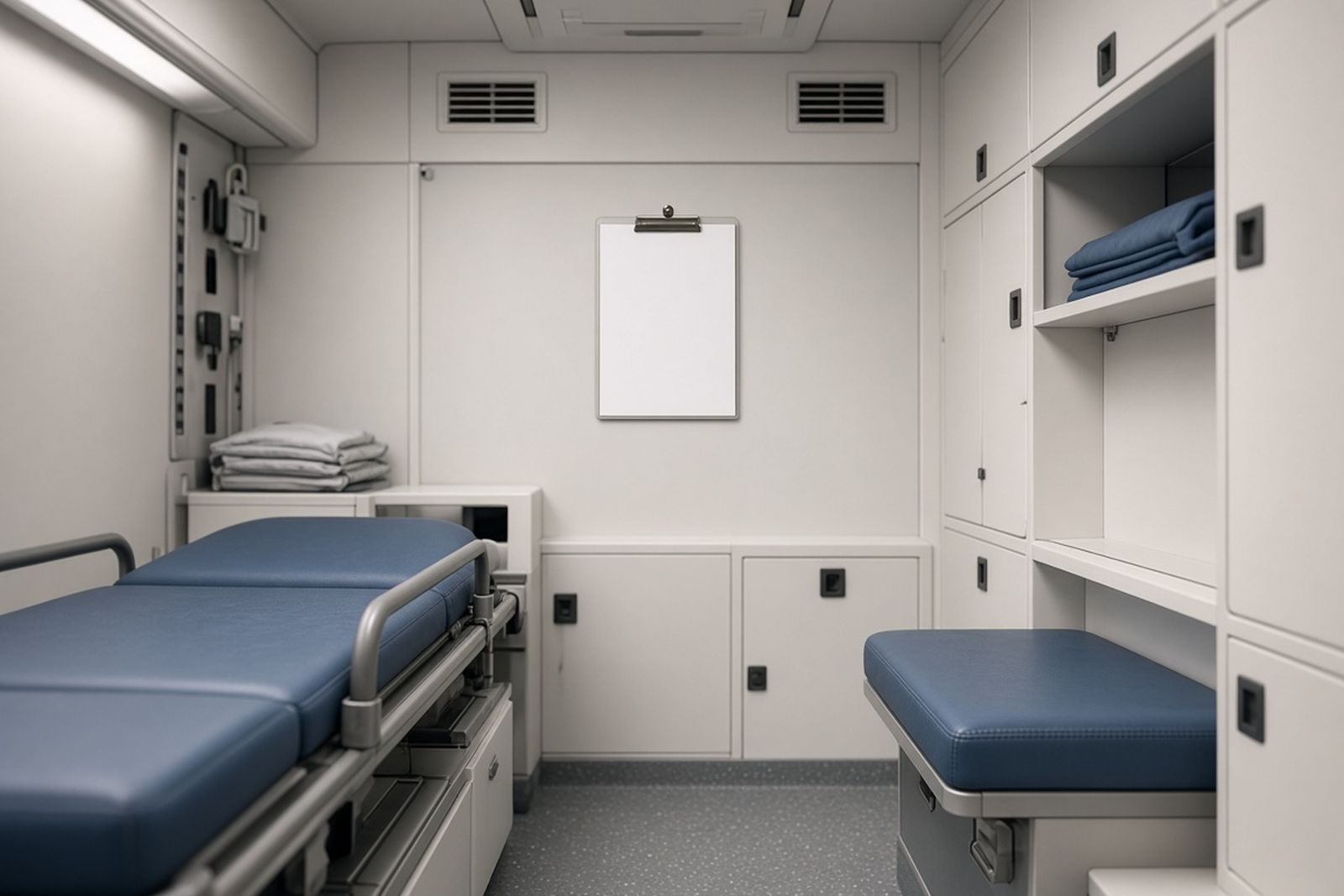
Question 1: Which kinds of emergency vehicles have you cleaned lately, and can you walk us through the steps for ours? Ambulance patient areas, patrol car back seats and fire truck cabs each have their own trouble spots. A company that knows your vehicle types will bring up details without being asked. Examples include cot mounts, cabinet tracks, partition seams or air-pack seats.
Question 2: How do you search for needles and other sharps before cleaning, and what happens when you find one? The answer should describe a careful search before workers put their hands in hidden spots. That search should cover floor seams, under the cot, behind seat cushions, in door pockets and inside cabinet tracks. Ask how found sharps are written down and reported back to your agency.
A company that has not thought hard about sharps has probably not spent much time in patient areas.
Questions 3 and 4: products and contact time
Question 3: Which disinfectants will you use, what are their EPA registration numbers, and do their labels cover the germs we worry about most? Ask for the labels and safety data sheets. Your infection control officer should check the claims. The officer should also check that the products are safe for your surfaces. Some products can harm vinyl, plastic or electronics over time.
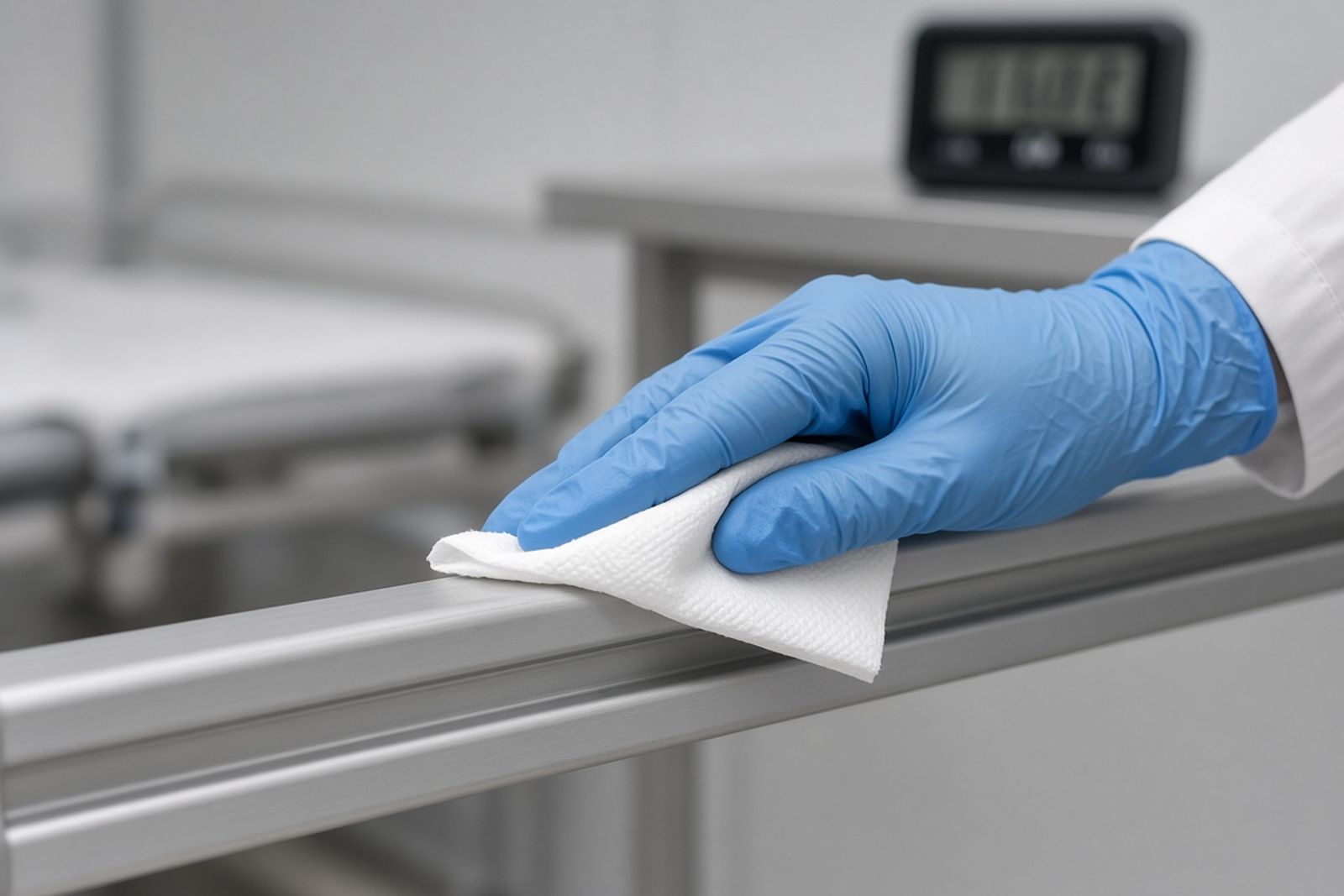
Question 4: How will you make sure every surface stays wet for the full time the label requires? This is called contact time. Listen for details about the order of steps, reapplying on walls and ceilings, and supervision. Contact time is the step most likely to be cut short under pressure. So you want a company that will not bend on it.
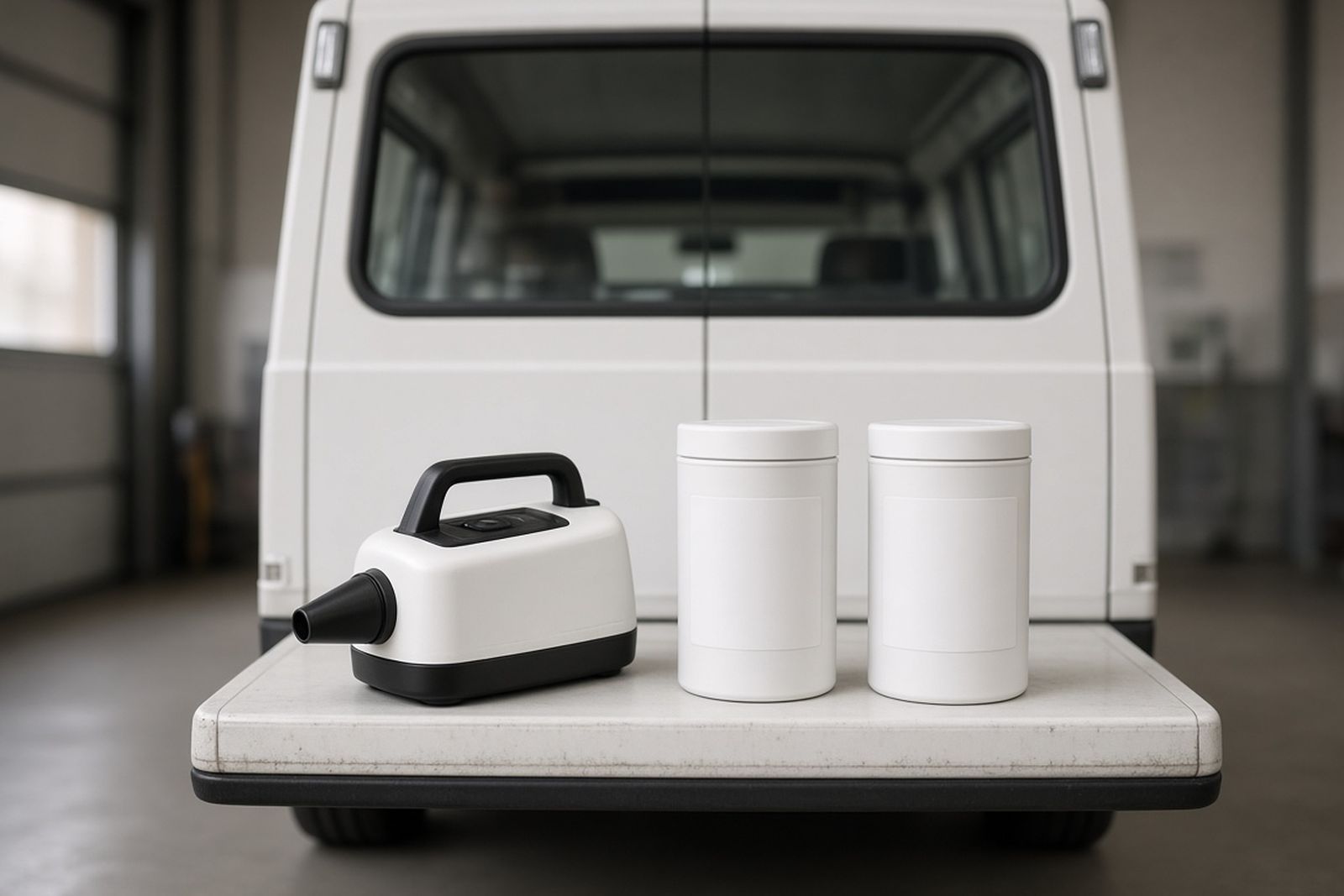
If the company plans to spray or fog, ask two things. How will it clean surfaces that are visibly dirty first? And how will it protect the electronics on board?
Questions 5 and 6: soft goods and portable equipment
Question 5: How do you decide whether a soft item should be cleaned or replaced, and what approval do you need from us? A good answer describes checking covers and seams for damage and for fluid that has soaked through. It includes replacing items that cannot be confirmed clean. It also follows an agreed dollar limit for approval, so your agency is not surprised by replacement charges.
Question 6: How will you clean portable gear such as monitors, cables, stethoscopes and stretchers? These items are often missed. This is most true for small ones like stethoscopes and cables that travel from patient to patient. A company that includes gear in its work, following each maker's cleaning directions, closes a real gap.
Agree in writing which gear the company cleans and which your own staff handle.
Questions 7 and 8: turnaround and records
Question 7: How long does a routine full deep clean really take, and how long after heavy contamination? Can you work at our stations, or do units come to you? You need to plan time out of service and backup coverage. Be careful if a company promises a time that seems too short for full contact times and a proper sharps search.
Question 8: What does your decon record include, and can it match our format? At a minimum, you want the unit number, date, times out and back, and what triggered the clean. You also want products, registration numbers, contact times, items replaced, sharps found, the worker's name and sign-off. Ask for a sample record. Confirm it can be filed in your fleet or infection control system.
Records are what your auditors, medical director and risk manager will review. They should be complete without follow-up calls.
Questions 9 and 10: technician protection and problem reporting
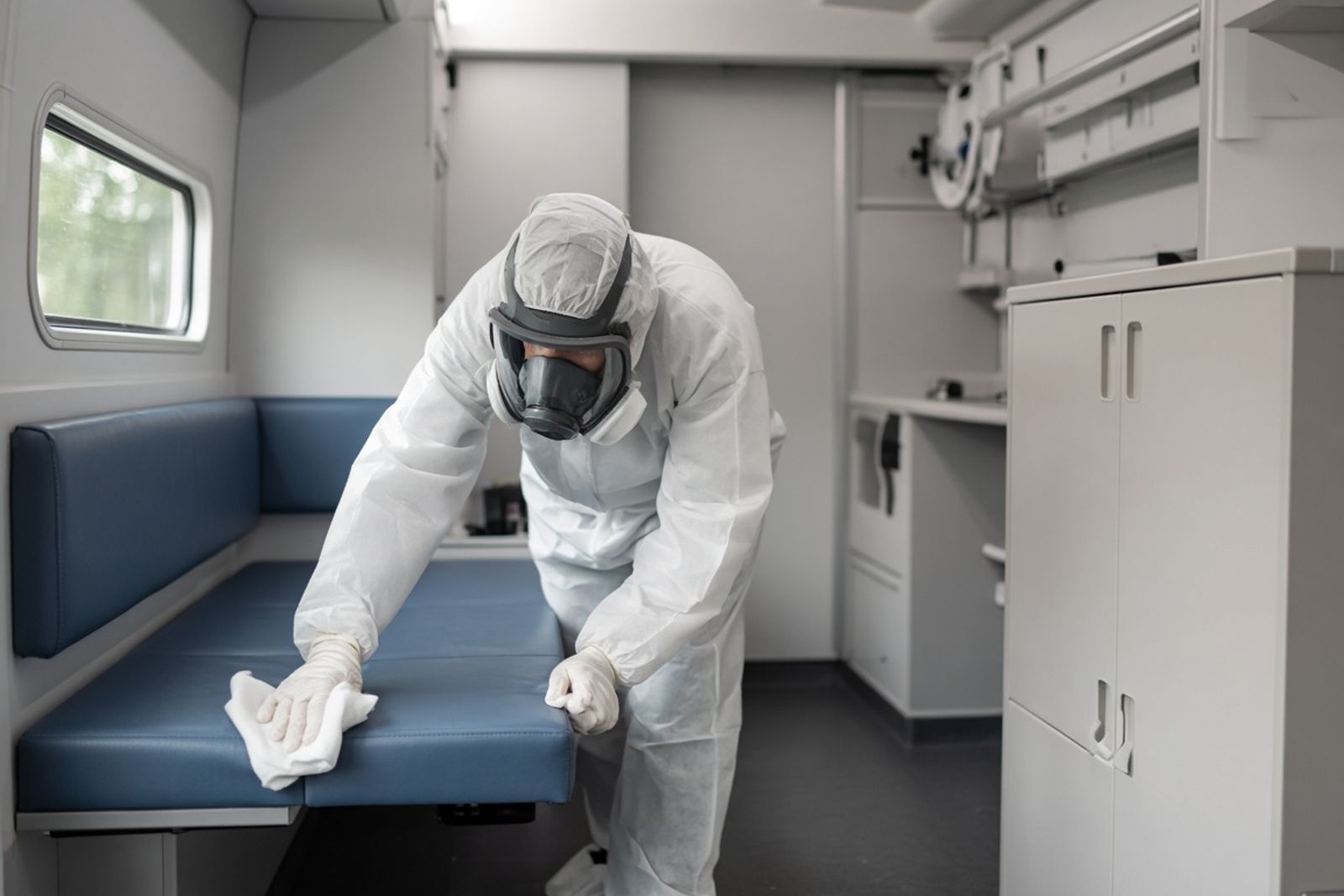
Question 9: What training on bloodborne germs, protective gear and vaccines do your workers receive? Decon workers face the same exposure risks as your crews. Sometimes they face more, because they handle heavy contamination. Ask for the training records, or a summary of them, for your files.
Question 10: When you find a problem during decon, how do you report it? Problems might be a damaged mattress cover, a cabinet seal that traps fluid, or germs that keep showing up in the same spot. The best companies act as a second set of eyes on your fleet. What they notice can point to repairs or design changes that cut future contamination.
Ask your medical director whether your state EMS office sets any rules for hired cleaning of licensed EMS vehicles. If so, build those rules into the scope of work.
Answers that suggest a provider is not ready
Some companies come from carpet, janitorial or car detailing work and have added vehicle decon to their services. Several of them are excellent. Others have not yet adjusted to the facts of patient areas, and their answers usually show it.
Be careful if a company talks mostly about looks, such as shine, scent or interior detailing, instead of germs. Products that cover up smells and fabric sprays do not belong in a patient area. The only exception is if your infection control officer has approved them.
Notice how the company responds when you ask about sharps, contact time or records. Experienced companies expect those questions and answer them in detail. Pausing, vague comfort or irritation are useful warning signs.
If you are unsure, ask for references from other EMS agencies, fire departments or police fleets, and call them. Ask how the company handles heavy contamination. Ask how reliable its return times have been, and whether its records held up during an audit.
- Promising a fixed return time that leaves no room for full contact times
- No clear steps for searching for sharps
- Products named without registration numbers or labels
- Willing to reuse soft items with torn covers or soaked-through seams
- No sample decon record to show you
- Not wanting your infection control officer to watch
Run a trial clean before you sign
Written answers and reference calls only go so far. If you are choosing between two companies, ask each to do a trial deep clean. Have them clean the same unit in different weeks. Have your infection control officer attend both.
Watch the work, not just the finished patient area. Note whether surfaces are sprayed and wiped almost at once or kept wet for the label time. Note whether the worker does a visible sharps search. See whether the cot mattress comes off so its seams can be checked. Check whether the record lists registration numbers or only product names. A company whose record flags a defect, such as a loose cabinet seal, is already acting as the second set of eyes from the last question.
Share both records with the fleet manager and the medical director before you decide. Whichever company you choose, carry what you learned into the agreement. For example, you could require records within one shift of each decon and set review meetings every three months.
What should go into the service agreement?
Once you pick a company, put the key expectations in writing. A clear agreement protects both sides. It also makes performance reviews simple.
Review the agreement with your infection control officer and risk manager before you sign. Look at it again after the first few months of service.
- Scope for routine deep cleans and for heavy contamination
- Approved products with registration numbers and required contact times
- Rules for replacing soft items and gear, and dollar limits for approval
- Expected return times and after-hours service
- What the decon record includes, its format and when it arrives
- Who is responsible for handling and disposing of sharps and waste
- Worker training, protective gear and insurance requirements
- Your right to audit and a schedule for performance reviews