Short answer
Environmentally responsible emergency vehicle decontamination means using the right amount of the right disinfectant, keeping rinse water out of storm drains, segregating waste so only truly regulated items go in red bags, and choosing products that do not degrade vehicle interiors. None of this requires cutting corners on infection control. Targeted, well-executed cleaning usually protects both crews and the environment better than heavy spraying.
Infection control and a lighter footprint point the same way
In an ambulance, careful infection control and a lighter environmental footprint point in largely the same direction. The most effective decon practices, such as removing soil before disinfecting and keeping a product wet for its full contact time, are also the ones that use chemicals most efficiently. The wasteful practices, such as spraying clouds of disinfectant over a dirty compartment or hosing out a unit, tend to be less effective as well.
Evidence that good technique works is encouraging. In a 2018 study by Farhadloo and colleagues, the reported contamination rate on prehospital ambulances fell from 52% before disinfection to 8% afterwards. Results like that come from doing the job carefully, not from using more product than the label calls for.
Environmental responsibility in this field is really about precision: the right product, in the right amount, on the right surfaces, with waste and water going to the right place.
Where decon water ends up
Rinse water from ambulance cleaning can contain body fluids, detergents, disinfectant residues, and road grime. If it flows into a storm drain, it usually reaches a creek, river, or lake without treatment. If it goes to a sanitary sewer, it is treated at a wastewater plant, which is generally the appropriate destination.
Many stations were built decades ago, and bay drains do not always go where people assume. Some connect to storm sewers, some to sanitary lines, and some to oil-water separators. Before your crews wash anything, confirm with facilities staff or your local wastewater utility where each drain leads.
Ask the same utility whether your jurisdiction has specific expectations for vehicle wash water; some require separators or pretreatment for certain discharges.
- Never hose out a patient compartment into a storm drain or parking lot
- Use wipe-based or spray-and-wipe methods inside the unit to minimize liquid
- Clean removable equipment in a sink or wash area connected to sanitary sewer
- Keep exterior washing separate from interior decon, and follow your jurisdiction's vehicle wash rules
- Inspect and maintain any oil-water separator on its recommended schedule
How much disinfectant is actually enough?
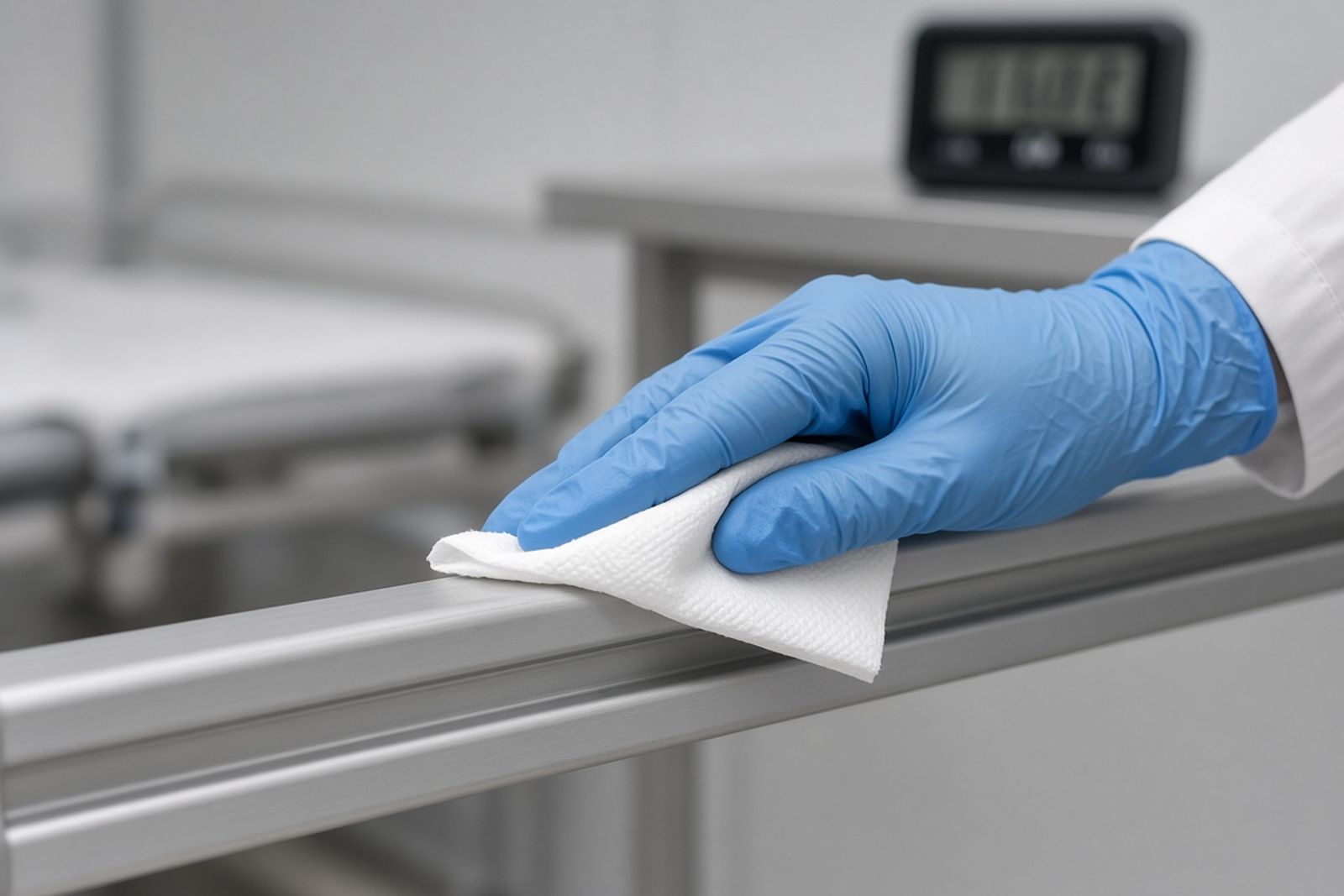
The product label answers this question. It states the dilution, if any, the application method, and the contact time needed to achieve the claimed kill. Using a stronger mix than the label directs does not make a product work better and can damage surfaces, irritate crews, and increase the chemical load going down the drain.
Pre-diluted products and pre-saturated wipes help here, because they remove the guesswork of mixing. Where concentrates are used, dispensing systems that meter the correct ratio are more reliable than eyeballing.
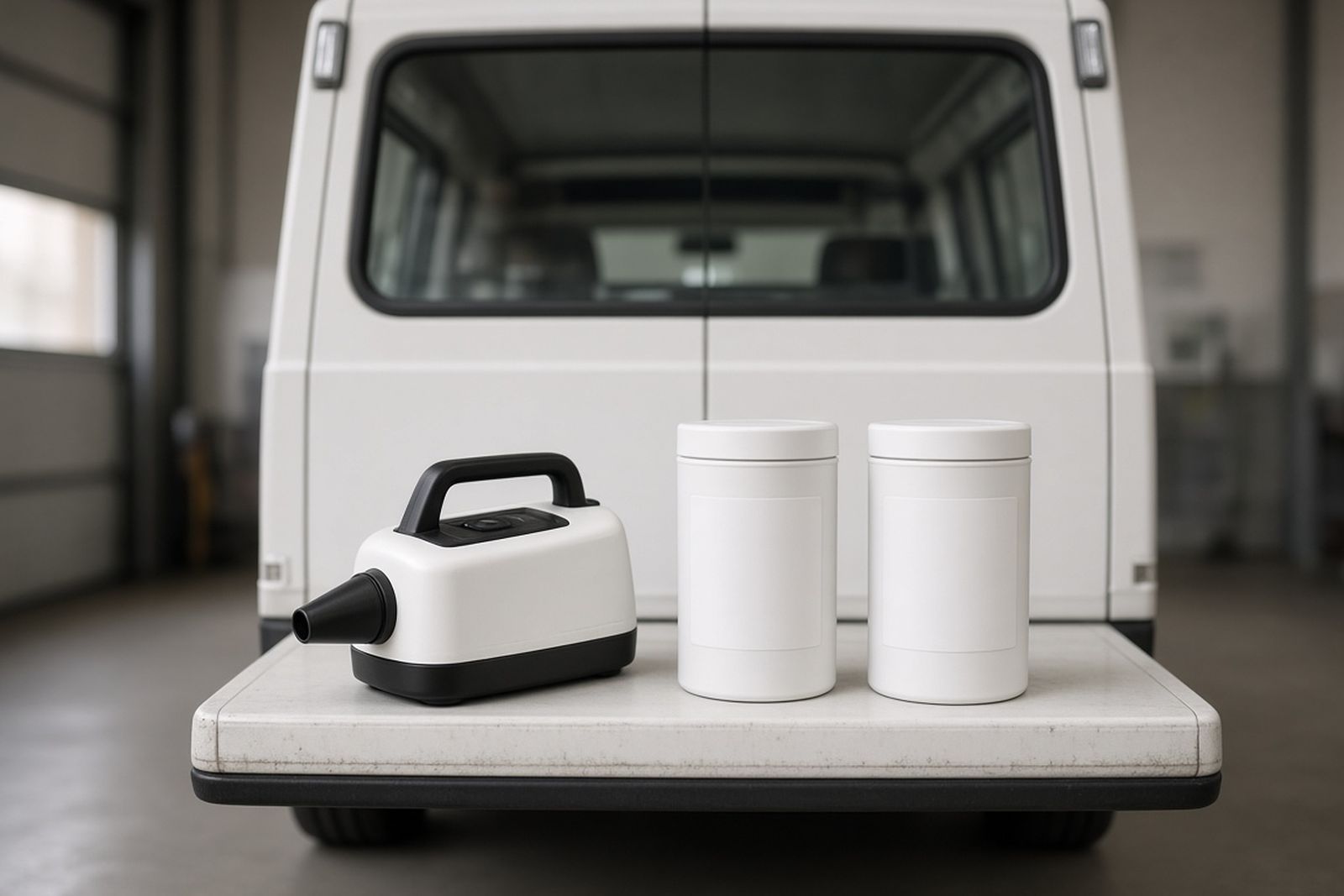
Fogging and misting deserve particular care. They can be useful in specific situations, but they place fine droplets throughout the compartment, including on electronics and in the air crews will breathe. They should never be a substitute for cleaning and wiping touch surfaces, and they should only be used with products labeled for that application method.
Cutting regulated medical waste without breaking rules
Regulated medical waste costs more to handle and often goes through energy-intensive treatment. When everything from a busy compartment goes into a red bag, including wrappers, clean packaging, and lightly used items, the volume grows quickly.
Good segregation starts at the point of use. Crews who know what qualifies as regulated waste under their state's rules can keep ordinary trash out of red bags, which reduces cost and environmental impact. At the same time, anything saturated or caked with blood or other potentially infectious material must go into the regulated stream.
Your agency's infection control officer and waste hauler are the best sources for what belongs where. Post a short, illustrated guide in each unit and at the station waste area. Clear guidance works better than asking tired crews to make judgment calls at the end of a shift.
Are single-use wipes or reusable cloths the better choice?
There is no universal answer. Single-use disinfectant wipes deliver a consistent amount of product and eliminate the risk of a contaminated cloth spreading organisms from one surface to another. They also generate a steady stream of waste.
Reusable microfiber cloths can reduce waste and pick up soil effectively, but only if they are laundered properly between uses and kept strictly separated by task. A cloth used on a stretcher and then on a cab steering wheel undoes the point of cleaning. Some disinfectants also bind to certain cloth fibers, reducing the amount that reaches the surface; check with the product manufacturer.
Many fleets use a hybrid approach: reusable cloths for the detergent cleaning step at the station, where laundering is available, and single-use wipes for between-call disinfection in the field.
Idling, exhaust, and bay air
It is common to see an ambulance idling in a bay or at a hospital ramp while the crew wipes down the compartment, often to keep the climate control and ventilation running. That habit has two environmental costs: exhaust inside or near an enclosed bay, and fuel burned for no transport purpose.
Ventilation during decon is genuinely important, because disinfectant vapors accumulate in a closed box. But there are other ways to get fresh air. Opening the rear and side doors, using bay exhaust fans, or plugging into shore power where stations have it can keep air moving without running the engine.
If a unit must idle, make sure station exhaust capture systems are connected and working, and keep the bay doors open. Crews should not be cleaning inside a compartment while exhaust is drifting into it.
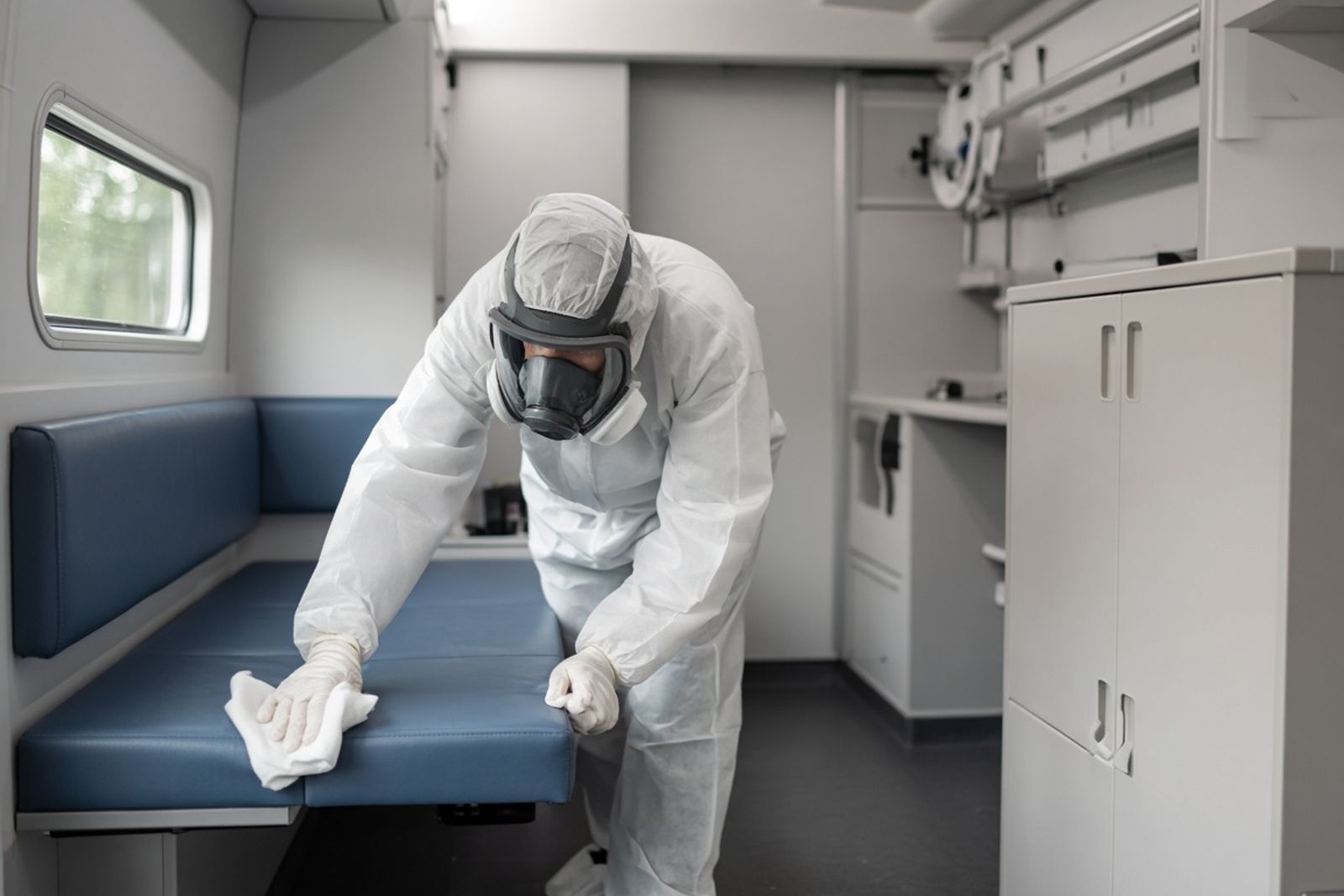
Air quality matters to the people doing the work as much as to the environment. A crew member who spends twenty minutes wiping a compartment in a closed bay breathes whatever the products release. Choosing lower-irritant products where they meet your disinfection needs, and moving air through the space, protects both.
Product compatibility is an environmental issue too
Harsh or incompatible products crack vinyl, cloud plastics, corrode metal fittings, and damage monitor screens. Damaged surfaces are harder to clean, trap contamination in cracks, and eventually need to be replaced. Every replaced stretcher mattress, bench cushion, or cabinet door is material headed to a landfill and a new one that had to be manufactured.
Choosing products that equipment makers approve for their surfaces extends the working life of the interior. Ask vendors for compatibility information, and keep a list of which products may be used on which items, especially electronics.
Rotating in a gentler cleaning step for routine soil, and saving more aggressive chemistry for situations that require it, also helps reduce wear.
Redesigning a fleet routine, step by step
Problems usually surface during a facilities review or a look at the invoices: a bay drain that turns out to feed the storm system while crews rinse stretchers over it, or regulated waste volume that keeps climbing. When that happens, the fixes tend to follow the same order.
Keep infection control audits running throughout, so you can show the changes did not weaken cleaning quality, and revise the waste guide whenever crews point out items that confused them.
- Stop any rinsing over storm-connected drains immediately and move equipment washing to a utility sink on a sanitary line
- Switch interior decon to a spray-and-wipe method with pre-diluted product, and print the contact time on a laminated card in each unit
- Work with the waste hauler on a simple visual guide showing what goes in red bags and what does not, then train crews and have supervisors check bins weekly for the first month
- Review waste volumes, product purchasing, and interior damage reports over the following months
Contractor questions, and where to start in-house
If you use an outside company for deep decontamination, its environmental habits become part of your footprint. A capable contractor should be able to answer these questions without hesitation.
A contractor that treats these questions as a nuisance may be cutting corners elsewhere too.
If you are looking for a starting point inside your own fleet, focus on three things. Confirm where every bay drain goes and stop any discharge to storm systems. Standardize on pre-diluted or metered products so crews use the labeled amount. Improve waste segregation with simple visual guidance.
Those steps cost little, protect local waterways, reduce chemical exposure for crews, and often lower waste bills. They also reinforce the habits that make decontamination effective in the first place: remove the soil, apply the right product correctly, and let it do its work.
- Where will any water used during the job be discharged?
- Which products will you use, and are they compatible with our interiors and electronics?
- Do you use fogging, and if so, when and with what product?
- How do you segregate regulated medical waste from ordinary trash?
- Who hauls your waste, and can you provide disposal documentation?
- What do you do with used PPE and cleaning materials?