Short answer
Start by listing every waste stream your decon process creates, then research each one separately. States largely regulate medical waste, so your state environmental or health agency is the key source for blood-soaked materials and sharps. OSHA sets container and labeling rules for workers. EPA's hazardous waste rules can apply to some chemicals and pharmaceuticals. Your wastewater utility governs decon bay drains, and DOT rules apply to transport.
Why waste is the hard part
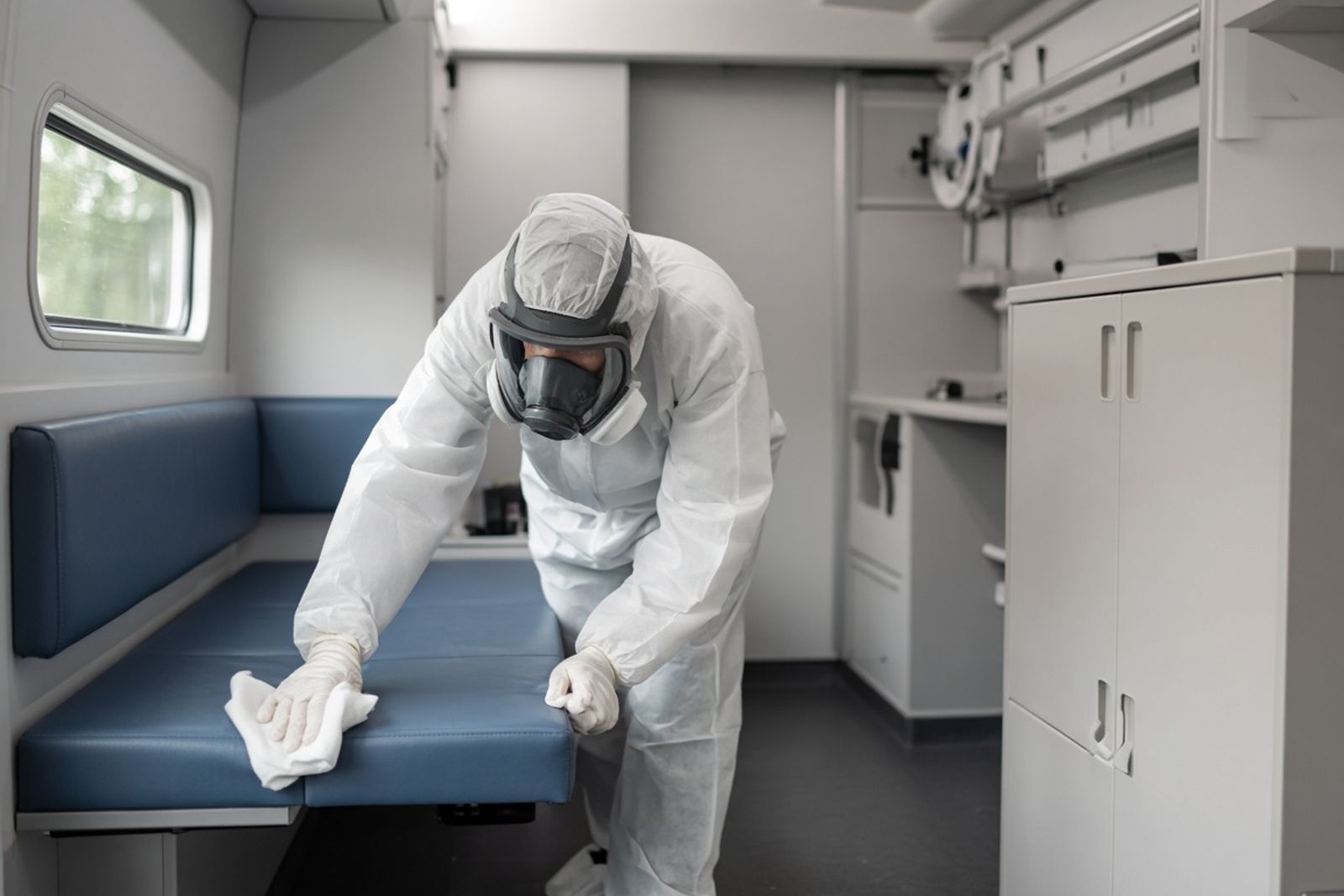
Cleaning a patient compartment produces more kinds of waste than most people expect. A single terminal clean after a trauma transport can generate used needles, a blood-saturated cot mattress, soiled straps, contaminated gloves and gowns, disinfectant wipes, and rinse water from the floor.
Each of those items may fall under a different rule, set by a different agency. Some are regulated medical waste. Some are ordinary trash. Some could be hazardous waste. Some go down a drain and become a wastewater question.
Many agencies have also inherited informal habits, such as leaving waste at the receiving hospital or putting everything in a red bag just in case. Those habits may work, may cost more than necessary, or may create problems no one has noticed. Researching the rules for each waste stream is the only way to know.
Every waste stream a decon produces
Begin your research by making a complete list. Walk through a terminal clean with a crew and write down every item that is discarded, along with how contaminated it usually is.
Once you have the list, you can research each stream on its own rather than trying to find a single rule for all of them.
Include vehicles beyond ambulances if your agency cleans them. A patrol car rear seat or a fire engine cab after an extrication can produce the same categories of waste in smaller amounts, and the same rules apply once it is generated.
- Sharps, including needles found during the sharps sweep and broken glass ampules
- Items saturated or dripping with blood, such as dressings, linens, and damaged soft goods
- Items with small amounts of dried blood or other body fluids
- Used PPE from crews and decon technicians
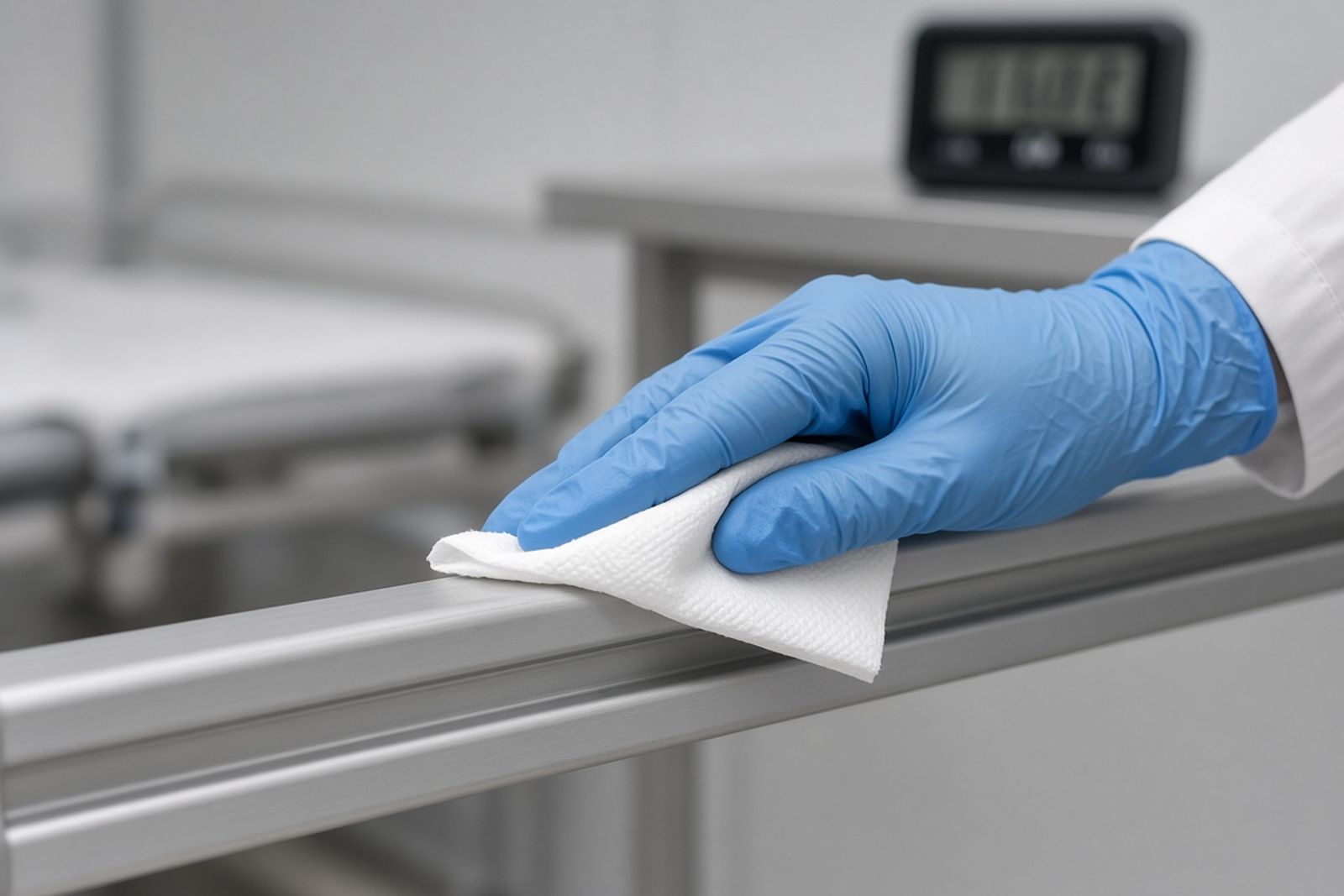
- Disinfectant wipes, mop heads, and cleaning cloths
- Leftover or expired medications and partially used vials
- Empty disinfectant containers and unused concentrate
- Rinse water and runoff from the decon bay floor
- Damaged equipment such as cables, sensors, or electronics
Does EPA regulate medical waste from ambulances?
Mostly no, which surprises many people given the title of most waste guidance. EPA ran a temporary federal medical waste tracking program decades ago, but it expired, and today the agency's medical waste page explains that states are primarily responsible for regulating medical waste.
EPA does still matter in two ways. First, its hazardous waste rules under the Resource Conservation and Recovery Act can apply to certain chemicals and pharmaceuticals, including some disinfectant concentrates if discarded unused, and many medications. EPA has a specific set of management standards for hazardous waste pharmaceuticals generated by healthcare facilities, which may apply to some EMS operations.
Second, EPA regulates the disinfectants themselves under federal pesticide law, and product labels often include disposal directions for containers and unused product. Follow them.
For blood-soaked materials and sharps, though, your state is the main authority.
Using EPA resources in practice
A practical way to use EPA resources is to check each disinfectant's label and safety data sheet for disposal statements, then ask your state whether any of your concentrates would be treated as hazardous waste if they expired or were spilled. Most ready-to-use products are not an issue in small quantities, but it is better to know.
Finding your state's medical waste rules
Every state handles medical waste a little differently. The program may sit in the environmental agency, the health department, or both. The terms also vary: regulated medical waste, infectious waste, biohazardous waste, and special waste are all used.
Search your state agency's website for its medical waste regulations, and look for guidance documents written for small generators. Then call the program staff. They can tell you how your agency is classified, whether each station counts as a separate generator, and which of your waste streams are regulated.
Ask specific questions and write down the answers with the date and the name of the person who answered. If the guidance is unclear, ask for it in writing.
- How does the state define regulated medical waste, and does a blood-saturated mattress qualify?
- Are items with small amounts of dried blood treated as ordinary solid waste?
- What container, labeling, and storage requirements apply at a station?
- How long can regulated waste be stored before pickup?
- Must we use a licensed or registered hauler, and what records do we keep?
- Are there specific rules for sharps, and for sharps found during decon?
OSHA container and handling rules
OSHA's Bloodborne Pathogens standard covers how workers handle regulated waste on the job, as OSHA defines it. It addresses sharps containers that are closable, puncture resistant, leakproof, and labeled or color coded, and requires that other regulated waste be placed in containers that are closable, constructed to contain their contents, and labeled or color coded.
Those requirements protect your crews and decon technicians while waste is in your stations and vehicles. They work alongside state rules, which govern what happens once waste leaves your custody. Where OSHA's definition and your state's definition differ, you may need to meet both.
Make sure your exposure control plan describes how decon waste is handled, contained, and stored, and that training covers it.
Is it acceptable to leave waste at the receiving hospital?
Many EMS agencies dispose of waste generated during patient care at the receiving hospital, and some restock supplies there. This can be a practical and legitimate arrangement, but it should rest on a clear agreement rather than habit.
Ask the hospital whether it accepts EMS waste, which types, and under what conditions. Terminal clean waste, such as a discarded mattress or large volumes of soiled soft goods, may be outside what the hospital is willing or permitted to accept. Waste generated at your station after the call is usually your responsibility.
Get the arrangement in writing, and confirm how it fits with your state's generator rules. If the hospital changes its policy, you need to know before crews start leaving waste somewhere it is no longer accepted.
Transport is another consideration. If your agency ever carries regulated medical waste on public roads, for example moving bagged waste from an outlying station to a central collection point, DOT hazardous materials rules may apply to packaging and labeling. Your hauler or state program can tell you whether that kind of movement is allowed and how to do it properly.
Decon bay drains and leftover medications
Water used to rinse floors and equipment often goes down a floor drain. Your wastewater utility decides what can be discharged, and some prohibit or limit blood, disinfectants, fuels, or oils. Stations may need connections to the sanitary sewer rather than storm drains, and some may need a separator. Call the utility and ask what it allows.
Leftover medications are a separate stream entirely. Controlled substances are governed by federal DEA rules for handling, wasting, and disposal, and many other drugs may be hazardous waste. Your medical director and pharmacy partner should define how medications are handled, and that procedure should stay separate from general decon waste.
Worked example: a fire department sorts its waste
This worked example is illustrative. A fire department with four stations runs ambulances out of two of them. After a trauma transport, crews discover that the cot mattress cover has split and the foam is saturated. They are unsure whether it goes in a red bag, the station dumpster, or back to the hospital.
The department's infection control officer researches each stream. The state health department explains that the saturated mattress is regulated medical waste under state rules, while wipes with small amounts of dried blood can go in ordinary trash if bagged. The officer learns that each ambulance station is a separate generator and must have a hauler agreement.
The receiving hospital confirms in writing that it accepts sharps containers and patient care waste, but not mattresses or other terminal clean waste. The wastewater utility confirms that the decon bay floor drains may go to the sanitary sewer, but not concentrated disinfectant. The medical director confirms that medications are handled under a separate procedure.
The officer updates the decon procedure with a short waste table, posts it in both bays, and trains every shift.
Keeping waste procedures current
Waste rules change less often than infection control guidance, but they do change, as do hospital policies and hauler contracts. Review your waste research at least once a year and whenever you add stations, vehicles, products, or a new decon provider.
Keep your notes, agency correspondence, hauler agreements, and disposal records together. They show that your procedures are based on actual requirements, not assumptions.
Rules vary by state and county; verify with the local authority. Your state medical waste program, wastewater utility, receiving hospitals, medical director, and waste hauler are the essential contacts for this research.
Review disposal invoices and manifests occasionally as well. A sudden jump in red bag volume may mean crews are over-classifying ordinary trash, which adds cost, while a drop may mean regulated waste is ending up in the dumpster. Either pattern is worth a conversation at shift briefings.