Short answer
Compare emergency vehicle decon bids by normalizing scope before looking at price. Check whether each covers the full compartment, portable equipment, and soft goods; which registered products and contact times are used; how sharps and waste are handled; realistic out-of-service time; and what records you receive. A low bid often omits steps. A high bid should explain what extra work it includes.
Why quotes differ, and what a thin one leaves behind
Fleet managers are often surprised when two providers look at the same ambulance, fire apparatus cab, or patrol car and return very different numbers. Sometimes one provider is simply more efficient. More often, the two bids describe different jobs.
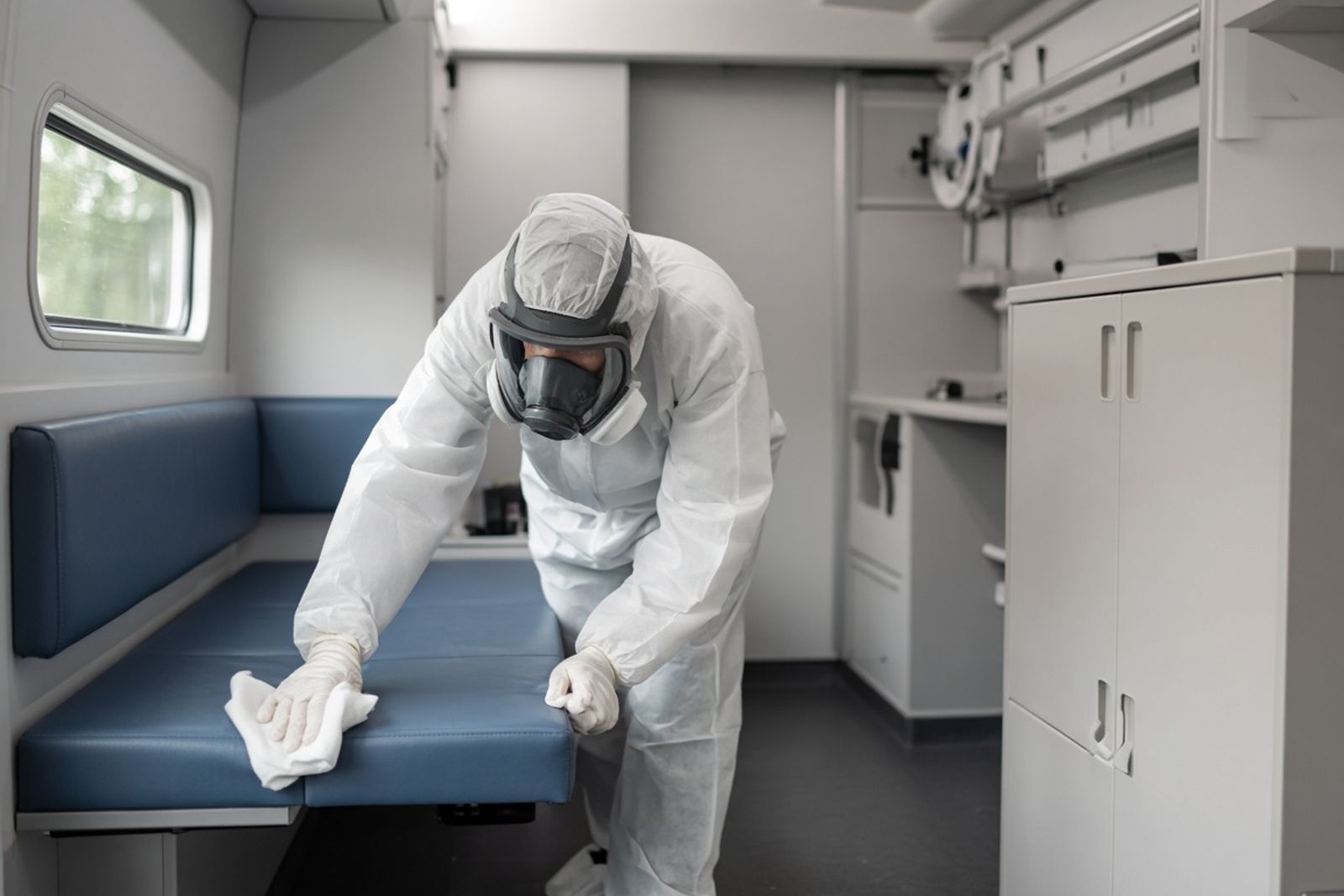
One quote may assume a surface wipe of visible contamination and a quick return to service. Another may include pulling the cot mattress and bench cushions, removing cabinet contents, cleaning monitors and cables, a structured sharps sweep, full wet contact times on every surface, and a written record. Both are called decon, but only one is a terminal clean.
Your job is to turn each bid into a list of specific tasks so you can see where the difference comes from. Only then does price comparison mean anything.
Pricing structure adds another layer. Some providers charge per unit, some by the hour, some by contamination level, and some combine a base fee with separate charges for replacements, waste, travel, or after-hours calls. Two bids that look similar on the first page can end up far apart once those extras are added.
It can, and research shows how much depends on the protocol rather than the intention. In a 2015 tracer study of emergency medical response, Valdez and colleagues found that existing decontamination left 26 of 48 sites tracer-positive. When an added hydrogen-peroxide wipe protocol was used, 19 of 48 sites remained tracer-positive.
Those results suggest that even well-meaning cleaning misses a lot, and that a more deliberate process makes a measurable difference. A bid that is low because it skips steps is not saving you money if the unit goes back into service still contaminated.
Time pressure is a related factor. A Danish study of 80 ambulances, published in BMC Infectious Diseases in 2018, found that crews adhered to thorough-cleaning guidelines only 35% of the time, though between-patient moderate cleaning adherence was 100%. Thorough cleaning is the step most likely to be squeezed, which is often exactly what you are paying an outside provider to do properly.
Normalizing scope across bids
Send every provider the same written request describing your vehicle types, typical contamination events, and what you expect a terminal clean to include. Ask them to respond line by line rather than with a single total.
When bids come back, build a simple comparison table. Mark each item as included, excluded, or billed separately. The gaps usually explain most of the price difference.
Include at least one realistic scenario in your request, such as a unit returning after a trauma transport with blood on the floor, bench seat, and cot. Asking each provider to describe exactly what they would do for that scenario reveals differences a generic price sheet hides.
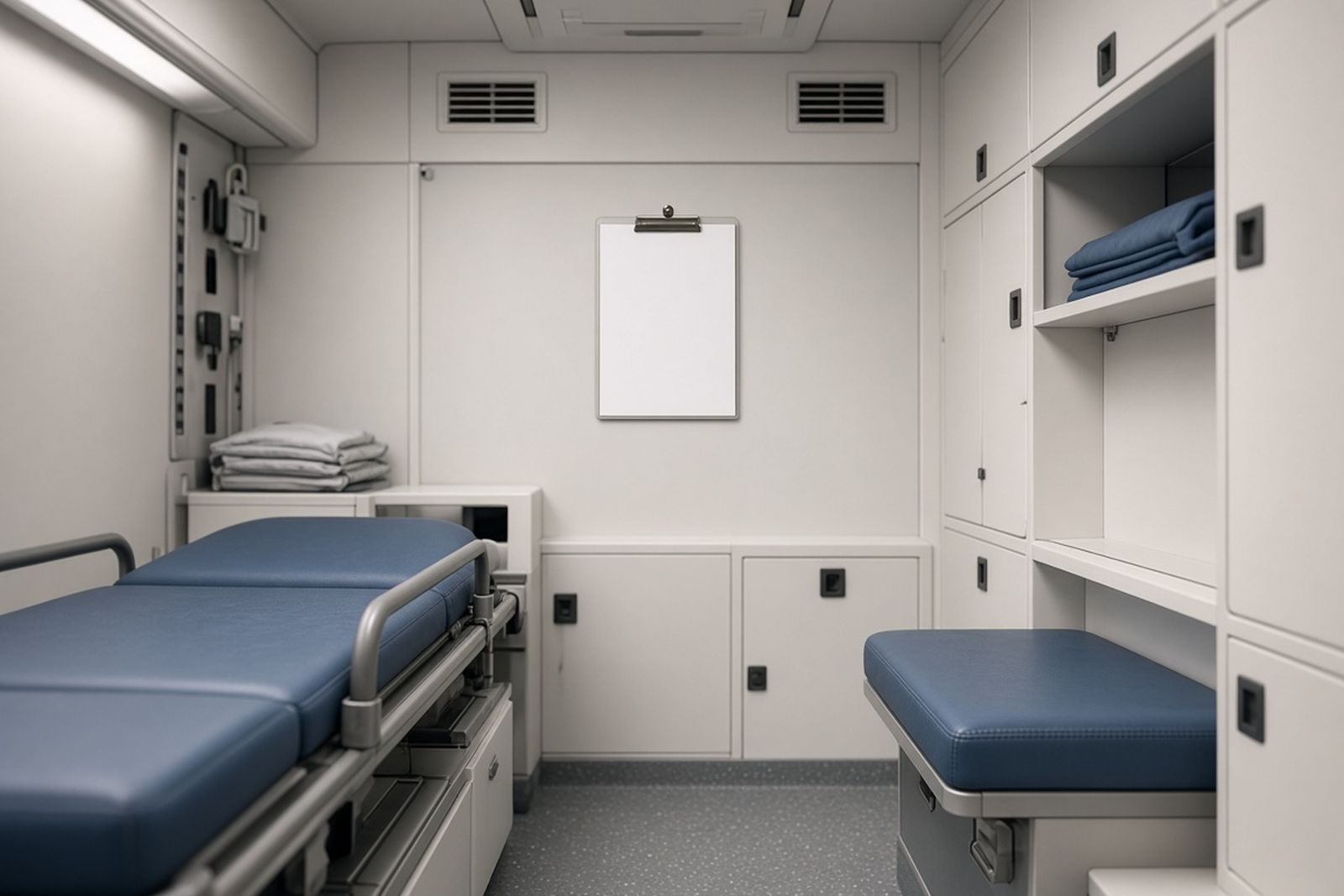
- Patient compartment surfaces, including ceiling, walls, cabinets inside and out, and floor channels
- Cab surfaces, especially where crews touch controls with contaminated gloves
- Cot, mattress, straps, and mounting hardware
- Bench seats, captain's chair, and seat seams
- Portable equipment such as monitors, cables, suction units, and stair chairs
- Sharps sweep with documentation of anything found
- Soft goods inspection and replacement decisions
- Waste packaging and disposal
- Written decon record for each unit
Products and contact time: what each bid should name
Ask each provider to name the disinfectants they plan to use, with EPA registration numbers and the labeled contact time for the organisms you care about. A provider who cannot answer that question has not planned the job carefully.
Contact time is where cheaper bids most often cut corners, because it is invisible afterward. A surface sprayed and wiped dry in seconds looks exactly like one that stayed wet for the full labeled time. Ask how the provider ensures dwell time on vertical surfaces and ceilings, where product runs off quickly, and whether they reapply.
Also ask about compatibility. Some products degrade vinyl upholstery, plastic cabinet faces, or screen coatings over time. A slightly more expensive product that protects your interior can save replacement costs later. Your infection control officer should review the product list before you sign.
How do soft goods and equipment affect the final cost?
Soft goods are the biggest source of surprise charges. A mattress with a torn cover, a bench cushion with a split seam, or saturated straps may need to be replaced rather than cleaned. One bid may include a replacement allowance; another may bill replacements at cost plus a handling fee; a third may not mention replacements at all.
Ask each provider how they decide whether to clean or replace an item, whether they will photograph damaged items before discarding them, and what approval they need from you first. Set an approval threshold in writing so you are not surprised on the invoice.
Portable equipment has a similar issue. Some providers clean monitors and cables as part of the scope; others expect your crews to handle it. Make sure the bids treat this consistently.
Turnaround and out-of-service time
Every hour a unit is out of service has a real cost to your agency, whether that means paying for a reserve unit, moving crews between stations, or accepting longer response coverage gaps. That cost belongs in your comparison even though it does not appear on the bid.
Ask each provider for a realistic timeline for a routine terminal clean and for a gross contamination event, and whether they come to your station or require units to be delivered. A provider who works on site may cost more per job but return units faster.
Be cautious with a turnaround estimate that seems too short. If a provider promises to finish a full terminal clean in far less time than others, ask how they fit full contact times, a sharps sweep, and equipment cleaning into that window.
Consider your peak periods, too. A provider who can handle one unit a week may struggle when several units are contaminated on the same night. Ask how many units they can process at once, whether they have backup technicians, and how they prioritize when multiple agencies call at the same time.
Two patrol car bids, compared line by line
Take, as an illustration, a mid-sized police department that needs a contractor for patrol cars contaminated during arrests, such as a rear seat soiled with blood or vomit. It receives two bids, and one is substantially lower than the other.
The fleet supervisor lines them up item by item. The lower bid covers wiping the rear seat and floor with a general-purpose disinfectant. It does not mention the partition, door handles, seat belts, the gap under the molded seat, or a sharps search. It gives no contact time and provides a one-line receipt as documentation.
The higher bid removes the molded rear seat where possible, searches for needles and other sharps, cleans the partition, door interiors, seat belts, and floor, uses a registered disinfectant with a stated contact time, and provides a record listing the areas cleaned, products used, and anything found. It also offers on-site service at the department's garage.
When the supervisor adds the cost of moving cars to the lower bidder's shop and back, the gap narrows. Given the difference in scope and documentation, the department chooses the higher bid and asks for a quarterly review.
Red flags, and what to request before you sign
A low price is not automatically a problem. Some providers have efficient processes or lower overhead. The concern is when the price is low because the scope is thin, the protections are weak, or the paperwork is missing.
If you see several of these signs in one bid, ask for a detailed walk-through of how they would handle one of your units, and consider a supervised trial before signing.
Once you narrow the field, ask the finalists for a sample decon record, references from other EMS, fire, or law enforcement fleets, proof of insurance, and a summary of how their technicians are trained and protected. A provider comfortable with scrutiny will usually offer these without being asked.
Write the agreed scope, products, approval thresholds, turnaround expectations, and record format into the contract. That makes future invoices easy to check against what you agreed.
Public agencies may also have procurement rules that govern how bids are solicited, evaluated, and awarded, so involve your purchasing office early.
Plan to revisit the comparison after the first few months. Pull a handful of decon records, compare them with the agreed scope, and ask crews whether returned units look and smell properly cleaned. That review tells you whether the price you accepted is buying the service you expected.
- A single lump-sum price with no task breakdown
- No named products, registration numbers, or contact times
- No mention of sharps, soft goods, or portable equipment
- Turnaround that seems too fast for a full terminal clean
- No sample decon record
- Vague answers about technician training and protective equipment
- Reluctance to let your infection control officer observe