Emergency Vehicle Decontamination: Regulations
How to identify the worker-safety, waste, transport, environmental, and local rules that may apply to emergency vehicle decontamination. Confirm jurisdiction-specific requirements with the issuing authority.
Rule posts help agencies see which rules touch vehicle cleaning and who enforces them. Articles explain how OSHA's bloodborne disease standard shapes exposure control plans, protective gear, and training for crews who clean units. They also explain how EPA registration applies to the disinfectants on your approved list. Other posts describe how state EMS offices look at ambulance cleanliness during inspections. They cover how state medical waste programs sort dirty linens and pads. They also show where fire and police agencies fit when their vehicles fall outside EMS standards. Posts also explain how to look up waste rules when your district crosses county lines.
Get an email reply about emergency vehicle decontamination
Send a short message to the follow-up inbox. A coordinator can reply by email. This form does not send emergency help; call 911 first if anyone is in danger.
Following the rules is an ongoing job for a fleet, not a one-time event. Gaps usually show up during an inspection, an audit, or after a crew exposure. These posts help infection control officers match each rule to an agency policy. They show how to find the official source for state rules and keep records in order. Rules differ by state and county. So the articles urge you to check with the agency in charge, not rely on a vendor summary or a nearby department's habits. Keep dated notes of those talks in your exposure control file. That makes your position stronger when questions come up.
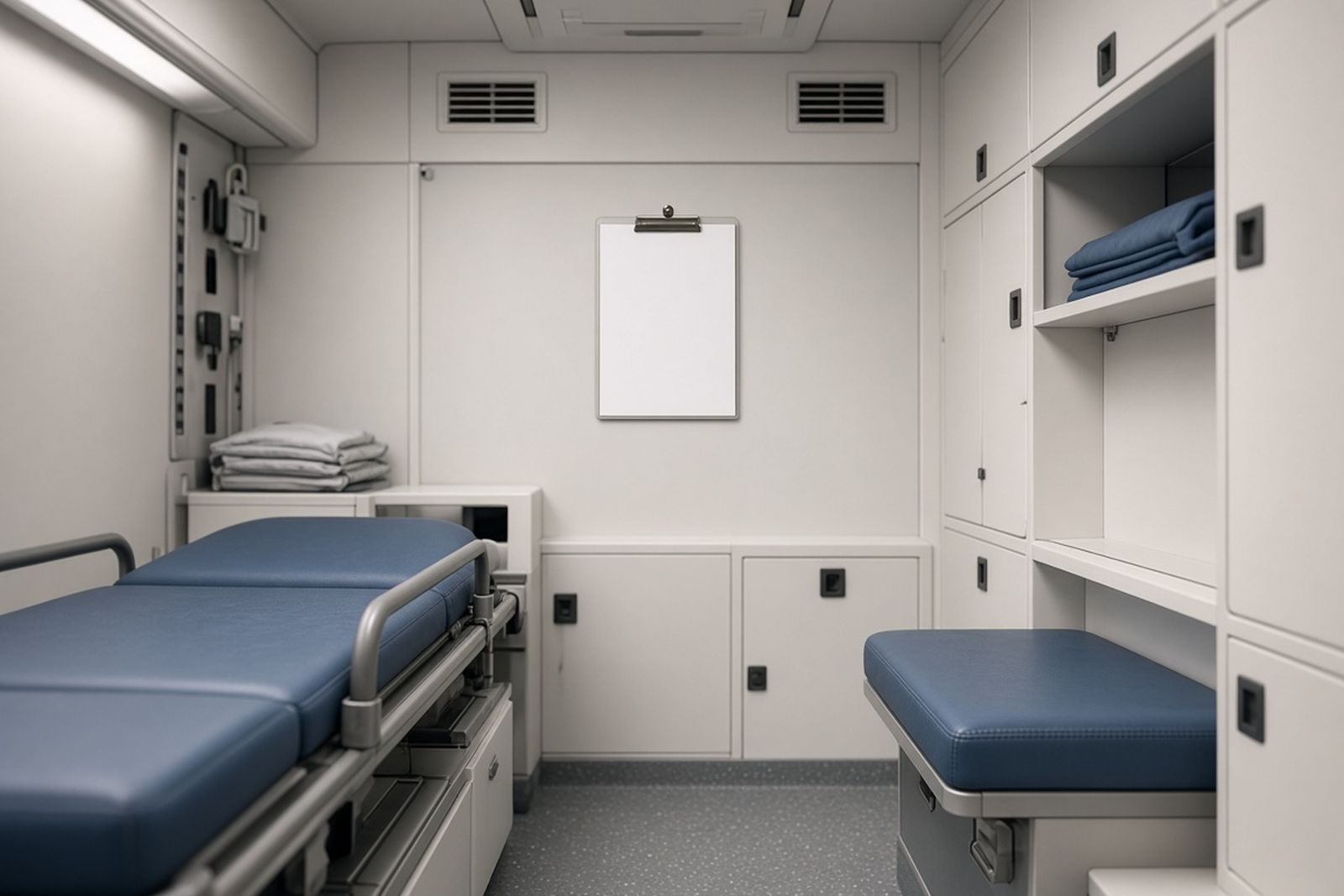
OSHA Regulations and Emergency Vehicle Decontamination
How OSHA rules on blood, gear and chemicals shape the cleaning of ambulances and fire trucks. It also shows where state plans change who is covered.
OSHA does not have a rule just for cleaning vehicles. But several general rules apply whenever workers clean soiled ambulances, fire trucks or patrol cars. The Bloodborne Pathogens standard drives written plans, training, vaccines and cleaning schedules. Other rules cover protective gear, breathing protection and chemical safety. Public agencies may fall under a state plan instead of federal OSHA. So confirm which regulator covers your fleet.
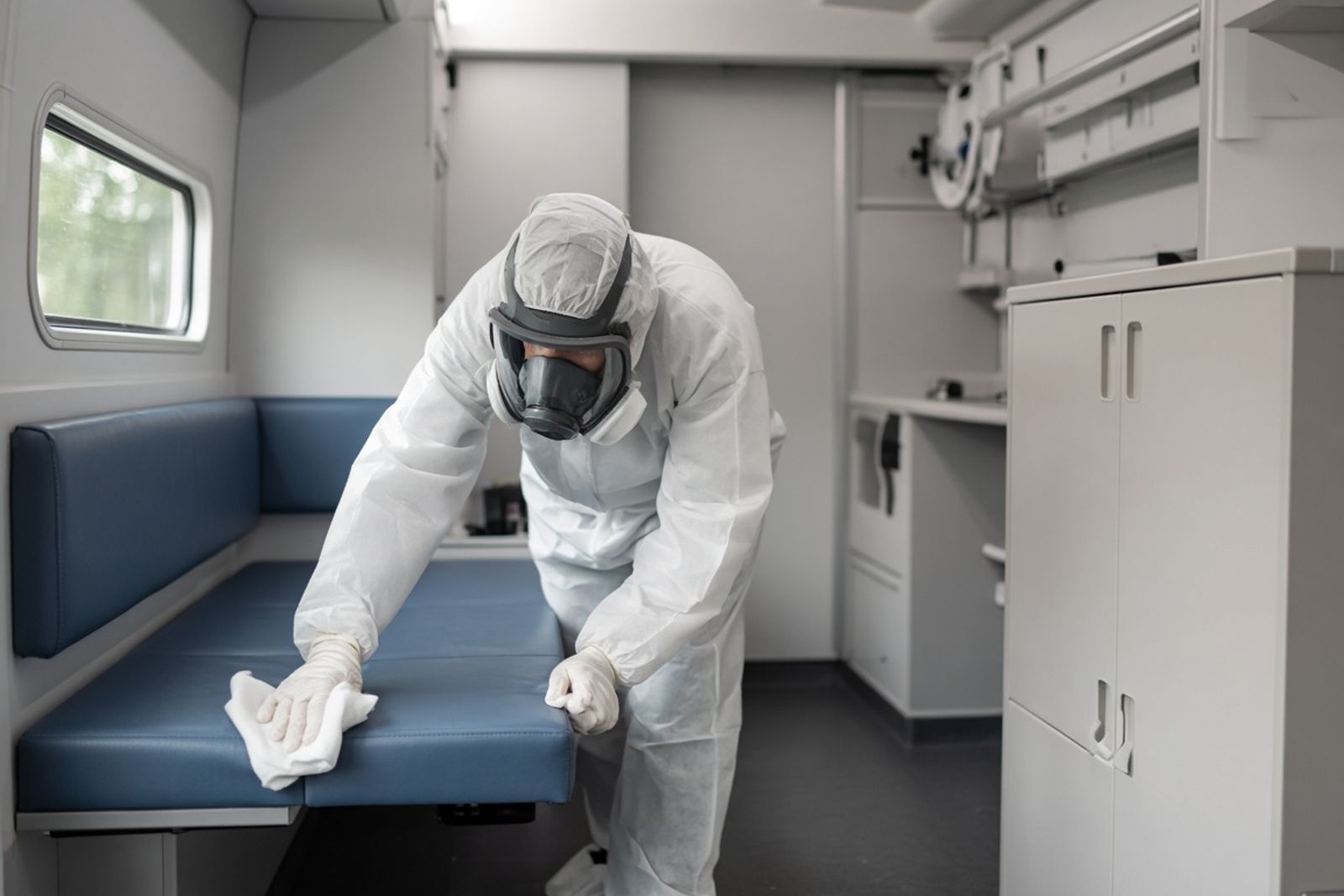
Which Federal, State, and Local Rules Apply to Emergency Vehicle Decontamination?
Ambulance and fire truck cleanup falls under federal worker safety and product rules, state EMS licenses and local protocols. Here is how to map each layer.
Emergency vehicle decontamination (decon) is shaped by several layers of rules. At the federal level, OSHA or a state plan covers worker safety. EPA labels control how disinfectants are used. Notice rules protect responders who may have been exposed. DOT rules apply when medical waste is shipped. States add EMS licenses, vehicle checks and medical waste rules. Locally, medical directors, health departments and sewer utilities set protocols. Map each layer for your own agency.
How to Research Waste Rules for Emergency Vehicle Decontamination
Sharps, soaked soft goods, used PPE, leftover medications, and decon bay runoff each follow different rules. Here is how fleets can research every waste stream.
Start by listing every waste stream your decon process creates, then research each one separately. States largely regulate medical waste, so your state environmental or health agency is the key source for blood-soaked materials and sharps. OSHA sets container and labeling rules for workers. EPA's hazardous waste rules can apply to some chemicals and pharmaceuticals. Your wastewater utility governs decon bay drains, and DOT rules apply to transport.
Sourced figures on regulations
- 55%
Reported disinfection compliance was 55% for stretchers and only 4.1% to 47% for stethoscopes in EMS studies reviewed.
Read with care: Ranges pool heterogeneous study designs and countries.
Source: Antimicrobial Resistance & Infection Control (PMC) (2025)16 studies (8 USA), published 2010-2024
- 56%
A tracer study found a surrogate virus spread to 56% of ambulance sites after a call, and current decontamination practices reduced that only to 54%.
Read with care: Tracer study, not a real pathogen; hydrogen peroxide wipe protocol reduced spread to 40%.
Source: New Jersey Department of Health (research abstract compilation) (2015)Fire-based EMS units, 48 sampled sites, bacteriophage tracer
- 46.08%
In a Saudi hospital study, 46.08% of 204 ambulance swab samples grew bacteria, but no growth was detected after standard cleaning and disinfection.
Read with care: Only two vehicles sampled; MRSA was not detected.
Source: Pathogens (PMC) (2025)Two ambulances at one Saudi hospital, April-May 2025
These figures are public research and agency data, not this network's own job records. Keep each number with its population, year and limits; none of them predicts cost, timing or outcome at a specific property.
What research has found
Findings from published studies of people and properties in situations like this one. They describe what researchers observed in a specific group; they are not predictions for your case.
The intervention significantly reduced measured viral loads.
All six surface types were contaminated before routine cleaning.
Regulations: common questions
Does OSHA require a written plan for cleaning emergency vehicles?
Some workers can reasonably expect contact with blood or other body fluids that can carry disease. Their employers usually need a written exposure control plan under OSHA's bloodborne disease standard. That plan usually covers cleaning work surfaces and equipment, including vehicles. Review it with your safety officer or your state job safety agency.
Do disinfectants used in ambulances need to be registered with the EPA?
Products sold to kill germs on surfaces usually must carry EPA registration. The label lists the germs they work on and the contact times that back up those claims. Your medical director or infection control officer should pick registered products that suit your needs. Check product claims right on the label. Do not rely on sales materials.
Who inspects ambulance cleanliness in my state?
In many states, the EMS office that licenses ambulance services checks vehicle condition during inspections. That includes how clean the vehicles are. Some regions add oversight through medical directors or regional councils. Rules differ, so contact your state EMS office. Ask for its current vehicle standards and inspection checklist.
Do state EMS rules apply to patrol cars and fire engines?
State EMS offices usually regulate licensed ambulances and sometimes other medical vehicles. They do not usually regulate patrol cars or fire engines. But worker safety and waste rules still apply to those vehicles when staff clean up blood or body fluids. Check with your state labor department and waste program about the rules for your police or fire fleet.
Which ambulance and fire truck cleaning logs should be ready for a state EMS or OSHA visit?
Have these on hand: your exposure control plan, crew training records, written cleaning steps, and safety data sheets for the disinfectants you stock. Inspectors often ask for a sample of cleaning logs for each unit. These show which rig was cleaned, when, by whom, and with what product. Waste hauler agreements and disposal records for used linens and needles may also come up. Filing these together by unit makes an inspection much easier.
Are there rules about where decon wash water can go?
Yes. Your local sewer utility usually sets them. Many utilities ban sending blood, disinfectants, or oils to storm drains. They may require a hookup to the sewer or a separator. Contact your utility before you design or change a wash area. Label drains so crews know which ones are safe to use.
Who decides which disinfectants our crews may use?
In most agencies, the medical director and infection control officer choose, working within agency policy. They look at each product's registration and label claims. They check that it is safe on vehicle materials and medical devices and safe for the crews who use it. They also check whether its contact time is realistic between calls. Some state EMS offices publish guidance that shapes the choice. Keep the approved list current, dated, and posted in every station.
Related community polls
Every count is a real visitor vote; nothing is seeded or padded. One vote per poll per device, and you can change your answer.
After a bloody transport, what usually decides whether your unit gets a full deep clean?
Who performs terminal cleans on your fleet most of the time?
More on emergency vehicle decontamination
Emergency Vehicle Decontamination services
Learn how deep cleans of ambulances, fire trucks, and police cars are planned. See needle sweeps, choices about soft items, and records by unit number.
Costs explained
What drives the price, published cost ranges, and how to read a written quote line by line.
Insurance and payment
Which policies may respond, how to document a claim, and what to do if coverage is denied.
Planning tools
Guided planners for fleet managers. Get cost ranges, vendor checks, insurance steps, first-day actions, waste sorting, and in-house versus vendor risk.
Community polls
See how other EMS, fire, and police fleets handle time pressure, new soft items, records, and product choices in their own bays.
Knowledge quiz
Test what you know about cabin hazards, who pulls a unit from service, containment, contact time, waste, and cleaning records before the next hard call.