Short answer
Emergency vehicle cleanup has changed a lot. It used to mean rinsing out the back of a rig and wiping the stretcher. Now it is a planned practice. Crews separate quick cleaning between calls from a full deep clean. They map every surface hands touch in the patient area and cab. They choose products that are safe for medical devices and replace soaked soft items. Crews are protected by written safety plans, and each unit's cleaning is logged. Research on germs left behind drove many of those changes.
Earlier eras: hose it out and restock
In earlier decades of emergency medical services, cleaning an ambulance often meant hosing out the floor, wiping the stretcher and restocking supplies. Interiors were simpler, with fewer electronics and less mounted equipment. The focus was on mess you could see, not on germs you could not.
Police and fire vehicles got even less attention. A patrol car's back seat might be wiped after someone under arrest bled or threw up. Fire truck jump seats were cleaned when they looked dirty. Formal rules for stopping germs in these vehicles were rare.
Crews did the best they could with what they had. But they did not clearly understand how germs spread in a moving vehicle. So many surfaces were never cleaned at all.
Soft items were handled loosely too. Blankets, pillows and cot covers were often shaken out and reused. Torn mattresses stayed in service long after fluid could seep into the foam. Replacing them was seen as a supply cost, not a choice about stopping germs.
Bloodborne pathogens become a workplace issue
As people learned more about diseases carried in blood, emergency services began to see body fluid exposure as a job risk. It was no longer seen as just part of the job. Employers were expected to protect workers through written safety plans, protective gear, training and vaccines.
That shift changed how vehicles were seen. A patient area was no longer just a workspace to tidy. It was a place where crews and future patients could be exposed. Gloves, eye protection and set cleaning steps became standard.
It also changed who was expected to clean and how. Agencies began writing policies. These described cleaning between calls, heavy cleaning after major exposures, and how soiled waste and linens should be handled.
Stations changed too. Many added their own cleaning rooms or wash bays with sinks, drains and storage for supplies. These were kept apart from kitchens and living areas. Setting aside a space for decontamination (decon) made it easier for crews to clean well. It also made it harder for germs to drift into areas where people eat and sleep.
Research reveals hidden contamination
Studies of ambulance surfaces played a major role in how vehicle decon changed. Researchers tested surfaces. They traced how germs spread during practice calls. They also measured how well existing cleaning worked.
Some of the most important field work used a harmless tracer to follow the spread of contamination through practice calls. Even improved wipe-down steps left gaps. This showed that making a process better is not the same as making it perfect.
Researchers also looked at how patterns change with the way a vehicle is used. Emergency calls bring speed, hands-on procedures and many people into a small space. All of these give germs more chances to spread. That thinking led agencies to match how often and how deeply they clean to how each vehicle is really used.
Other studies found bacteria on oxygen tanks, stethoscopes, monitors and stretcher surfaces. Taken together, the research pushed agencies to look past the stretcher and the floor. They began to think about every surface a gloved hand might touch.
Touch-point protocols take shape
As research showed how germs spread, agencies began making checklists. The lists named the surfaces to clean after each call and during a full deep clean. The idea was simple. If a surface is on the list, it gets cleaned. If it is not, it probably will not.
Modern touch-point lists often include the items below. Each agency adjusts them to its own vehicles and gear.
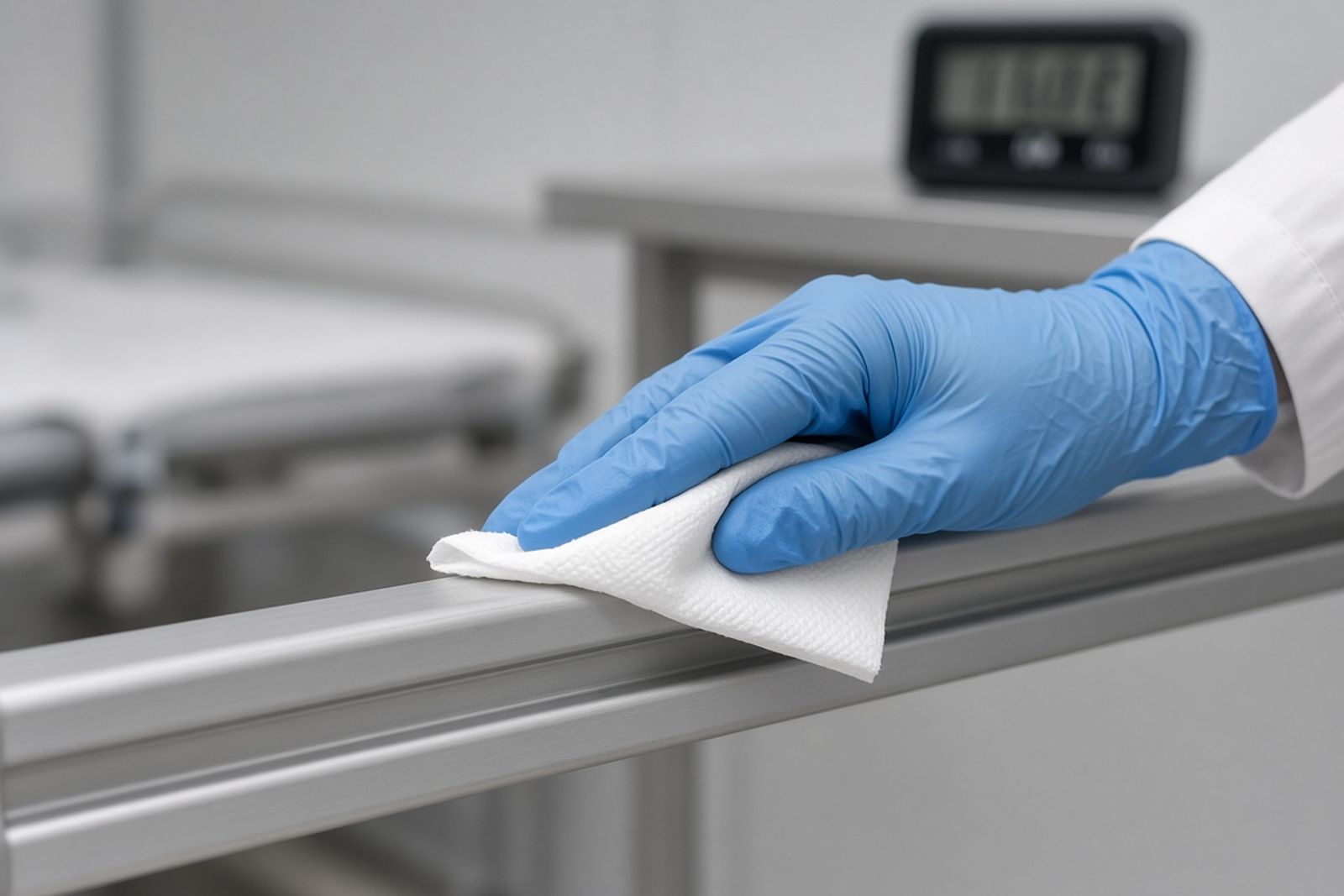
- Stretcher rails, handles, straps, buckles and mattress surfaces
- Cabinet latches, drawer pulls and overhead grab rails
- Heart monitor keypads, lead wires and blood pressure cuffs
- Suction units, oxygen regulators and tank surfaces
- Door handles inside and out, including rear and side doors
- Radio handsets, onboard computers, steering wheel and shifter
- Floor tracks, stretcher mounts and seat belts
Why did product compatibility become such a concern?
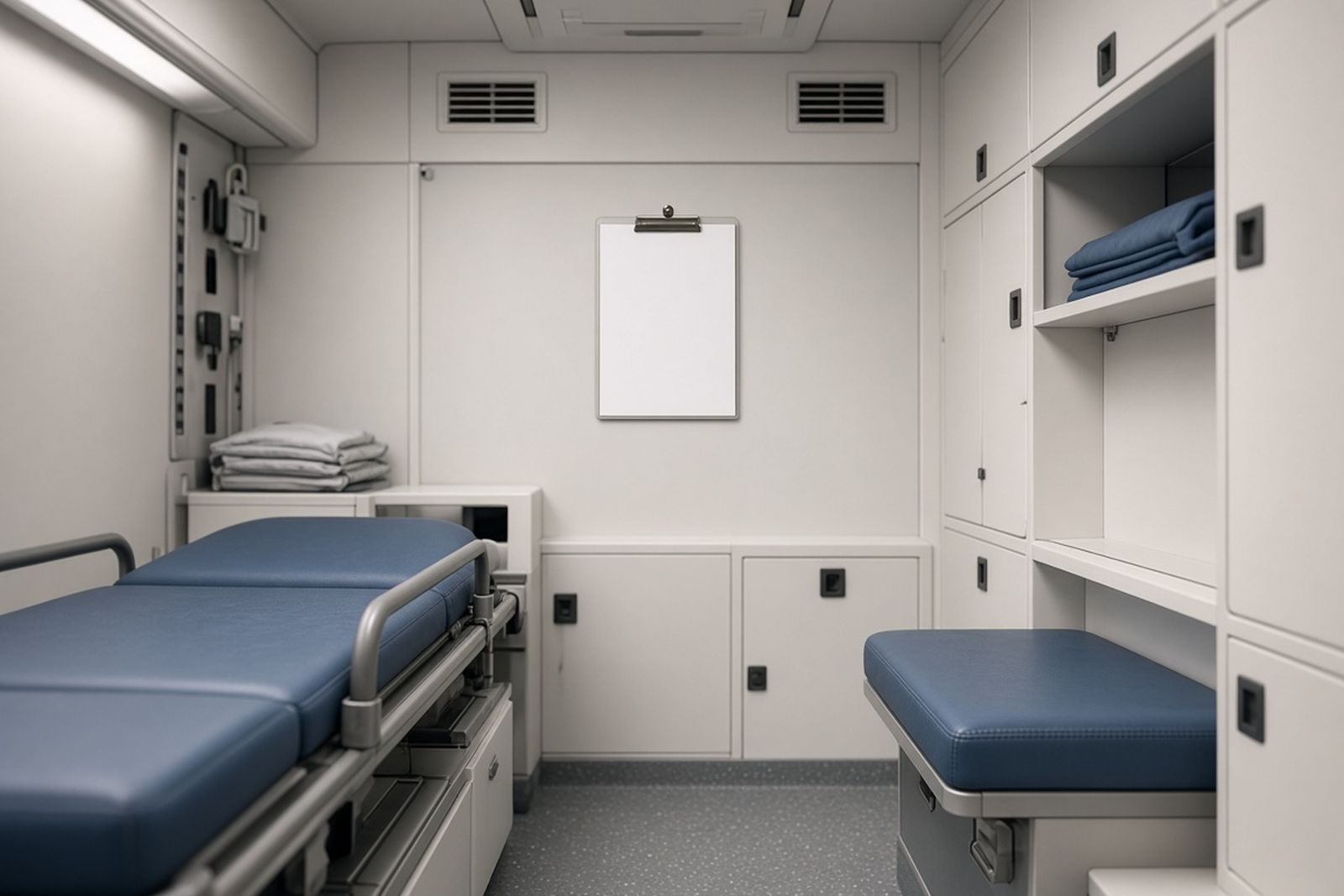
Ambulance interiors changed a great deal as medical technology improved. Heart monitors, breathing machines, powered stretchers, video scopes and computers now share space with vinyl seats and plastic panels. Each one can handle only certain disinfectants.
Agencies learned, sometimes through costly damage, that the strongest chemical is not always the right one. Some products clouded screens, cracked cases or wore down seats over time. Equipment makers began publishing advice on which products were safe. Decon steps started to point to that advice.
Ease of cleaning also became something to look for when buying. Fleet managers began asking makers about flooring without seams, sealed cabinet interiors and seat covers that hold up to repeated disinfecting. A vehicle that is easier to clean saves time on every decon over its working life. That math now shows up when agencies decide what to buy.
This shift made choosing products more careful. Agencies now look for disinfectants whose labels cover the germs they deal with. The products must also be safe for the devices in their fleet. Agencies train crews to follow label directions instead of making it up as they go.
Routine cleaning vs terminal decon
Early practice often treated every cleaning the same way. Over time, agencies began to separate two kinds. One is the quick cleaning between calls. The other is the full deep clean needed after heavy contamination, after possible high-risk germs, or on a set schedule.
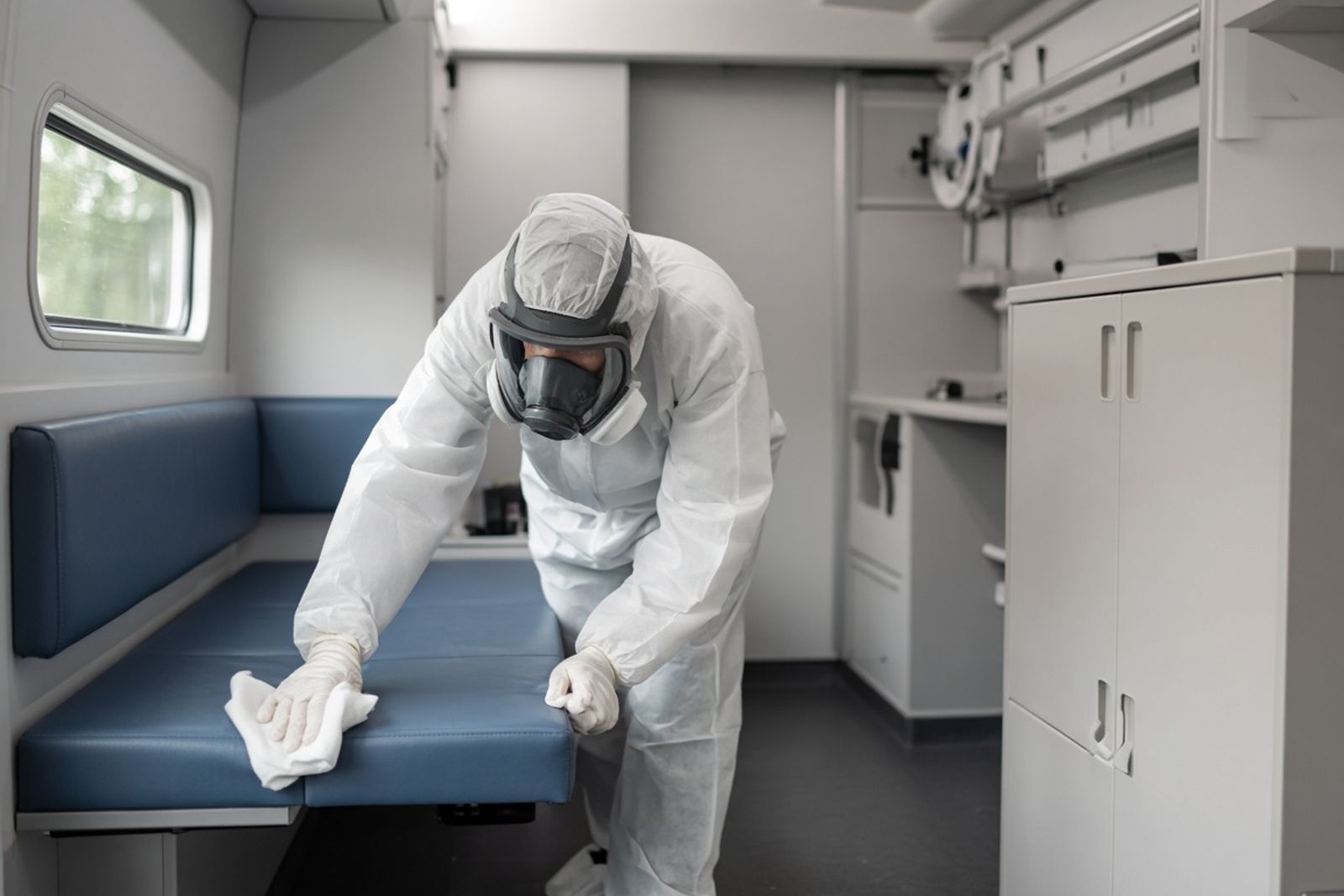
Cleaning between calls focuses on high-touch surfaces and dirt you can see, so the unit can go back into service. A full deep clean means removing gear and soft items. Crews clean every surface in the patient area and cab. They keep disinfectant wet for the time on the label, and they write down the work.
Scheduled deep cleans also caught on. Many agencies no longer wait for an obvious exposure. Instead, they rotate units through a full decon on a regular cycle. This catches buildup in places that quick cleaning misses, such as behind cabinets and under stretcher mounts. Pairing scheduled cleans with cleans after exposures gives a fleet two layers of protection.
Research supports doing it right. Farhadloo and colleagues reported in 2018 that germs were found on 52% of ambulance samples before disinfection and on 8% afterward. That kind of gain depends on a planned process, not a quick wipe.
The same call, then and now
To see how far practice has come, take one made-up call handled two ways. A patient with a heavily draining wound and a possible drug-resistant infection is taken to the hospital.
In an older approach, the crew might wipe the stretcher mattress, mop the floor and restock. The monitor cables, cabinet latches and cot straps might not be touched. No one would write down what was done.
In a modern approach, the supervisor pulls the unit for a full deep clean. The stretcher and soft items are removed. Straps are sent out for washing, and a torn mattress is replaced. The patient area and cab are cleaned first. Then they are disinfected with a product that is safe for the monitor and works against the likely germ. Workers follow a touch-point checklist and keep surfaces wet for the label time. They record the unit number, products and surfaces treated.
The modern way keeps the unit out of service longer. But the next crew and patient can trust it. And the agency has a record if questions come up.
Documentation and outside vendors
As steps grew more detailed, agencies began keeping decon logs. Those records help with follow-up after exposures, accreditation reviews and spotting trends. A log may show that one unit keeps needing heavy decon. Or it may show that soft items on one vehicle are rarely replaced. Either way, it can reveal problems that would otherwise go unnoticed.
Some agencies also began hiring outside companies for full deep cleans. This was most common after major exposures or when crews were stretched thin. These companies brought special training and gear. But agencies learned to require them to follow agency steps and give records for each unit.
Training moves from habit to written procedure
Training followed the same path. Decon was once passed along informally from senior crew members to new hires. Each station built its own habits. Many agencies now teach vehicle decon during orientation. They give written steps with photos of each touch point and refresh the training from time to time. Steady teaching cuts down on the gaps between shifts and stations that research found again and again.
Records have become a way to turn decon from an unseen task into a part of infection control you can measure.
Where is emergency vehicle decontamination heading?
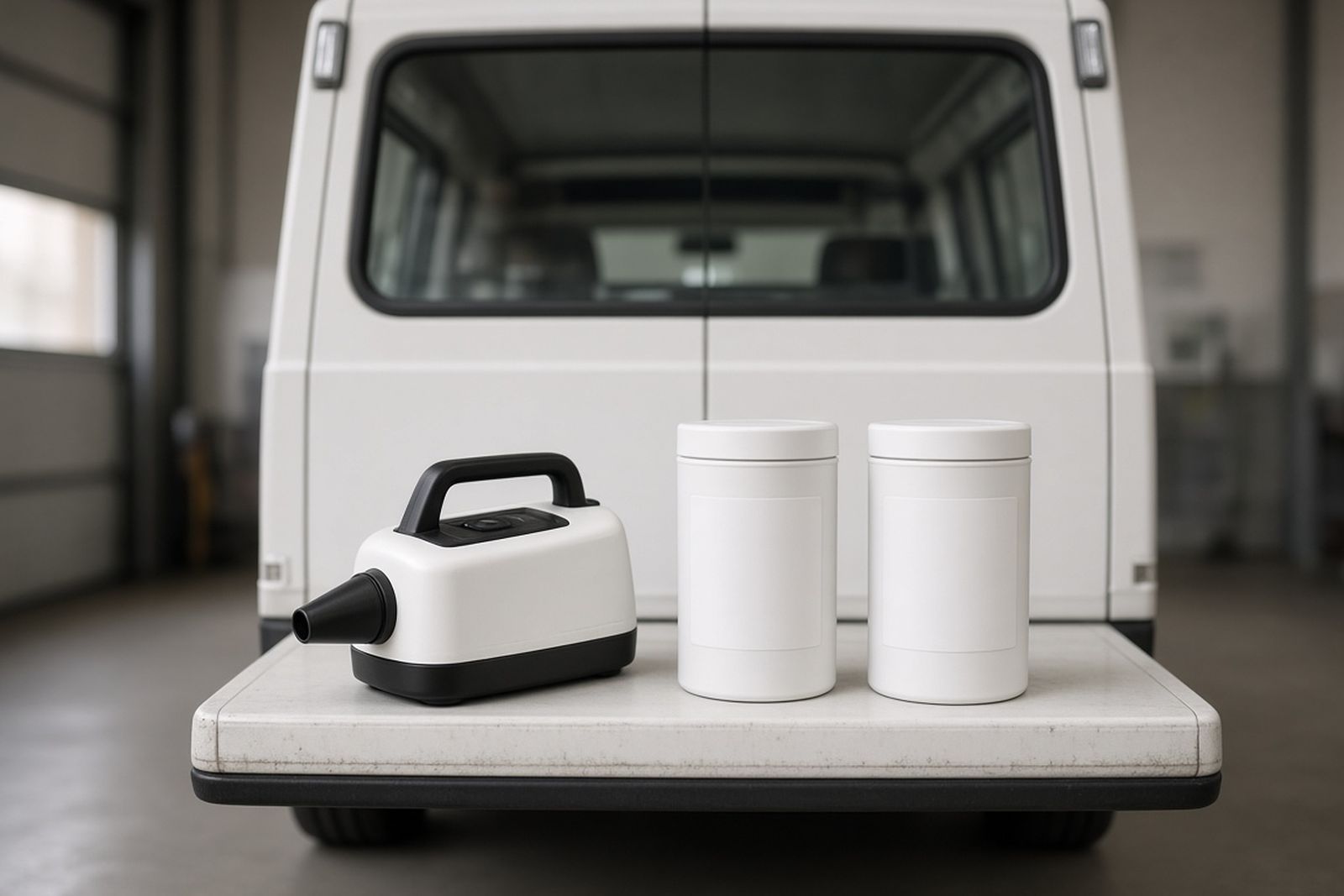
Several trends are shaping what comes next. Vehicle designers are paying more attention to ease of cleaning. They are using fewer seams, smoother surfaces and materials that hold up to disinfectants. Agencies are trying digital decon logs filled out on tablets. Some are looking at add-on tools, such as ultraviolet light or disinfectant mist. They know these do not replace hands-on cleaning.
There is also more attention on police and fire vehicles, which were overlooked for a long time. Patrol cars, prisoner vans and fire trucks carry many of the same exposure risks as ambulances. Agencies are starting to use similar steps for them.
Expectations will keep changing as research and guidance change. Check in from time to time with your state EMS office and medical director. That way, your decon program reflects current standards, not habits handed down from decades ago.