Short answer
In-house crew decontamination works well for routine between-call cleaning and scheduled terminal cleans when staff are trained, supplied, and given enough time. Outside professional decontamination makes more sense after gross contamination, crashes, known high-risk organisms, or when audits show in-house cleans are falling short. The key differences are time, specialized products and tools, exposure risk to crews, documentation, and who removes and replaces damaged components.
What DIY means for a fleet
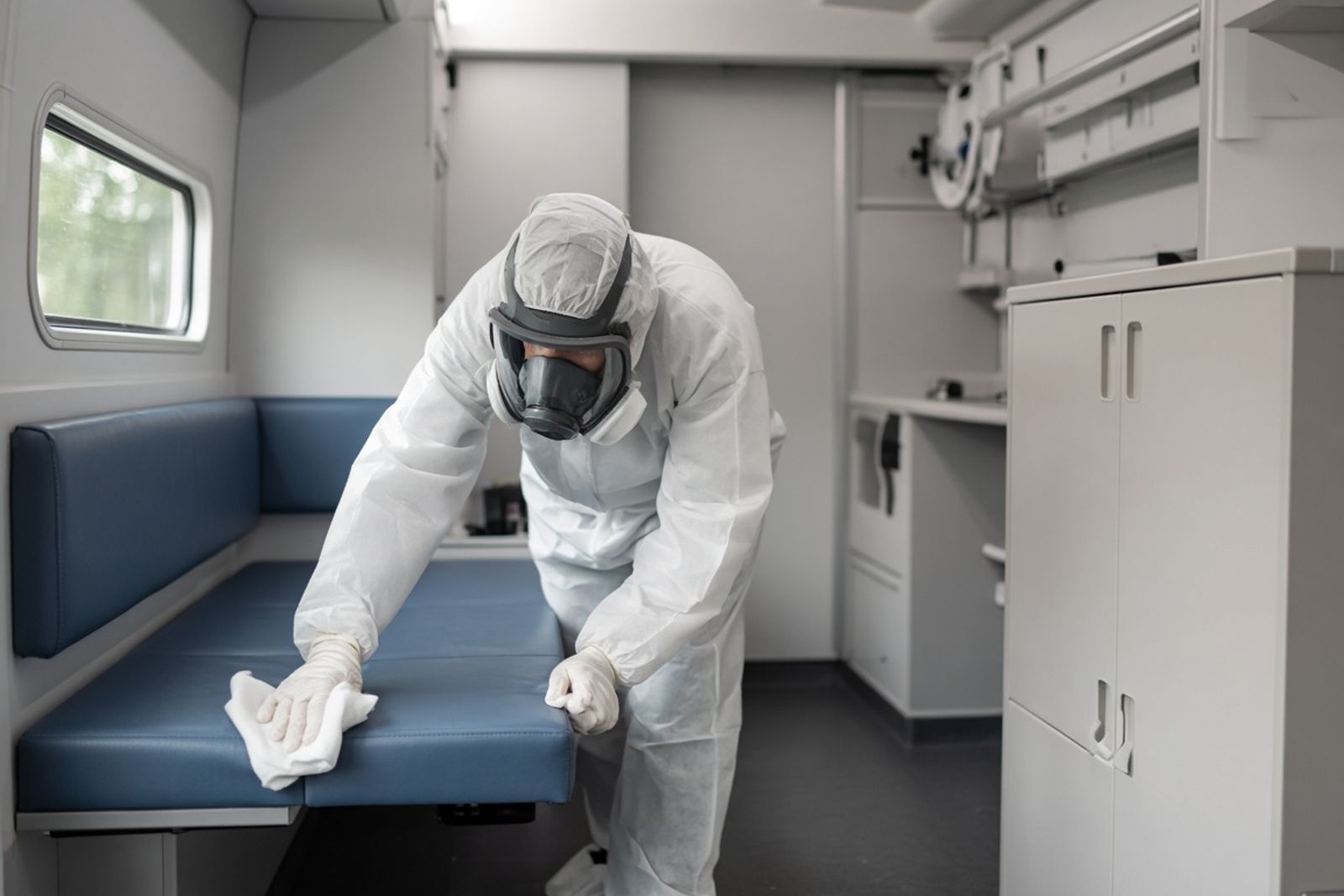
For a household, DIY means cleaning something yourself. For a fleet, it usually means the people who staff the vehicles, or other in-house personnel, handle decontamination rather than an outside contractor. That can include EMTs and paramedics wiping down a unit between calls, firefighters cleaning an engine cab after a medical assist, or patrol officers cleaning a rear seat after a transport.
Most agencies rely on in-house decon for the bulk of their cleaning, and that is appropriate. Crews know the vehicles, they are on site, and routine cleaning is part of the job. The question is not whether crews should clean at all, but where the line falls between routine in-house work and situations that call for outside help.
Drawing that line in advance, in writing, avoids arguments and improvised decisions after a difficult call.
It also protects crews. When a written policy says a certain kind of event goes to an outside provider, no one on shift has to feel they are shirking by sending a unit out, and no supervisor has to make a judgment call alone at the end of a long night.
In-house strengths, and the consistency problem
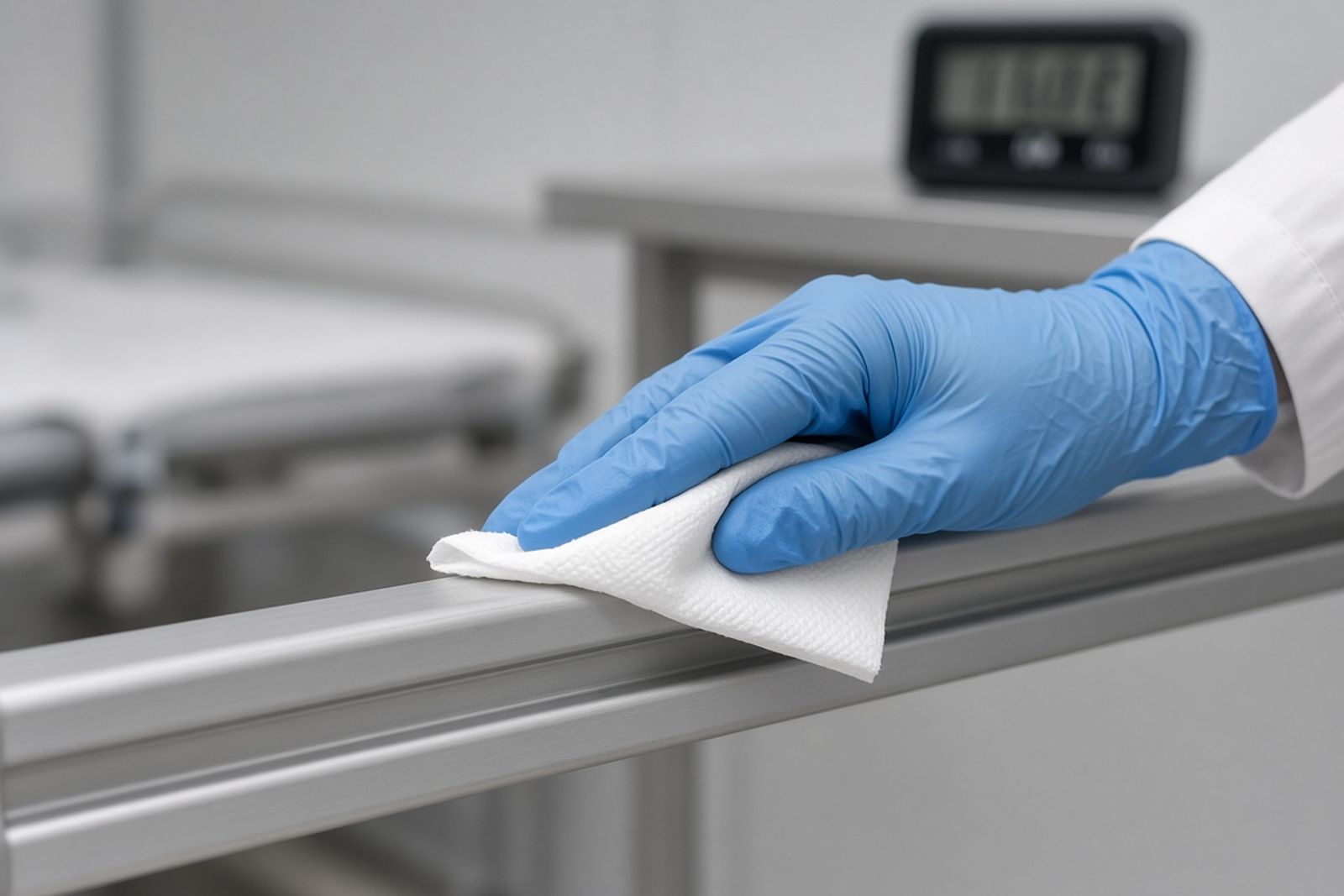
Between-call cleaning is the foundation of fleet infection control, and it is almost always an in-house task. Crews wipe the cot, bench seat, high-touch points, and equipment used on the patient. Done consistently, this reduces the spread of organisms from one patient to the next.
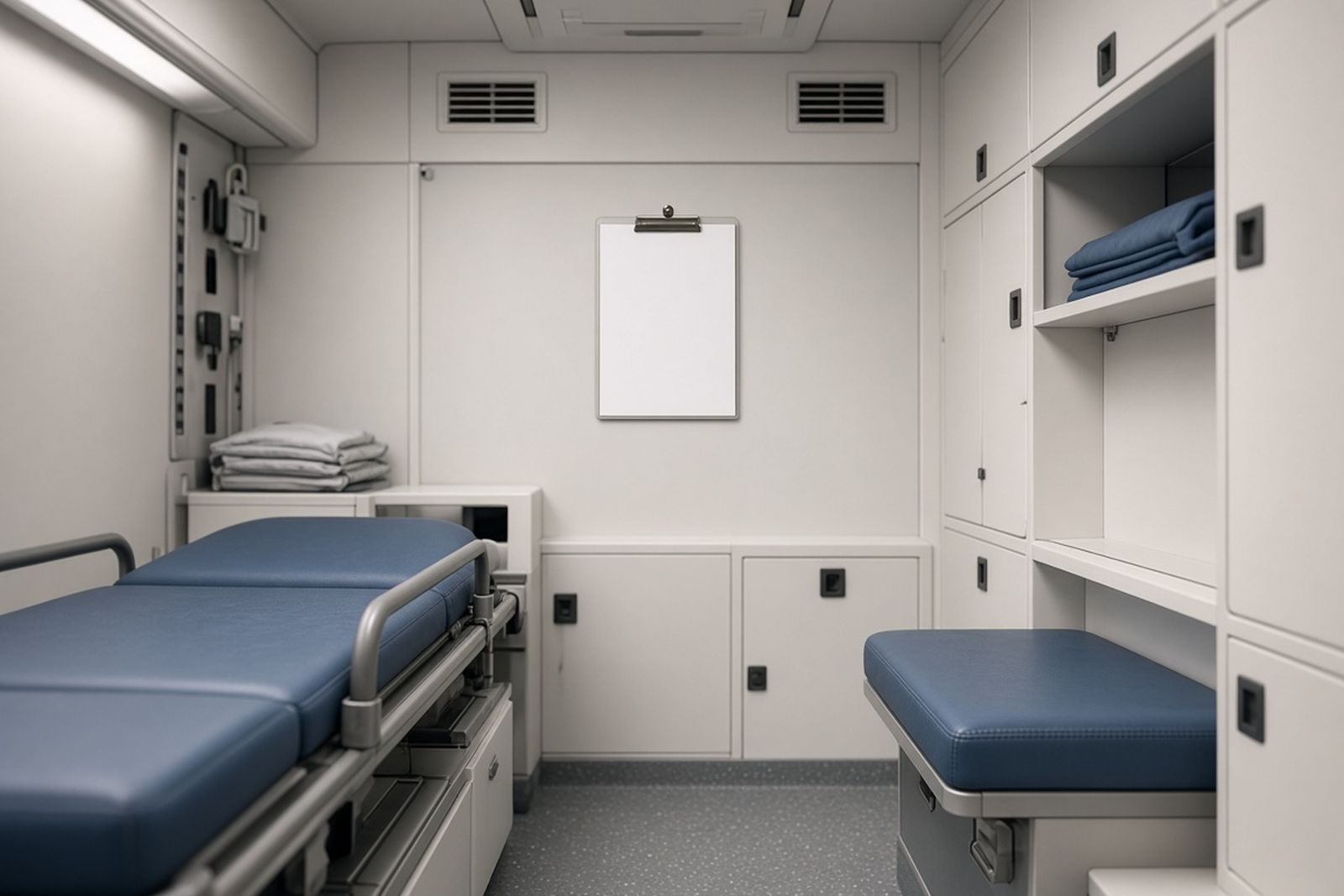
Scheduled terminal cleans can also be done well in-house when staff have written procedures, the right products, enough time, and supervision. Some agencies assign terminal cleans to specific shifts or dedicated staff so the task does not compete with emergency calls.
In-house work has real advantages. It is faster to start, cheaper per clean, and keeps the unit close to its station. Crews also build habits and knowledge that improve day-to-day practice.
The weak points are consistency and time. When call volume rises, thorough cleaning tends to be the first thing shortened.
Studies of prehospital practice suggest that cleaning compliance varies widely. A 2025 scoping review in Antimicrobial Resistance & Infection Control reported disinfection compliance of 55% for stretchers and only 4.1% to 47% for stethoscopes in the EMS studies it reviewed.
Those figures come from different agencies and methods, so they cannot predict your fleet's performance. They do suggest that small, portable items and less obvious surfaces are often skipped, even when the stretcher gets attention.
Contamination can also travel with the crew rather than staying in the vehicle, which is why hand hygiene, uniforms, and personal equipment belong in the program alongside vehicle cleaning.
The takeaway is not that crews are careless. It is that the job is hard to do consistently under pressure, and that measurement is the only way to know how your own fleet is doing.
When is outside professional decontamination the better choice?
Certain events push beyond what a crew can reasonably handle during a shift. Those include heavy bleeding, vomiting, or incontinence that reached floor tracks, seat cushions, and cabinet interiors; crashes that scattered supplies, glass, and sharps; transports of patients with known or suspected high-consequence organisms; and situations where fluids reached headliners, ventilation intakes, or the driver's compartment.
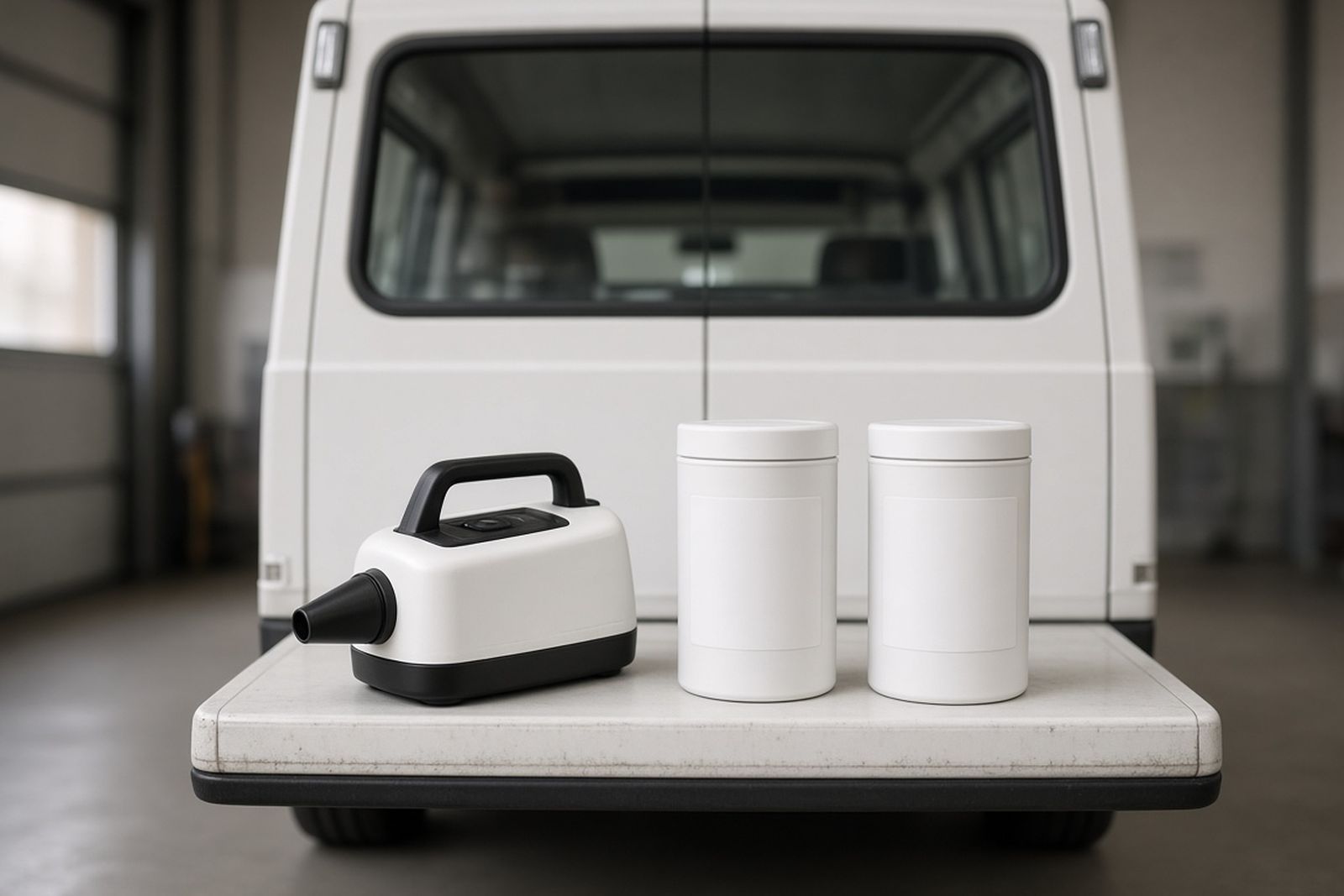
In those cases, the work often involves removing components, replacing soft goods, reaching hidden cavities, and using products with longer contact times or special handling. Outside providers who specialize in vehicle decontamination may have the equipment, staff, and time to do that without pulling crews off the road.
A professional clean can also make sense as a periodic reset. Some fleets schedule an outside deep clean on a regular cycle to catch areas that routine cleaning misses.
If audits show in-house terminal cleans consistently missing surfaces, an outside provider can serve as a benchmark while the agency retrains and adjusts procedures.
When you choose an outside provider, look for experience with vehicles specifically. Cleaning a patient compartment is different from cleaning a room: the spaces are tight, the materials are varied, and the unit has to go back on the road with every cabinet, strap, and device in working order. Ask for references from other fleets and a sample report before you need them.
Crew safety and end-of-shift fatigue
Every decon task carries some exposure risk. Crews may handle blood, body fluids, sharps, and chemicals, sometimes after a physically and emotionally demanding call.
Asking an exhausted crew to clean a heavily contaminated unit at the end of a long shift raises the chance of needlestick injuries, splashes, and chemical exposures. It also adds emotional weight after calls involving serious trauma or death.
Outside providers are not immune to these risks, but their staff are typically dedicated to the task, equipped for it, and not coming off an emergency call. That difference matters most for the heaviest events.
Whoever does the work, make sure they have access to the protective equipment, vaccinations, and exposure reporting procedures your infection control plan requires.
In-house vs outside: the critical differences
Comparing in-house and outside decon on a few key points makes the tradeoffs clearer.
- Time: in-house cleans compete with call volume, while outside providers can focus on a single unit
- Scope: crews handle surfaces and equipment, while professionals more often remove seats, flooring, and panels
- Products: in-house kits usually carry one or two products, while specialists may bring sporicidal or specialty chemistries
- Verification: few fleets audit every clean, while some providers include ATP testing or photo documentation
- Soft goods: crews may launder or replace straps and covers, while providers can source and install replacements
- Cost: in-house work is cheaper per clean, while outside work reduces crew exposure and downtime on the road
- Documentation: outside providers may deliver a formal report, which can help with audits and claims
When the policy trigger is met
Written triggers earn their keep right after a hard call, when nobody wants to debate. A trigger might read: gross contamination that reaches floor tracks and cabinet interiors goes to the contracted provider. Once it is met, the sequence should be short and automatic, so the officer on duty is following a plan rather than weighing options at the end of a long night.
- The officer on duty places the unit out of service and switches to a reserve ambulance
- The crew removes and bags obvious waste, secures sharps, and then steps back
- The crew is given time to rest and is offered the agency's peer support program
- The provider removes components such as bench cushions or floor trim as needed, cleans and disinfects the compartment, and replaces soft goods
- The provider's written report and photos are filed with the incident record
- Reusable items such as jump bags are emptied, cleaned, and restocked in-house under the agency's own procedure
How can you strengthen in-house decon without outsourcing everything?
Most of your fleet's cleaning will stay in-house, so investing in that work pays off. Write a clear wipe sequence for each vehicle type. Keep stocked decon kits at every station and in every unit. Choose products whose contact times crews can meet. Train new staff and refresh everyone periodically.
Audit regularly. Fluorescent markers and ATP swabs are inexpensive ways to see what is missed. Share results with crews as coaching, not punishment.
Protect time for terminal cleans. Schedule them during low-demand periods and keep a reserve unit available so thorough cleaning does not get skipped.
Finally, include hand hygiene and personal equipment in the program. Stethoscopes, radios, phones, and uniforms travel with the crew and deserve attention alongside the vehicle.
Consider pairing each station with a decon lead, a crew member who receives extra training, checks supplies, and helps less experienced staff with unusual situations. A single knowledgeable person on each shift can raise the quality of cleaning across the whole station.
What the written policy should include
Your policy should define the levels of decon your agency uses, who performs each level, which products and protective equipment are required, when a unit is placed out of service, and when an outside provider is called. It should also state how cleans are documented and audited.
Review the policy with your medical director, infection control officer, and labor representatives if applicable. Update it when vehicles, equipment, or guidance change.
Check with your state EMS office for any requirements that apply to infection control plans, vehicle standards, and waste handling.