Short answer
Emergency vehicle decontamination cost depends on the exposure type, how much of the patient compartment was affected, which soft goods and equipment must be replaced rather than cleaned, the disinfectant's contact time, the vehicle's layout, and how long the unit is out of service. For fleets, lost availability often matters as much as the invoice. Budget for routine terminal cleans, exposure-driven cleans, and soft-goods replacement separately.
What a terminal clean actually pays for
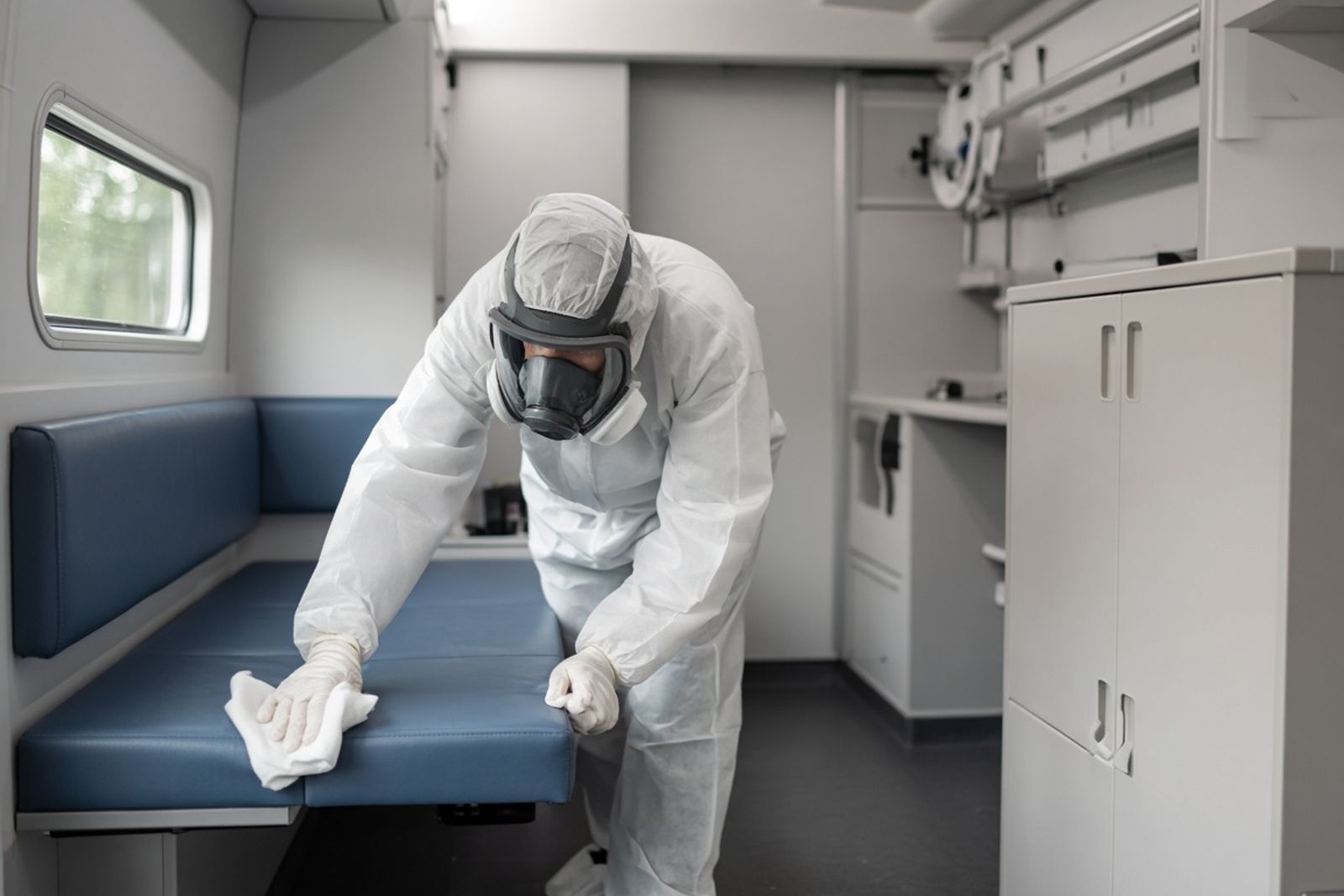
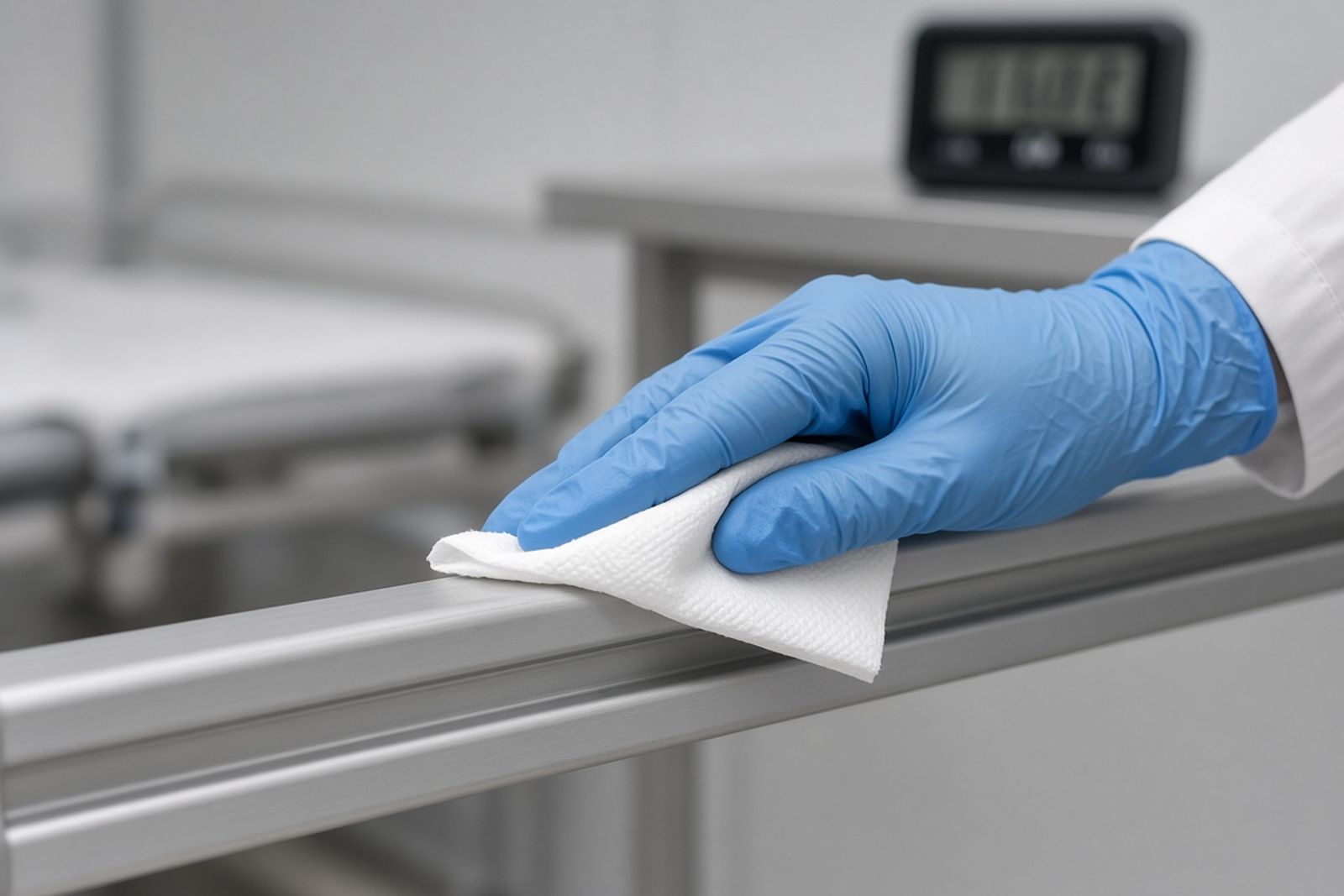
A between-call wipe is fast and handled by crews. A terminal clean is a different job: the unit is taken out of service, emptied, cleaned from ceiling to floor, disinfected with a registered product for its full labeled contact time, and restocked. Each soft good is inspected and either cleaned, replaced, or sent for laundering.
The cost reflects labor hours, disinfectant and supplies, protective equipment, sharps and waste disposal, replaced soft goods, documentation, and, for fleets, the value of the unit being unavailable. Some agencies perform terminal cleans in-house with trained staff; others contract with outside providers for some or all of them.
Whichever model you use, it helps to break the cost into those components. That makes budgeting easier and exposes where money is going.
It also helps to decide who approves each category. Routine cleans might be approved by a station supervisor, while replacing a full set of soft goods or sending a unit to an outside provider could require sign-off from the operations chief. Clear approval lines keep costs visible without slowing a unit's return to service.
How the exposure type changes the scope
Not every terminal clean is the same. A scheduled monthly clean of a unit with no known exposure is mostly thorough routine work. A clean after transporting a patient with a known multidrug-resistant organism may call for a product with a specific label claim and closer attention to every surface the patient or crew touched.
A gross contamination event is another step up. Heavy bleeding, vomiting, or incontinence during a long transport can reach cot mechanisms, floor seams, cabinet tracks, and seat upholstery. Crash-related contamination often scatters supplies and sharps into places crews rarely clean.
When you request a quote or estimate internal labor, describe the exposure type as clearly as privacy rules allow. It affects product choice, labor time, and how much will need replacing.
Police and fire vehicles have their own versions of this problem. A patrol car's rear seat after transporting a person who was bleeding or vomiting, or an engine's cab after crews returned from a messy extrication, may not have a patient compartment but can still need a full decon with seat and floor attention.
Soft goods and equipment: the replacement drivers
Soft goods are often the most expensive part of a heavy decon, because some items cannot be reliably disinfected once fluid has soaked in or seams have been compromised. Inspect each item; a torn cover or a stain that has penetrated usually means replacement.
Equipment can also carry contamination that is easy to miss. Research compiled via ACEP Now in 2018 reported that MRSA was detected on all nine oxygen tanks sampled from three ambulances and on 96% of oxygen cylinders in storage at an Alabama EMS station. Items that move between units or sit in storage deserve a place in your decon plan and your budget.
- Cot mattresses and cot straps
- Bench seat and captain's chair cushions
- Restraint belts and shoulder harnesses
- Stair chair fabric and straps
- Blood pressure cuffs and reusable monitoring cables
- Linens, blankets, and pillow covers
- Floor mats and adhesive seam covers
Compartment design and labor time
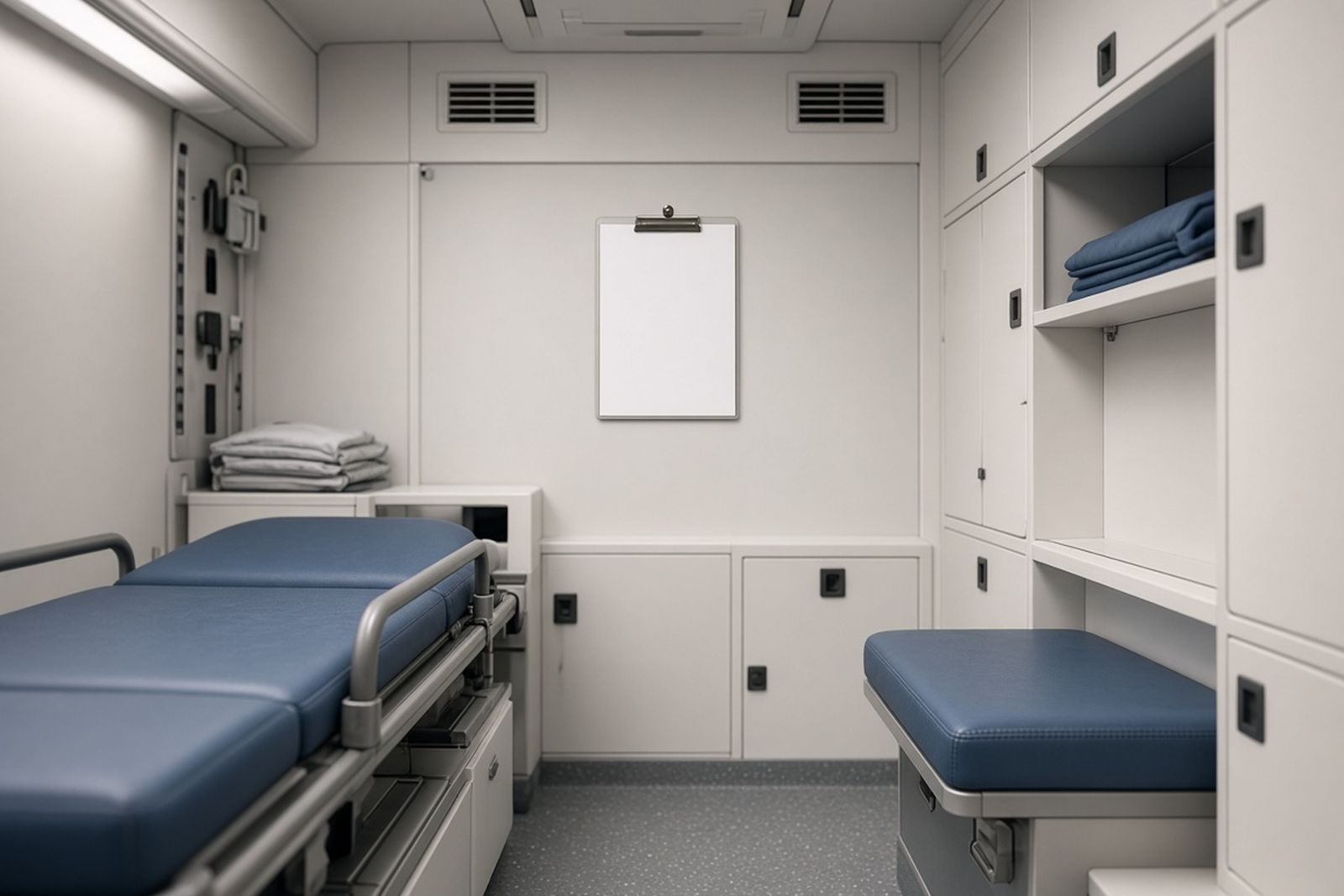
Two ambulances of the same age can take very different amounts of time to decontaminate. Compartments with many open shelves, exposed fasteners, fabric-covered surfaces, and hard-to-reach seams take longer than those designed with smooth, sealed surfaces and rounded corners.
Cabinet tracks, cot mounts, suction and oxygen fittings, and the gap between the floor and the walls are common places for residue to collect. Crews may need to remove panels or mounts to reach them after a heavy contamination event.
When your fleet is due for new units, consider involving your infection control officer in the specification process. Design choices made at purchase can reduce decon time for the life of the vehicle.
Aftermarket additions matter too. Extra brackets, cable runs, and storage bags added over the years can create new crevices. Periodically removing what is no longer needed simplifies cleaning.
The real cost of out-of-service time
For most fleets, the biggest cost of a terminal clean is not the supplies or labor but the unit's absence from the road. A unit out of service for several hours can affect response times, mutual aid requests, and crew overtime.
That pressure can tempt supervisors to cut corners, and the thorough clean is the step most likely to be squeezed. The quick clean happens; the thorough one often does not.
Budgeting explicitly for out-of-service time, and using spare units where possible, gives crews the room to do terminal cleans properly instead of squeezing them into gaps between calls. Where spares are scarce, staggering scheduled terminal cleans so that two units from the same station are never down on the same day keeps coverage steadier.
In-house vs outside, and whether thoroughness pays
Many agencies ask whether they should train their own staff to perform terminal cleans or contract the work out. There is no single right answer, and the comparison is more complicated than hourly rates.
In-house programs give you control over scheduling and can turn a unit around quickly when a trained staff member is on duty. They also carry hidden costs: training time, supervision, protective equipment, a suitable decon bay with drainage and ventilation, product inventory, and the risk that terminal cleans get squeezed out when call volume rises. Staff who clean units are also taken away from other duties.
Outside providers bring dedicated staff, standardized procedures, and documentation, and they can absorb the heavy events that would tie up your team for hours. Their costs are more visible on an invoice, and availability may be limited overnight or during regional surges.
Many fleets land on a hybrid. Crews handle between-call cleaning and some scheduled terminal cleans, while an outside provider handles gross contamination, crash-related decon, and periodic audits. Whatever model you choose, track time out of service and audit findings under both approaches so the comparison rests on your own data rather than assumptions.
It is fair to ask whether a longer, more expensive clean makes a measurable difference. Visual inspection cannot answer that, because the contamination a structured disinfection process removes is mostly invisible. Your own audit data can: fluorescent marker checks or ATP readings taken before and after a change in process show whether the extra time is buying results.
When you present budget requests to leadership, pairing costs with that kind of evidence, along with your own exposure records, makes a stronger case than cost figures alone.
Building a budget that stays predictable
A useful decon budget starts with last year's records rather than a guess. Separate three categories: scheduled terminal cleans for every unit on a regular cycle, exposure-driven terminal cleans triggered by specific calls, and soft-goods replacement. For each, estimate labor hours, supplies, protective equipment, disposal, and replacement items, then add the overtime cost of backfilling units that were out of service when no spare was available.
Watch for units that consistently take longer to clean, for example because of a fabric-covered bench seat or open shelving. That observation belongs in the replacement plan for the next vehicle purchase. An itemized request supported by your own records is also easy for leadership to question line by line, which tends to make approval smoother.
Predictability comes from tracking. Log every terminal clean with the unit number, trigger, time out of service, products used, and items replaced. After a few months, patterns emerge, such as units that need more frequent attention or soft goods that fail early.
Standardize products and procedures across the fleet so crews and contractors are not improvising. Keep a stock of common replacement soft goods so units are not held out of service waiting for parts.
Finally, review contracts with outside decon providers at least annually, comparing their reports with your own audit findings. Your medical director can confirm whether your state EMS office sets cleaning requirements for licensed EMS vehicles that should be written into those contracts.