Short answer
Property managers rarely clean ambulances themselves, but the buildings they manage host the work. Bays, wash pads, floor drains, waste storage rooms, and shared garages all carry decontamination risk. Your job is to know what the tenant or fleet operator does on site, make sure the lease assigns responsibility, confirm wash water and waste go where they should, and document any contamination that reaches common areas.
Why ambulance decon is a building issue
Many EMS agencies do not own their stations. They lease a converted warehouse, share a municipal public safety building, or rent bays inside a hospital-owned structure. Private transport companies often operate from light industrial units with roll-up doors. In each case, someone other than the agency manages the building.
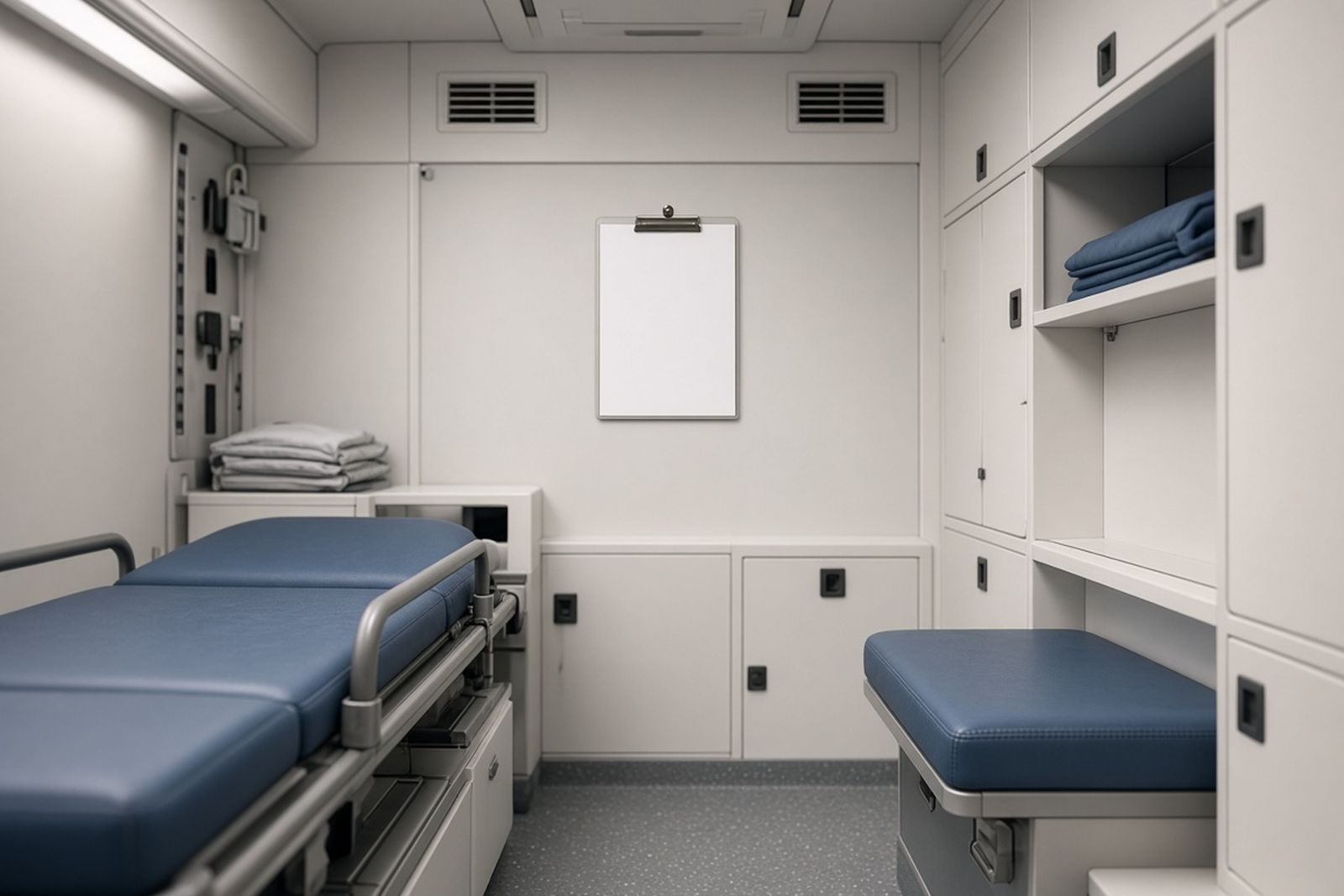
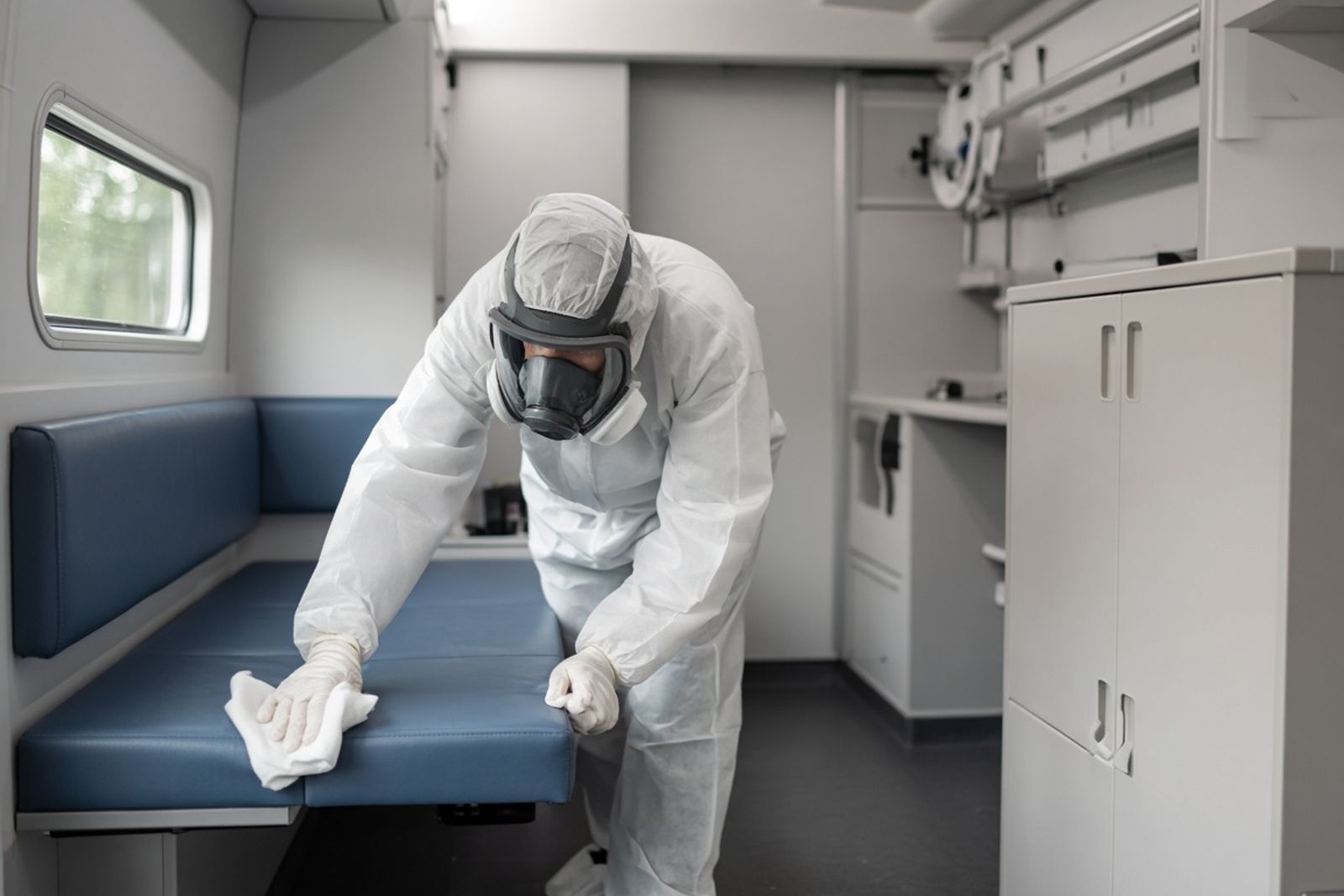
Decontamination of those vehicles happens somewhere. After a call involving heavy blood loss, vomit, or an infectious patient, crews clean the patient compartment, stretcher, and equipment, and that work frequently takes place in the bay you manage. Contaminated wipes, sharps containers, rinse water, and soiled linens then move through your hallways, dumpsters, and plumbing.
Most of the time, a well-run agency handles this without any problems for the landlord. The trouble starts when nobody wrote down who is responsible for what, and a clogged drain, a leaking waste container, or a complaint from a neighboring tenant lands on your desk with no plan behind it.
Agencies take this seriously because studies of in-service ambulances regularly find organisms on surfaces crews touch, sometimes even on units already signed off as clean. For you, the takeaway is practical rather than clinical. A tenant that does deep cleans properly will produce more waste, use more disinfectant, and need a well-ventilated space to do it. Supporting that work, rather than discouraging it, protects your building and the people in it.
The riskiest parts of the building
Think about the path a contaminated ambulance takes after it backs in. The risk follows that path, and it tends to concentrate in a handful of places.
Walk that route with the tenant's supervisor once a year. You will learn more in twenty minutes on the floor than from any written policy.
- Apparatus bays where units are parked, restocked, and wiped down between calls
- Wash pads or wash bays, especially where hoses are used inside the patient compartment
- Floor drains, trench drains, and any oil-water separator connected to them
- Rooms or cages where regulated medical waste and sharps containers are held for pickup
- Laundry areas or bins for soiled linens and blankets
- Crew locker rooms and showers where contaminated uniforms come off
- Shared parking garages or loading docks where units idle or are cleaned informally
What should the lease say about decontamination and medical waste?
A standard commercial lease was not written with ambulances in mind. If your building hosts an EMS tenant, review the lease or a side agreement with your attorney so it addresses the realities of the work. Nothing here is legal advice, and the right language depends on your jurisdiction.
Useful topics to cover include where vehicle cleaning may occur, whether hoses and pressure washers are permitted inside the bay, how the tenant stores and removes regulated medical waste, who maintains drains and separators, and what happens if contamination escapes into a common area. It also helps to require the tenant to give you contact information for its infection control officer and its waste hauler.
Ask for a copy of the tenant's exposure control plan summary or cleaning procedure for your file. You are not approving their clinical practice. You simply want to know what they do on your property so you can plan maintenance and respond sensibly if something goes wrong.
Revisit the terms when the tenant's operations change. An agency that adds a second shift, starts handling specialty transports, or begins restocking other stations from your building may generate more waste and cleaning activity than the original lease anticipated.
Where is wash water allowed to go?
This is the question that most often surprises landlords. Water used to rinse a patient compartment or scrub a stretcher can contain body fluids, detergents, and disinfectant residue. Where it ends up matters.
Floor drains in older industrial buildings sometimes connect to a storm system rather than the sanitary sewer, and storm drains typically discharge to surface water without treatment. If an EMS tenant is hosing out units over a drain that goes to the storm system, that is a problem worth solving quickly. Your local wastewater utility or public works department can tell you what is permitted and whether any pretreatment or permit applies.
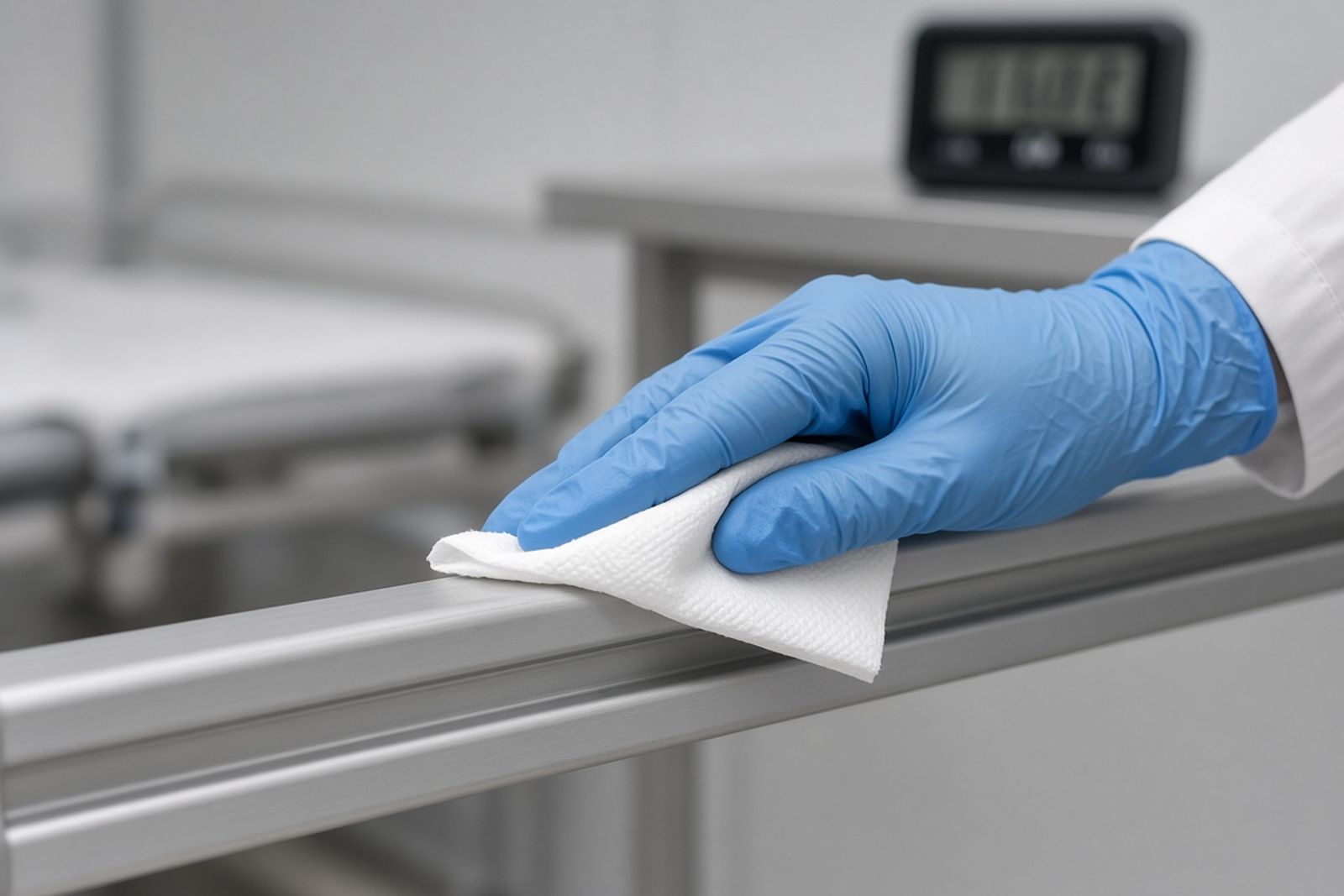
Pull the building's plumbing drawings, confirm which drains go where, and label them. Many agencies prefer low-water methods such as pre-saturated wipes and spray-and-wipe disinfection precisely because they produce little runoff.
Contamination in common areas: a three-step response
Occasionally a crew member walks through a shared corridor in a soiled uniform, a waste bag tears on the way to the dumpster, or a stretcher leaves a trail across a loading dock. These moments are uncomfortable, but they are manageable if you have a simple process.
First, restrict access to the affected area with cones or tape. Second, notify the tenant's supervisor, since the tenant typically has trained staff and appropriate supplies. Third, if your own janitorial staff are expected to respond, make sure they are trained for blood and body fluid cleanup and have the right PPE; otherwise, call a professional remediation company.
Do not ask general cleaning staff to deal with visible blood unless your employer program covers them for that task. Keep a short incident note with the date, location, who cleaned it, and what products were used.
Pay attention to porous surfaces in shared spaces. Carpet runners at a side entrance, upholstered lobby chairs, and unsealed concrete absorb fluids in ways that a quick wipe will not fix. A remediation company can tell you whether a material can be cleaned and disinfected in place or should be removed and replaced. Make that decision before anyone scrubs, since aggressive cleaning of a porous surface can push contamination deeper.
Illustrative scenario: a shared garage turned wash bay
The following situation is illustrative, not a real property. You manage a mixed-use medical office building with a two-level parking garage. A private ambulance company leases a suite on the ground floor and has permission to park two units in reserved spaces.
A tenant in the building next door complains that crews have been rinsing stretchers and wiping down compartments in the garage after late-night transports. You check and find damp stains near a floor drain, discarded gloves in a planter, and a partly full sharps container left on a bumper.
You start by photographing the area and restricting access to the two spaces. You then meet with the company's operations manager and infection control lead. Together you confirm that the garage drain connects to storm sewer, so rinsing there must stop. The company agrees to move all cleaning to an approved station, to do only dry wipe-downs on site, and to keep a sealed waste container inside its suite for pickup.
You bring in a remediation contractor to clean and disinfect the stained area and the planter. Afterward, you add a paragraph to the lease addendum describing permitted cleaning locations, and you post signage near the reserved spaces.
Who should you call, and what should you ask them?
If you need outside help with a contamination event in your building, look for a company that performs biohazard and vehicle decontamination work and can explain its process plainly. A company that cleans ambulances regularly understands the waste streams and product choices involved.
Before work begins, ask questions that clarify scope and protect you as the owner or manager.
- Which areas will you clean, and which are the tenant's responsibility?
- What disinfectants will you use, and can you share the safety data sheets?
- How will you package, label, and remove regulated waste from the building?
- Will you use water, and if so, where will it drain?
- What documentation will you provide when the work is complete?
- Do your technicians work under a bloodborne pathogens exposure control program?
Planning ahead for the next event
Keep a one-page reference in your building file. List the EMS tenant's supervisor and after-hours contact, its waste hauler, your plumber, the local wastewater authority, and a remediation company you have vetted. Note which drains connect to sanitary sewer and which do not.
Schedule periodic walk-throughs of bays and waste storage areas. Look for overfilled containers, damaged flooring that could trap fluids, poor ventilation where disinfectants are used, and hoses left in patient-care areas. Small fixes, such as sealing a cracked bay floor or adding a lockable waste cage, prevent larger headaches later.
Finally, treat the tenant as a partner. Crews who clean vehicles well are doing exactly what you want. Clear expectations, a suitable space, and a quick way to reach each other when something goes wrong are usually all it takes.