Short answer
PPE for emergency vehicle decon should come from a written hazard assessment of each task: between-call wipe-downs, terminal cleans, soft goods removal, sharps sweeps, and chemical mixing. Typical selections include chemical-compatible gloves, fluid-resistant gowns or coveralls, splash eye protection, and respirators when products or conditions require them. Train crews on donning and doffing, stock every size, and review the assessment when products or vehicles change.
Hazard assessment before the PPE kit
Most fleets already have PPE on the shelf. The problem is that the gear chosen for patient care is not always the gear that fits decon work. A nitrile exam glove that is fine for starting an IV may tear when a technician pulls a bench cushion loose, or degrade after a long stretch of contact with a concentrated disinfectant.
OSHA's PPE standard, 29 CFR 1910.132, asks employers to assess hazards first, select equipment to match, and certify the assessment in writing. That order matters. It forces you to look at what decon crews actually do, in your vehicles, with your products, rather than assuming one kit covers everything.
A good assessment also gives you something concrete to show your medical director, your union or labor representatives, and an inspector. It explains why each item is required and when.
Break the assessment out task by task
The easiest way to build a useful assessment is to list the decon tasks as your crews and technicians perform them, then evaluate each one for contact, splash, puncture, inhalation, and physical hazards.
Walk through a real unit with a senior medic and whoever performs terminal cleans while you do this. They will point out tasks that do not show up on paper, such as crawling into the rear step well or reaching behind the oxygen cylinder bracket.
Do not forget vehicles outside the ambulance fleet. A patrol car rear seat after a bleeding arrestee, or a fire engine cab after crews return from an extrication, has its own tight spaces and materials. Hard plastic prisoner seats, partition cages, and SCBA seat backs each deserve a line in the assessment if your agency cleans them.
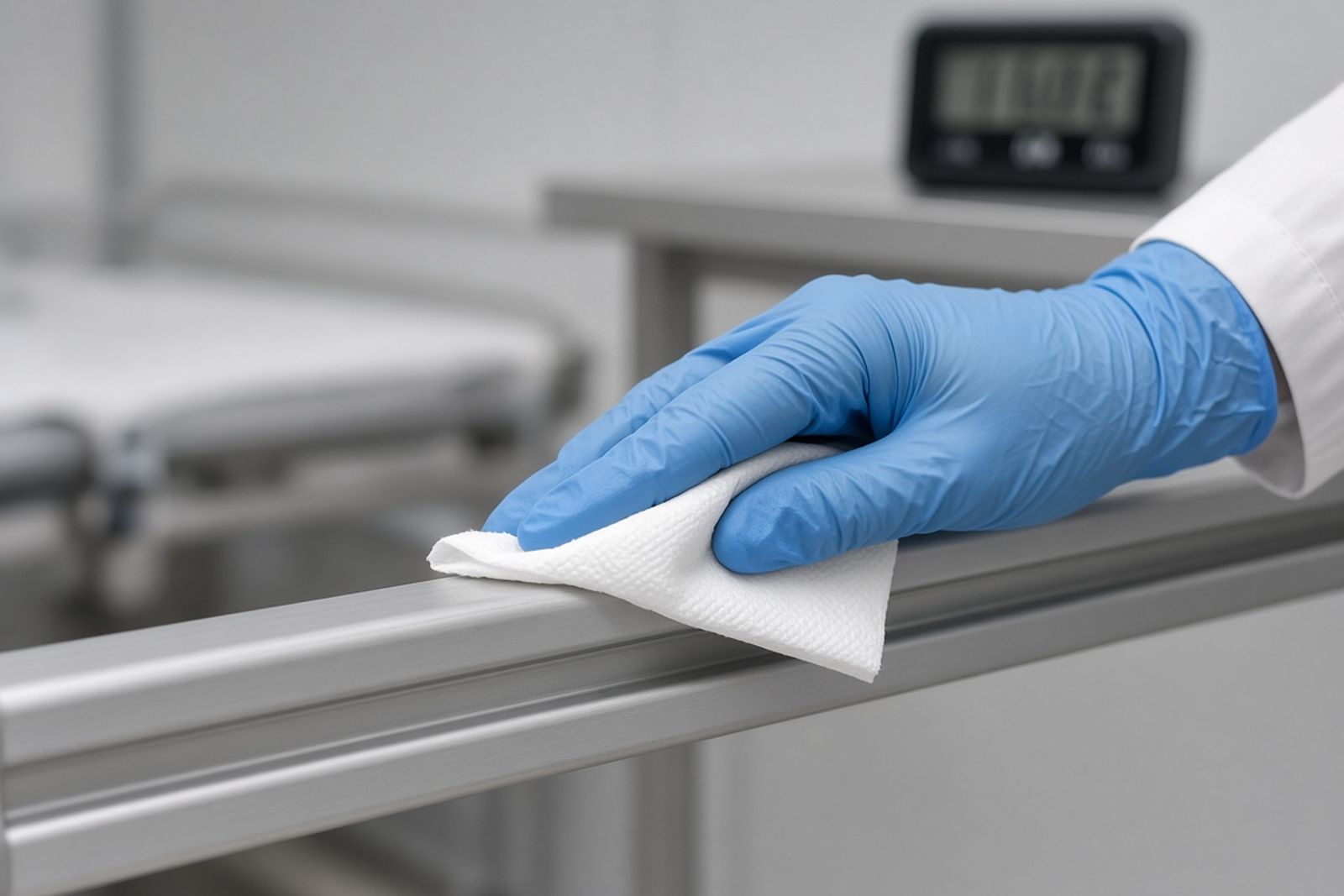
- Between-call wipe-down of high-touch surfaces with ready-to-use wipes
- Gross contamination cleanup on floors, bench seats, and walls
- Removal and bagging of soaked linens, straps, and disposable items
- Sharps sweep of seams, floor channels, cabinet tracks, and seat gaps
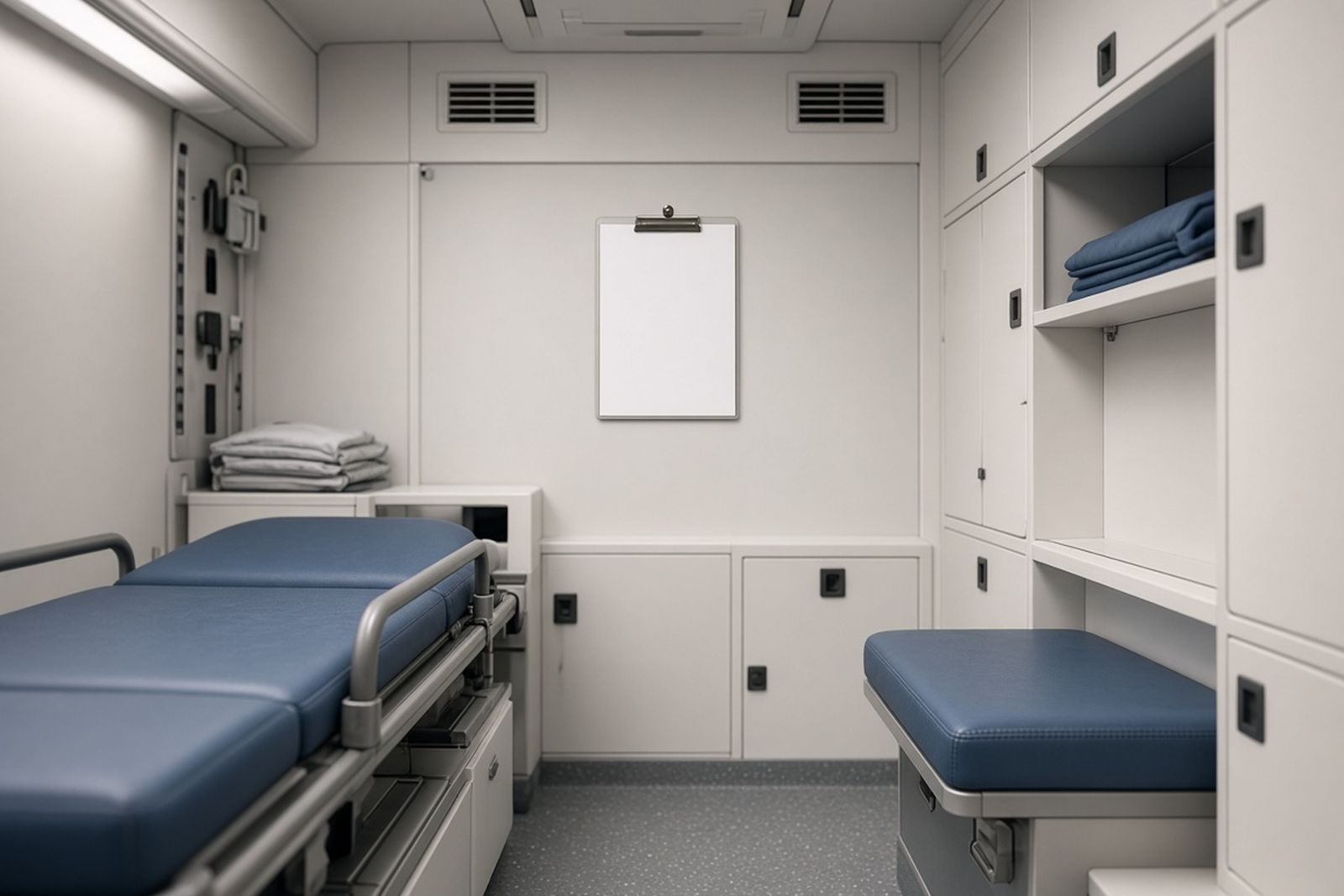
- Terminal cleaning of the full patient compartment, including ceiling and cabinets
- Cleaning portable equipment such as monitors, cables, suction units, and stretchers
- Mixing or diluting disinfectant concentrates
- Pressure washing or hosing floors and exterior compartments in the decon bay
How often are EMS workers exposed in ways PPE is meant to prevent?
Numbers from the field help explain why this is worth the effort. A research compilation published by the New Jersey Department of Health in 2015 describes one EMS system that logged 397 infectious-exposure reports, a rate of 1.2 exposures per 1,000 EMS incidents, with body-fluid splashes making up 14.1%.
Splash, contact, and puncture are the three exposure routes decon PPE addresses most directly. If your own exposure reports show a pattern, such as splashes during floor cleaning or cuts during sharps sweeps, feed that back into the assessment.
Gloves: chemistry and durability
Gloves are the most important and most frequently misjudged item. Two factors decide whether a glove is appropriate: its resistance to the disinfectant being used and its durability for the physical task.
Check each disinfectant's safety data sheet for glove material recommendations, and ask the glove manufacturer for chemical resistance data. Some quaternary ammonium, peroxide, and chlorine products are gentle on common nitrile; others are not, especially at higher concentrations or longer contact.
For terminal cleans and gross contamination, many fleets use a heavier, extended-cuff glove over a thinner inner glove. The outer glove handles abrasion and chemical contact, and the inner glove protects hands while the outer pair is removed. For sharps sweeps, consider cut-resistant liners, while remembering that no glove reliably stops a needle; the sweep technique itself is the main protection.
Replace gloves as soon as they tear, become visibly contaminated between areas, or show signs of chemical breakdown such as swelling, stickiness, or discoloration.
Body, eye, and face protection
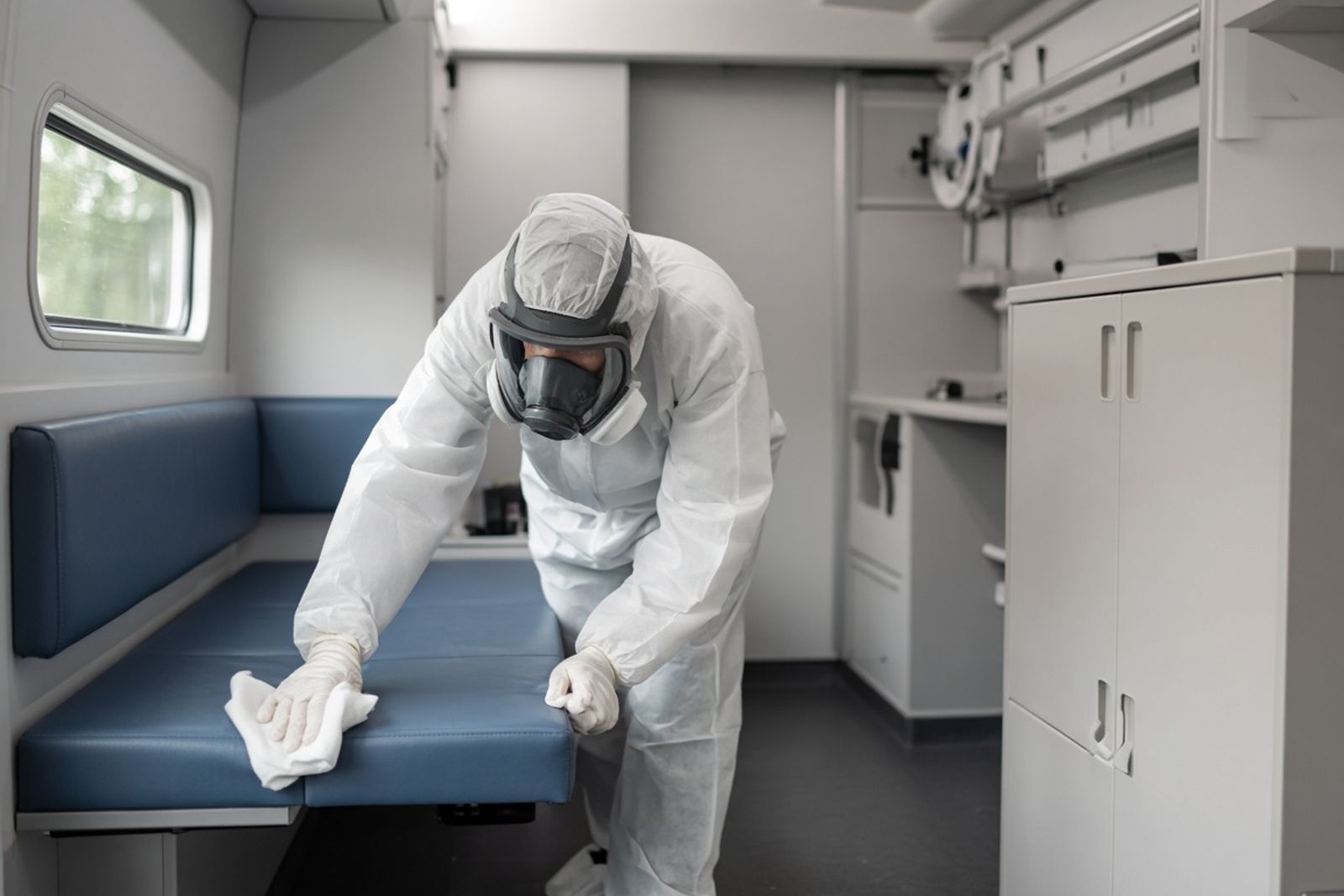
Body protection should match the volume of fluid involved. A fluid-resistant isolation gown may be enough for a between-call wipe. A terminal clean after major bleeding or incontinence, where technicians kneel on the floor and lean into cabinets, usually calls for coveralls with good fluid resistance and boot covers or dedicated washable boots.
Eye protection is essential whenever liquid is being sprayed, poured, or wiped overhead. Ceiling panels, grab rails, and upper cabinets drip, and a technician looking up is exactly where the splash lands. Indirect-vented goggles or a face shield worn over safety glasses are common choices. Standard prescription glasses are not a substitute.
Hosing or pressure washing in the decon bay adds its own splash and aerosol hazards, and the PPE should be upgraded accordingly.
Think about heat and fatigue as well. A technician in coveralls, double gloves, and goggles inside a closed module on a summer afternoon can overheat quickly. Build breaks and hydration into long terminal cleans, and open doors or run the air handler when the procedure allows it.
When do decon technicians need respiratory protection?
Respiratory needs in vehicle decon are driven mostly by chemistry and confinement. A patient compartment is a small enclosed space, and spraying or fogging a disinfectant inside it can concentrate vapors or mists quickly. Product labels and safety data sheets will often state when respiratory protection is required.
A second driver is the patient. After transporting someone with a known or suspected airborne illness, your infection control policy may call for respirators during cleaning until the compartment has been ventilated for a set period. Follow your medical director's direction and current public health guidance on that point.
If respirators are required, your agency needs a respiratory protection program under 29 CFR 1910.134, including medical evaluation, fit testing, and training. If your plan relies on keeping doors open and the exhaust fan running instead, write that into the procedure so it happens every time.
Warning signs that the PPE plan needs rework
PPE problems rarely announce themselves as PPE problems. They show up as a cluster of minor skin complaints among crews who do terminal cleans, gloves that feel tacky by the end of a long decon, or a splash to the eye while someone wipes the ceiling above the cot. Any of these is a reason to reopen the hazard assessment.
Start with the safety data sheet for your primary disinfectant, which may recommend a heavier glove material for extended contact than the exam gloves crews usually reach for. Then watch a few terminal cleans. You may find crews working overhead without goggles because the only eye protection stocked is a pair of fog-prone safety glasses.
The fixes are often modest: extended-cuff outer gloves for terminal cleans, indirect-vented goggles in each decon kit, and a pole-mounted wiping tool so ceilings are not cleaned by hand. Update the written assessment, train every shift, and ask crews to keep reporting symptoms. Solving the problem rarely requires an expensive product. It requires looking closely at the task.
Donning and doffing matter as much as the gear
Even well-chosen PPE can transfer contamination if it is removed carelessly. The outside of gloves and gowns after a terminal clean is some of the most contaminated material in the station.
Train crews on a consistent removal sequence, typically gloves first or gloves together with gown, then eye protection by the strap, then any respirator, followed immediately by hand hygiene. Designate a spot at the edge of the decon area for removal, with a lined waste container and hand hygiene supplies within reach.
Practice this during training rather than only describing it. A short drill using a harmless fluorescent lotion on the outer gloves shows crews exactly where contamination ends up when they get the sequence wrong.
How do you keep the assessment and supplies current?
A hazard assessment is not a one-time document. Review it whenever you change disinfectants, bring new vehicle types into the fleet, add new equipment, or see a pattern in exposure reports.
Supply is the other half. PPE that exists in the supply room but not in the decon bay in the middle of the night is not protecting anyone. Stock every size, including extra-small and extra-large gloves and coveralls, and assign someone to check kits on a regular schedule.
Public agencies in particular should confirm with their state labor department which occupational safety program covers their workers and whether state rules add requirements beyond the federal standards.
- Recertify the written assessment after any product or vehicle change
- Keep glove compatibility data on file for each disinfectant
- Check decon kits for complete sizes and unexpired items
- Track exposure reports by task to spot recurring gaps
- Refresh donning and doffing training at least during annual bloodborne pathogens training