Short answer
Red flags in an emergency vehicle decontamination vendor include fogging without pre-cleaning, no touch map of the patient compartment, disinfectants that ignore equipment manufacturer guidance, no plan for straps, cushions, and other soft goods, vague turnaround promises, and no per-unit completion record. A qualified vendor asks about the exposure, the unit's equipment, and your infection-control policy before touching the vehicle.
What is at stake in vendor choice
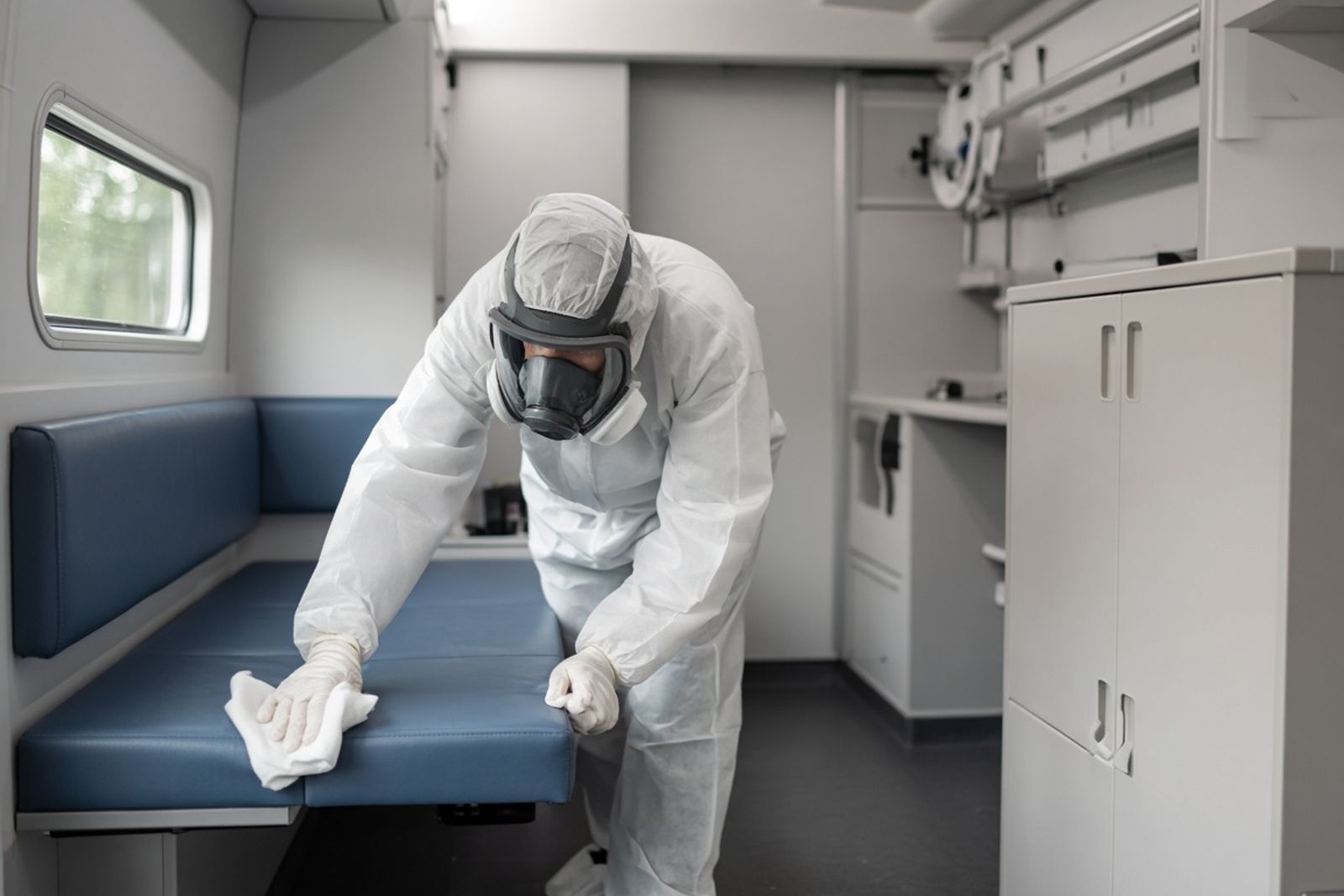
An ambulance, fire apparatus, or patrol car is a working clinical and operational space that returns to service quickly. When a unit needs more than a crew wipe-down after a heavy exposure, the vendor you call is trusted with a vehicle that will carry another patient, prisoner, or crew within hours.
Research shows how easily contamination survives routine effort. Schaps and colleagues reported in 2026 that 60% of ambulances labelled service-ready had at least one targeted pathogen. A terminal decon vendor exists to close that gap, and one that cuts corners simply adds a new label to the same problem.
The warning signs below come from the questions fleet managers, infection-control officers, and station supervisors should raise before a vendor ever opens a rear door.
Is a fog-and-go service a red flag?
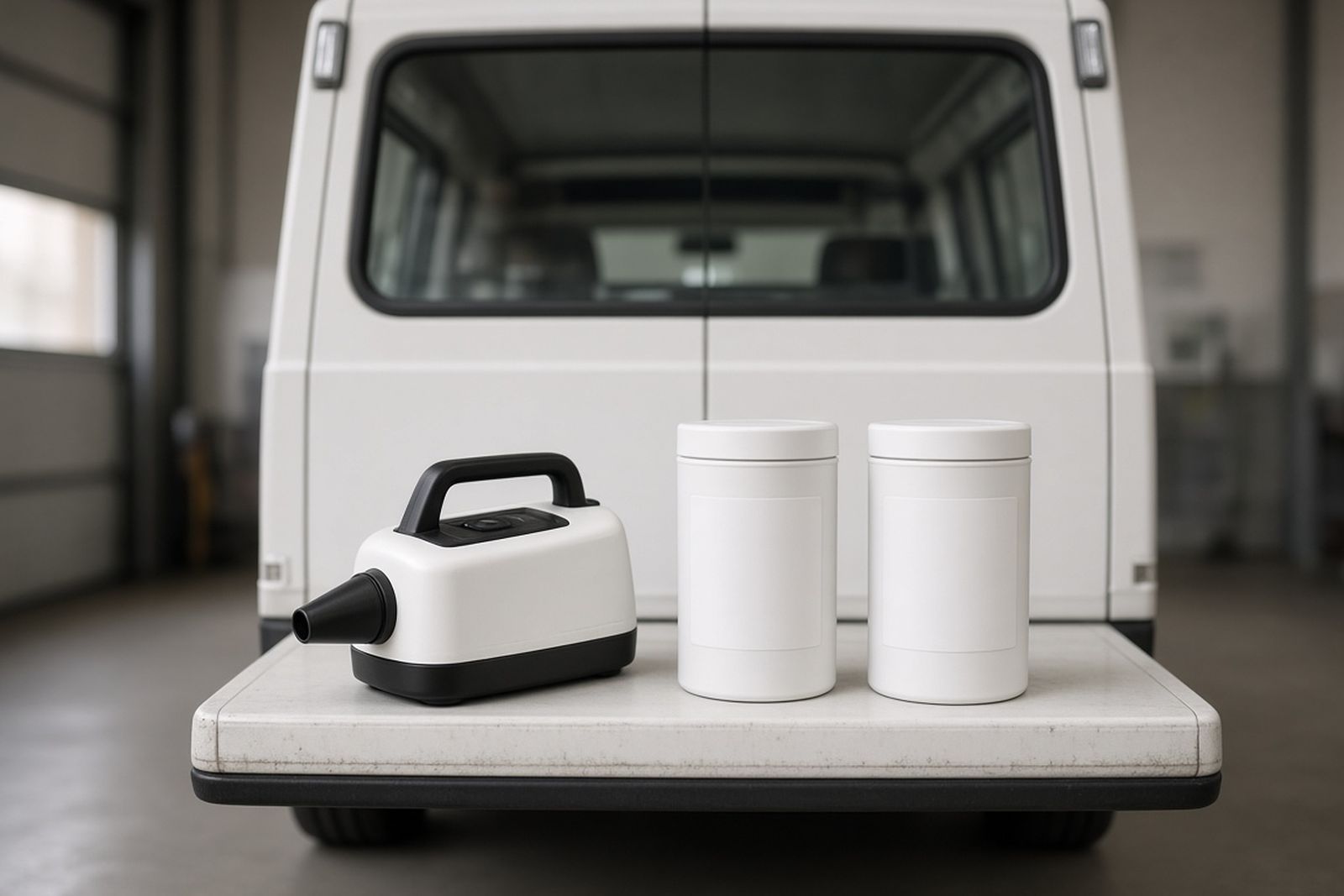
Fogging, misting, and electrostatic application can help reach crevices in a patient compartment. The problem arises when a vendor treats a fogger as the whole job. Dried blood in a stretcher mount, vomit in a floor track, or residue on a cabinet latch can shield organisms underneath, and no amount of mist removes that soil.
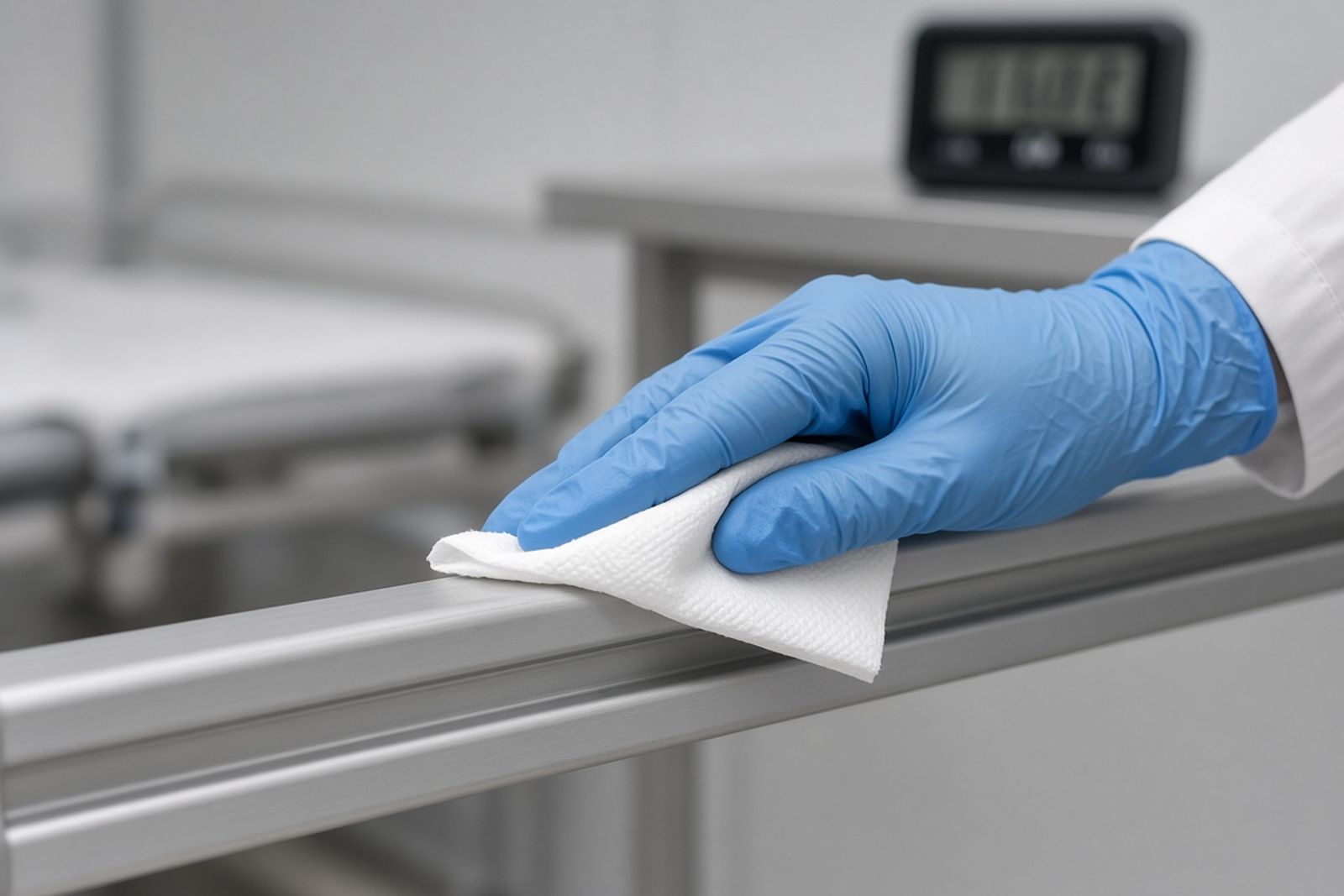
Ask the vendor to describe what happens before any device runs. You want to hear about removing gross contamination, cleaning with detergent and friction, rinsing where appropriate, and only then applying a registered disinfectant for its full labeled contact time.
If the vendor cannot explain how they clean before they disinfect, or says their product cleans and disinfects in one step without referencing the label directions for heavily soiled surfaces, treat the pitch with caution.
Pay attention to where the vendor plans to do the work. Decontaminating a unit in an open public lot, with runoff heading toward a storm drain and bystanders walking past, is a sign the vendor has not thought through containment. A good vendor asks whether your station has a wash bay, a designated decon area, or a drain connected to sanitary sewer, and adjusts the plan to fit.
Red flag: no questions about equipment and materials
A good provider asks about your equipment and materials early. A patient compartment contains monitors, suction units, stretchers, powered loading systems, radios, and computers, each with its own manufacturer guidance on which chemicals are safe. Vinyl upholstery and polycarbonate panels can crack or cloud under harsh products used repeatedly.
Material damage is not just cosmetic. Cracked surfaces hold soil and become harder to decontaminate the next time. A vendor who uses the same aggressive product on every surface without asking about your equipment may be shortening the life of expensive devices and making future decon harder.
A qualified vendor will ask for, or already know, compatibility guidance for common devices in your fleet. They will also ask which equipment your own crews clean and which the vendor is expected to handle, so nothing is missed or double-treated with incompatible products.
Red flag: no plan for soft goods
Cot mattresses, straps, seat belts, restraints, and cloth covers absorb fluids and are difficult to disinfect in place. After a heavy exposure, many agencies launder or replace these items rather than trying to treat them inside the vehicle.
A vendor who plans to spray soft goods and call them clean is skipping one of the most important decisions in the job. Ask how the vendor will assess each soft item, which items they recommend replacing, and whether they will coordinate with your supply officer so replacements are ready when the unit returns.
Torn mattress covers are a particular concern. Once the outer layer is breached, fluid can reach the foam underneath. A vendor should check covers for damage and flag any that should be taken out of service.
Promises that should make you skeptical
Fleet managers are under constant pressure to return units to service, and some vendors lean on that pressure with promises that sound reassuring but are not grounded in the work itself.
Be cautious when you hear claims like these:
A realistic vendor will instead give you a range, explain what could extend it, such as a damaged mattress, contamination under the stretcher mount, or fluid in the floor seams, and call you if the job changes. That kind of communication lets you plan coverage with a reserve unit instead of discovering a delay at shift change.
- A guaranteed turnaround time quoted before anyone knows the type or extent of contamination
- Assurance that the unit will be sterile or pathogen-free
- A single product said to work on every organism and every surface
- No need to remove equipment or soft goods from the compartment
- Refusal to share the product label, registration number, or safety data sheet
- Claims that documentation is unnecessary because the vendor is certified
Touch mapping separates good vendors from weak ones
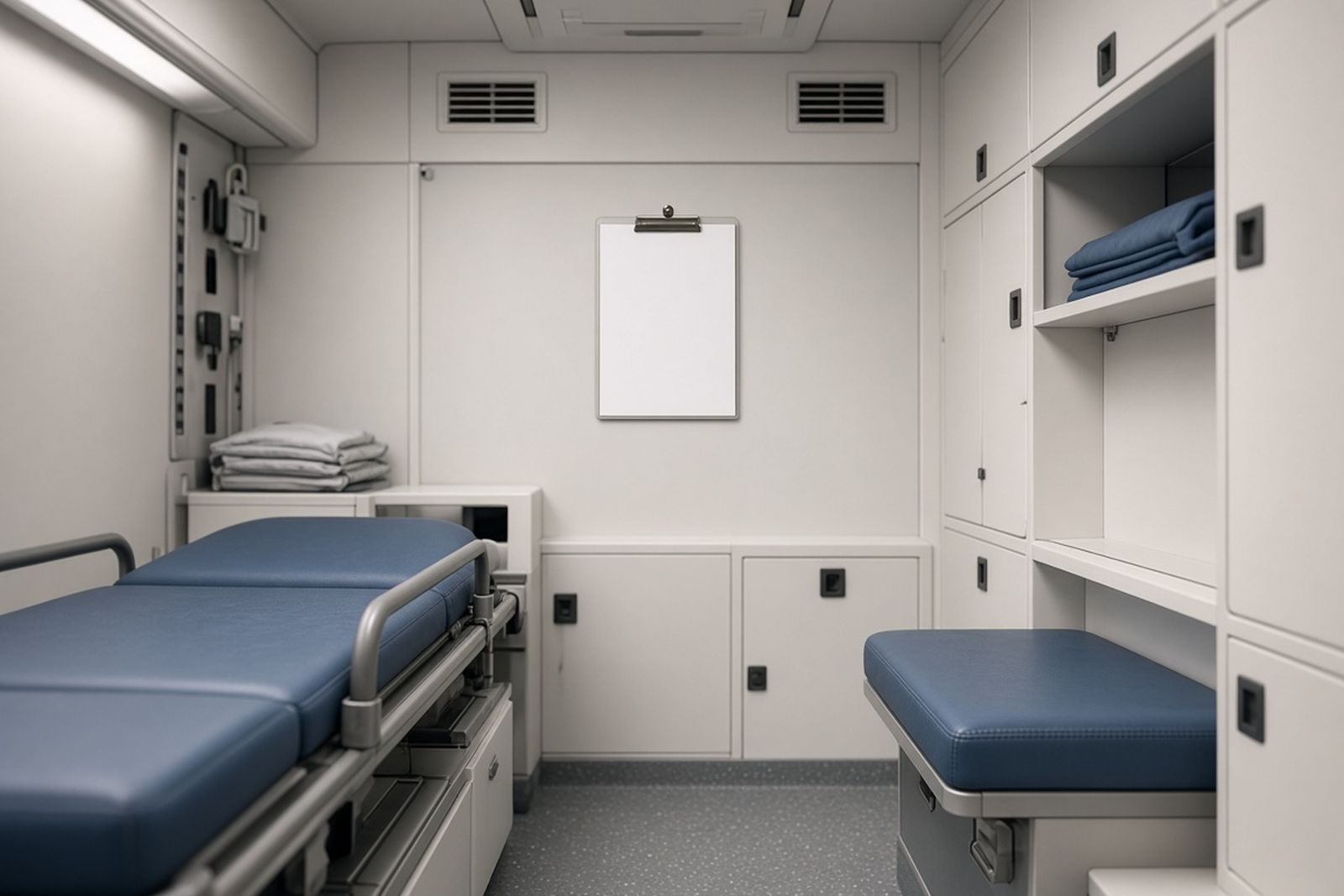
Crews move quickly during a call, and gloved hands spread material to cabinet handles, overhead grab rails, radio controls, monitor buttons, and door interiors. A strong vendor walks the compartment, cab, and exterior touch points and builds a list of surfaces to treat rather than focusing only on the obvious spill.
Even well-run agencies struggle to clean thoroughly when calls keep coming, and that gap is exactly what a terminal decon vendor is supposed to fill.
The cab deserves the same attention. Drivers often touch the steering wheel, shifter, radio, and mobile data terminal with gloves they wore in the back, and those surfaces are easy for a vendor to skip because they look clean. Ask whether the cab is part of the standard scope or an add-on.
Ask the vendor to show you their standard touch-point checklist for a vehicle like yours. If they do not have one, or if it looks like a generic list for a building, they may not understand how contamination moves in a vehicle.
Same unit, two vendors: a side-by-side
Picture two vendors called to the same job at an illustrative county EMS agency. Its medic unit transported a trauma patient with significant bleeding late at night. The crew did a gross clean at the hospital bay, but the supervisor pulls the unit out of service for a terminal decon.
The first vendor offers to fog the compartment in about an hour and have the unit back on the road before morning shift. They do not ask about the monitor, the stretcher mount, or the cot mattress. They provide no written record beyond an invoice.
The second vendor asks what was contaminated, whether the stretcher was removed, and which devices are mounted in the compartment. They propose removing the stretcher and soft goods, cleaning the floor tracks and mount, disinfecting touch points using products compatible with the monitor manufacturer's guidance, and bagging the mattress for replacement because the cover is torn. They estimate a longer turnaround and provide a completion sheet listing each surface treated, the product used, and the contact time.
The first vendor returns the unit faster. The second returns a unit the supervisor can actually vouch for, with a record the infection-control officer can file.
What documentation should every decon produce?
Fleet decontamination is an ongoing program, not a one-time event. Every terminal clean should produce a record tied to the unit number, date, time, reason for decon, surfaces treated, products used, contact times met, soft goods removed or replaced, and the name of the technician responsible.
Ask whether records are delivered on paper, by email, or through a portal, and whether they can be exported by unit. A stack of loose invoices is hard to audit. A searchable log lets you see at a glance which vehicles have had repeated heavy exposures and whether soft goods on a particular unit are being replaced as often as they should be.
That record helps your infection-control officer spot trends, supports exposure follow-up if a crew member later reports illness, and gives you evidence during audits or accreditation reviews. A vendor who treats documentation as an afterthought is making your job harder.
Some agencies also require vendors to follow their own exposure control plan or policy. Your medical director and state EMS office can tell you which requirements apply to contracted cleaning of your fleet.
What a trustworthy decon partner looks like
The strongest vendors behave like an extension of your infection-control program. They ask about the exposure, the unit, and your policies. They clean before disinfecting, choose products that fit both the organism and your equipment, and respect contact time on every surface.
They also train and protect their own technicians, carry insurance appropriate for working on emergency vehicles, and know how to handle regulated waste from the compartment. They are candid about turnaround, and they tell you when a unit needs more time or when soft goods should be replaced.
Most importantly, they leave a record. When a vendor hands you a clear completion sheet for every unit, you can show your crews, your medical director, and your community that each vehicle was genuinely ready for the next call.