Short answer
Take the unit out of service with dispatch right away, and make sure any exposed crew member starts your exposure procedure. Remove the crew's gear, bag obviously contaminated disposables, and close up the compartment without trying to clean it quickly. Look for sharps only with gloves and a light, never by feel. Photograph, log what happened, and hand the unit to a trained decon team for a full terminal clean.
First move: tell dispatch and look after the crew
The first step is administrative, and it matters most: tell dispatch the unit is out of service. A contaminated compartment that gets assigned to the next call in the middle of a quick wipe is exactly how exposures and cross-contamination happen.
Next, look after the crew. If anyone had a splash, a needlestick, or contact with blood or body fluids on broken skin, they should start your exposure control procedure immediately. That usually means washing the area, reporting to a supervisor, and getting evaluated. The vehicle can wait; post-exposure care cannot.
Park it where decon can happen safely
Then park the unit in a location where decon can happen safely, ideally a bay with good lighting, drainage, and ventilation, away from other units and public areas.
If the contamination happened on a patrol car or engine rather than an ambulance, the same logic applies. Tell your supervisor or shift commander, take the vehicle off the available list, and keep other officers or firefighters from using it until it has been cleaned.
Resist the quick clean
After a hard call, crews often want to wipe things down quickly and get back in service. The instinct is admirable, but a rushed clean after gross contamination tends to spread material around rather than remove it, and it can give a false sense that the unit is ready.
Even under routine conditions, a unit that looks ready is not always clean. A unit coming back from a heavy contamination event starts in a much worse position, and a hurried wipe cannot close that gap.
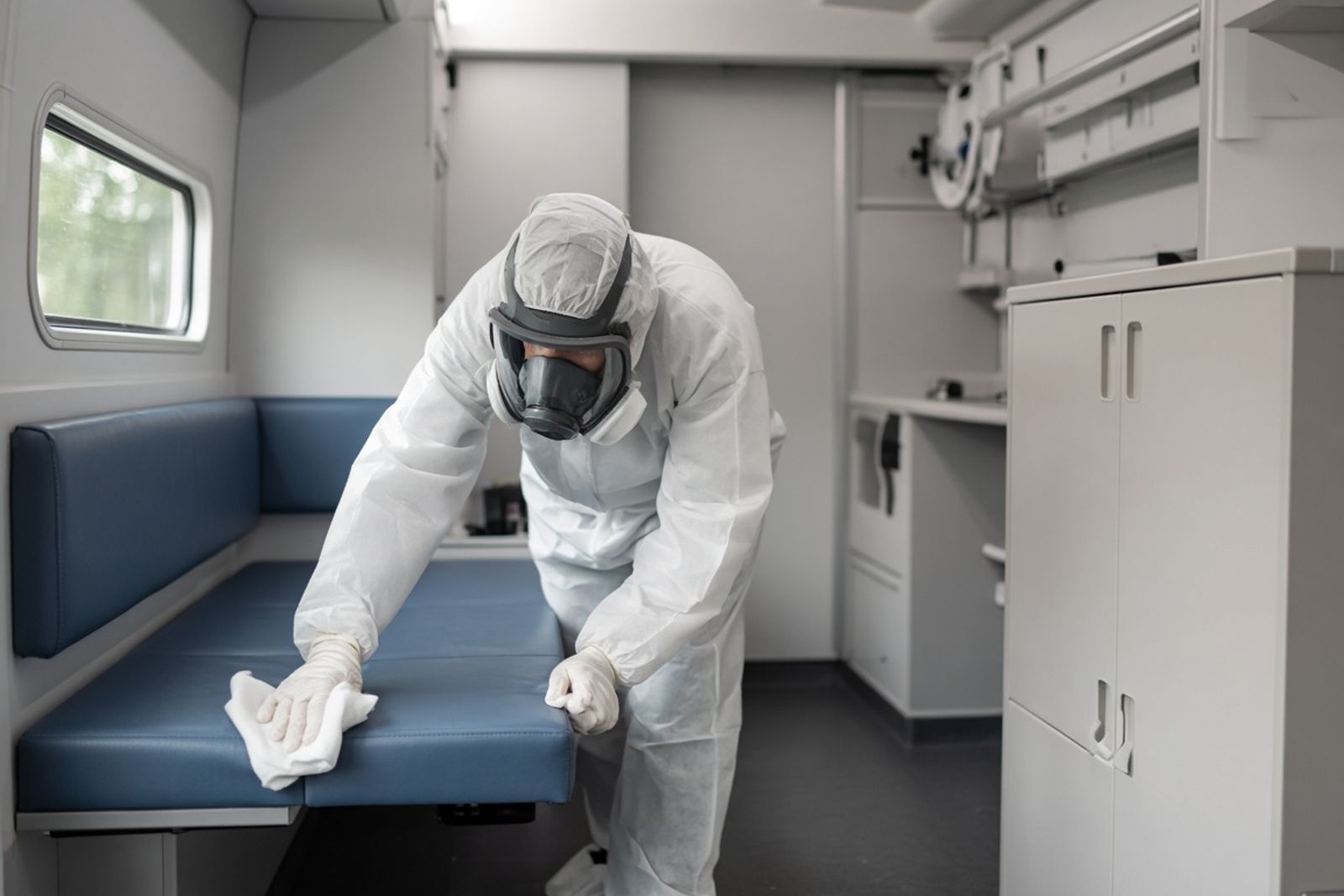
When the contamination is significant, the right call is to stabilize the compartment and bring in a full terminal decon, whether that means your trained in-house team or a contracted provider.
What can crews safely do while waiting for the decon team?
Crews can take a few useful steps that reduce risk without attempting a full clean. Wear gloves, eye protection, and a gown or fluid-resistant layer if there is any chance of contact.
Keep these steps brief, and leave the detailed work to the team assigned to the terminal clean.
- Remove and bag personal gear and uniforms that were soiled, following your agency's laundry procedure
- Place obviously contaminated disposables, such as dressings and pads, into a biohazard bag
- Close sharps containers that are full and secure them for replacement
- Remove portable equipment that needs separate cleaning, if it can be handled safely
- Close cabinet doors and the compartment to limit spread while waiting
- Leave soft goods in place for the decon team to assess rather than stripping them hastily
Checking for sharps without getting hurt
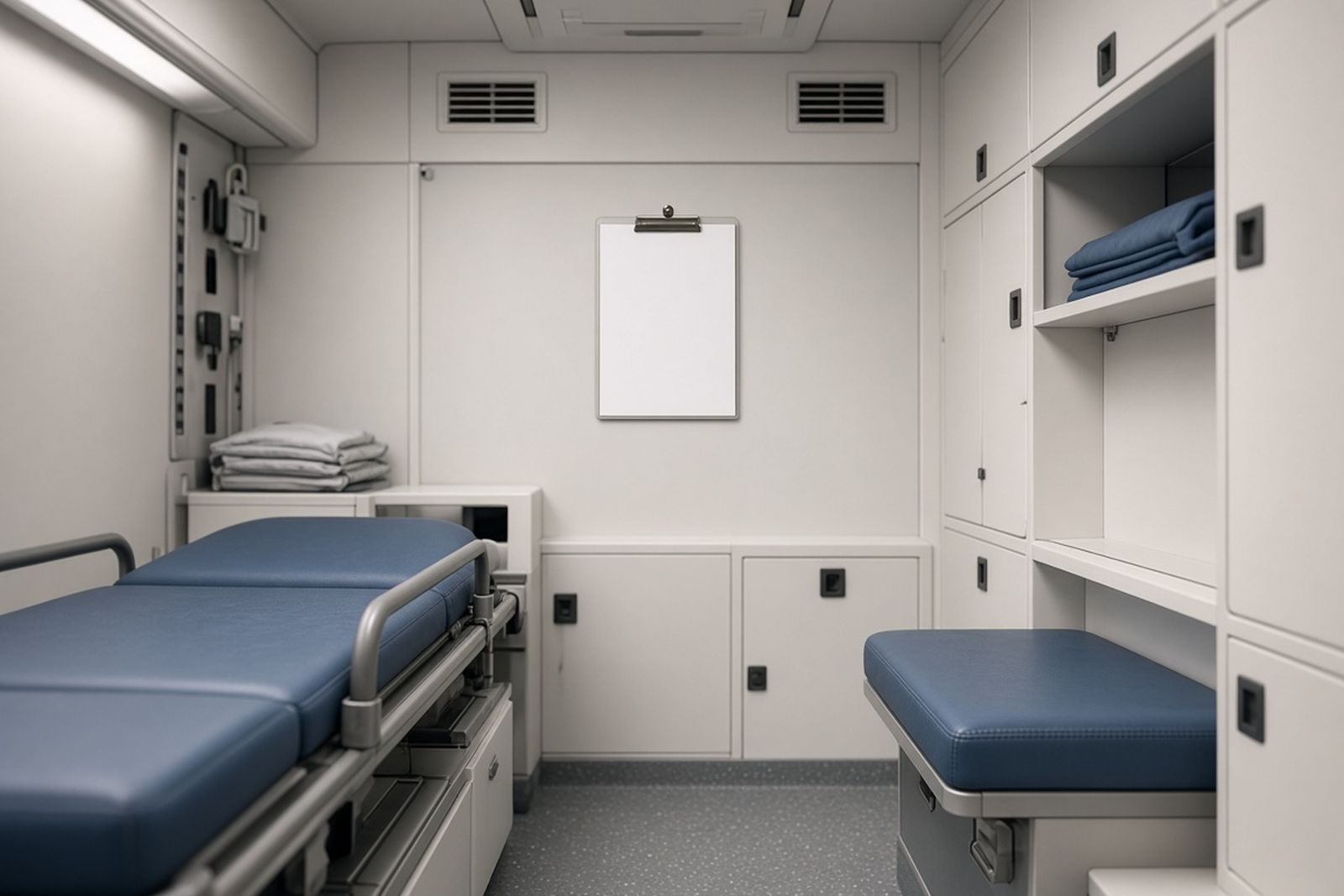
A chaotic call or a crash can send needles and other sharps into places they are not normally found: under the cot, along floor seams, behind cushions, in cabinet tracks, and in door pockets. Every decon should include a deliberate sharps check, and it should never be done by feel.
Use a flashlight and look first. If you see a sharp, pick it up with tongs or forceps rather than fingers and place it directly into a sharps container. Do not reach into gaps or under equipment where you cannot see.
If you do not have the right tools or the unit is heavily contaminated, leave the sharps check to the decon team and warn them clearly about what may be present. Note any sharps you found and removed in your log.
The crew needs as much attention as the vehicle
It is easy to focus on the unit and forget the people who worked in it. NIOSH reported in 2017 that more than 22,000 EMS workers visit emergency departments each year for work-related injuries, including about 6,000 per year for exposures to harmful substances such as blood.
Supervisors should ask each crew member directly whether they had any exposure, rather than waiting for someone to volunteer it. Some people downplay splashes or small cuts after a busy call.
Make sure the exposure report and the vehicle decon record reference each other. That link helps your infection control officer see patterns and confirms that the unit was handled after the event.
Heavy calls can also take an emotional toll. If a crew member seems shaken, give them a moment away from the unit and let them know peer support or your employee assistance program is available. Someone who is struggling should not be the person asked to scrub the compartment.
Documenting the handoff
A short, clear handoff helps the decon team work safely and efficiently, and it becomes part of your record. Note the unit number, the time it was taken out of service, and a general description of the event without patient identifiers.
Record what was contaminated, including the cot, floor, seats, walls, cabinets, and equipment, and whether the contamination reached the cab. Note any sharps found or suspected, any known or suspected organism, and whether the unit was in a collision.
Photographs taken from the doorway can help, especially after crashes. Keep them within your agency's systems, since patient privacy rules may apply to anything that could identify the call.
Illustration: a clean handoff after a crash
The sequence below is illustrative rather than a real incident. An ambulance is struck at an intersection while transporting a patient with a head wound. No one is seriously hurt, but supplies spill across the floor, the cot shifts, and blood reaches the bench seat and a lower cabinet.
The crew places the unit out of service as soon as police clear the scene, and the patient is transferred to a second unit. Back at the station, the supervisor asks each crew member about exposures; one EMT has blood on a forearm and starts the exposure procedure. The other crew member bags the obviously soiled dressings, closes the compartment, and uses a flashlight to spot two capped syringes near the cot mount, removing them with forceps.
The supervisor writes a short handoff note describing the collision, the contaminated areas, the syringes found, and the cabinet door that no longer latches. The decon team arrives, reviews the note, and begins a full terminal clean. The note, the exposure report number, and the crash report number are filed together.
When should you call an outside decon provider instead of handling it in-house?
Many agencies handle most terminal cleans with trained staff. An outside provider may make more sense when contamination is extensive, when a collision has damaged the compartment, when your trained staff are unavailable or were involved in the call, or when a known organism calls for products and procedures your team does not usually use.
Having a provider agreement in place before you need it saves time. When the call comes, you should already know who to contact, what information they need, and how quickly they can respond.
Ask your medical director and state EMS office in advance whether any notification, cleaning, or waste requirements apply to contaminated emergency vehicles in your area.
Keep the provider's contact details, your account information, and a copy of the handoff note template in each station and in supervisors' vehicles. At two in the morning after a difficult call, no one should have to search for a phone number.
Getting the unit back on the road
Only return a unit to service after the terminal clean is complete, the disinfectant has been given its full contact time, soft goods and equipment have been cleaned or replaced, and the compartment has been restocked. A supervisor or designated crew member should inspect the unit and sign the decon record.
If the unit was in a collision, it also needs mechanical and safety checks before it returns. Decon and repair are separate steps, and both must be complete.
Check in with the crew and debrief
Finally, check in with the crew who brought it in. A brief conversation about how they are doing, and what could make the next heavy call easier to manage, is part of a good response.
Use the event as a learning opportunity. At your next crew meeting or infection control review, walk through what went well, what slowed the response, and whether supplies such as tongs, flashlights, extra biohazard bags, or a spare cot mattress should be staged differently at each station.