Emergency Vehicle Decontamination: Process & What to Expect
Property-specific walkthroughs for emergency vehicle decontamination: assessment, scope approval, hazard controls, material decisions, documentation, verification, and restoration handoff. Not every phase applies to every incident.
Posts in this category follow a dirty unit from the moment it backs into the bay until a supervisor signs it back into service. Articles describe how a crew or contractor strips soft items and pulls the cot and removable gear. They show how cleaners work from the ceiling of the patient area down to the floor. They also show how to follow the contact time printed on the disinfectant label. Other posts explain what makes a unit stay out of service longer. Fluids that reached cabinet seams or a stretcher part are two examples. Posts also cover what a crew can safely do at the hospital ramp before driving back to the station.
Get an email reply about emergency vehicle decontamination
Send a short message to the follow-up inbox. A coordinator can reply by email. This form does not send emergency help; call 911 first if anyone is in danger.
Knowing the order of steps keeps a busy shift from cutting corners when the next call is already waiting. It also helps fleet supervisors guess how long a unit will be down. They can then arrange a spare vehicle and explain the delay to dispatch without guessing. When everyone knows which steps cannot be rushed, it is easier to resist pressure to return a unit early. The job record also tells a clear story if an infection control officer or state inspector later asks what happened. Shared expectations make handoffs between shifts smoother, too, when a unit is still being cleaned at shift change.
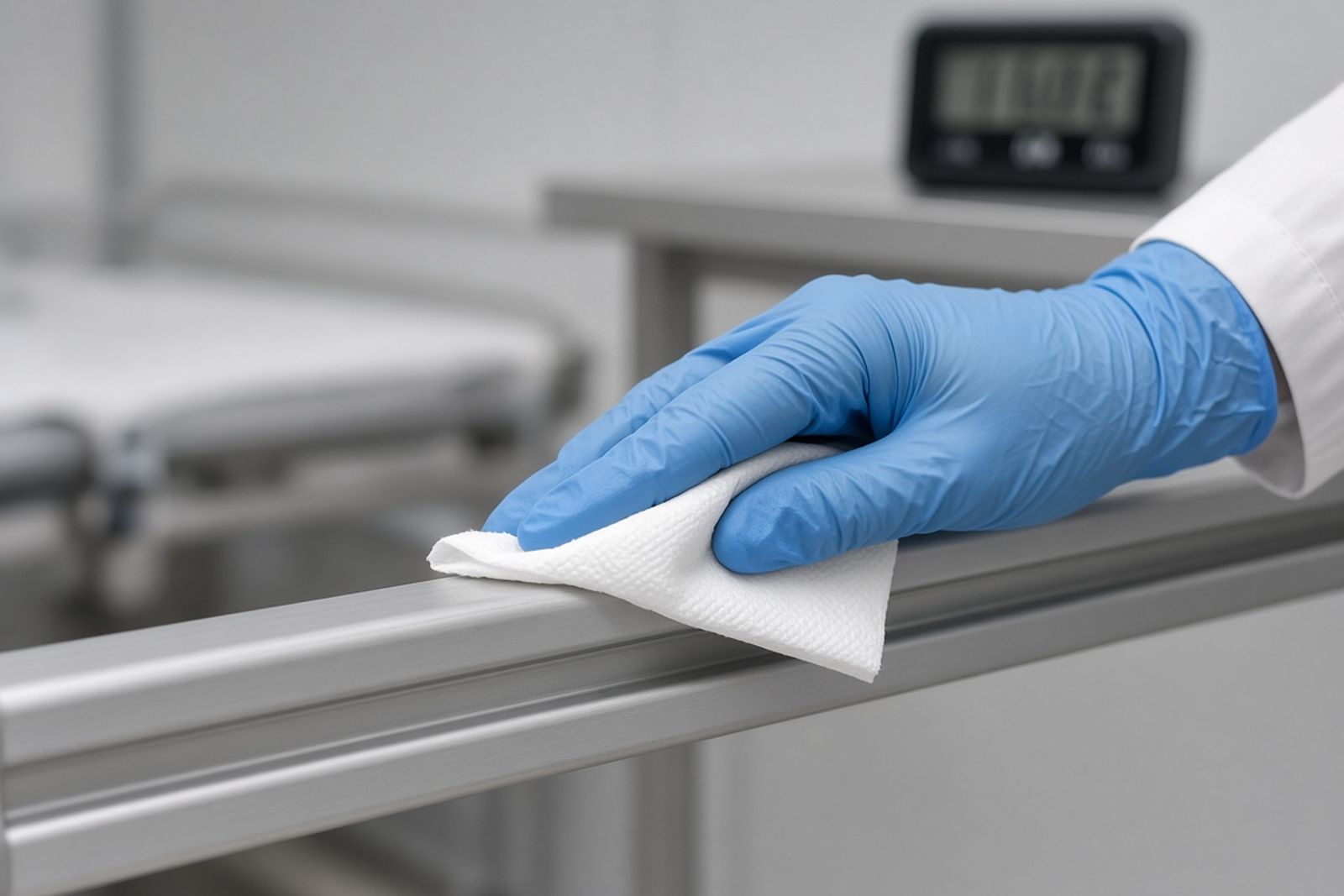
What to Expect During Professional Emergency Vehicle Decontamination
How a professional terminal decon of an ambulance, engine cab, or patrol car unfolds, from intake and sharps sweep to contact time, soft goods, and handback.
Expect an intake conversation about the exposure, then a crew who take the unit offline, remove equipment and soft goods, sweep for sharps, clean every surface from top to bottom, and apply a registered disinfectant for its full labeled contact time. Soft goods are cleaned or replaced, equipment is disinfected separately, and the unit is restocked. It ends with a written record and formal return to service.
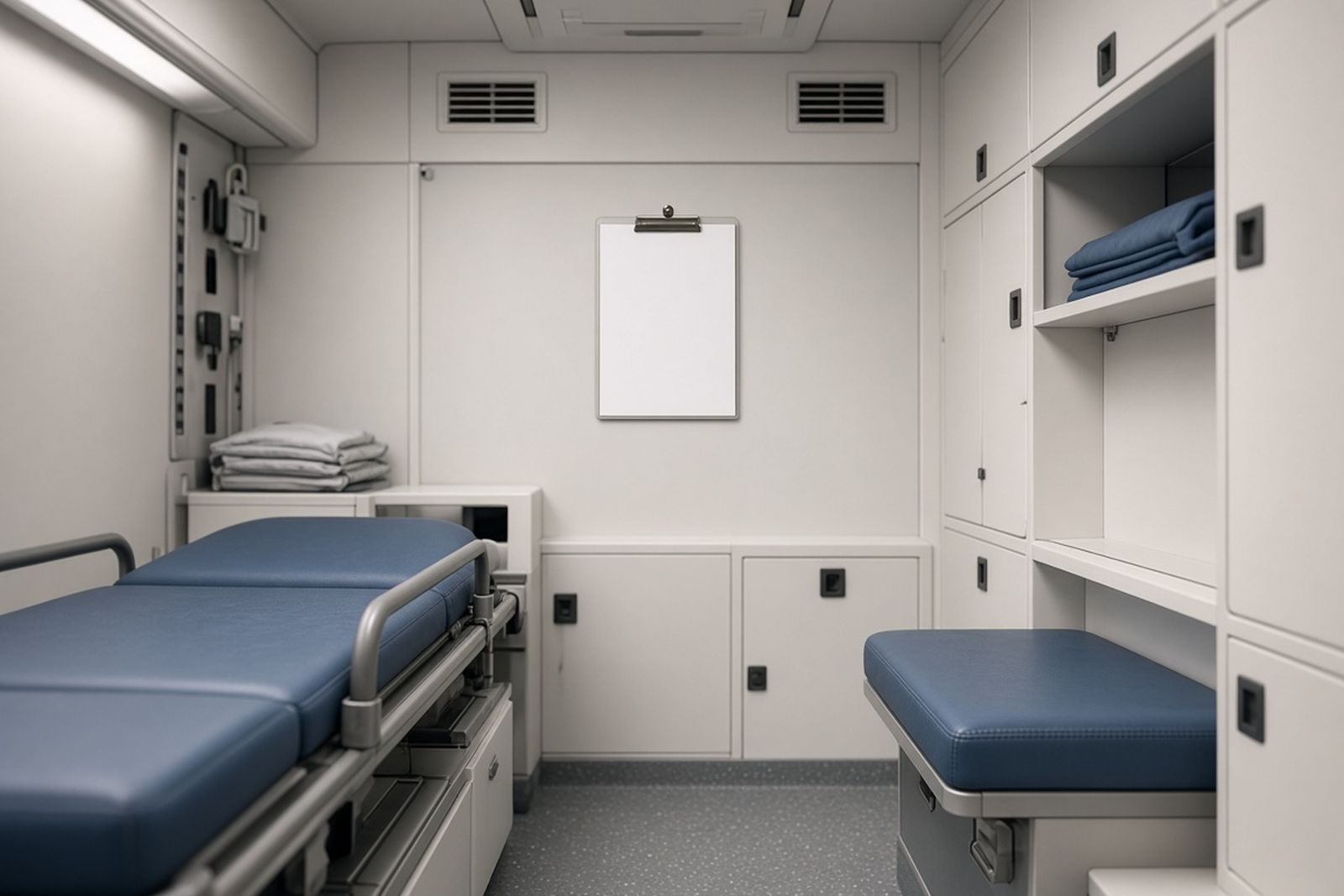
How Long Does Emergency Vehicle Decontamination Take?
What controls how long an ambulance, patrol car, or engine is out of service for decon, from exposure type and soft goods to dwell times and restocking.
How long emergency vehicle decontamination takes depends on the level of clean, not the vehicle alone. A between-call wipe is brief, a scheduled terminal clean takes a unit out of service longer, and a gross contamination or crash event takes longest because soft goods, equipment, and hidden areas must be addressed. Disinfectant contact time, drying, restocking, and inspection all add to the total.
Urgent Emergency Vehicle Decontamination: What to Do Before a Provider Arrives
A unit just came back from a call with heavy blood, vomit, or a crash inside. What crews and supervisors should do before a terminal decon crew takes over.
Take the unit out of service with dispatch right away, and make sure any exposed crew member starts your exposure procedure. Remove the crew's gear, bag obviously contaminated disposables, and close up the compartment without trying to clean it quickly. Look for sharps only with gloves and a light, never by feel. Photograph, log what happened, and hand the unit to a trained decon team for a full terminal clean.
Sourced figures on process & what to expect
- 52%
The reported contamination rate fell from 52% before disinfection to 8% afterwards.
Read with care: Abstract does not provide sample count; product-specific; contamination is not infection.
Source: Farhadloo et al. (2018)Ambulance cabins and equipment in Qom, Iran, treated with one named disinfectant.
- 214
214 of 429 samples grew bacteria.
Read with care: Detection is not infection; small local fleet; most isolates were environmental flora.
Source: Noh et al. (2011)13 Seoul ambulances; 33 sites each, 429 samples.
- 26
Existing decontamination left 26 of 48 sites tracer-positive.
Read with care: Surrogate-virus transfer, not measured patient infection; local workflow.
Source: Valdez et al. (2015)EMS field experiment using seeded bacteriophage as a microbial surrogate.
These figures are public research and agency data, not this network's own job records. Keep each number with its population, year and limits; none of them predicts cost, timing or outcome at a specific property.
What research has found
Findings from published studies of people and properties in situations like this one. They describe what researchers observed in a specific group; they are not predictions for your case.
The intervention significantly reduced measured viral loads.
All six surface types were contaminated before routine cleaning.
Process & What to Expect: common questions
What happens to a unit between a messy call and its return to service?
The crew usually removes heavy mess and bags throwaway items. Then the unit is tagged out. Hard surfaces, equipment, and fabrics are cleaned and disinfected under your agency's rules. Damaged or soaked items are replaced. A named supervisor reviews the job record before the vehicle goes back into service.
Can crews do a quick wipe-down at the hospital instead of returning to the station?
A quick wipe-down of high-touch surfaces is common between routine transports. But it does not replace a deep clean after a heavy mess. If fluids reached fabric, seams, or the inside of equipment, most rules call for taking the unit out of service. Your medical director and exposure control plan decide where that line is.
Why does a cleaned ambulance sometimes stay out of service longer than expected?
Delays can come from waiting on new cot pads or straps. They can come from the disinfectant contact times on many surfaces, drying fabrics, or fixing gear damaged during the call. Some units also need a supervisor or outside check before release. Planning for a spare unit eases the pressure to rush those steps.
Who should decide that a unit is ready to go back in service?
A named supervisor or infection control contact should, not the person who cleaned it. A second set of eyes catches missed surfaces, wet cushions, and missing gear. It also keeps the choice apart from the pressure to get the unit moving. Name the role in your written steps. Give that person clear power to hold a unit. Have them sign the cleaning record before dispatch is told.
What should the crew tell the decon team at handoff?
Describe where fluids went and whether anything reached fabric, seams, or the cab. Say whether needles were used or may be loose. Say whether any germ of concern is suspected. Mention doors or drawers that were open during the call and any gear that was damaged. Keep patient names and details out of it. A short written note works better than a hallway chat, especially if the clean runs across a shift change.
How should crews prepare a unit for a scheduled terminal clean?
Remove personal items and empty the trash. Secure or remove controlled drugs under your agency's steps. Note any damage or problems you have seen since the last clean. Leave supplies in place unless the steps say otherwise, so the team can check the cabinets. Tell the team about a sticky latch or a worn cushion seam. That helps them focus on spots that need extra care.
What happens if a problem is found during the clean that needs a repair?
The cleaning team should photograph it, note it on the record, and tell the supervisor. It depends on the problem. The unit may stay out of service until the fleet shop can fix it. Or it may return with a work order if the problem does not affect cleaning or safety. A cracked seat cover, a cabinet seal that traps fluid, or a loose mount are common finds worth fixing quickly.
Related community polls
Every count is a real visitor vote; nothing is seeded or padded. One vote per poll per device, and you can change your answer.
After a bloody transport, what usually decides whether your unit gets a full deep clean?
Who performs terminal cleans on your fleet most of the time?
More on emergency vehicle decontamination
Emergency Vehicle Decontamination services
Learn how deep cleans of ambulances, fire trucks, and police cars are planned. See needle sweeps, choices about soft items, and records by unit number.
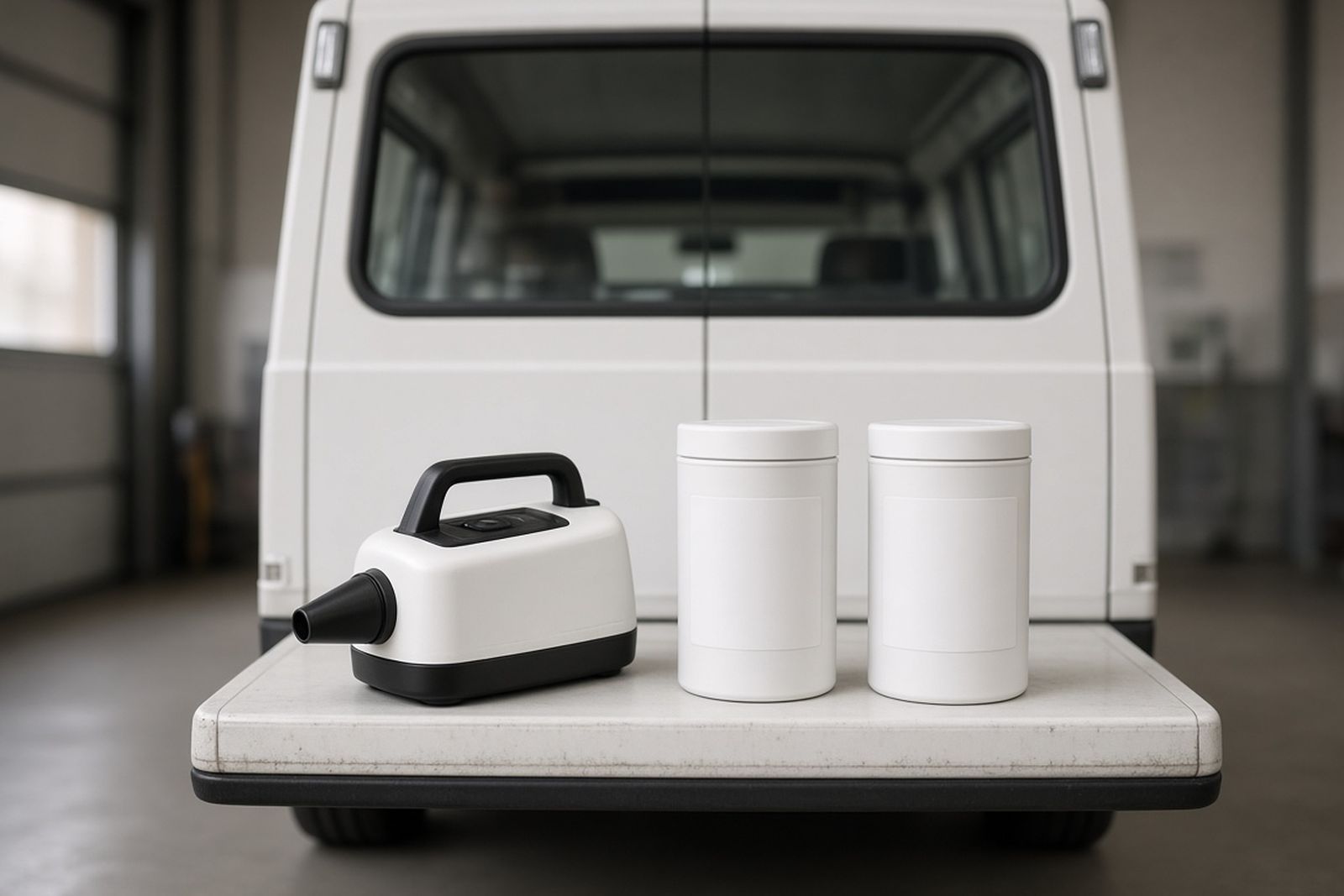
Costs explained
What drives the price, published cost ranges, and how to read a written quote line by line.
Insurance and payment
Which policies may respond, how to document a claim, and what to do if coverage is denied.
Planning tools
Guided planners for fleet managers. Get cost ranges, vendor checks, insurance steps, first-day actions, waste sorting, and in-house versus vendor risk.
Community polls
See how other EMS, fire, and police fleets handle time pressure, new soft items, records, and product choices in their own bays.
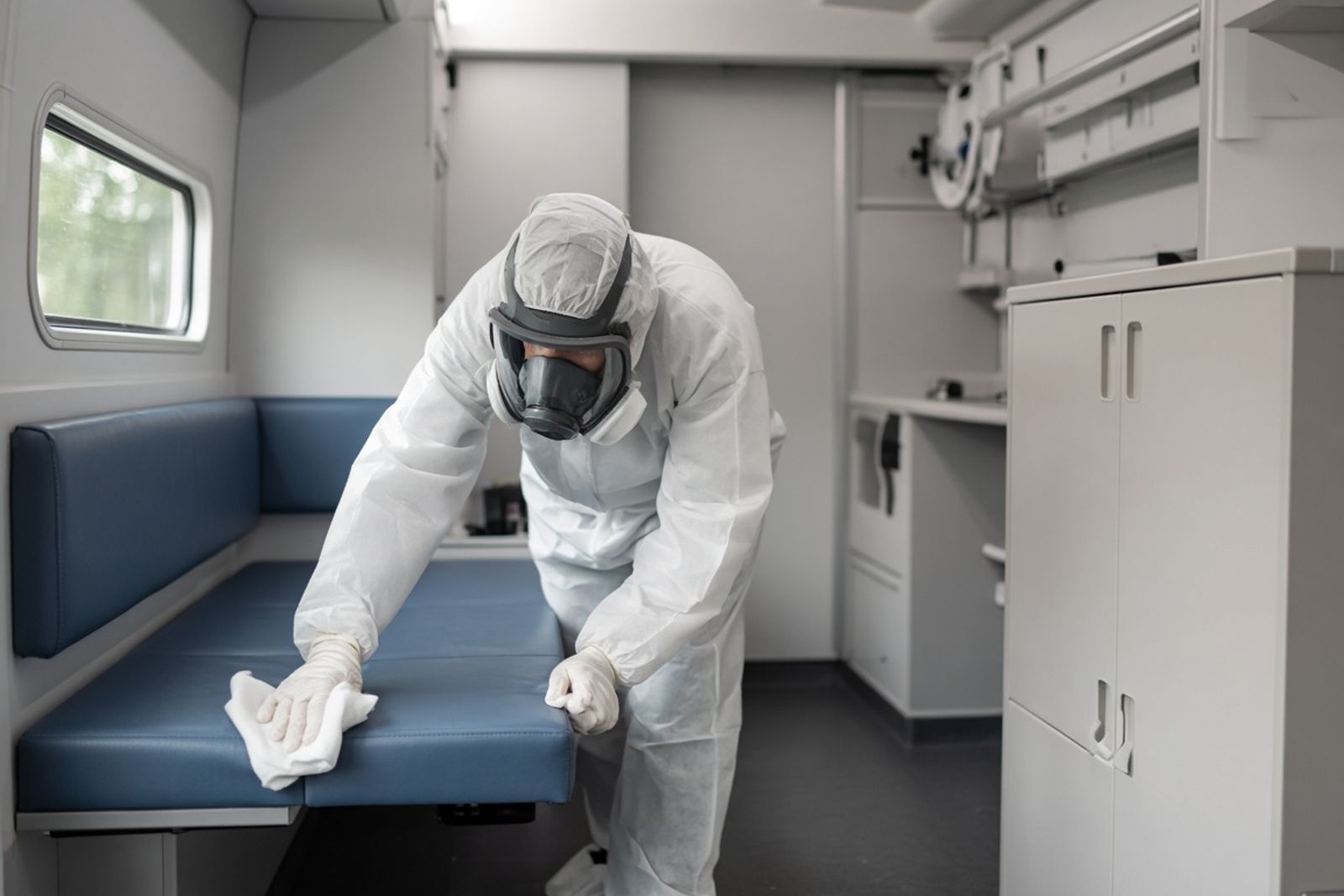
Knowledge quiz
Test what you know about cabin hazards, who pulls a unit from service, containment, contact time, waste, and cleaning records before the next hard call.