Short answer
Enzymatic cleaners break down proteins, fats, and starches in blood, vomit, and other body fluids, so they help with dried soil in stretcher mechanisms, seat fabric, and some reusable equipment when the manufacturer allows. They are cleaners, not disinfectants, so a registered disinfectant must follow. Live-microbe products suit drains and odor control in bays, but seldom belong inside a patient compartment where you are trying to reduce microbes.
Two very different product types
In environmental work, bioremediation means using biological processes to break down contaminants. In emergency vehicle decontamination, the term gets used more loosely to describe two different kinds of products.
The first is enzymatic cleaners. These contain enzymes, typically proteases for proteins, lipases for fats, and amylases for starches, that break organic soil into smaller pieces that rinse or wipe away more easily. The enzymes themselves are not alive.
The second is microbial or bio-based products. These contain live, beneficial bacteria, often in spore form, that consume organic residue over time. They are common in drain maintenance, grease traps, and odor control.
The two are very different, and they fit very different parts of an emergency vehicle program. Mixing them up is where problems start.
Enzymes: where they help, and why they are never the last step
Blood and many other body fluids are rich in protein. When they dry, particularly in grooves, tracks, and fabric, those proteins bind tightly to surfaces. Ordinary detergent and friction can struggle to remove them, and a disinfectant applied over dried protein may not reach the organisms underneath.
Enzymatic cleaners are designed for exactly this problem. Given enough dwell time, they loosen protein soil so that it can be wiped, brushed, or extracted away. That makes the surface ready for disinfection.
Contamination levels in ambulances make thorough soil removal worthwhile. In a 2011 surveillance study of metropolitan ambulances by Noh and colleagues, 214 of 429 samples grew bacteria. Much of what builds up on surfaces is organic residue that shields microbes, and removing it is the step that makes the rest of the process work.
Enzymatic cleaners are not disinfectants. They break down soil; they do not reliably inactivate bacteria, viruses, or fungi. After an enzyme step, surfaces still need a registered disinfectant applied according to its label, including the full contact time.
Sequencing matters. Many disinfectants will deactivate enzymes, and some enzyme residues can interfere with certain disinfectants. The usual approach is to apply the enzymatic cleaner, allow the recommended dwell time, remove the loosened soil and residue by wiping or rinsing, and only then disinfect. Follow both product labels.
Temperature and time also affect performance. Enzymes typically work best within a certain temperature range and need a few minutes to act. Spraying an enzyme cleaner and wiping it off immediately wastes the product and leaves soil behind.
- Dried blood in stretcher rails, locking mechanisms, and wheel assemblies
- Soiled seat fabric and cloth seatbelts in the cab or on the bench
- Floor seams, track edges, and textured flooring where residue collects
- Vomit residue in hard-to-reach crevices around seats and cabinets
- Reusable medical devices, only when the device manufacturer's instructions call for an enzymatic detergent
Live-microbe products belong outside the compartment
Live-microbe products generally do not belong in the patient compartment. The goal inside an ambulance is to remove soil and reduce microbes on surfaces that contact patients and providers. Deliberately introducing live bacteria, even beneficial ones, works against that goal and would be difficult to justify to an infection control officer or medical director.
Live-microbe products also tend to work slowly, over hours or days, which does not fit the turnaround needs of an emergency vehicle. And the disinfectants used afterward would kill the microbes anyway, making the product pointless.
Where microbial products can make sense is outside the vehicle: in station floor drains, trench drains, and grease or oil separators where organic buildup causes odors and clogs. Even there, check with your facilities team and wastewater utility, since some systems have restrictions on what may be added.
Odors and interior materials
Odors in emergency vehicles often come from organic residue that was not fully removed: vomit in a seat seam, urine in a floor channel, blood in a stretcher mattress seam. Masking products cover the smell briefly, but it returns when the residue is still there.
Enzymatic cleaners can break down the source of the odor so that it can be removed. This is especially useful in patrol car rear seats and in cabs with fabric upholstery, where odors can persist for days.
If an odor keeps coming back after enzyme treatment and disinfection, the residue may have penetrated padding or foam beneath a torn cover. At that point, replacing the component is usually more effective than repeated cleaning.
Resist the temptation to reach for fragrances or ozone generators as a shortcut. Fragrance hides the problem from the crew while the residue remains, and ozone raises its own safety and material concerns in an enclosed compartment. Finding and removing the source is slower but lasts.
Most enzyme cleaners are relatively gentle compared with strong oxidizers or solvents, but they are not risk-free for every surface. Some formulations can leave residues that attract dirt, and some are not recommended for electronics or certain coated surfaces.
Check the product's compatibility information and any guidance from equipment and vehicle manufacturers. For cardiac monitors, ventilators, and other electronics, use only products the device maker approves. Test on a small, hidden area of fabric or vinyl before treating an entire seat.
Rinse or wipe away enzyme residue before disinfecting, both to protect the disinfectant's performance and to avoid sticky films that collect new soil.
Worked illustration: dried blood in a stretcher mechanism
As an illustration, take a private ambulance company whose unit returns from a long interfacility transfer. The crew was busy with the patient throughout, and a small amount of blood dripped into the stretcher's height-adjustment mechanism. By the time the unit reaches the station, the blood has dried in the grooves.
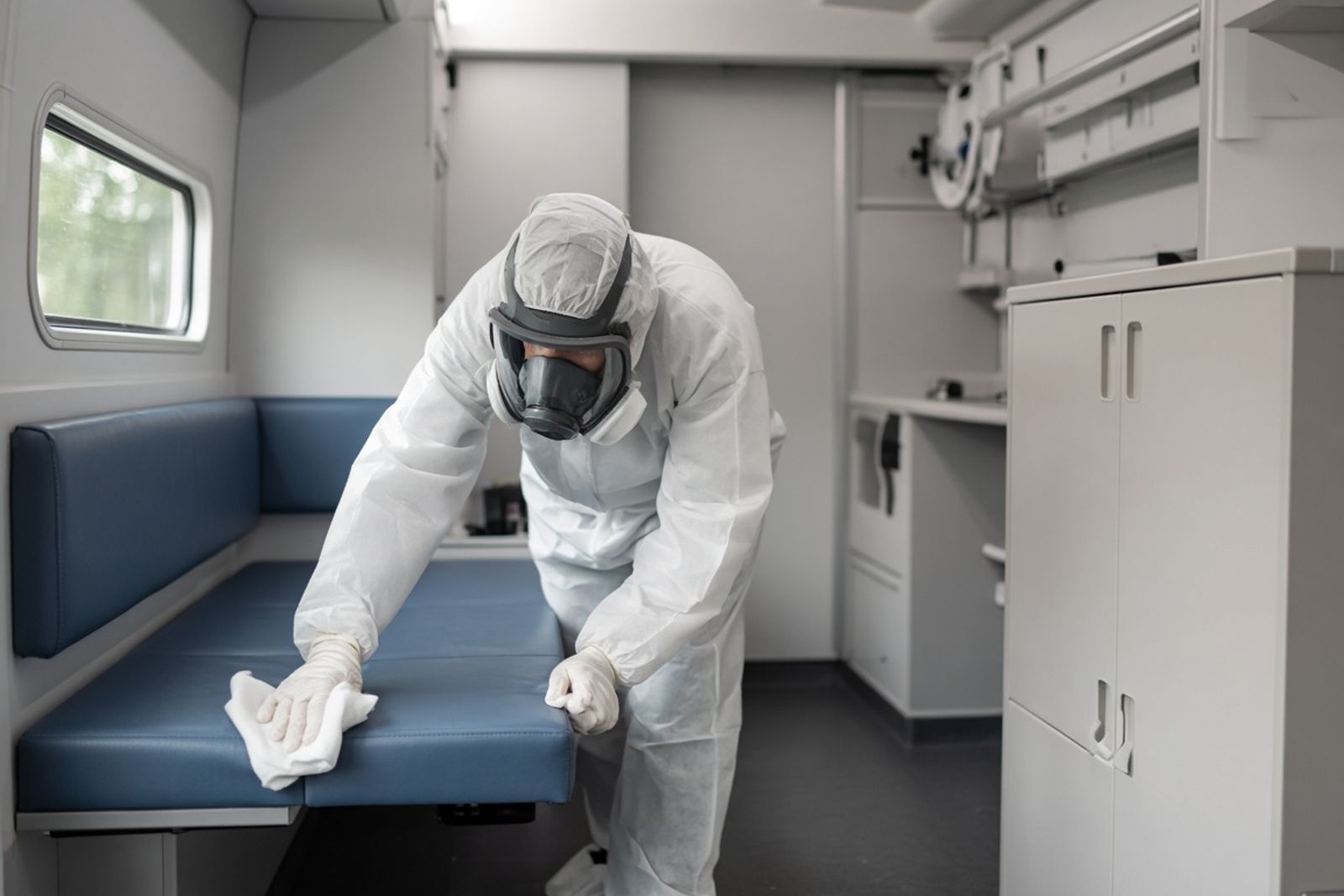
The fleet technician removes the stretcher from the unit and places it in the station's equipment cleaning area. Wearing appropriate PPE, he applies an enzymatic cleaner approved by the stretcher's manufacturer to the mechanism and allows it to dwell for the time on the label.
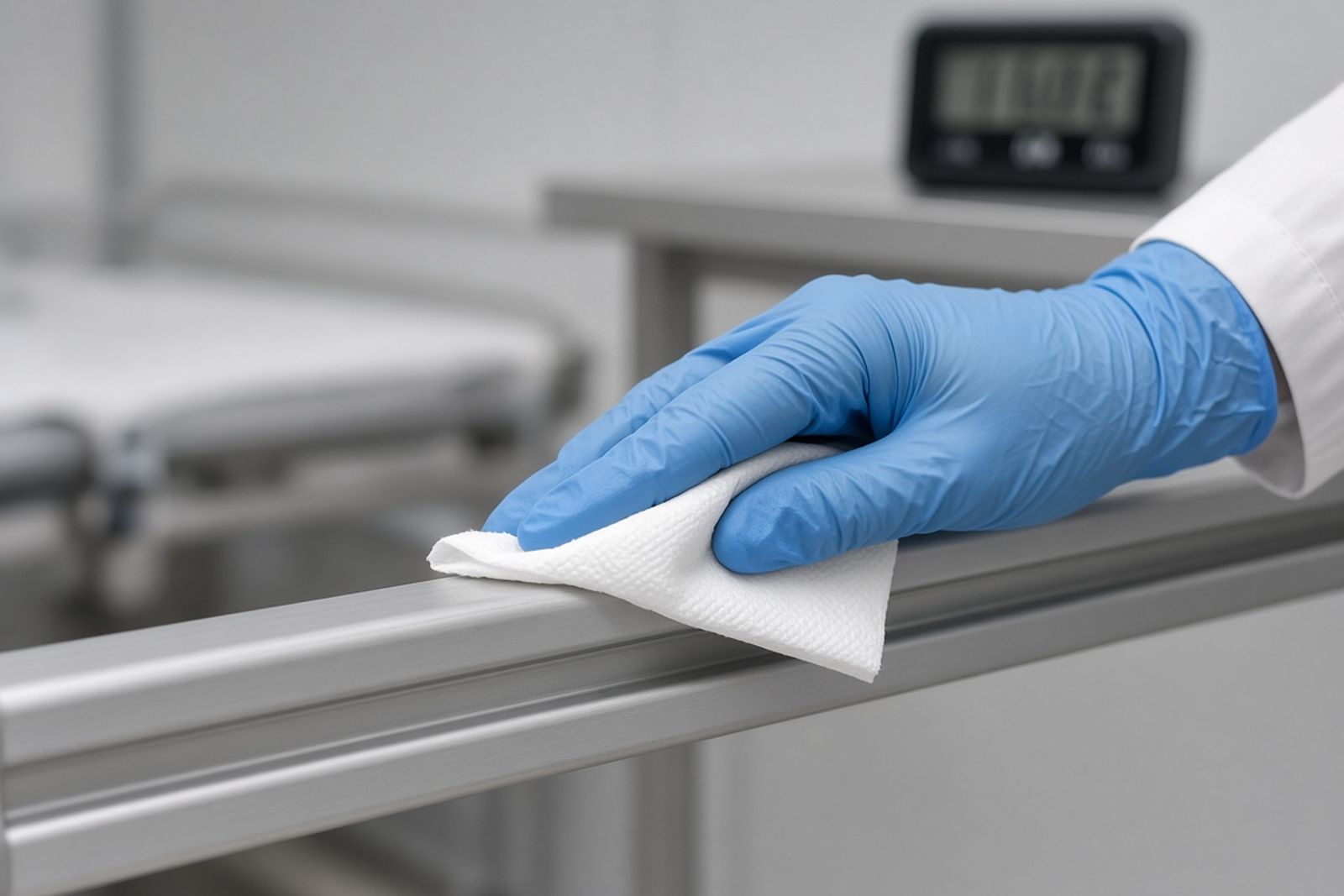
He then uses a soft brush to work the loosened residue free and wipes the area clean with a damp cloth, followed by a dry one. Once the visible soil is gone, he applies the company's registered disinfectant and keeps the surfaces wet for the full contact time.
After inspection under a bright light, he lubricates the mechanism according to the manufacturer's instructions, since cleaning products can strip lubricant. The stretcher is returned to the unit, and the technician logs the cleaning and products used.
Deciding when to use enzymes, and what to ask vendors
Most fleets do not need an enzyme step after every call. Between-call cleaning typically targets fresh soil on hard, smooth surfaces, where a detergent or a one-step cleaner-disinfectant used according to its label is usually adequate. Adding an enzyme step to every turnaround would slow units down without much benefit.
Enzymes earn their place in three situations. The first is heavy protein soil that has been allowed to dry, such as blood left in a mechanism during a long transport. The second is porous or textured material, including fabric seats, cloth belts, and grooved flooring, where soil settles deep. The third is the scheduled deep clean, when units come out of service for a top-to-bottom decontamination and technicians have time to let products dwell properly.
Writing these triggers into your cleaning procedure keeps enzyme products from being overused on routine cleans or forgotten when they are genuinely needed. It also helps with purchasing, since you can estimate consumption based on how often deep cleans and heavy-soil events occur.
Training should cover the why, not just the how. Crews who understand that enzymes loosen soil but do not disinfect are less likely to skip the disinfectant afterward, and less likely to believe an enzyme spray alone has made a unit ready for the next patient.
Storage deserves a word as well. Enzyme products can lose activity if they overheat or freeze, and ambulance compartments and unheated station storage rooms see both extremes. Keep stock in a temperature-controlled area, rotate it, and note expiration dates.
Marketing for these products can blur important distinctions. Clear questions will help you understand what you are buying and whether it fits your program.
Be cautious of any product that claims to clean and disinfect in one step through enzymes or microbes alone, or that promises to eliminate all pathogens. Those claims deserve a close look at the label and the evidence behind it.
- Is this an enzymatic cleaner, a live-microbe product, or something else?
- Is it intended as a cleaner only, or does it carry any registered disinfectant claims?
- What dwell time and temperature does it need to work?
- How should it be removed before a disinfectant is applied?
- Is it compatible with vinyl, plastics, stretcher mechanisms, and electronics in our units?
- Have equipment manufacturers approved it for their devices?