Short answer
Decontaminating a unit after a difficult call can bring the event back in vivid detail, and exposure worries can linger for weeks. Crews and fleet staff can lean on peer support teams, employee assistance programs, chaplains, and licensed clinicians who understand first responders. Agencies can help by letting another crew or a contractor handle heavy decon. Anyone in crisis can call or text 988 at any hour.
When the call lands during the clean
During a call, training takes over. Crews focus on the airway, the bleeding, the drive, and the handoff. There is little room to feel much of anything. The emotions often arrive later, and for many responders they arrive in the back of the ambulance with a bucket of wipes.
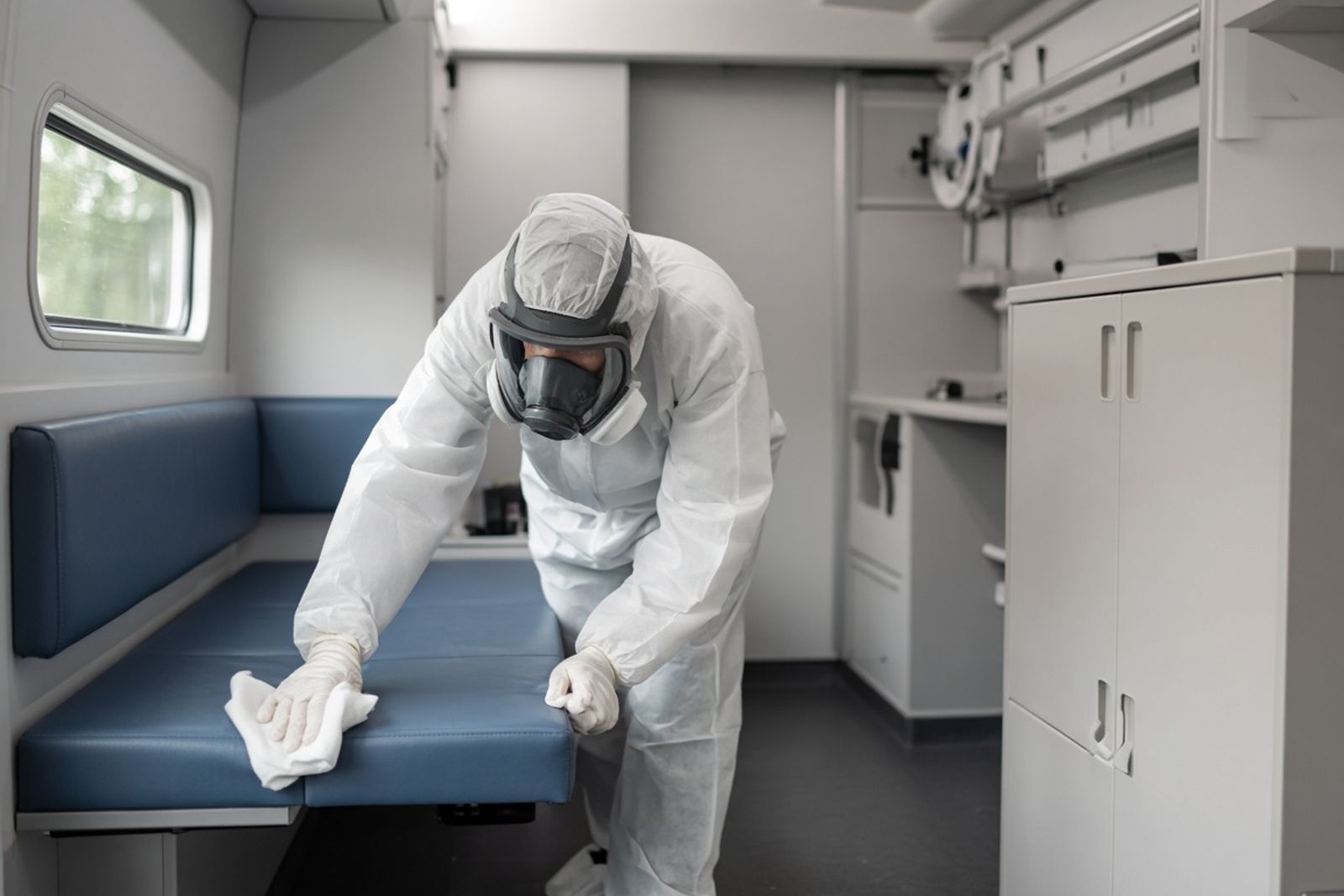
Decontamination is quiet, repetitive, and close. You are alone or with a partner in the space where the call happened, handling the equipment you used and seeing what the patient left behind. Details that barely registered during the call can suddenly feel very sharp.
If you have found that post-call cleaning is when a hard call really lands, you are not unusual and you are not weak. It is a common experience, and it is worth planning for rather than pushing through alone.
Sensory details play a part. The smell of a particular disinfectant, the feel of a stretcher strap, or the sight of a monitor cable can become linked to a specific call. Weeks later, the same product or piece of equipment may bring the memory back unexpectedly during an ordinary shift. Knowing that this can happen makes it less alarming when it does, and gives you a reason to mention it to a peer supporter or counselor.
Common reactions after a difficult call and decon
People respond differently, and there is no correct way to feel. Some reactions pass within days; others linger. Noticing them is the first step toward getting support if you need it.
If reactions last more than a few weeks, get worse over time, or interfere with work, relationships, or sleep, that is a good time to talk to someone with training in first responder mental health.
- Replaying moments from the call while cleaning or afterward
- Trouble sleeping, or dreams connected to the event
- Irritability, numbness, or feeling detached from coworkers or family
- Avoiding the unit, the station, or a particular type of call
- Heightened worry about infection after a splash or needlestick
- Using alcohol or other substances to wind down more than usual
Exposure worry and the wait for results
Blood and body fluid exposures are part of EMS work, and each one leaves a person waiting on test results and wondering what to tell their family.
That waiting period can be stressful even when the actual risk is low. Crews may feel anxious about intimacy, about hugging children, or about going back to work. Some blame themselves for a moment of broken technique.
The best antidote is prompt, accurate information. Report exposures right away through your agency's process so you can be evaluated quickly. Ask the clinician who sees you to explain your specific risk and the follow-up plan in plain language. If worry persists despite reassurance, it is appropriate to bring that to a counselor as well.
What support options are available to EMS and public safety crews?
Most agencies offer more support than crews realize. The challenge is often knowing what exists and feeling comfortable using it.
Peer support teams are made up of fellow responders trained to listen and to connect colleagues with further help. Many people find it easier to open up to someone who has done the same work.
Employee assistance programs typically provide a number of confidential counseling sessions at no cost to the employee, often including family members. Check your agency's specific benefits.
Chaplains serve many fire and EMS departments and offer support regardless of faith background.
Licensed clinicians who specialize in first responders understand shift work, call exposure, and department culture. Your EAP or peer team can often provide referrals.
Crisis support is always available. If you are thinking about suicide or are worried about a coworker, call or text 988 to reach the 988 Suicide and Crisis Lifeline, available around the clock.
Should someone else handle the decon after certain calls?
Some agencies have adopted a simple practice: after calls that are especially hard, such as those involving children, colleagues, or mass casualties, the unit's crew is not asked to perform the deep clean. Another crew, a fleet technician, or a contracted decontamination company does it instead.
This is not about avoiding responsibility. It gives the crew time to decompress, speak with a supervisor or peer, and handle their own exposure follow-up, rather than going straight from the call to scrubbing the compartment.
If your agency does not have this practice, consider raising it. A short written policy can define which calls trigger it, who decides, and how the unit returns to service.
The same consideration applies to fleet and contractor staff. Technicians who decon units after major incidents may also be affected by what they see. Their employers should make support available to them too.
An illustrative case: supporting a crew after a pediatric call
To make this concrete, here is an illustrative case rather than a real one. A two-person ALS crew returns to the station after a call involving a seriously ill infant. The patient was transported, but the outcome is uncertain. The compartment needs a thorough decon.
The shift supervisor meets the crew in the bay. She takes the unit out of service and asks the station's utility crew to handle the decontamination. She sits with the medics in the day room, asks how they are doing, and lets them know a peer support team member can come by that evening if they would like.
One medic accepts. The other says he is fine and wants to finish his report. The supervisor respects that, but checks in with him again at the end of the shift and a few days later. She reminds both of them how to reach the EAP and that the 988 Lifeline is available any time.
The unit is cleaned, verified, and returned to service without either medic needing to go back into the compartment that night.
Volunteers and rural crews
Volunteer and rural responders face some particular pressures. They often know the patients personally, may have no second crew available to take over the decon, and sometimes clean a unit alone late at night before driving home to a sleeping household. Formal support programs may be thinner or harder to reach.
If that describes your department, it is still worth building a simple support plan. Neighboring agencies, county or regional peer teams, and state EMS associations sometimes share resources with smaller services. A mutual agreement with a nearby department to swap decon duties after especially hard calls can make a real difference.
Bringing the call home
Families are part of the picture too. Many responders come home after a difficult call and say nothing, wanting to protect the people they love. Partners and children often sense that something is wrong anyway. Some EAPs and peer programs offer family sessions or written guides that help households understand what first responders go through and how to support them without prying.
It can help to have a simple phrase ready for home, something like: it was a hard shift and I need a little quiet, but I am okay. That gives your family information without requiring you to describe the call. If you are not okay, that is important for them to know too, and reaching out to a professional together is a reasonable next step.
What supervisors and fleet managers can do
Leaders set the tone. When a supervisor treats a request for support as routine rather than exceptional, crews are more likely to use the help available.
The workload itself is demanding. According to the BLS, ambulance services recorded 7.4 total recordable injury and illness cases per 100 full-time workers in 2023, about three times the private-industry rate of 2.4. Physical strain and emotional strain often travel together, and supervisors are often the first to notice when a crew member is struggling with either.
- Post support contacts, including the EAP, peer team, and 988, in every station and unit
- Check in personally after hard calls, and again a few days later
- Offer to reassign decon after calls that are especially difficult
- Make exposure reporting simple and non-punitive
- Protect privacy when crew members seek help
- Include decon staff and contractors in support messaging
How can you look after yourself between calls?
Small habits add up. Eat and hydrate during long shifts when you can. Take a few minutes after a hard call before moving to the next task, even if it is just stepping outside. Talk with a partner you trust.
Pay attention to changes in yourself. If your sleep, mood, or relationships are shifting in ways that worry you or people close to you, reach out early rather than waiting until things are harder. Asking for support is a professional skill, just like any other.
And if you ever feel that you cannot keep yourself safe, call or text 988 right away, or go to the nearest emergency department.