Emergency Vehicle Decontamination: Industry Insights
Operational analysis of emergency vehicle decontamination documentation, property-type differences, technology limits, environmental decisions, and provider business models—without invented case histories.
Industry posts look at how vehicle cleaning has changed and where agencies are heading. Articles look at how disease outbreaks reshaped cleaning rules. They show how vehicle designers are choosing smooth surfaces and materials that are easier to clean. They show how digital logs are replacing paper checklists for tracking deep cleans. Other posts discuss greener ways to get rid of soft items. They cover the growth of hired cleaning for large fleets. Planning examples show how agencies build a solid scope of work for special jobs. Articles also cover what managers of stations and shared garages should know.
Get an email reply about emergency vehicle decontamination
Send a short message to the follow-up inbox. A coordinator can reply by email. This form does not send emergency help; call 911 first if anyone is in danger.
Knowing these trends helps fleet managers make buying choices that cut future cleaning work. It helps infection control officers expect new demands from inspectors or medical directors. Comparing notes with other agencies also brings out useful ideas. Examples include standard bay layouts or shared contracts through a regional council. These posts help leaders plan ahead instead of reacting after an outbreak or audit shows gaps. The articles also note where the evidence is still growing. Then you can weigh new products and practices with healthy doubt. You do not have to adopt each trend the moment it shows up in a sales pitch.
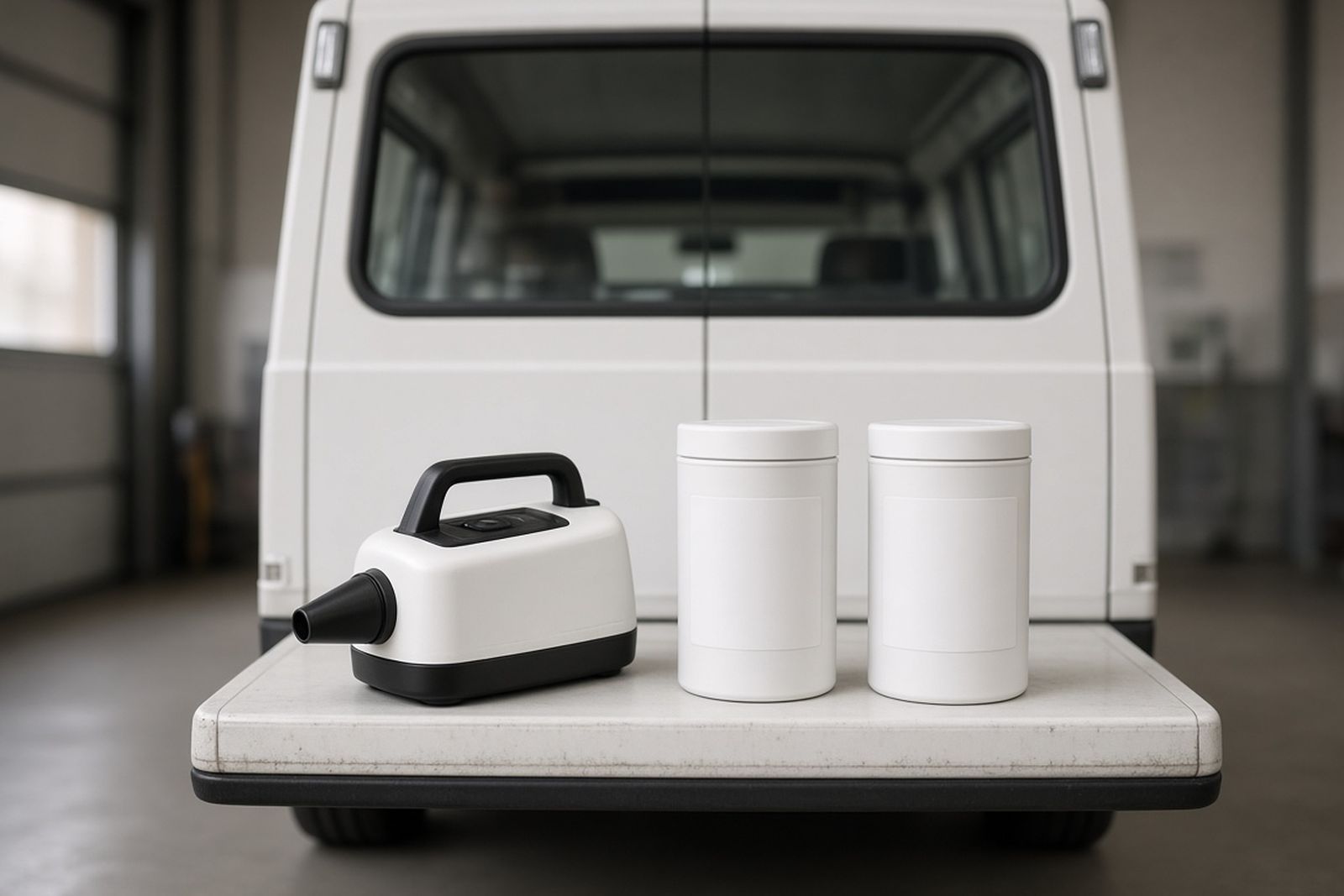
How Emergency Vehicle Decontamination Practice Has Changed
How ambulance and patrol car cleaning moved from hosing out the back to touch-point checklists, safe products, rules for soft items and unit logs.
Emergency vehicle cleanup has changed a lot. It used to mean rinsing out the back of a rig and wiping the stretcher. Now it is a planned practice. Crews separate quick cleaning between calls from a full deep clean. They map every surface hands touch in the patient area and cab. They choose products that are safe for medical devices and replace soaked soft items. Crews are protected by written safety plans, and each unit's cleaning is logged. Research on germs left behind drove many of those changes.
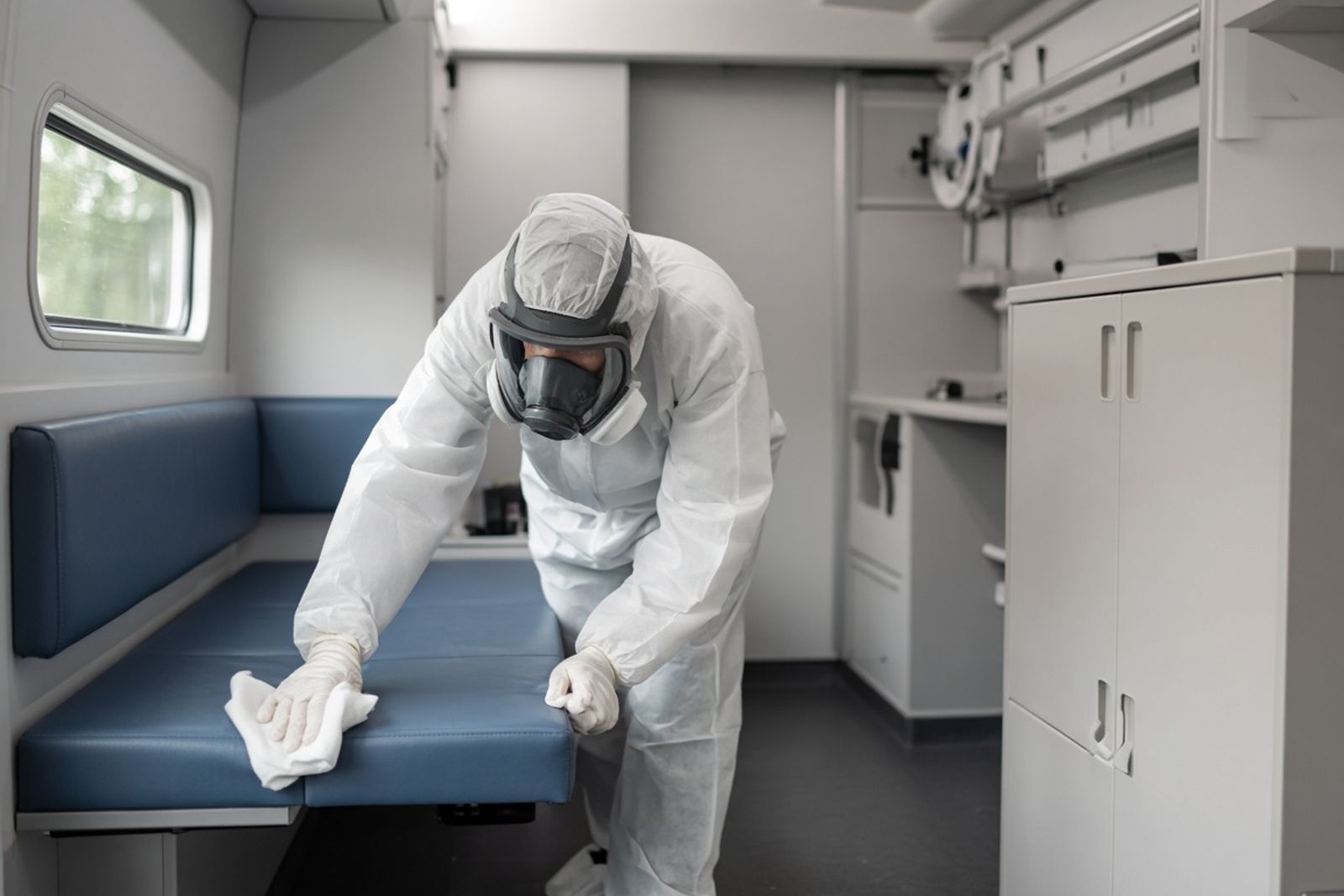
Emergency Vehicle Decontamination for Property Managers: What You Need to Know
If you lease space to an EMS agency or run a building with an ambulance bay, decon work touches your drains, waste storage, leases, and shared areas.
Property managers rarely clean ambulances themselves, but the buildings they manage host the work. Bays, wash pads, floor drains, waste storage rooms, and shared garages all carry decontamination risk. Your job is to know what the tenant or fleet operator does on site, make sure the lease assigns responsibility, confirm wash water and waste go where they should, and document any contamination that reaches common areas.
Emergency Vehicle Decontamination Planning Example: Building a Defensible Scope
A hypothetical walk-through of scoping a deep decon for an ambulance after a heavy-blood call, from intake questions to a return-to-service record.
A defensible emergency vehicle decontamination scope names the triggering event, divides the unit into zones, lists every surface and piece of equipment to be treated, matches products to materials, sets out waste handling, and defines how the unit will be verified and returned to service. The hypothetical below shows how a fleet manager and contractor might build that scope together so it holds up later.
Commercial vs Residential Emergency Vehicle Decontamination
Fleet ambulances have decon programs; a volunteer's personal truck and gear bag at home usually do not. How the two settings differ and where they overlap.
Commercial emergency vehicle decontamination covers agency-owned ambulances, engines, and patrol cars, where an employer program, approved products, and waste contracts already exist. The residential side covers personal vehicles, gear bags, and uniforms that volunteer or off-duty responders bring home, where none of that infrastructure exists. The biology is the same, but responsibility, tools, waste options, and family exposure are very different, so plan for both.
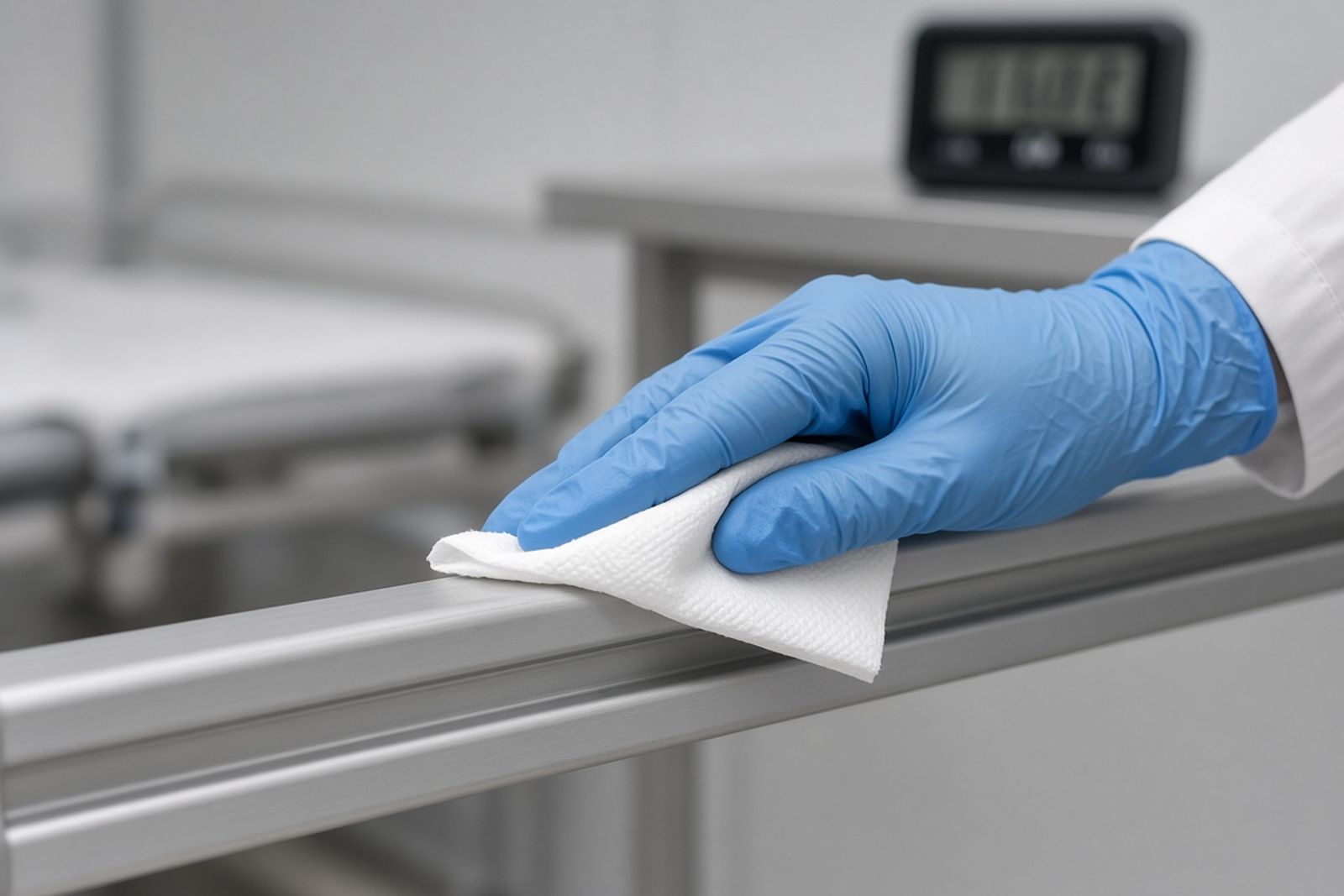
Environmental Responsibility in Emergency Vehicle Decontamination
How EMS and public safety fleets can cut runoff, chemical overuse, and waste volume from ambulance decon without weakening infection control.
Environmentally responsible emergency vehicle decontamination means using the right amount of the right disinfectant, keeping rinse water out of storm drains, segregating waste so only truly regulated items go in red bags, and choosing products that do not degrade vehicle interiors. None of this requires cutting corners on infection control. Targeted, well-executed cleaning usually protects both crews and the environment better than heavy spraying.
Sourced figures on industry insights
- 60%
60% of ambulances labelled service-ready had at least one targeted pathogen.
Read with care: Detection of selected pathogens is not measured patient transmission.
Source: Schaps et al. (2026)20 ambulances and 27 clinicians from two US agencies; 941 samples, 2021–2022.
- 27
Tracer spread from seeded surfaces to 27 of 48 other sampled sites.
Read with care: Surrogate-virus transfer, not measured patient infection; local workflow.
Source: Valdez et al. (2015)EMS field experiment using seeded bacteriophage as a microbial surrogate.
- 32%
Sixteen of 50 EMS stethoscopes tested were colonized with MRSA, and 32% of providers could not recall when they last cleaned theirs.
Read with care: Secondary compilation of abstracts; original study sample is small.
Source: New Jersey Department of Health (research abstract compilation) (2015)Single U.S. study of 50 EMS stethoscopes, compiled by NJ DOH
These figures are public research and agency data, not this network's own job records. Keep each number with its population, year and limits; none of them predicts cost, timing or outcome at a specific property.
What research has found
Findings from published studies of people and properties in situations like this one. They describe what researchers observed in a specific group; they are not predictions for your case.
The intervention significantly reduced measured viral loads.
Clinicians reported high awareness of uniform and vehicle cleanliness despite detected contamination.
Industry Insights: common questions
How are ambulance designs making decontamination easier?
Many newer patient areas use smooth flooring that curves up the walls. They have fewer exposed screws, sealed cabinets, and seat covers chosen to handle frequent disinfecting. These features cut down on places where fluids collect. When you plan new units, bring in your infection control officer. Then ease of cleaning is weighed along with medical layout and durability.
Are agencies moving from paper to digital cleaning logs?
Many agencies are moving to electronic records. These capture who cleaned a unit, which products were used, and who approved its return. Digital logs can make audits easier. They can also help spot patterns across a fleet. Whatever system you use, confirm it meets your state EMS office's record-keeping rules.
Why are some agencies hiring out more cleaning work?
Staff shortages, more calls, and special cleaning needs have led some agencies to hire out certain tasks. This is most common for deep or planned cleans. Hiring out can get crews back in service faster. But it needs oversight to make sure the steps and records meet agency standards. Many agencies use a mix of in-house and hired work.
How are vehicle builders responding to cleaning concerns?
Many builders now offer smooth flooring, sealed cabinets, rounded corners, and fewer exposed screws. They also offer seat covers made to handle frequent disinfecting. Some include cleaning guidance and lists of safe products with their vehicles. Agencies can ask for these features when they write specs. They should bring in their infection control officer early. Then ease of cleaning is weighed along with medical layout, durability, and price.
What trends are shaping decon for police and fire fleets?
More police and fire agencies now know about exposure risks. So more of them write down cleaning steps and train the staff who clean vehicles. They also call hired vendors for heavy messes. Vehicle choices more often reflect cleaning needs. Examples include hard plastic prisoner seats and washable cab materials. Many practices that started in EMS are spreading to these fleets. Two examples are touch-point lists and records for each unit.
How are decon providers changing their services?
Some vendors now offer on-site service at stations, planned deep-clean programs, and digital records for each unit. Some offer checks like quick swab tests that show leftover organic residue (these do not detect germs). Others focus on fast response to heavy messes. Agencies can find more tailored options than in the past. But they should still confirm that a vendor's products, methods, and records fit their own rules before signing.
Is decon becoming a bigger part of fleet planning?
For many agencies, yes. More fleet managers now think about ease of cleaning when they plan vehicle purchases and schedules. They also plan for spare units, spare soft items, and expected time out of service. Budget requests more often list cleaning supplies, testing tools, and hired services as their own lines. Planning ahead this way eases the pressure on supervisors when a very dirty unit comes back to the station.
Related community polls
Every count is a real visitor vote; nothing is seeded or padded. One vote per poll per device, and you can change your answer.
After a bloody transport, what usually decides whether your unit gets a full deep clean?
Who performs terminal cleans on your fleet most of the time?
More on emergency vehicle decontamination
Emergency Vehicle Decontamination services
Learn how deep cleans of ambulances, fire trucks, and police cars are planned. See needle sweeps, choices about soft items, and records by unit number.
Costs explained
What drives the price, published cost ranges, and how to read a written quote line by line.
Insurance and payment
Which policies may respond, how to document a claim, and what to do if coverage is denied.
Planning tools
Guided planners for fleet managers. Get cost ranges, vendor checks, insurance steps, first-day actions, waste sorting, and in-house versus vendor risk.
Community polls
See how other EMS, fire, and police fleets handle time pressure, new soft items, records, and product choices in their own bays.
Knowledge quiz
Test what you know about cabin hazards, who pulls a unit from service, containment, contact time, waste, and cleaning records before the next hard call.