Short answer
To evaluate decontamination technology for ambulances and other emergency vehicles, ask what the device or product actually claims, whether independent evidence supports that claim in a vehicle setting, whether it still requires manual cleaning first, how it affects turnaround time, crew safety, and interior materials, and how you will verify results. Technology can add to a strong manual process, but it rarely replaces one.
Why new decon technology is hard to judge
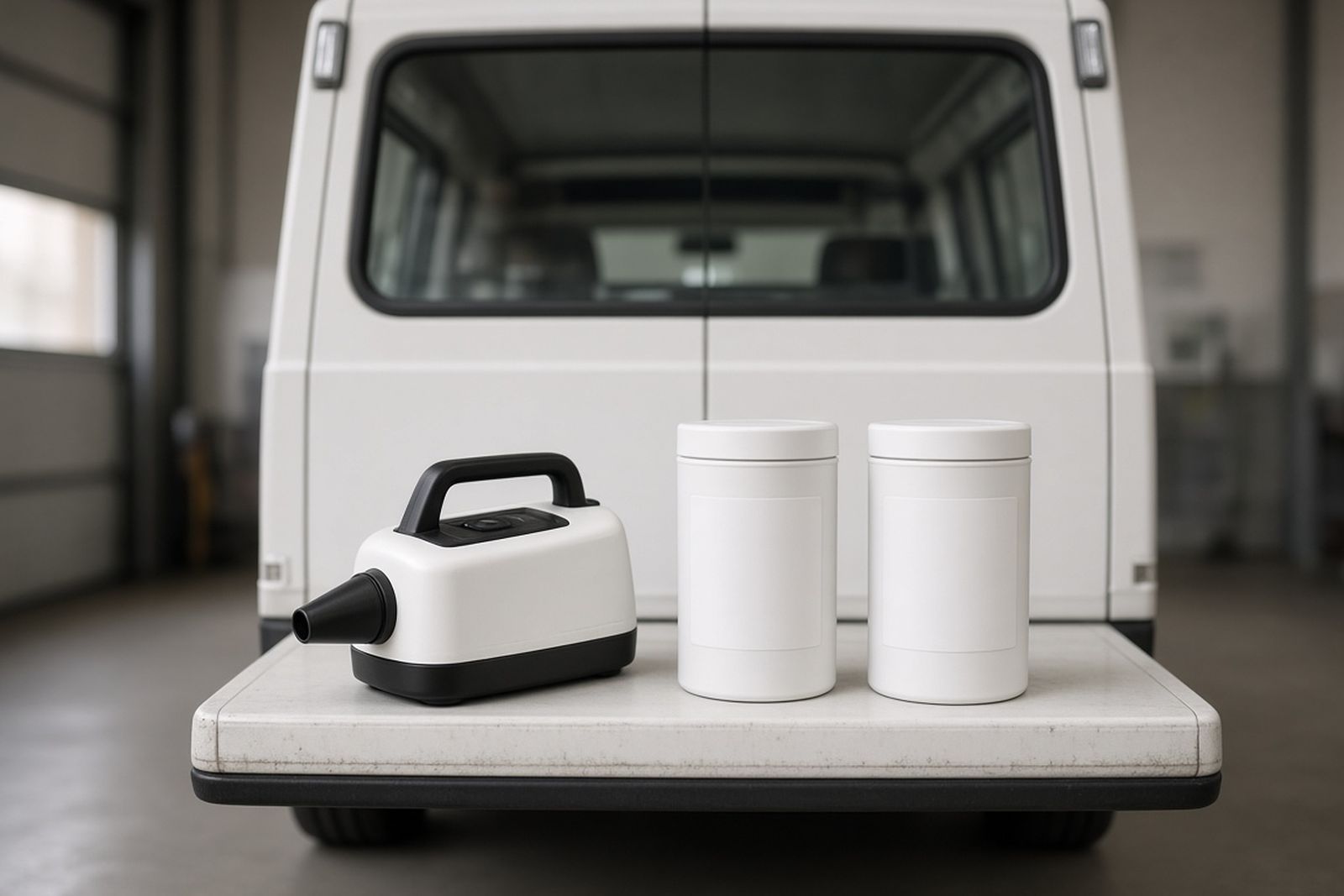
Vendors pitch EMS and public safety fleets constantly. Ultraviolet towers, hydrogen peroxide vapor units, electrostatic sprayers, antimicrobial coatings, and smart dispensers all arrive with impressive brochures and log-reduction figures from laboratory tests.
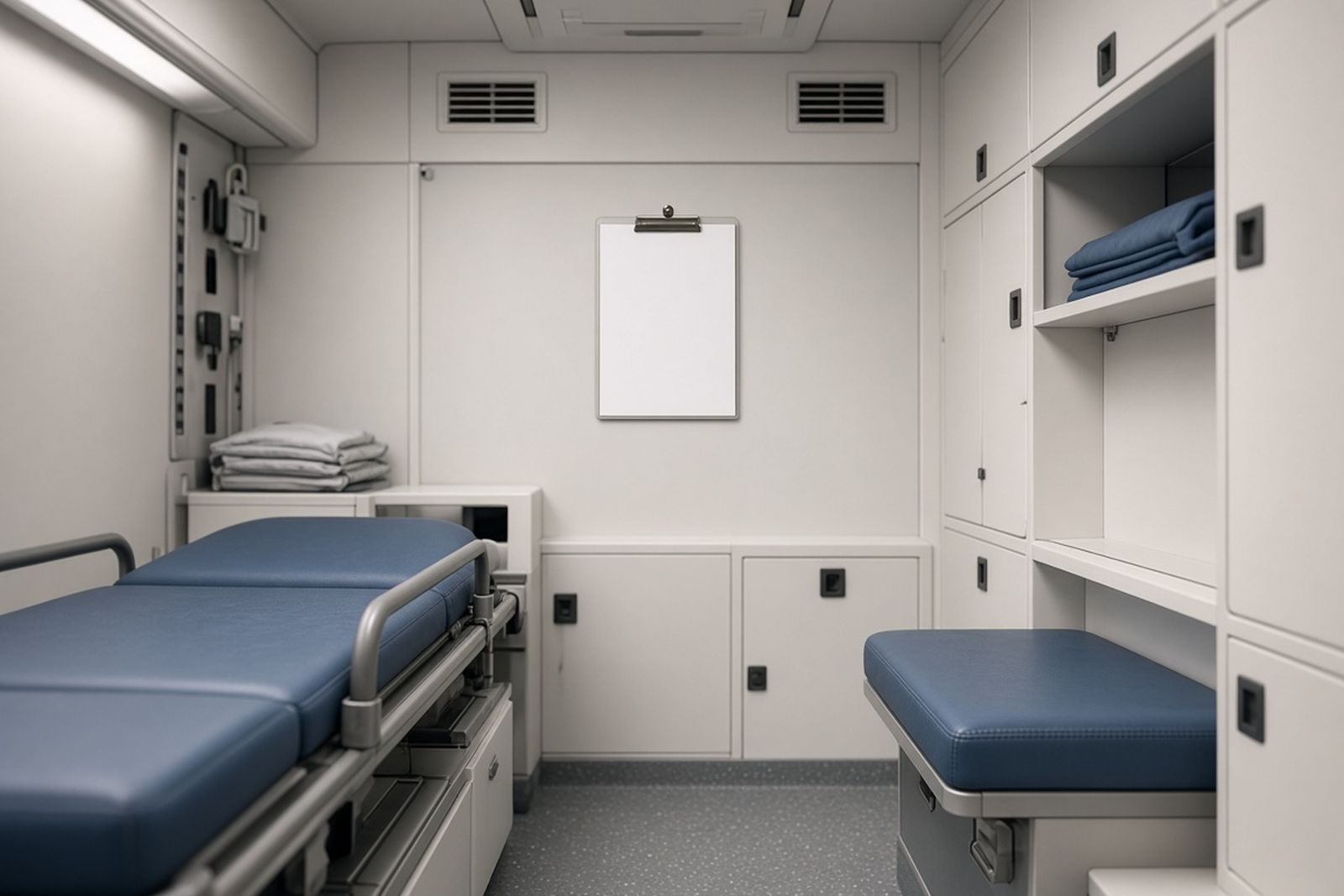
The difficulty is that an ambulance is not a laboratory. It is a small, cluttered compartment full of shadows, seams, straps, and electronics, used by crews who need the unit back quickly. A result achieved on a flat steel coupon in a test chamber may not translate to the underside of a stretcher rail.
Evaluating technology well means asking the same set of questions every time, and insisting on answers that fit your vehicles, your products, and your workflow.
Pin down the claim
Start by pinning down the claim precisely. Is the device meant to clean, meaning remove soil? To disinfect, meaning inactivate microbes on surfaces? To treat air? To leave a residual effect after application? Each is a different job, and products that do one may do little for the others.
For chemical products, including those applied by sprayers or foggers, check whether the product is registered for the intended use and application method, and read the label. The label, not the sales sheet, defines what the product may be used for, on which surfaces, and with what contact time.
For devices such as UV systems, which are not registered the same way chemicals are, ask for the test methods behind any performance claims, the organisms tested, the distances and exposure times involved, and whether testing occurred in a vehicle or a room.
Be cautious with any claim that a system eliminates the need for cleaning, works on every organism, or delivers a fixed result regardless of conditions.
Coatings and digital tools
Antimicrobial surface coatings deserve their own scrutiny. Some are marketed as providing ongoing protection for weeks or months after application. Ask how long the effect lasts under real wear, including daily wiping with your current disinfectant, which may strip or deactivate the coating. Ask whether the coating changes how your routine products perform, and whether crews might be tempted to clean less often because they believe the surface protects itself. A coating that encourages complacency can leave a unit worse off than no coating at all.
Digital tools belong in the conversation too. Apps that log each decon, dispensers that record use, and checklists on tablets do not kill anything, but they can improve consistency and give supervisors visibility. Judge them by whether crews will actually use them during a busy shift, and by whether the data they produce answers questions you care about.
Does it still depend on manual cleaning first?
Almost every disinfection technology works poorly on soiled surfaces. Blood, vomit, and grime shield microbes from light and chemicals alike. UV cannot reach organisms beneath a film of dried fluid, and vapors do not penetrate caked residue well.
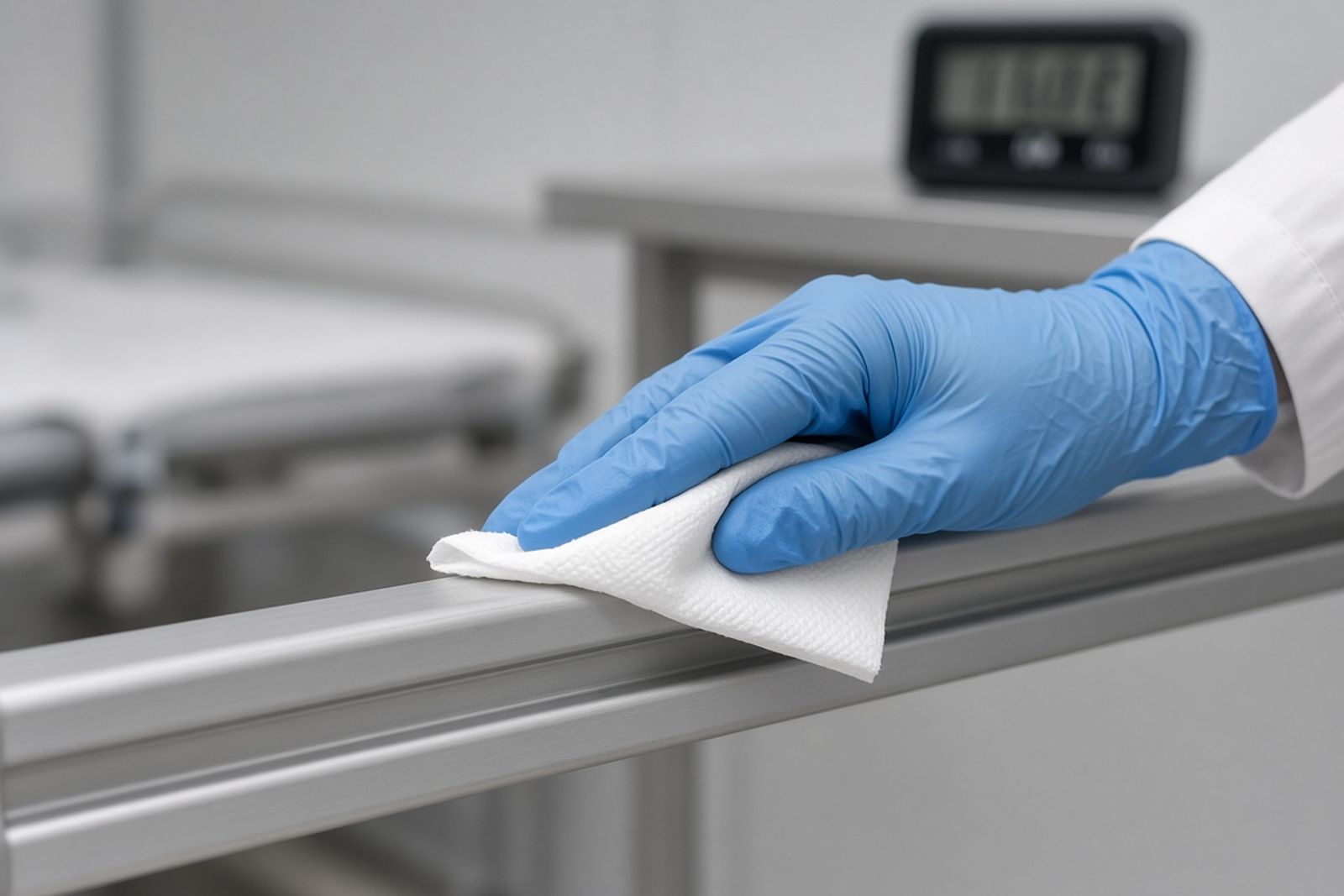
That means the technology you are evaluating will usually be an extra step after manual cleaning, not a replacement for it. Factor that into your turnaround calculations. If a unit still needs a full wipe-down before the device runs, the device adds time rather than saving it, even if it improves results.
Evidence from ambulances shows why better processes matter. In the tracer study by Valdez and colleagues published in 2015, existing decontamination left 26 of 48 sites tracer-positive, while an added hydrogen-peroxide wipe protocol left 19 of 48 sites tracer-positive. The improvement came from changing the manual process, and it still left many sites positive, which is a reminder that no single change solves the problem.
Turnaround and crew workload
Every minute a unit is out of service matters to a busy system. Ask vendors for realistic cycle times in a vehicle the size of yours, including setup, run time, aeration or re-entry time, and teardown.
Some technologies require the compartment to be sealed and unoccupied during treatment, and some require ventilation before crews can re-enter. Others need a trained operator, which may mean a supervisor or dedicated technician rather than the crew.
Consider where the work happens. A device that must be plugged into shore power in a station bay is not useful at a hospital ramp. A sprayer that needs refilling and cleaning adds tasks at the end of a shift.
- Setup and teardown time, not just run time
- Whether the compartment must be empty and sealed
- Re-entry or aeration time before the unit can be used
- Who is trained and authorized to operate it
- Power, storage, and maintenance requirements
- What happens if the cycle is interrupted by a call
Will it damage your vehicles and equipment?
Ambulance interiors are expensive, and their materials react differently to light and chemicals. Repeated UV exposure can degrade some plastics and fabrics over time. Oxidizing vapors can affect electronics and certain metals. Sprayed products may reach areas where residues build up, such as monitor housings and cabinet tracks.
Ask vendors for compatibility data with the specific materials in your units, and check with equipment manufacturers, especially for cardiac monitors, ventilators, and other electronics. If a vendor has not tested compatibility with common ambulance materials, consider running your own trial on a retired or spare unit before deploying widely.
Crew safety
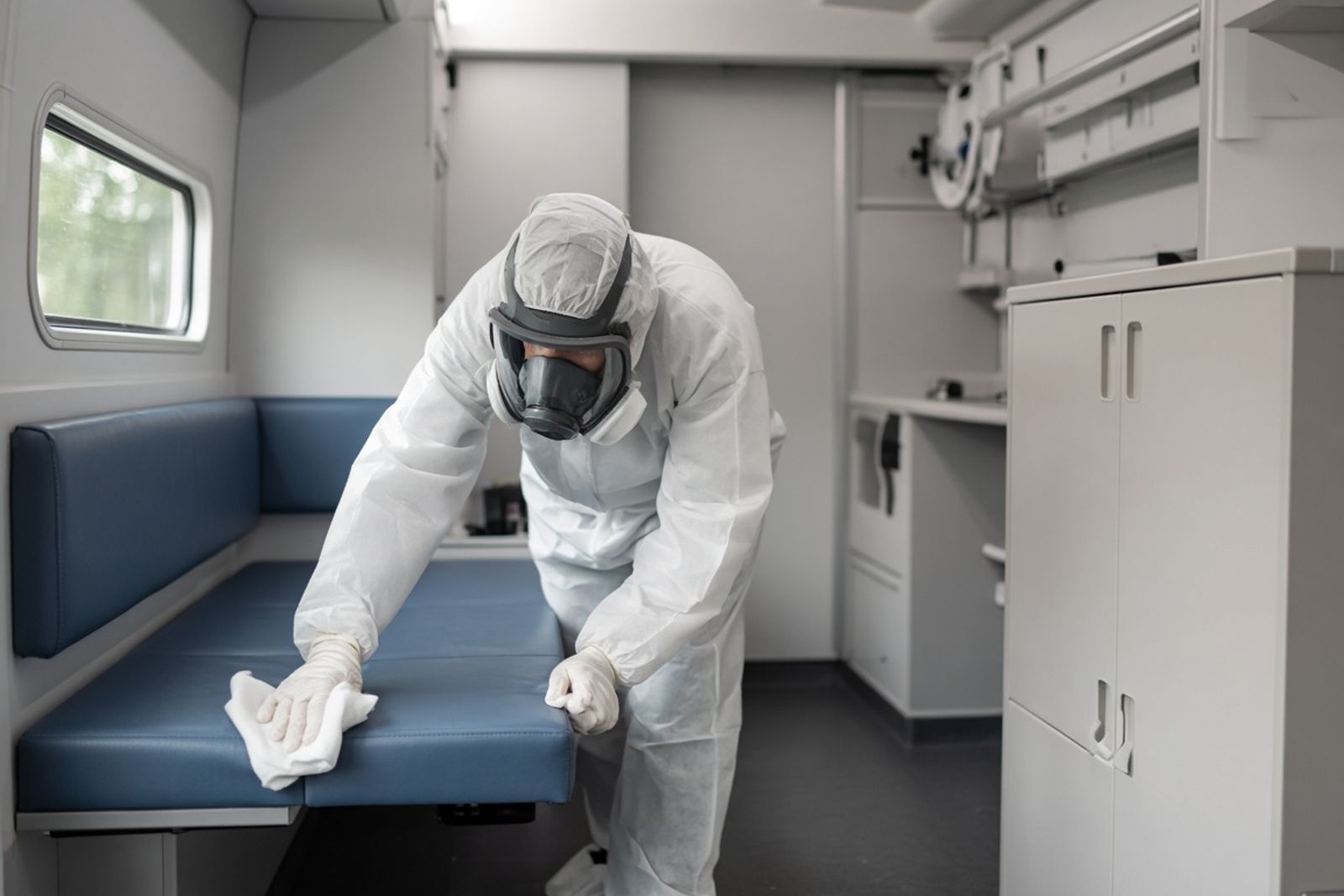
Every decon technology has a safety profile. UV-C is hazardous to skin and eyes, so devices need interlocks or procedures that keep people out during operation. Vapor and fogging systems produce airborne chemicals that require ventilation and re-entry controls. Electrostatic sprayers put fine droplets into the air near the operator.
Review the safety data sheets for any chemical, understand the required PPE, and involve your safety officer before a trial. Crews should know exactly when a compartment is safe to enter and how to tell if a cycle has finished.
Ask, too, what happens when something goes wrong. A UV device that is knocked over, a vapor unit that fails mid-cycle, or a sprayer that leaks should each have a clear response procedure.
How to run a fair trial
Vendor data often comes from hospital rooms, and devices such as portable UV-C systems can carry a significant price, so a structured trial before committing is worth the effort. Run it on your own units, with your own products and crews.
Be ready for a mixed answer. A device may improve directly exposed surfaces while doing little in shadowed areas, or crews may find the added time hard to absorb on busy shifts. In that case, limiting the technology to scheduled deep cleans, and putting the rest of the budget into manual technique, can be a sensible outcome.
- Split a small group of units: some use the current manual process only, others use the manual process followed by the new technology
- Choose fixed test points in advance, including shadowed areas under the bench and behind the stretcher mount, and check them at set intervals with a method such as ATP swabs
- Track cycle times, crew feedback, interruptions caused by calls, and any sign of material damage
- Ask equipment manufacturers whether monitors and other devices can tolerate repeated exposure
- Set a fixed trial length, such as sixty days, and decide in advance what result would justify a purchase
Verifying that it works in your fleet
Buying a device is not the same as knowing it works in your fleet. Plan how you will check results before you purchase, not after.
Options include ATP testing for organic residue, fluorescent markers that show whether surfaces were wiped, and, in specific situations, laboratory sampling arranged with a qualified lab. Each has limits. ATP does not measure pathogens; markers show coverage, not kill; lab sampling is slower and costlier.
Choose a verification method that matches the claim. If a vendor says its system reduces surface organisms, you need a method that looks at surface organisms. If it claims better coverage, markers may be enough. Ask your medical director whether any documentation is expected before a new decon method is adopted.
Questions for every vendor
A consistent list of questions keeps comparisons fair and exposes weak claims quickly. Share the list with vendors ahead of meetings so they can bring real answers.
Vendors with strong products usually welcome these questions. Evasive or vague answers are a signal to slow down.
- What exactly does the technology claim, and on what evidence?
- Was it tested in an ambulance or similar vehicle, and can we see the results?
- Does it require manual cleaning first, and how does it fit into our existing process?
- What are total cycle time, re-entry time, and operator requirements?
- What material compatibility testing has been done?
- What PPE and safety controls are required?
- How would you suggest we verify performance in our own units?
- What ongoing costs exist for consumables, maintenance, and training?