Short answer
ATP testing measures leftover organic material on a surface, so it is a quick check on whether cleaning removed soil from stretcher rails, monitor keys, and cabinet handles. It helps with training, spot audits, and trend tracking across a fleet. It does not identify pathogens, cannot confirm disinfection, and readings vary by device and technique, so treat it as one tool alongside visual inspection and good procedure.
What does an ATP swab actually measure inside an ambulance?
Adenosine triphosphate is a molecule found in living cells and in the organic residue they leave behind. Blood, saliva, mucus, skin cells, food, and bacteria all contain it. An ATP swab collects material from a surface, and a handheld luminometer uses a light-producing reaction to estimate how much ATP is present. The result appears as relative light units, usually abbreviated RLU.
In a patient compartment, that makes ATP a measure of how much biological soil remains on a surface after cleaning. A stretcher rail that has been properly scrubbed should read lower than one that was skipped or only sprayed.
That is the whole idea. It is not a lab culture, and it does not tell you which organisms are present or whether they are alive.
Where ATP genuinely helps a fleet
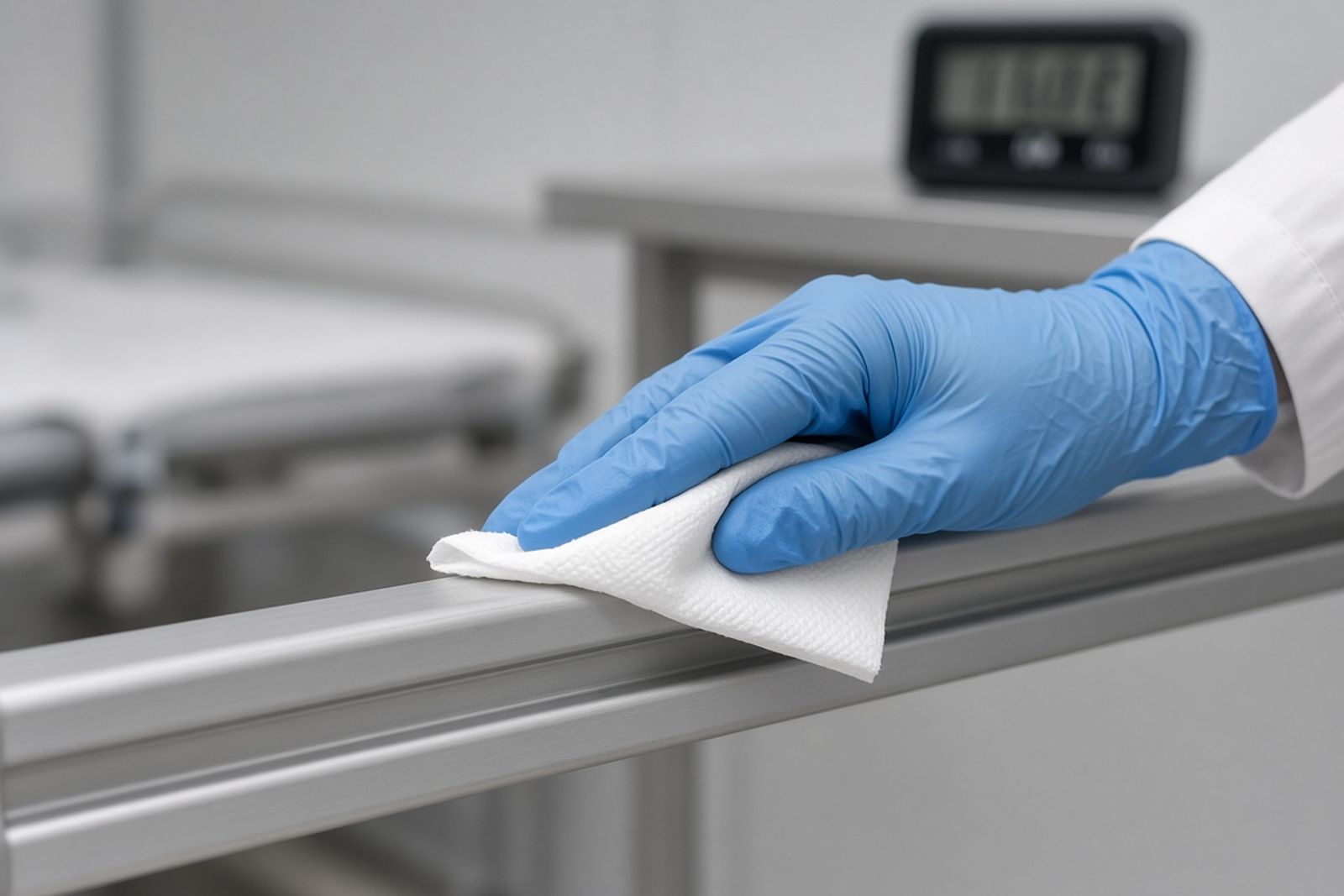
ATP shines when you want fast, objective feedback on cleaning technique. Results come back in seconds, so a supervisor can swab a surface, show the number to the crew member who cleaned it, and have them re-clean and re-test right there. That feedback loop is hard to match with visual inspection alone.
It also supports audits. If your agency randomly checks a few units each week, ATP gives you comparable numbers over time, as long as you use the same device, the same swab type, and the same sampling method.
Some agencies use it after a contractor performs a deep decontamination, as one piece of evidence that the work reached hidden touch points rather than only the obvious ones.
- Training new crew members on thorough wipe technique
- Spot-checking units after heavy-soil calls
- Comparing results before and after a change in products or procedure
- Identifying surfaces that are consistently missed
- Giving fleet managers a trend line rather than a hunch
Why a low reading can still mislead
A clean ATP result means there is little organic residue where you swabbed. It does not mean the unit is free of pathogens, and it says nothing about the surfaces you did not swab.
Viruses contain very little ATP of their own, and bacterial spores are metabolically quiet. A surface could carry a meaningful amount of either and still read low. Conversely, a surface could read high because of harmless residue, such as a food smear on a cab console, and still be low risk.
Chemistry interferes too. Some disinfectants and detergents can suppress or enhance the light reaction, which shifts readings in ways that have nothing to do with cleanliness. If you test immediately after spraying a product, check the device maker's guidance about waiting times and product interactions.
Technique matters most of all. Swabbing a small flat area with firm pressure will give a different result than a light pass over a textured grip. If two supervisors swab differently, their numbers are not comparable.
Surfaces worth swabbing
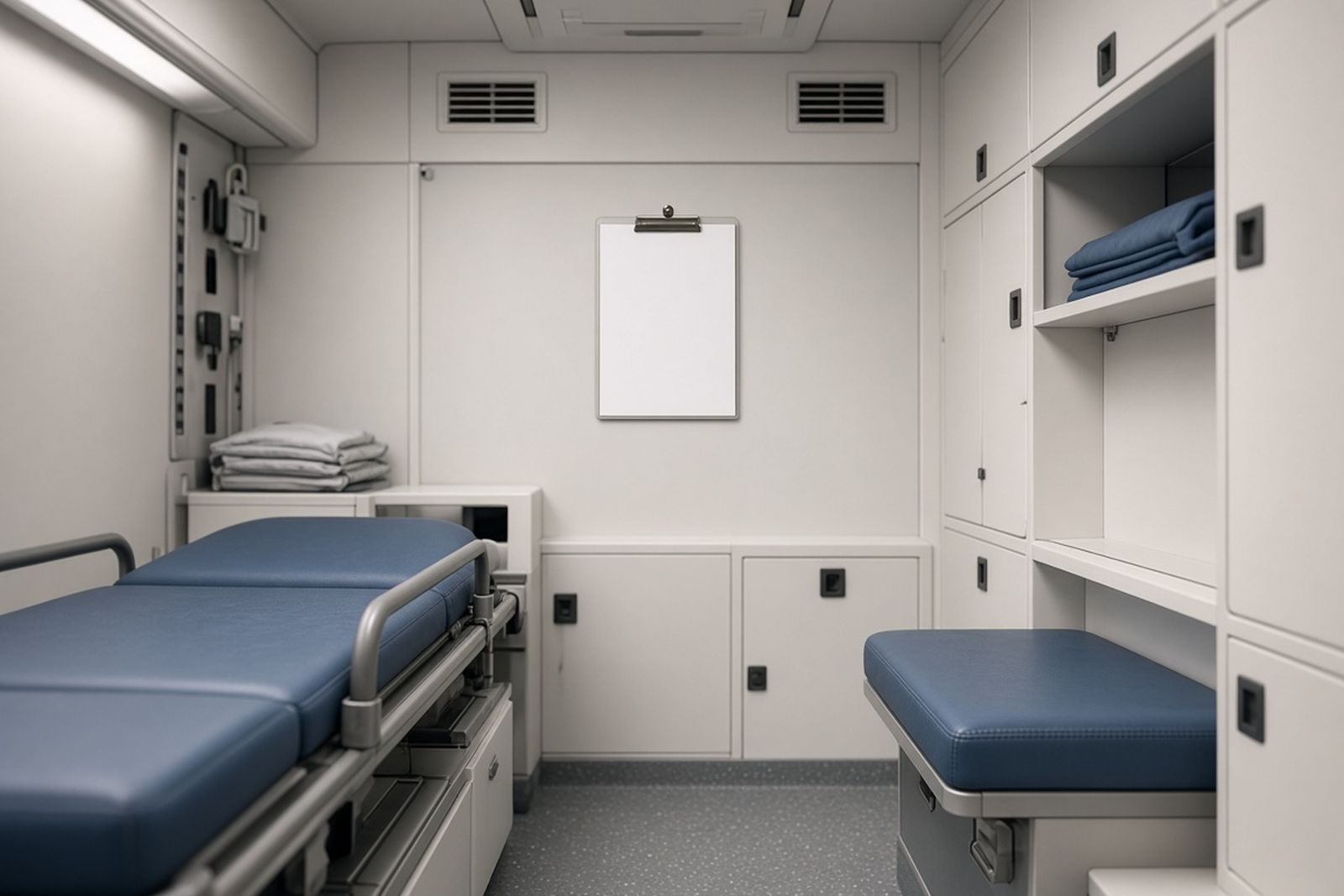
Pick surfaces that crews touch often, that are hard to clean, or that come in contact with patients. Research on prehospital contamination offers some guidance on where problems concentrate.
In a Danish study of 80 ambulances published in BMC Infectious Diseases in 2018, 27% of hand-touch sites and 59% of provider-related sites in ambulances exceeded cleanliness standards. A 2025 study of five South Korean emergency ambulances in the International Journal of Emergency Medicine found that all six high-touch surfaces tested were contaminated before daily disinfection, with ventilation outlets carrying the highest bacterial counts.
Those findings suggest looking beyond the stretcher mattress. Build a short, fixed list of test points so you can compare results over time.
- Stretcher rails, handles, and release levers
- Cardiac monitor buttons, cables, and the display bezel
- Cabinet latches and drawer pulls in the patient compartment
- Suction unit controls and oxygen regulator knobs
- Radio handsets, cab steering wheel, and gear selector
- Ceiling grab rails and the rear door handle
- Ventilation outlets and the area immediately around them
Setting your own pass and fail levels
There is no universal RLU number that defines a clean ambulance. Each device manufacturer calibrates differently, so a reading on one brand does not translate to another. Treat any vendor's suggested threshold as a starting point rather than a rule.
A practical approach is to establish your own baseline. Swab your chosen test points on several units immediately after a careful, supervised clean. Those readings tell you what good looks like with your device, your products, and your surfaces. Then set an internal target and a re-clean trigger based on that baseline.
Review your targets periodically. If you change disinfectants, swap swab types, or refurbish units with new materials, your baseline may shift. Record the device model and swab lot with each test so that you can explain unusual results later.
Illustrative case: ATP after a heavy-soil call
Walk through an illustrative case. A county EMS agency's medic unit transports a patient with a large gastrointestinal bleed. By the end of the call, blood has reached the stretcher, the floor, the side bench, and several cabinet handles.
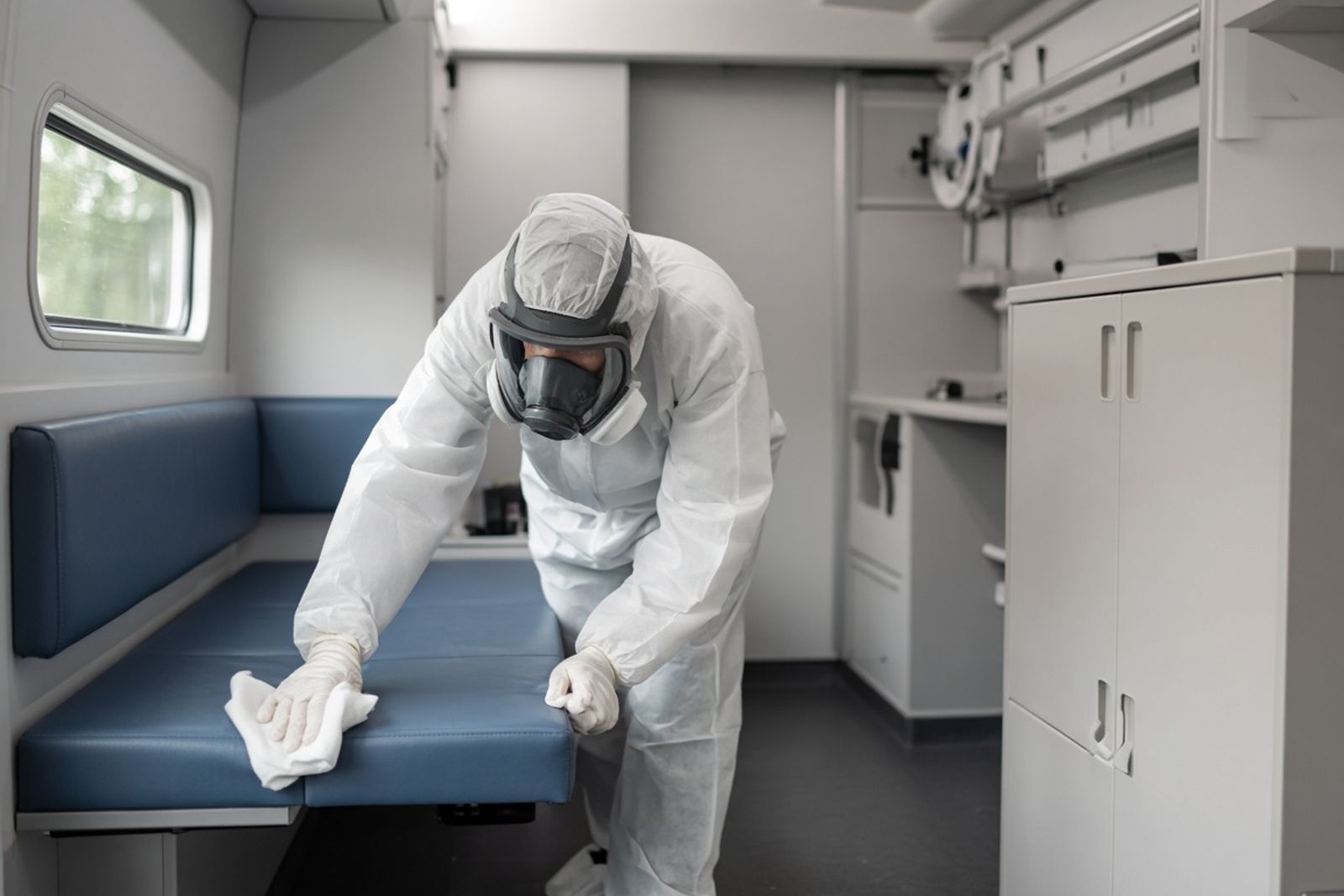
The crew bags linens and sharps, removes bulk soil, and cleans and disinfects the compartment using the agency's approved product, keeping surfaces wet for the labeled contact time. The unit is then taken out of service for a supervisor check.
The supervisor swabs eight standard test points with the agency's luminometer. Seven fall within the internal target. The eighth, a seatbelt buckle on the side bench, reads well above it. The crew re-cleans the buckle and the webbing around it, waits for the surface to dry, and the supervisor retests with a fresh swab. The second reading falls within the target, and the unit returns to service.
The supervisor notes the buckle in the fleet log. When the same point shows up again on two other units that month, the training officer adds seatbelt hardware to the agency's cleaning checklist. The ATP numbers did not prove the unit was sterile; they showed where technique was slipping.
A testing routine crews will actually follow
The best ATP program is small and consistent. A fleet that tests three units a week on the same eight points will learn more than one that tests every unit once and then abandons the effort.
Decide who swabs. Results are most comparable when a small group of trained supervisors or infection control staff do the testing, rather than every crew member testing their own work. Rotate which units are selected so crews cannot predict the check, but keep the test points fixed.
Make the log simple. Record the unit number, date, time, device, test point, reading, whether a re-clean was needed, and the retest reading. A shared spreadsheet is enough for most agencies. Over a few months, patterns emerge: a station whose results drift upward, a surface that fails often, or a shift that struggles after long runs.
Frame the results as coaching rather than discipline. Crews who feel punished by numbers tend to stop reporting problems, while crews who see the data as a way to protect themselves and their patients tend to engage with it. Share fleet-wide trends at station meetings and celebrate improvements.
Budget for consumables honestly. Swabs have a shelf life and storage requirements, and an expired or overheated swab can give unreliable readings. Keep them out of hot apparatus cabs and track lot numbers.
What ATP should never replace
ATP is a verification tool, not a cleaning method, and it should not become the goal in itself. Crews who learn to beat the swab can still miss the steps that actually protect patients.
Keep the fundamentals in place. Remove visible soil first, choose a registered disinfectant appropriate for the organisms of concern, follow the label contact time, and use products compatible with vinyl, plastics, and electronics. Visual inspection under good lighting still catches problems that swabs miss, such as dried blood in a stretcher mechanism.
When there is a specific concern, such as a suspected outbreak linked to a unit, ATP will not answer it. That situation calls for your infection prevention partners, and possibly for culture-based or molecular sampling arranged through a qualified laboratory.
How should an outside decon contractor present ATP results?
If you hire a company to deep-clean units, ATP results can be part of its closeout report. They are most useful when the contractor explains its method rather than just listing numbers.
Ask the contractor to state the device and swab used, the exact surfaces tested, when testing occurred relative to disinfection, and what threshold it applied and why. Before-and-after readings on the same points are more informative than after-only numbers.
Be cautious if a company describes ATP results as proof that a vehicle is pathogen-free or safe for any patient. That claim goes beyond what the test can support. Ask your medical director whether any additional documentation is expected for returning a unit to service after a significant contamination event.