Short answer
To evaluate equipment proposed for emergency vehicle decontamination, check that every chemical is EPA-registered for the organisms and application method involved, that it is compatible with your vehicle interiors and medical devices, that its contact time fits your workflow, and that any device supplements rather than replaces manual cleaning. Ask for manufacturer compatibility statements, re-entry intervals, and evidence the method reaches hidden touch points.
Why should fleets question equipment pitches at all?
Vendors and contractors increasingly offer fleets a wide range of decontamination tools: pre-saturated wipes, electrostatic sprayers, foggers, ultraviolet light units, hydrogen peroxide vapor systems, and chlorine dioxide generators. Each comes with claims about speed, coverage, or kill rates.
Some of those tools are excellent for particular uses. Others are poorly suited to the tight, equipment-dense space inside an ambulance or the rear compartment of a patrol car. A device that performs well in a hospital room may not fit your vehicles, your schedule, or your budget.
You do not need to be a microbiologist to evaluate a proposal. You need a short list of questions, and you need to insist on clear answers before anything touches your fleet.
Police and fire agencies face the same choices with different vehicles. A patrol car's hard plastic prisoner seat and partition, or an engine cab with SCBA brackets and radio gear, raise their own compatibility and access questions.
The goal is simple: buy or contract for the tools that make your crews' manual work more reliable, not tools that promise to replace it.
Check the chemicals first
Start with registration. Every disinfectant sold in the U.S. must be registered with the EPA, and its label lists the organisms it has been tested against, the surfaces it is approved for, and the application methods allowed. Ask for the EPA registration number of every product in the proposal and read the label yourself.
Check whether the label covers the organisms you worry about most, such as MRSA, norovirus, and C. difficile spores. Then check whether it allows the proposed application method. A product labeled for wiping may not be approved for fogging or electrostatic spraying.
Look closely at contact time. A product that requires ten minutes of wet contact may be excellent for terminal cleans but unrealistic between calls. Many fleets keep two products for that reason: one for routine turnover and one for heavier or specific exposures.
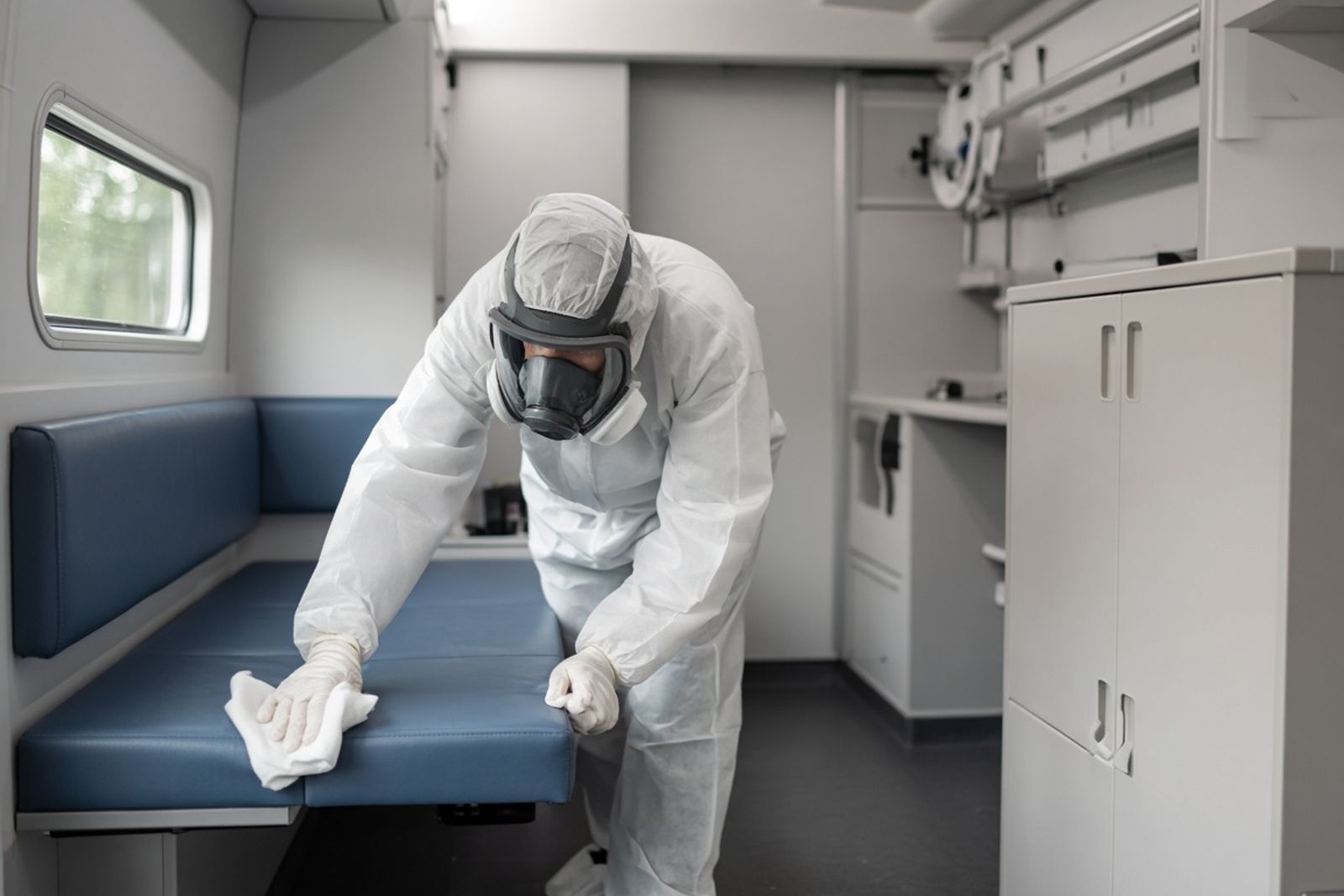
Finally, confirm the product's safety data sheet and any personal protective equipment it calls for. If crews must wear respirators to use a product, that affects how and where it can be applied.
Protecting vehicles and devices
Material compatibility is one of the most overlooked questions in fleet decon. Ambulance interiors include vinyl, polycarbonate, ABS plastics, stainless steel, aluminum, rubber seals, and touchscreens. Repeated exposure to an incompatible chemical can crack plastics, cloud screens, degrade seals, and void warranties.
Ask the vendor for written compatibility statements from your vehicle builder and from the manufacturers of your cardiac monitors, ventilators, suction units, and stretchers. Many device manufacturers publish lists of approved cleaning agents. If the proposed product is not on those lists, ask why.
Damaged surfaces are not just a cosmetic problem. Cracks and crazing give microbes places to hide and make later cleaning less effective.
Consider a trial on a single unit or a set of retired components before committing the fleet. A few weeks of real use will show whether a product leaves residue, dulls finishes, or makes surfaces sticky.
Where the equipment has to reach
The best equipment is the one that helps crews reach the places they usually miss. Evidence shows contamination can be widespread. A research abstract compiled by the New Jersey Department of Health in 2015 reported that sixteen of 50 EMS stethoscopes tested were colonized with MRSA, and 32% of providers could not recall when they last cleaned theirs. A 2018 report in the Emergency Medicine Journal, summarized by ACEP Now, found MRSA on all nine oxygen tanks sampled from three ambulances.
Those findings point to portable equipment, not just fixed surfaces. When evaluating a proposal, ask how the method treats items that move between the unit, the patient, and the hospital: stethoscopes, oxygen cylinders, monitor cables, and jump bags.
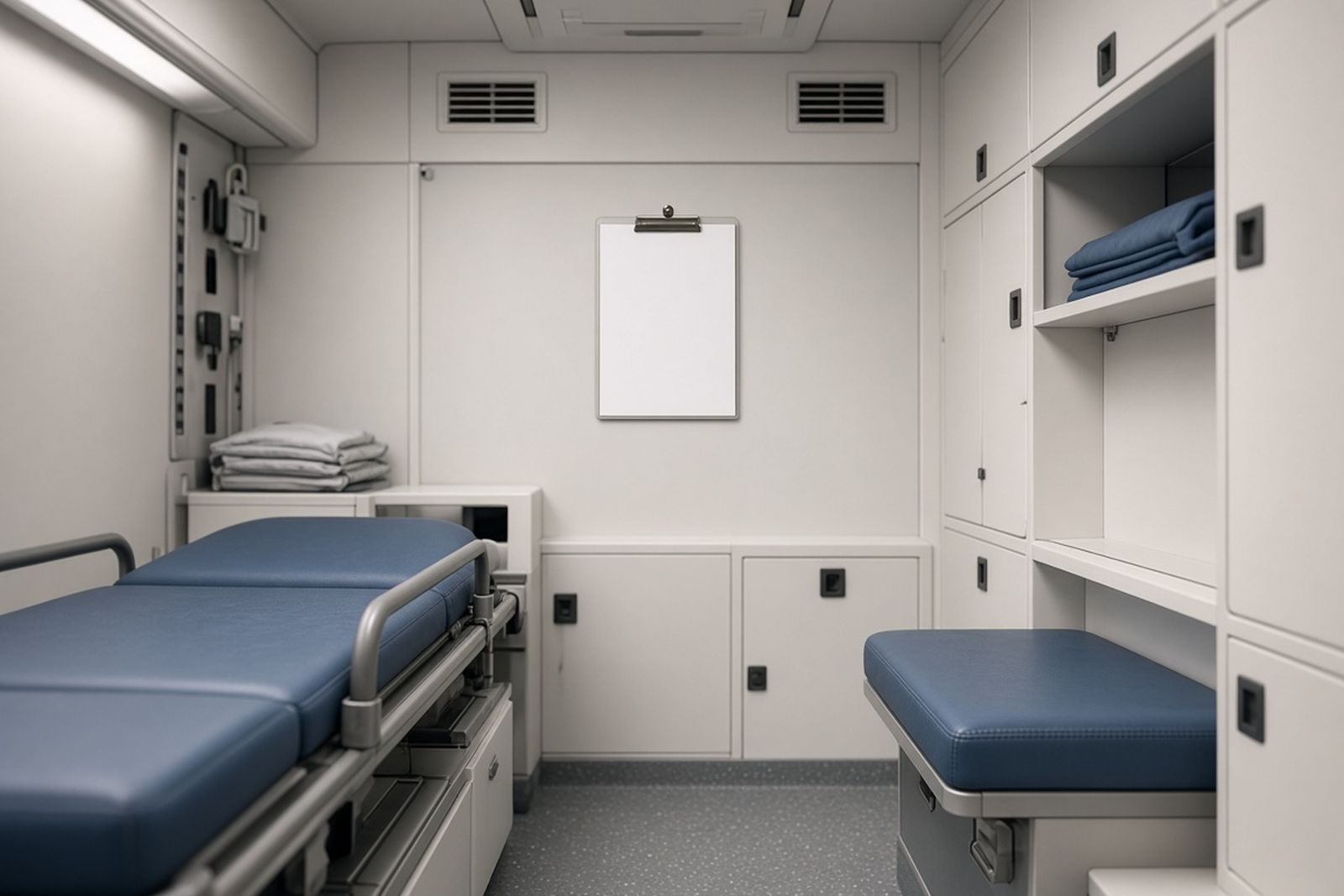
Ask the vendor to walk through a unit with you and show exactly how their tool would reach cot rails, cabinet latches, the undersides of shelves, and ventilation intakes.
If they cannot answer clearly, the equipment may cover the obvious surfaces while leaving the risky ones untouched.
Sprayers, foggers, and UV devices: the questions
Automated and semi-automated tools can add value, especially for terminal cleans. They can also create a false sense of security if they are used as substitutes for manual cleaning.
Ask these questions about any device in a proposal.
- Is the chemical registered for this specific application method?
- Does the device require surfaces to be pre-cleaned, and who does that?
- How is the labeled wet contact time achieved and confirmed?
- What is the re-entry interval before crews can work in the unit again?
- How does the device reach shadowed areas, drawers, and cabinet interiors?
- What protective equipment do operators need?
- What are the maintenance, calibration, and replacement part requirements?
- What independent evidence supports the vendor's claims in vehicles, not just rooms?
Weighing evidence that a method works
Vendors often cite laboratory log reductions. Those numbers are useful, but they come from controlled tests on clean coupons, not from a patient compartment after a busy shift. Field evidence is more meaningful.
Adding a new step is not a guarantee either. A better wipe or a new device can help without solving the problem alone, because technique, coverage, and workflow matter as much as the product.
Ask vendors whether their product or device has been tested in ambulances or similar vehicles and whether they can share the study. If not, propose your own pilot using fluorescent markers or ATP swabs before and after treatment.
Be cautious about claims that a device eliminates the need for manual cleaning. No credible evidence supports that in vehicles with visible soil.
Comparing proposals side by side
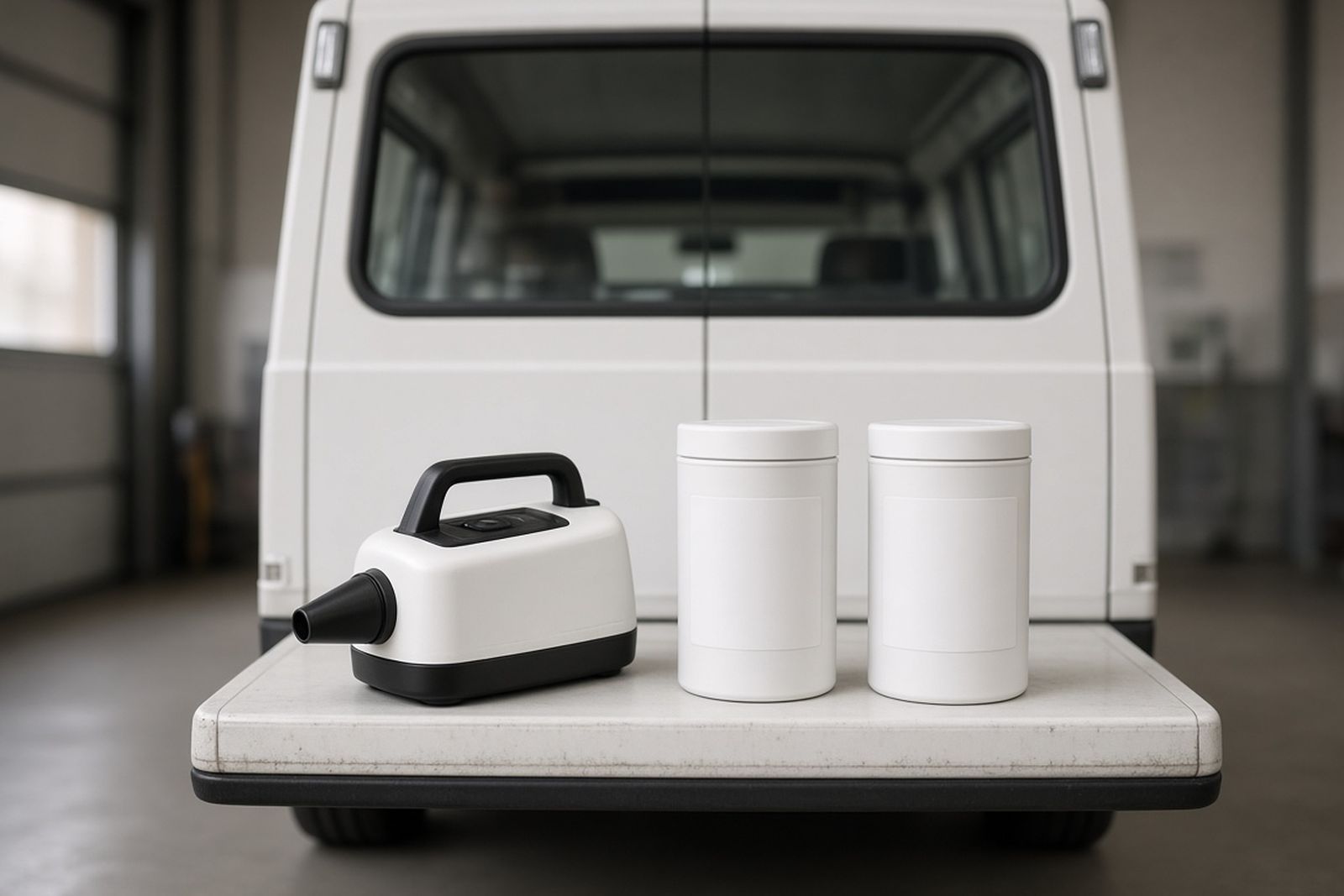
When two proposals arrive, put them through the same checks rather than comparing brochures. A common pairing sets an ultraviolet light unit that treats a compartment during a short cycle against an electrostatic sprayer with a hydrogen peroxide product plus pre-saturated wipes for between-call use.
Each component tends to reveal its own limits. A UV unit may require the compartment to be empty, may not reach inside closed cabinets, and may have no field data from ambulances. A sprayer product may be registered for electrostatic application yet carry a label contact time longer than crews can meet between calls. Wipes may or may not appear on your monitor manufacturer's approved list.
You do not have to accept or reject a proposal whole. Adopting compatible wipes for routine turnover, piloting a sprayer on a couple of units for terminal cleans, and asking a UV vendor for vehicle-specific data before reconsidering is a reasonable split. Audit the pilot units with fluorescent markers before expanding anything.
Costs, practical details, and documenting the decision
The purchase price is only one part of the cost. Consider consumables, replacement parts, training time, maintenance, and the out-of-service time each method requires. A faster device that needs frequent repairs may cost more in lost availability than a slower method that simply works.
Storage matters too. Where will the equipment live? Can it be carried to each station, or does every unit need to come to a central location? How will crews charge batteries, refill reservoirs, and track use?
Think about who operates it. If only one supervisor is trained, the tool may sit unused during nights and weekends.
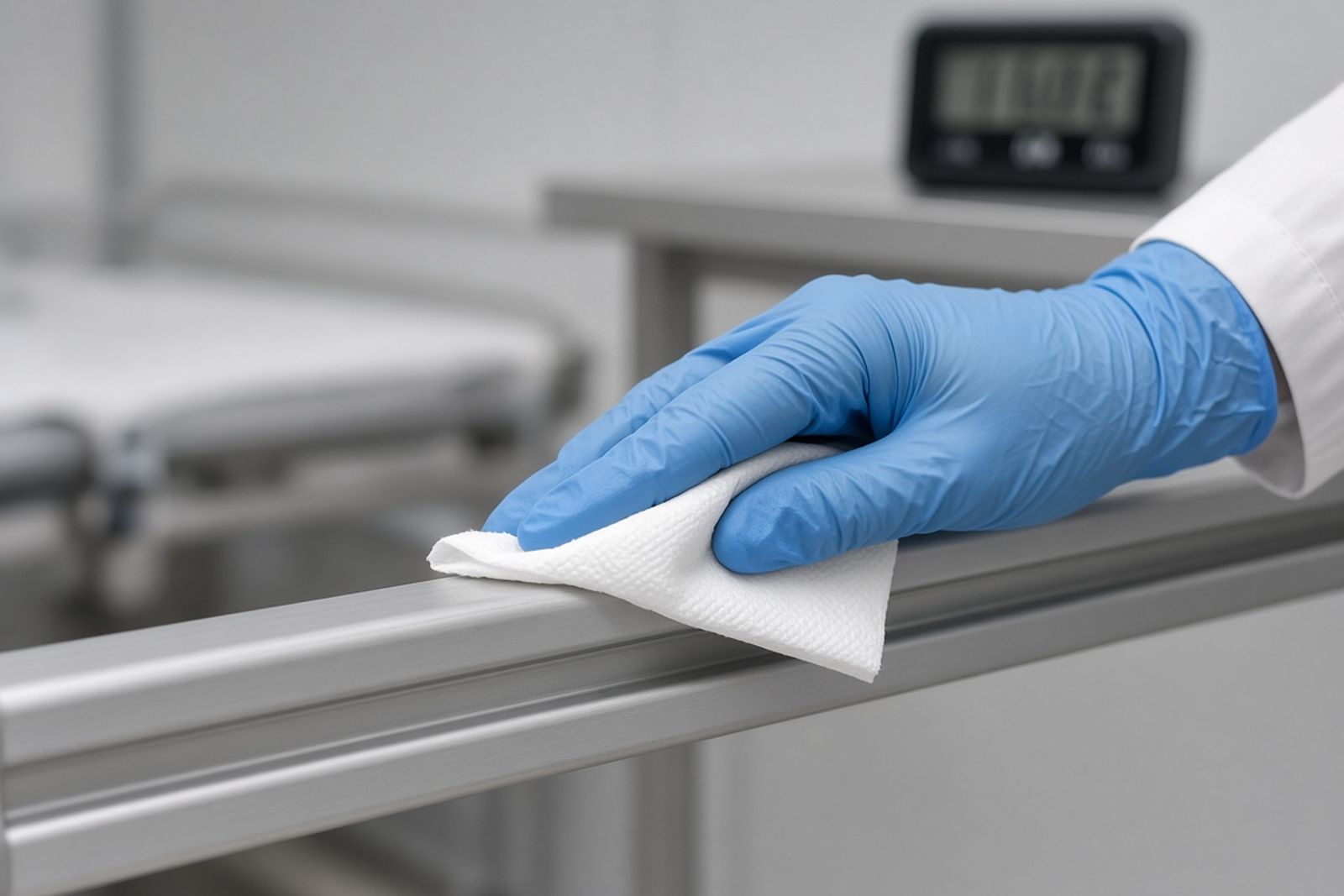
Do not forget the basics that make any system work: wall-mounted wipe dispensers within reach of the rear doors, waste bags and sharps containers sized for the unit, spare soft goods, disposable mop heads, and a timer crews can see. Small, inexpensive items like these often do more to improve consistency than a high-end device that sits in a closet.
Keep a written record of why you chose each tool and product, including registration numbers, compatibility statements, pilot results, and any concerns raised. That record helps you defend the decision to your medical director and leadership and makes future reviews easier.
Include the crews who will use the equipment in that record. Their feedback on ease of use, odor, residue, and time required is some of the most valuable data you can collect, and tools that crews find frustrating tend to be skipped when calls stack up.
Revisit the decision as your fleet changes. New vehicle builds, new devices, and new guidance may shift what works best.
Before adopting any new decontamination equipment, run it past your state EMS office and medical director, and follow device manufacturers' instructions.