Short answer
In emergency vehicle decontamination, cleaning is the physical removal of blood, vomit, dirt, and residue from compartment and cab surfaces; disinfection is the application of a registered product that inactivates remaining pathogens when kept wet for its labeled contact time. Both are needed, in that order, and both must respect device and upholstery compatibility. Soft goods that absorbed fluid are usually laundered or replaced.
Two steps, not one
In a busy shift, it is natural to think of decon as one quick task: grab a wipe, go over the stretcher, and get back in service. That habit blurs two separate steps. Cleaning removes material from a surface. Disinfection inactivates organisms left on it. A wipe that does one well may not do the other.
The distinction matters because a patient compartment accumulates both visible and invisible contamination. Blood in a floor track, dried vomit on a cabinet edge, or skin oils on a grab rail can all protect organisms from a disinfectant. If those residues stay, the disinfectant is working on the surface of the dirt rather than the surface of the vehicle.
Understanding the two steps helps crews, fleet managers, and vendors agree on what a finished decon actually looks like.
The same logic applies outside EMS. A patrol car's rear seat after a bleeding arrestee, or a fire engine's jump seat after a rescue, needs the soil removed before a disinfectant can do its work. Hard plastic prisoner seats are easier to clean than cloth upholstery, but seams, seat belt receivers, and the partition still collect residue that a single spray will not lift.
Cleaning in a patient compartment
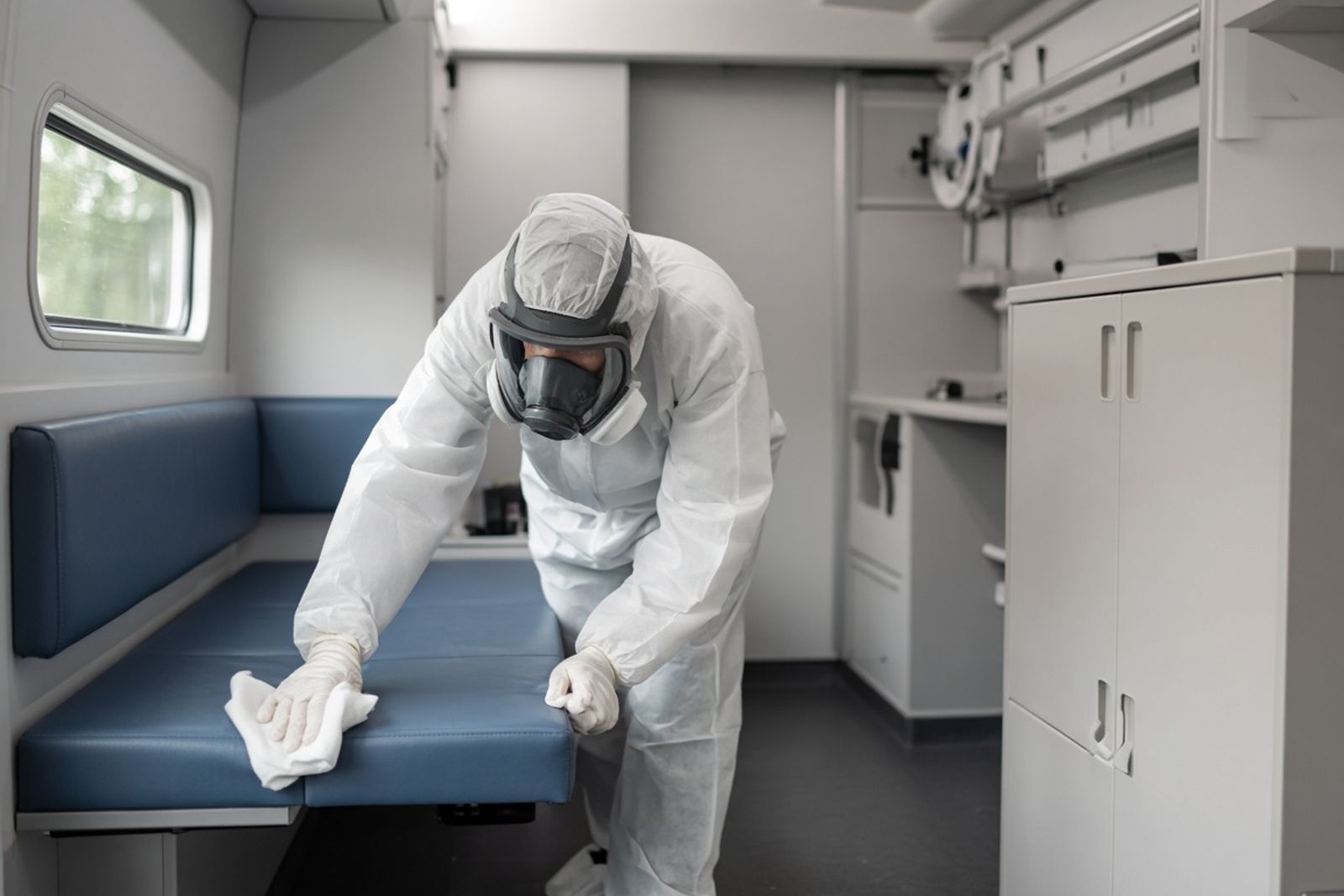
Cleaning in a vehicle starts with removing gross contamination: blood, body fluids, vomit, and debris. Crews use absorbent materials and disposable towels, working from the least contaminated areas toward the most contaminated so they do not drag material across clean surfaces.
Next comes detergent cleaning with friction. That means wiping or scrubbing surfaces with a cleaning solution or a cleaner-disinfectant used in its cleaning mode, paying attention to seams, textured plastics, buckles, latches, and floor tracks where residue collects. Changing wipes frequently keeps soil from being redistributed.
Some surfaces need extra attention. Stretcher mounts, the edges of floor mats, the gap around cabinet doors, and the underside of the bench seat often hold dried material that a quick wipe misses. Removing the stretcher during terminal decon makes these areas reachable.
Rinsing is sometimes skipped because vehicles lack running water, but some product labels call for it, particularly when a detergent leaves residue that could interfere with the disinfectant. Stations with a wash bay or decon room make this easier. Where rinsing is not practical, crews can use a clean damp cloth to remove detergent residue before applying the disinfectant.
What does disinfection add once the unit is clean?
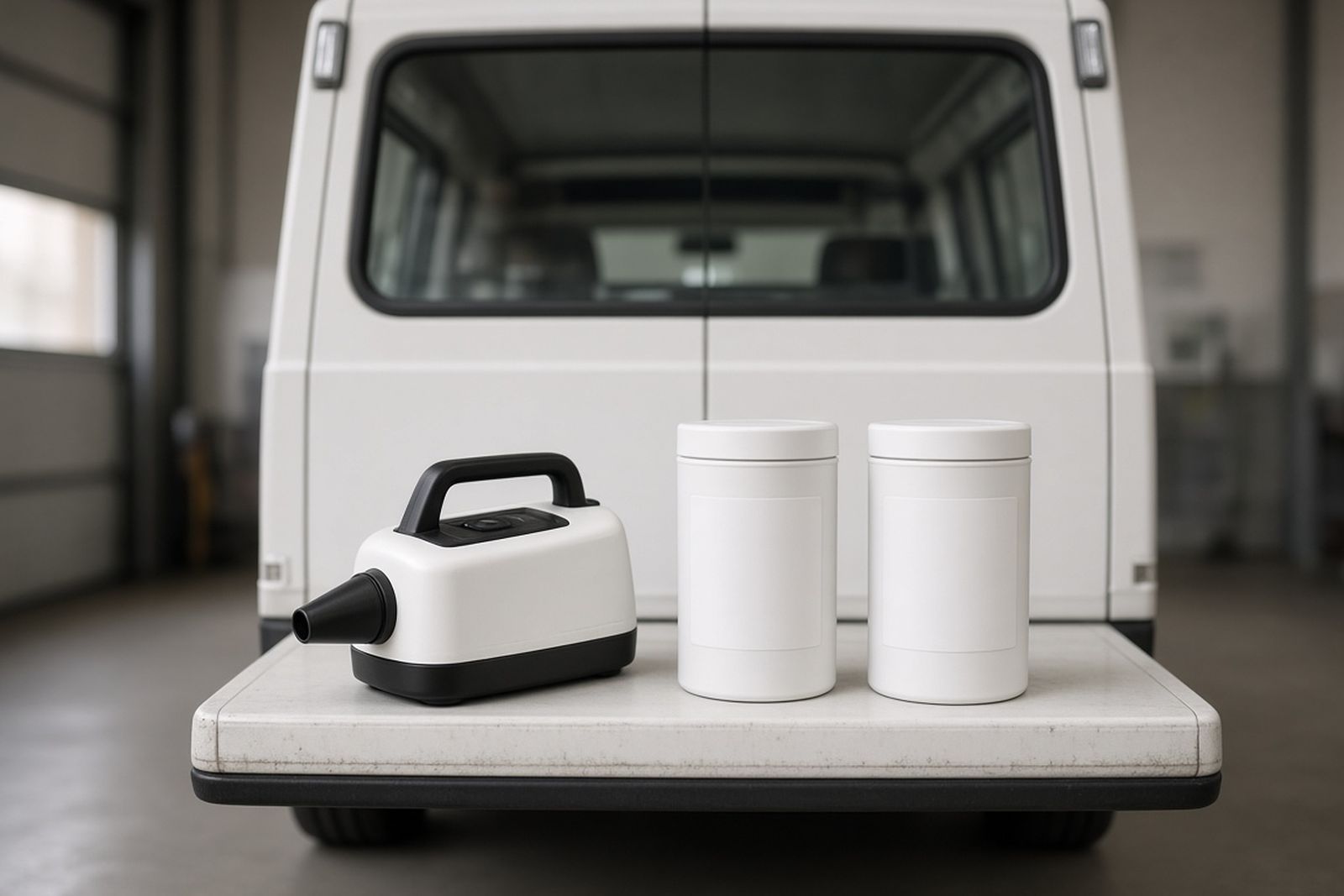
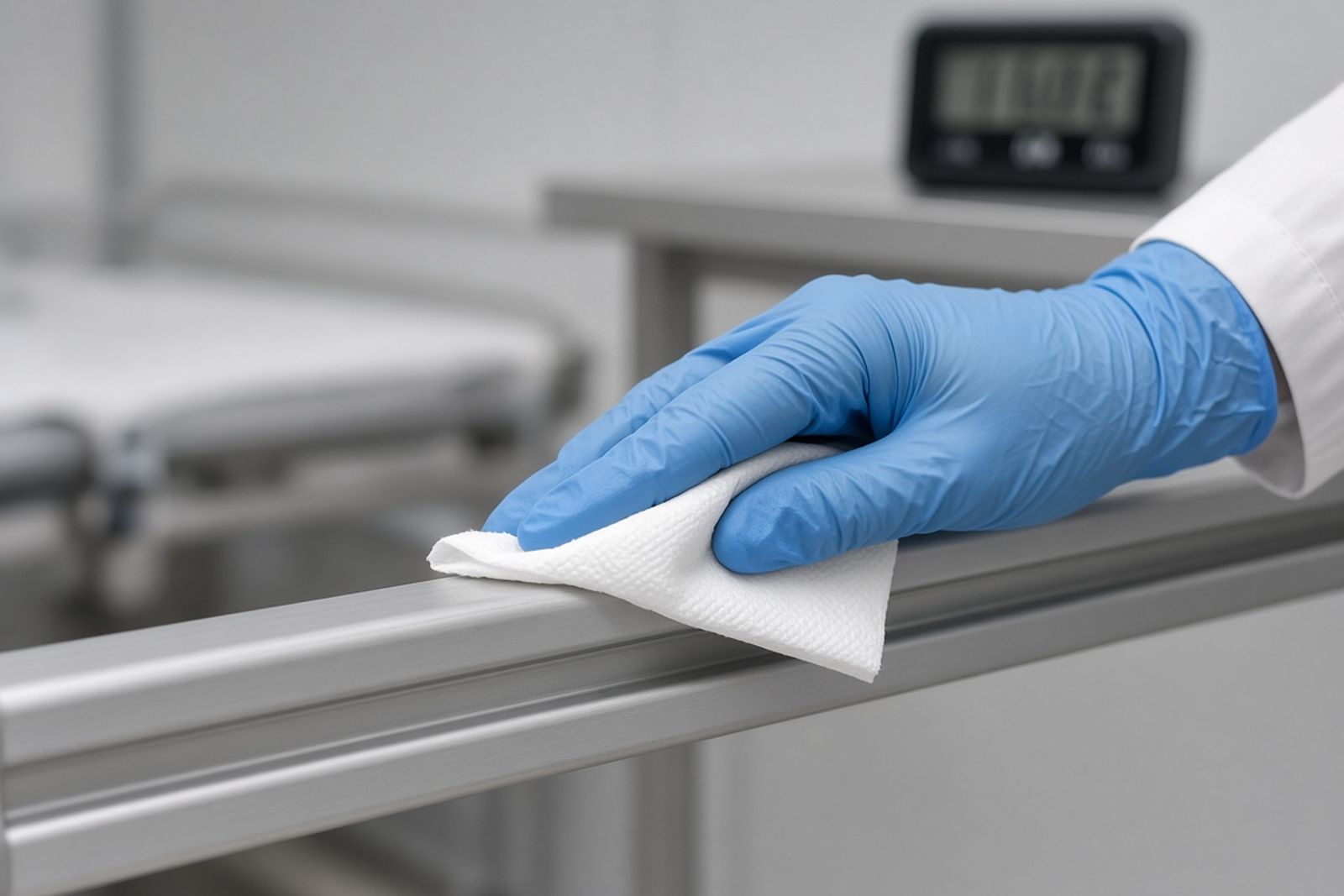
Disinfection applies a registered product with claims against the organisms of concern. The label specifies dilution, surfaces, and contact time. Surfaces must stay visibly wet for that full time for the product to achieve its labeled kill.
When cleaning and disinfection are done properly, the results can be striking. In a 2025 Saudi hospital study published in Pathogens, 46.08% of 204 ambulance swab samples grew bacteria, but no growth was detected after standard cleaning and disinfection. That outcome depended on both steps being performed, not on disinfection alone.
Meeting contact time in a vehicle is harder than in a building. Compartments heat up, air moves through vents, and vertical surfaces shed liquid. Crews often need to reapply product, choose products with contact times that fit their workflow, and resist the urge to wipe dry before time is up.
The most often missed surfaces
The stretcher, floor, and bench seat get most of the attention. Many other surfaces are touched just as often but cleaned less consistently.
Research has highlighted some surprising locations. In a 2025 study of five South Korean emergency ambulances published in the International Journal of Emergency Medicine, all six high-touch surfaces tested were contaminated before daily disinfection, with ventilation outlets carrying the highest bacterial counts. Vents are rarely on a crew's mental checklist, yet they are touched to adjust airflow and collect settled particles.
Oxygen equipment deserves a mention of its own. Cylinders, regulators, and flowmeters travel between vehicles, storage rooms, and patients, and they are handled constantly. Because they move around, they are easy to leave out of a single vehicle's decon checklist. Treating them as their own item, cleaned and disinfected whenever they are swapped, closes that gap.
Other commonly missed surfaces include the items below.
- Ventilation outlets and climate controls
- Overhead grab rails and ceiling-mounted IV hooks
- Cabinet latches and the inner edges of drawers
- Monitor controls, patient cables, and reusable cuffs
- Suction canister holders and oxygen regulators
- Radio handsets, mobile data terminals, and cab controls
- Seat belt buckles and stretcher straps
Compatibility and soft goods
Cleaning and disinfecting products interact with the materials they touch. Monitors, ventilators, and other devices often carry manufacturer guidance on approved products. Vinyl upholstery, polycarbonate panels, and rubber seals can crack, cloud, or become sticky with repeated exposure to incompatible chemicals.
Damaged surfaces are harder to clean the next time. Cracks and pits trap soil and give organisms places to hide. Choosing compatible products for both cleaning and disinfection protects equipment and makes future decon more effective.
Some agencies simplify this by standardizing on a small set of products that manufacturers of their main devices approve. Posting a product and contact time chart in the station decon area helps crews use the right product on the right surface.
Cot mattresses, straps, seat belts, blankets, and cloth restraints absorb fluids. Surface cleaning and disinfection cannot reliably reach fluid that has soaked into fabric or foam.
For that reason, many agencies launder or replace soft goods after significant exposures rather than trying to disinfect them in the vehicle. Mattresses with intact, fluid-resistant covers can often be cleaned and disinfected; mattresses with torn or cracked covers usually need to be removed from service.
Stocking spare soft goods at each station reduces pressure to reuse items that should be replaced. It also shortens turnaround, because the unit does not have to wait for laundry.
Personal equipment is similar. Stethoscopes, penlights, trauma shears, and radio holsters go from call to call on the crew's body. They can be cleaned and disinfected, but only if someone remembers to do it. Adding them to the end-of-call routine keeps them from carrying contamination into a freshly decontaminated vehicle.
Between-call wipe vs full decon: two calls compared
Two back-to-back calls, invented for illustration, show the difference. A crew transports a patient with a nosebleed on one call, then a patient with uncontrolled vomiting on the next.
After the first call, the crew performs a between-call clean. They remove a few blood-stained gauze pads, wipe the stretcher mattress and rails, clean the monitor cable and blood pressure cuff, and apply a cleaner-disinfectant to the touched surfaces, waiting the labeled contact time before returning to service.
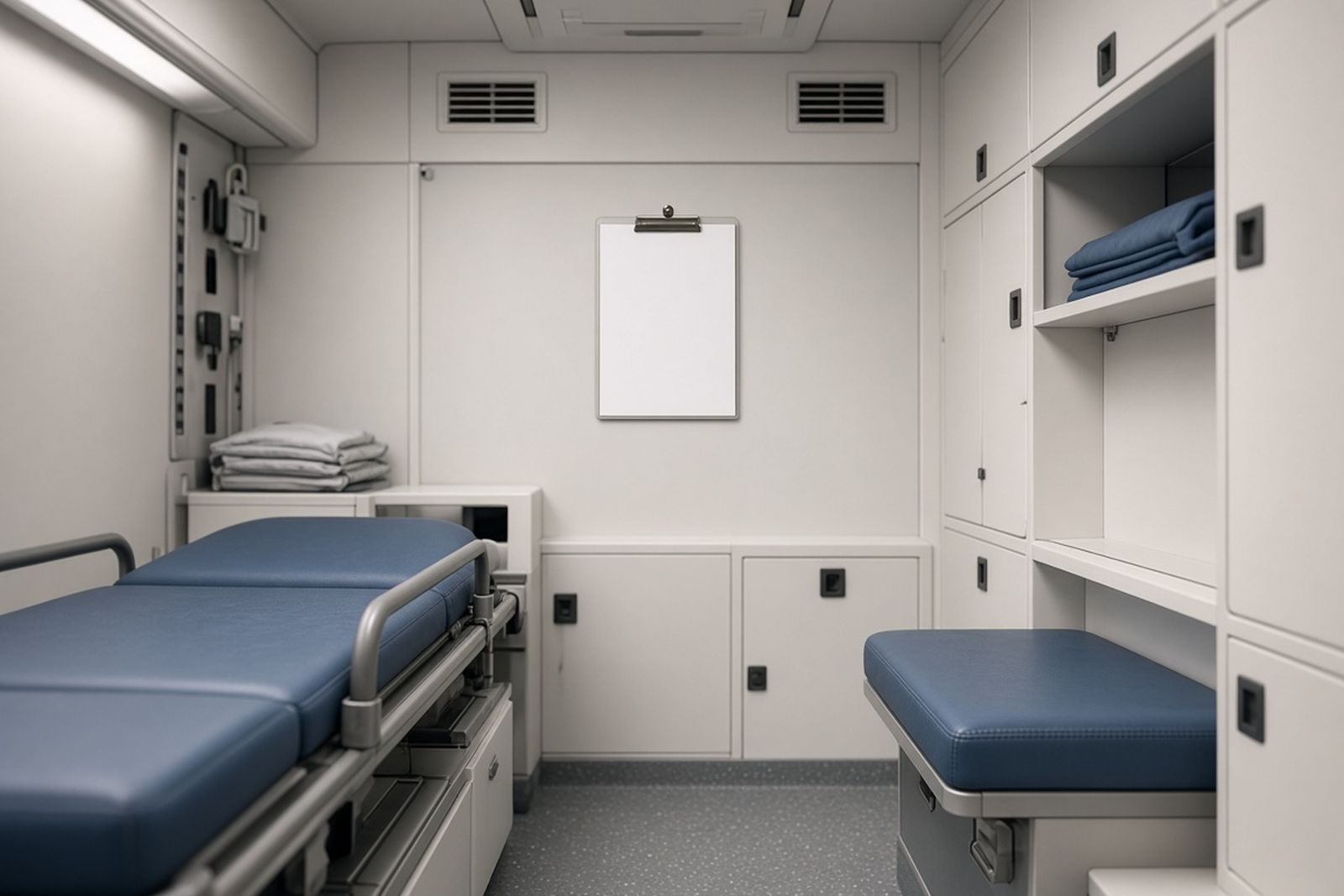
After the second call, vomit has reached the floor, the bench seat, and the lower cabinet doors, and the mattress cover has a small tear. The supervisor pulls the unit for terminal decon. The crew or vendor removes the stretcher and soft goods, cleans the floor tracks and bench seat with detergent and friction, rinses where needed, then applies a disinfectant compatible with the upholstery and effective against common gastrointestinal organisms. The torn mattress is replaced, and vents, grab rails, and cab controls are included on the checklist.
Both responses involved cleaning and disinfection. The difference was depth: the second call required removing more material and reaching more surfaces before disinfection could be trusted.
Verifying both steps, and writing them into policy
Verification starts with a clear process. A written checklist that separates cleaning and disinfection steps, lists surfaces, and records products and contact times makes it easier to confirm that nothing was skipped.
Some agencies use fluorescent markers placed on surfaces before decon to see whether they were wiped, or ATP testing as an indicator of residual organic material. These tools do not test for specific pathogens but can reveal missed surfaces and guide training.
Supervisors can also spot-check units returning to service, looking for residue in floor tracks, sticky films on panels, and damaged soft goods. Feedback should be constructive; the goal is consistent practice, not blame.
A good decon policy defines both terms, describes when each is required, and explains how they fit together for between-call cleaning and terminal decon. It names approved products, their contact times, and the surfaces they may be used on.
The policy should also address soft goods, device compatibility, protective equipment for crews, waste handling, and documentation. Including police and fire vehicles, not just ambulances, makes the policy more complete.
Check with your state EMS office and medical director to make sure your policy matches current expectations and supports both cleaning and disinfection on every unit.