Short answer
To judge equipment proposed for cleaning your vehicles, check four things. Every chemical should be EPA-registered for the germs and the way it will be applied. It should be safe for your interiors and medical devices. Its wet time should fit how your crews work. And any device should add to hand cleaning, not replace it. Ask for the makers' written statements, the wait time before re-entry, and proof the method reaches hidden touch points.
Why should fleets question equipment pitches at all?
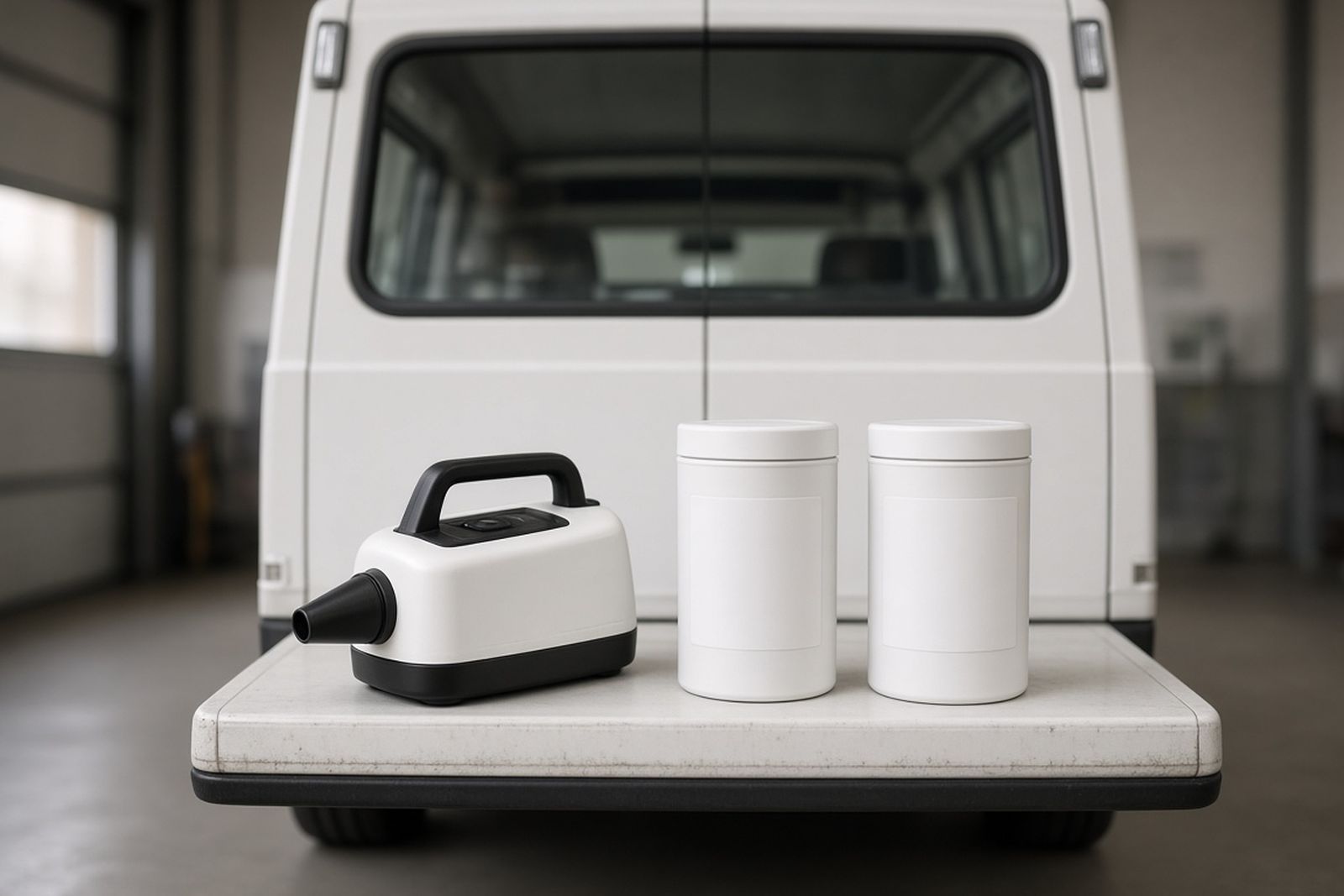
Vendors and contractors now offer fleets a wide range of decontamination, or decon, tools. There are pre-wetted wipes, sprayers that put an electric charge on the droplets, and foggers. There are ultraviolet (UV) light units, hydrogen peroxide vapor systems, and chlorine dioxide generators. Each comes with claims about speed, coverage, or how many germs it kills.
Some of those tools are excellent for certain uses. Others suit the tight, crowded space inside an ambulance or the rear of a patrol car poorly. A device that does well in a hospital room may not fit your vehicles, your schedule, or your budget.
You do not need to be a scientist to judge a proposal. You need a short list of questions. And you need to insist on clear answers before anything touches your fleet.
Police and fire agencies face the same choices with different vehicles. A patrol car has a hard plastic prisoner seat and a partition. An engine cab has air-pack brackets and radio gear. Each raises its own questions about safe products and access.
The goal is simple. Buy or hire the tools that make your crews' hand cleaning more reliable. Skip the tools that promise to replace it.
Check the chemicals first
Start with registration. Every disinfectant sold in the U.S. must be registered with the EPA. Its label lists the germs it was tested against, the surfaces it is approved for, and the ways it may be applied. Ask for the EPA registration number of every product in the proposal. Then read the label yourself.
Check whether the label covers the germs you worry about most, such as MRSA, norovirus, and C. difficile spores. Then check whether it allows the proposed way of applying it. A product labeled for wiping may not be approved for fogging or charged spraying.
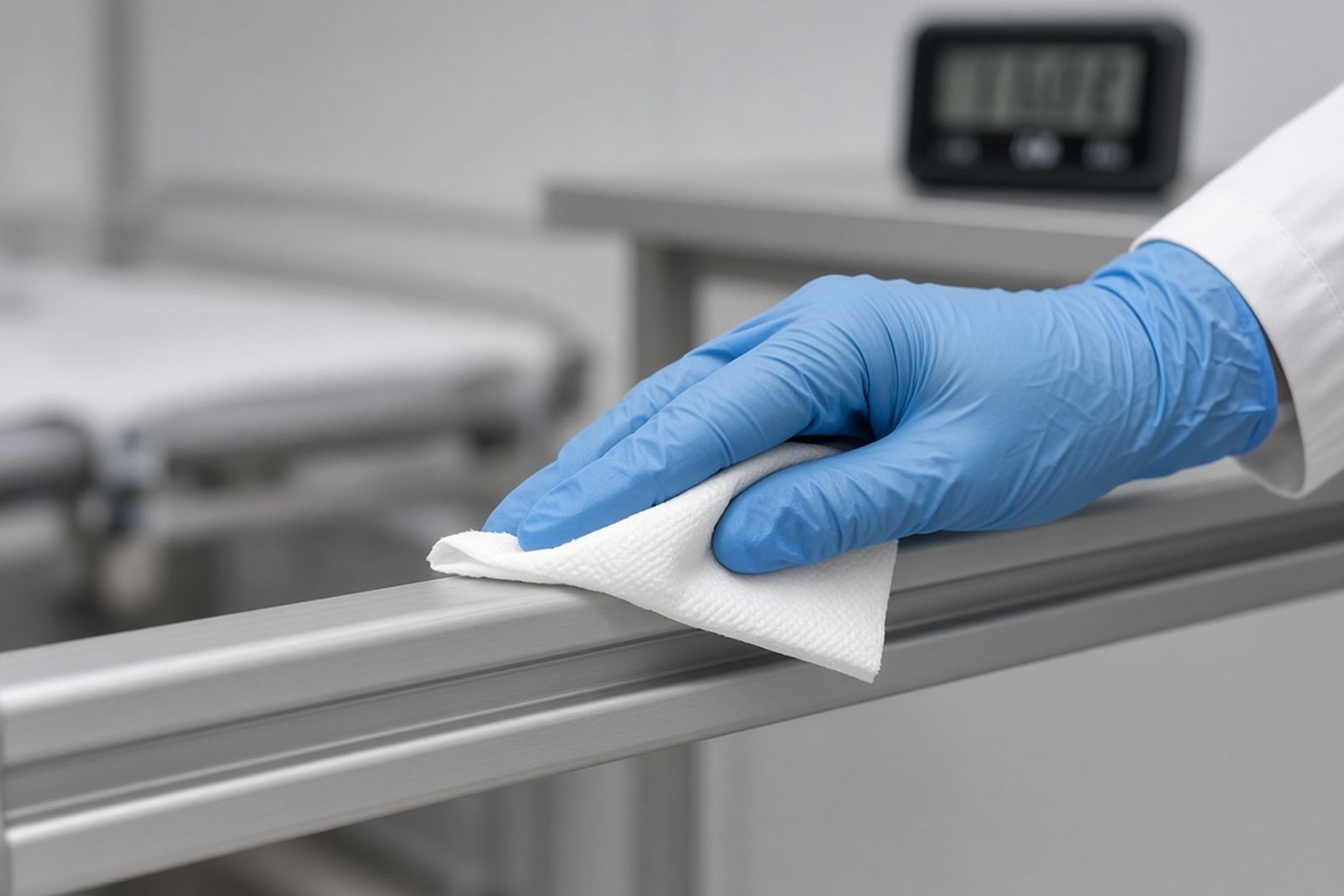
Look closely at how long the product must stay wet, called its contact time. A product that needs ten minutes of wet contact may be excellent for deep cleans but not practical between calls. Many fleets keep two products for that reason. One is for routine turnover. The other is for heavier or special exposures.
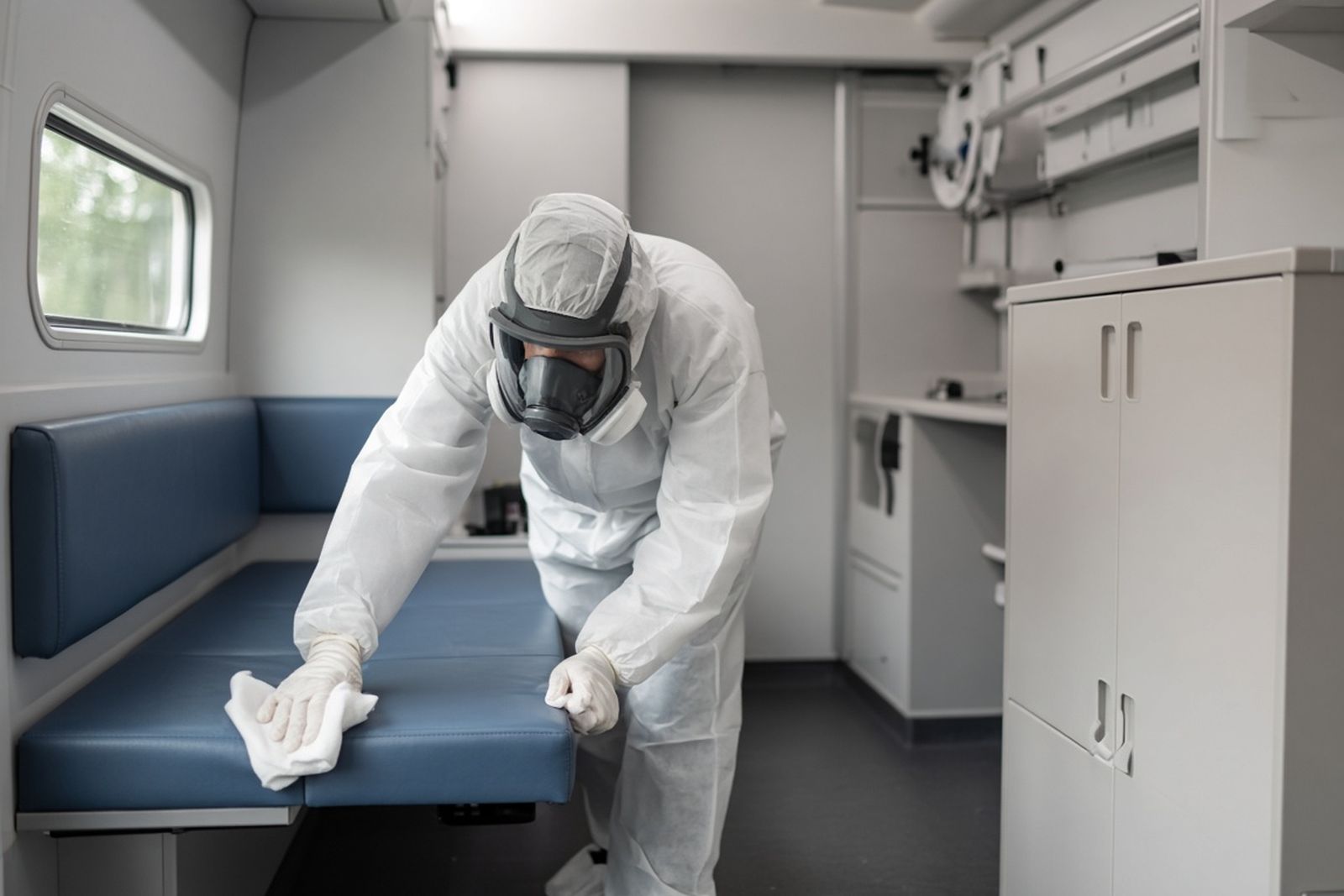
Last, review the product's safety data sheet and any protective gear it calls for. If a product can only be used with a respirator on, that affects how and where your crews can apply it.
Protecting your vehicles and devices
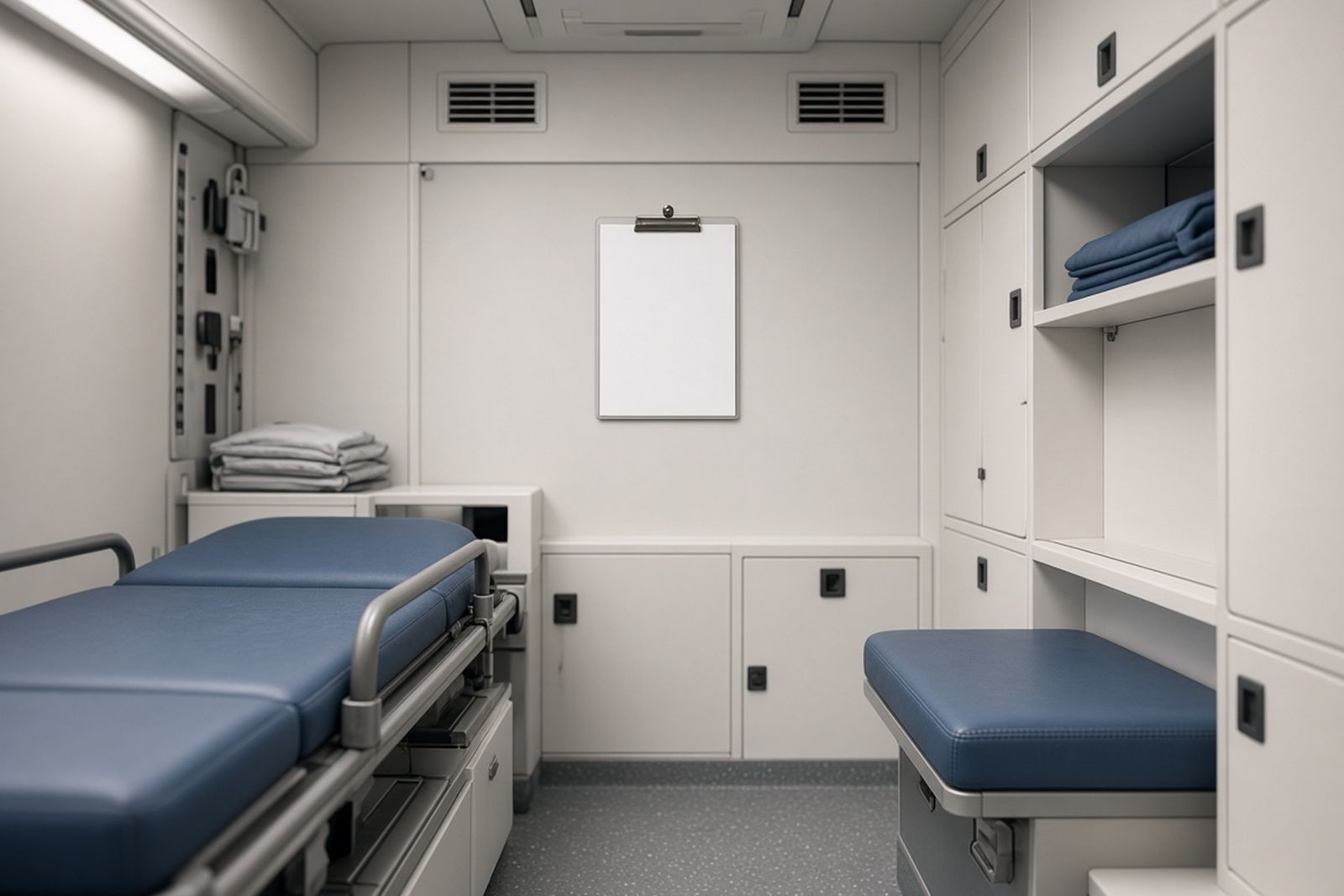
Whether a product is safe for your materials is one of the most overlooked questions in fleet decon. Ambulance interiors include vinyl, clear hard plastic, ABS plastic, stainless steel, aluminum, rubber seals, and touchscreens. Repeated contact with the wrong chemical can crack plastics, cloud screens, wear out seals, and void warranties.
Ask the vendor for written statements from your vehicle builder that the product is safe to use. Ask for the same from the makers of your heart monitors, ventilators, suction units, and stretchers. Many device makers publish lists of approved cleaning products. If the proposed product is not on those lists, ask why.
Damaged surfaces are not just a matter of looks. Cracks and fine surface crazing give microbes places to hide and make later cleaning less effective.
Think about a trial on one unit, or on a set of retired parts, before you commit your fleet. A few weeks of real use will show whether a product leaves residue, dulls finishes, or makes surfaces sticky.
Where the equipment has to reach
The best equipment is the kind that helps your crews reach the places they usually miss. Evidence shows germs can be widespread. A 2015 research abstract compiled by the New Jersey Department of Health reported MRSA on sixteen of 50 EMS stethoscopes tested, and 32% of companies could not recall their last cleaning. A 2018 report in the Emergency Medicine Journal, summarized by ACEP Now, found MRSA on all nine oxygen tanks sampled from three ambulances.
Those findings point to portable equipment, not just fixed surfaces. When you judge a proposal, ask how the method treats items that move between the unit, the patient, and the hospital. Think of stethoscopes, oxygen cylinders, monitor cables, and jump bags.
Ask the vendor to walk through a unit with you. Have them show exactly how their tool would reach cot rails, cabinet latches, the undersides of shelves, and air intakes.
If they cannot answer clearly, the equipment may cover the obvious surfaces and leave the risky ones untouched.
Sprayers, foggers, and UV devices: the questions
Automated tools, and tools that are partly automated, can add value, most of all for deep cleans. They can also give a false sense of safety if they are used in place of hand cleaning.
Ask these questions about any device in a proposal.
- Is the chemical registered for this exact way of applying it?
- Does the device need surfaces to be cleaned first, and who does that?
- How is the label's wet contact time reached and confirmed?
- How long must crews wait before they can work in the unit again?
- How does the device reach shadowed areas, drawers, and the insides of cabinets?
- What protective gear do operators need?
- What upkeep, calibration, and replacement parts does it need?
- What independent evidence backs the vendor's claims in vehicles, not just rooms?
Weighing the evidence that a method works
Vendors often quote lab figures for how many germs were killed. Those numbers are useful. But they come from controlled tests on clean sample pieces, not from a patient compartment after a busy shift. Evidence from the field means more.
Adding a new step is no guarantee either. A better wipe or a new device can help without solving the problem alone. Technique, coverage, and the way the work flows matter as much as the product.
Ask vendors whether their product or device has been tested in ambulances or similar vehicles. Ask whether they can share the study. If not, propose your own trial. Before and after treatment, use glow-in-the-dark markers or a quick swab test that shows leftover organic residue (it does not detect germs).
Be careful with claims that a device removes the need for hand cleaning. No credible evidence supports that in vehicles with soil you can see.
Comparing proposals side by side
When two proposals arrive, put them through the same checks. Do not just compare brochures. A common pairing looks like this. One proposal is a UV light unit that treats a compartment in a short cycle. The other is a charged-spray machine with a hydrogen peroxide product, plus pre-wetted wipes for use between calls.
Each part tends to show its own limits. A UV unit may need the compartment to be empty. It may not reach inside closed cabinets. It may have no field data from ambulances. A sprayer product may be registered for charged spraying. Yet its label contact time may be longer than your crews can meet between calls. Wipes may or may not be on your monitor maker's approved list.
You do not have to accept or reject a proposal whole. A fair split might look like this. You adopt wipes that are safe for your devices for routine turnover. You try a sprayer on a couple of units for deep cleans. You ask the UV vendor for data from vehicles before you look again. Check the trial units with glow-in-the-dark markers before you expand anything.
Costs, practical details, and recording your decision
The purchase price is only one part of the cost. Think about supplies, replacement parts, training time, and upkeep. Think about the time out of service each method needs. A faster device that needs frequent repairs may cost you more in lost time on the road than a slower method that simply works.
Storage matters too. Where will the equipment live? Can it be carried to each station, or does every unit have to come to one central place? How will your crews charge batteries, refill tanks, and track use?
Think about who runs it. If only one supervisor is trained, the tool may sit unused on nights and weekends.
Do not forget the basics that make any system work. Mount wipe dispensers on the wall within reach of the rear doors. Stock waste bags and needle containers sized for the unit. Keep spare soft items, throwaway mop heads, and a timer your crews can see. Small, cheap items like these often do more for steady results than a high-end device that sits in a closet.
Keep a written record of why you chose each tool and product. Include the registration numbers, the makers' statements, the trial results, and any concerns raised. That record helps you defend the decision to your medical director and your leaders. It also makes future reviews easier.
Put the crews who will use the equipment in that record. Their feedback on ease of use, smell, residue, and time needed is some of the most valuable data you can collect. Tools that crews find frustrating tend to get skipped when calls stack up.
Look at the decision again as your fleet changes. New vehicle builds, new devices, and new guidance may shift what works best.
Before you adopt any new decon equipment, run it past your state EMS office and medical director. And follow the device makers' instructions.