Short answer
Emergency vehicle decontamination creates stress beyond the mess itself: crews who just ran a hard call may be asked to clean the evidence of it, supervisors juggle coverage with a unit out of service, and personnel worry about exposure. Reduce that strain by separating crews from heavy decon after difficult calls, planning reserve coverage, giving clear exposure follow-up, and communicating when units are genuinely ready.
Why is vehicle decon stressful for crews and supervisors?
For people outside public safety, cleaning a vehicle sounds like a routine task. For crews, it often comes at the end of the hardest calls of a shift. A unit that needs heavy decon usually carried a patient who was bleeding, very sick, or in crisis. Cleaning up after that patient can bring the call rushing back.
Supervisors feel a different kind of pressure. Every unit out of service is a gap in coverage, and there may be calls holding. Meanwhile, the infection-control officer wants the decon done properly, and the crew wants to know whether they were exposed.
EMS work already carries a heavy physical toll, and decon is one more demand on people who are already stretched.
Police and fire personnel face their own version of this. An officer who transported a combative, bleeding arrestee may have to clean the rear seat before going back on patrol. Firefighters may return from a rescue with contaminated gear, tools, and jump seats. Each of these moments adds to the mental load of the shift, even if nobody names it.
Should crews clean their own unit after a traumatic call?
Many agencies expect crews to do at least an initial clean after every call, and for routine calls that works well. After a particularly difficult call, such as a pediatric death, a violent scene, or a line-of-duty injury, asking the same crew to scrub the compartment can deepen the emotional impact.
Consider a policy that allows supervisors to pull a unit and assign heavy decon to another crew, fleet staff, or an outside vendor when a call has been especially hard. The original crew can then focus on documentation, rest, and any peer support the agency offers.
This is not about coddling anyone. It is about recognizing that repeated exposure to reminders of traumatic calls can contribute to burnout, and that a small change in who cleans the vehicle can make a real difference.
Easing exposure worries
Crew members often leave a heavy decon wondering whether they were exposed. A splash to the face, a glove tear, or contact with a contaminated surface can trigger anxiety that lasts until follow-up is complete.
Exposure events are not unusual in EMS. The New Jersey Department of Health compiled research in 2015 describing one EMS system that logged 397 infectious-exposure reports, a rate of 1.2 exposures per 1,000 EMS incidents, with body-fluid splashes making up 14.1%. Those numbers show why a clear, supportive exposure process matters.
Make sure crews know exactly what to do after a possible exposure, who to call, and how follow-up works. Treat exposure reports as routine and blame-free. People are more likely to report promptly when they know the process is straightforward and confidential, and prompt reporting leads to better care.
Worry often spreads to home. Crew members may hesitate to hug their children or share a bed with a partner until they know whether follow-up testing is needed. Giving people clear timelines for follow-up, and plain answers about what the risk actually is, can ease that fear. Station showers, spare uniforms, and a place to bag soiled clothing also help crews leave contamination at work rather than carrying it home.
Keeping coverage while a unit is out
Coverage pressure is one of the biggest sources of stress in fleet decon. When a supervisor feels forced to choose between a thorough terminal clean and keeping enough units in service, corners get cut.
Planning in advance reduces that tension. The steps below help agencies keep coverage steady while giving decon the time it needs.
- Maintain at least one reserve unit stocked and ready to swap for a unit pulled for decon
- Pre-stage replacement soft goods, such as mattresses and straps, so turnaround is not delayed by supply
- Define which exposures trigger a terminal decon so decisions are not made case by case under pressure
- Agree on a realistic turnaround range with any outside vendor
- Give supervisors clear authority to hold a unit out of service until decon is complete
- Communicate reduced coverage to dispatch promptly
Trust, transparency, and vendor conduct
A crew that does not trust its vehicle will behave differently. They may re-wipe surfaces constantly, hesitate to use equipment, or worry during every shift. That uncertainty is exhausting and can erode morale across a station.
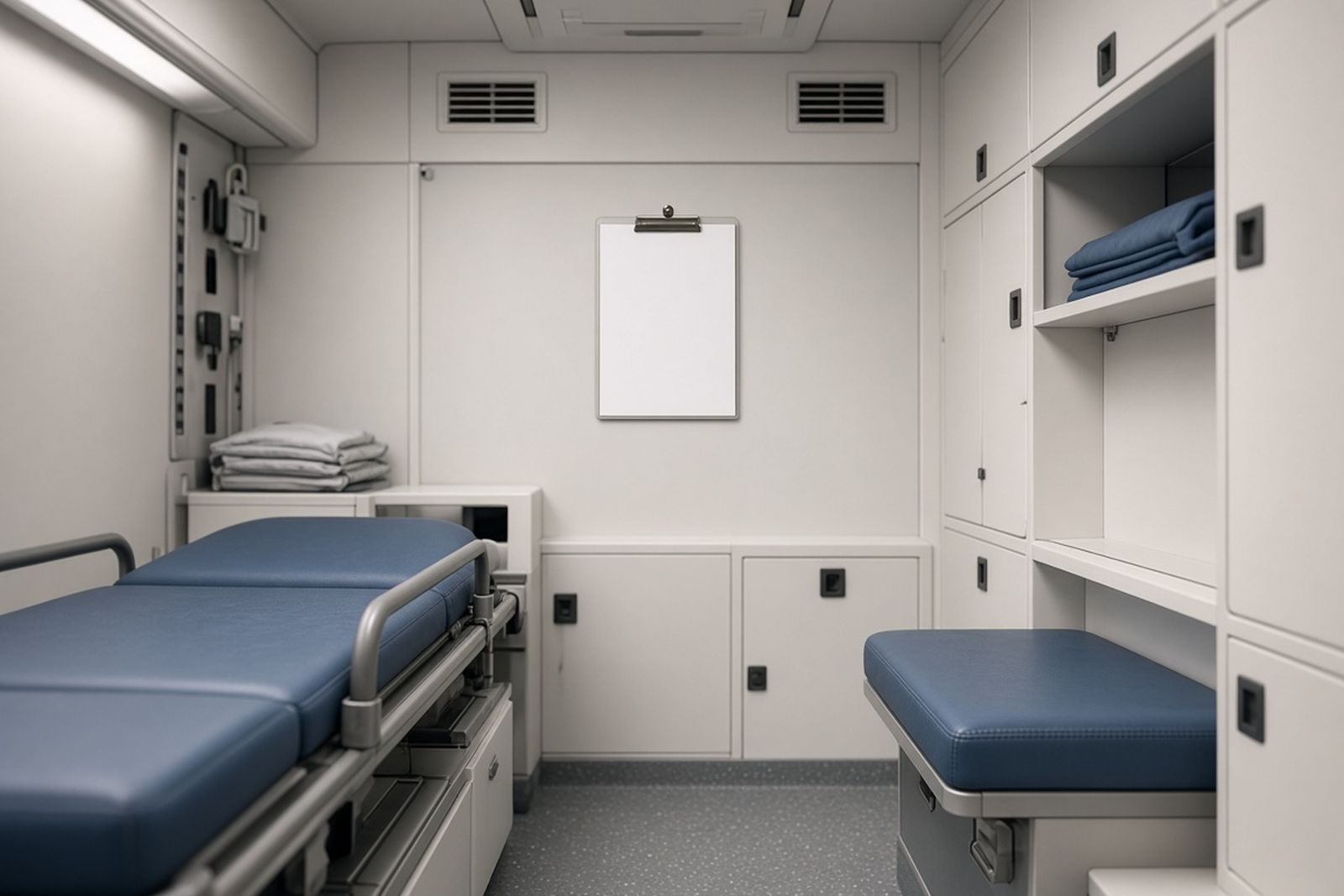
Trust comes from transparency. When a unit returns from terminal decon, a record should travel with it showing what was cleaned, which products were used, and who signed off. Posting that record in the unit or in a shared log lets crews see for themselves that the work was done.
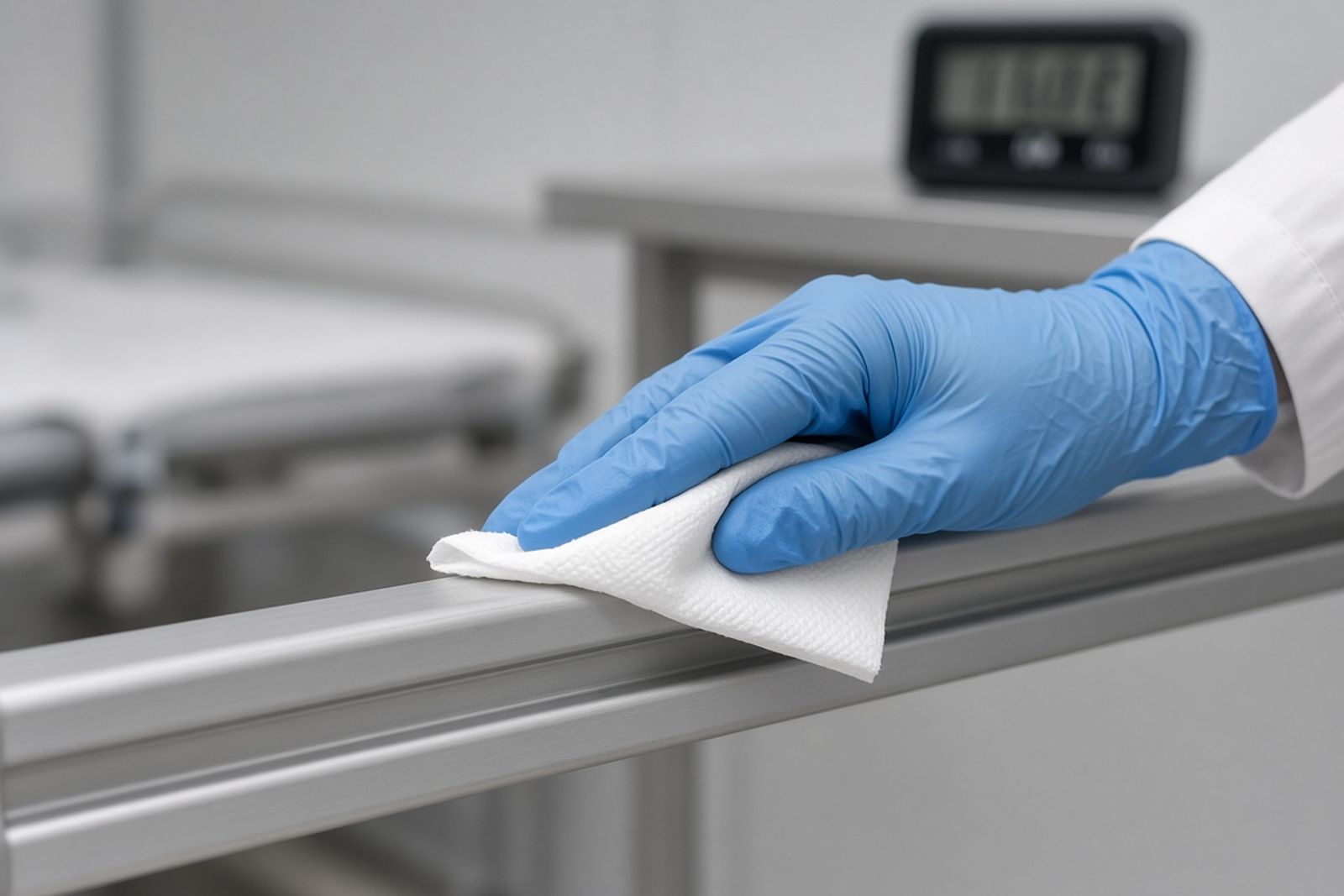
Leaders can reinforce trust by being present. A supervisor who walks through a newly returned unit with the oncoming crew, points out that the stretcher tracks and cabinet latches were addressed, and answers questions honestly signals that decon is taken seriously. That brief walk-through often does more than any memo.
Encourage crews to report concerns if they find residue or missed areas. Treat those reports as useful feedback rather than complaints, and close the loop by telling crews what was done in response.
Outside decon vendors often work in station bays where crews live and rest between calls. The way a vendor behaves can either reassure or unsettle the people who use that space.
Ask vendors to keep work confined to the decon area, contain runoff, dispose of waste properly, and avoid leaving contaminated items in common spaces. Crews should not come back from a call to find soiled soft goods piled near the kitchen.
Vendors should also be discreet. Comments about the call that produced the contamination, photographs taken for anything other than documentation, or casual talk about patients have no place in a station.
When a hard call leaves a heavily contaminated unit
The hardest decons often arrive at the worst times: late on a weekend, at a small station with two front-line units and one reserve, after a call involving a critically injured young patient. The crew is shaken and the compartment is heavily contaminated. A supervisor with a plan can handle this without choosing between the crew and coverage.
About a week later, ask the vendor and the crew for feedback. Small findings, such as a spare mattress that was not stocked at the station and delayed the return to service, are easy to fix and make the next turnaround shorter. Losing a unit for several hours is manageable when coverage holds, the crew is protected, and the vehicle comes back as one everyone can trust.
- Pull the unit, put the reserve in service, and tell the crew plainly that they will not be doing the heavy decon
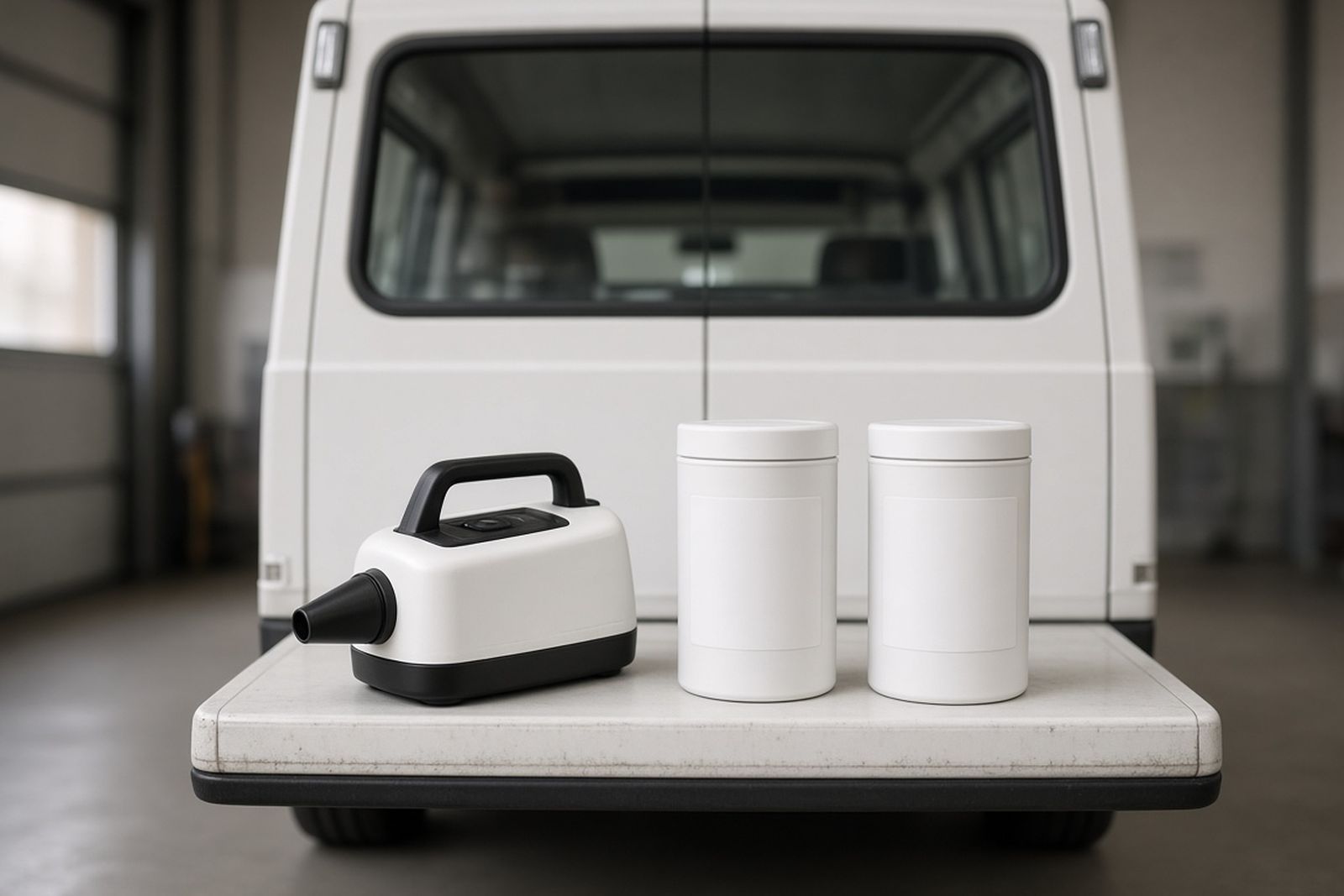
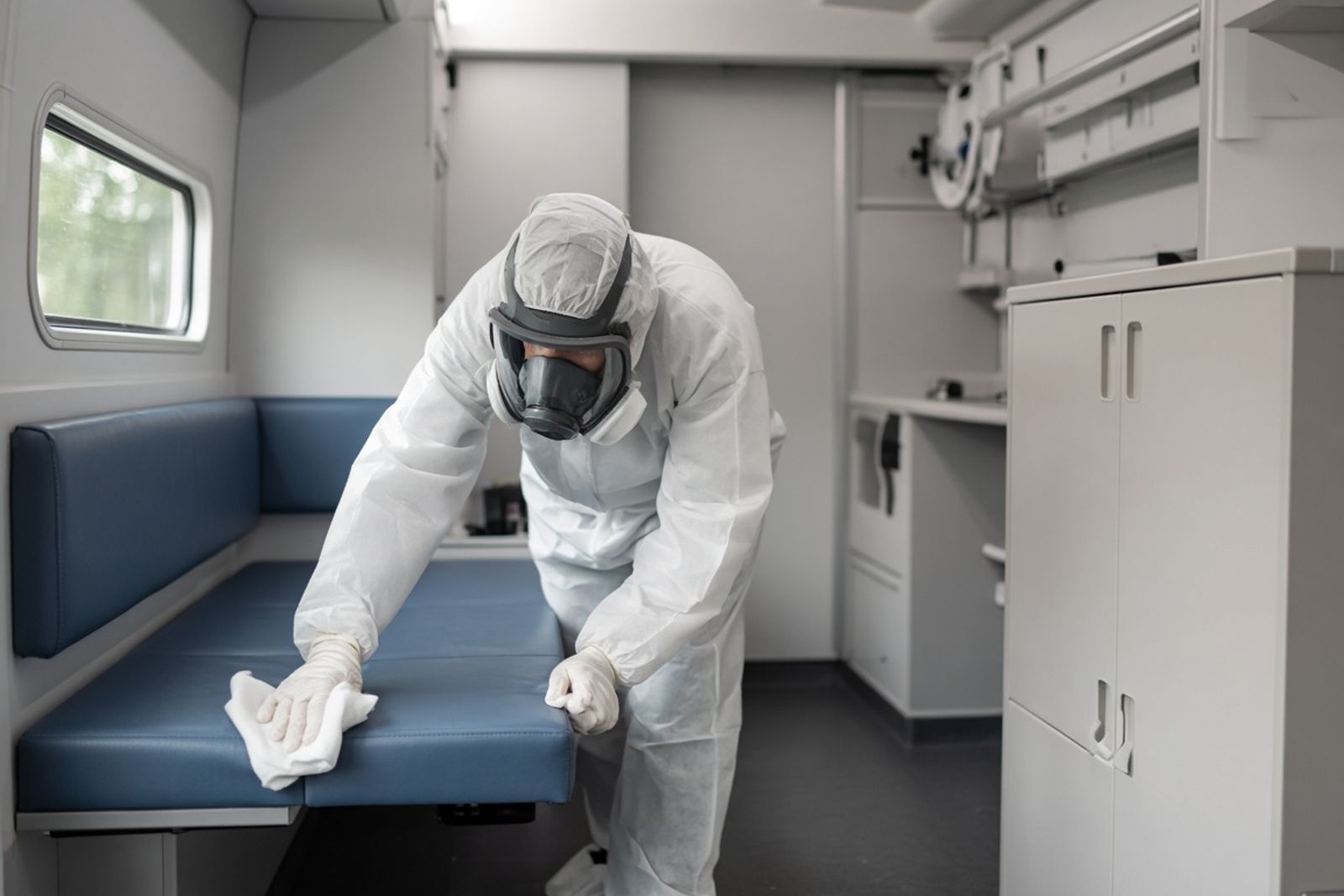
- Call the agency's decon vendor, or assign another crew, to remove the stretcher and soft goods, clean and disinfect the compartment and cab, and leave a completion record
- Check in with each crew member, remind them of the peer support team, and make sure any exposure, even a small glove tear, is reported
- Return the unit to service only with a clear record, so the next crew can trust it
Support after hard calls and exposures
Many agencies now have peer support teams, chaplains, or employee assistance programs. These resources are most effective when they are visible and normal to use. Supervisors can help by mentioning them after difficult calls rather than waiting for someone to ask.
Watch for signs of accumulated stress, such as irritability, withdrawal, changes in sleep, or loss of interest in work. Encourage people to talk, and make it clear that seeking help is a sign of professionalism, not weakness.
If any crew member expresses thoughts of self-harm, connect them with help immediately. The 988 Suicide and Crisis Lifeline is available by call or text, and many agencies also have dedicated first responder support lines.
Reducing stress over the long term
A well-designed decon program lowers stress simply by removing uncertainty. When crews know what triggers a terminal clean, who performs it, how exposure follow-up works, and how records are shared, they spend less energy worrying.
Review the program regularly with input from crews, supervisors, the infection-control officer, and the medical director. Ask what is working, where turnaround causes friction, and whether soft goods and supplies are adequate.
Your state EMS office and medical director can confirm current expectations for decontamination and exposure follow-up, so your program meets them while protecting the people who make it work.