Short answer
Emergency vehicle decontamination works when three things happen in order: organic soil is physically removed, a registered disinfectant stays wet on every surface for its labeled contact time, and the product suits the vinyl, plastics, and electronics it touches. Contamination spreads quickly through a patient compartment, so the science is about reaching hidden touch points, not just visible ones.
Why is a patient compartment so hard to get truly clean?
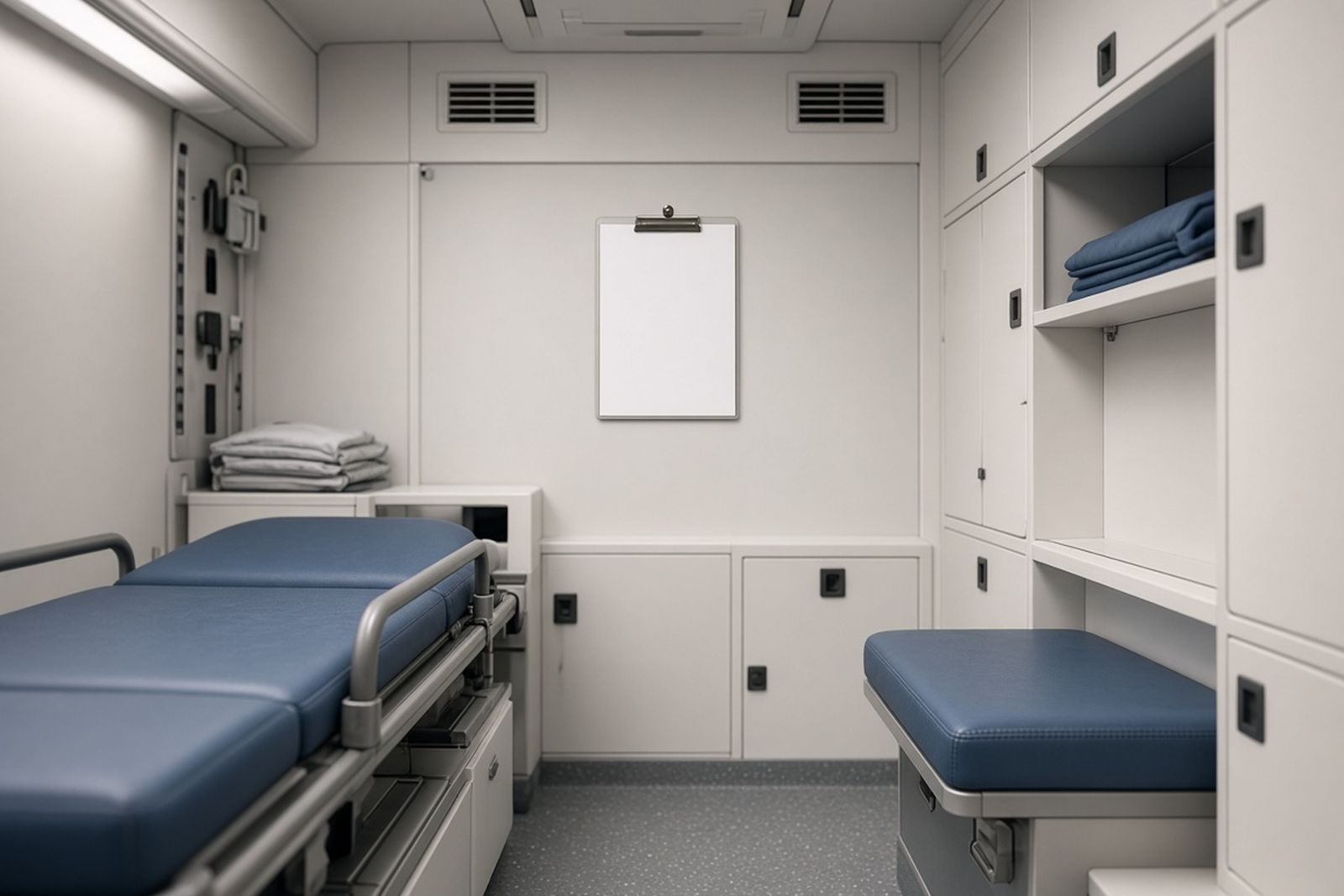
An ambulance box is a small room packed with seams, straps, hinges, and textured plastics. Every one of those features gives microbes a place to settle where a cloth does not easily reach. Add vibration, temperature swings, and constant hand contact, and you have an environment that behaves very differently from a hospital room.
Crews also work fast. Gloved hands move from the patient to the monitor to the cabinet latch to the radio in seconds, and each touch can carry material to a new surface. Researchers have tested this directly. In a 2015 field experiment published by Valdez and colleagues, a harmless tracer placed on seeded surfaces spread to 27 of 48 other sampled sites during a simulated response.
That finding explains why fleet managers talk about touch mapping rather than just wiping the stretcher. The contamination you cannot see usually matters more than the spill you can.
Cleaning comes before disinfection
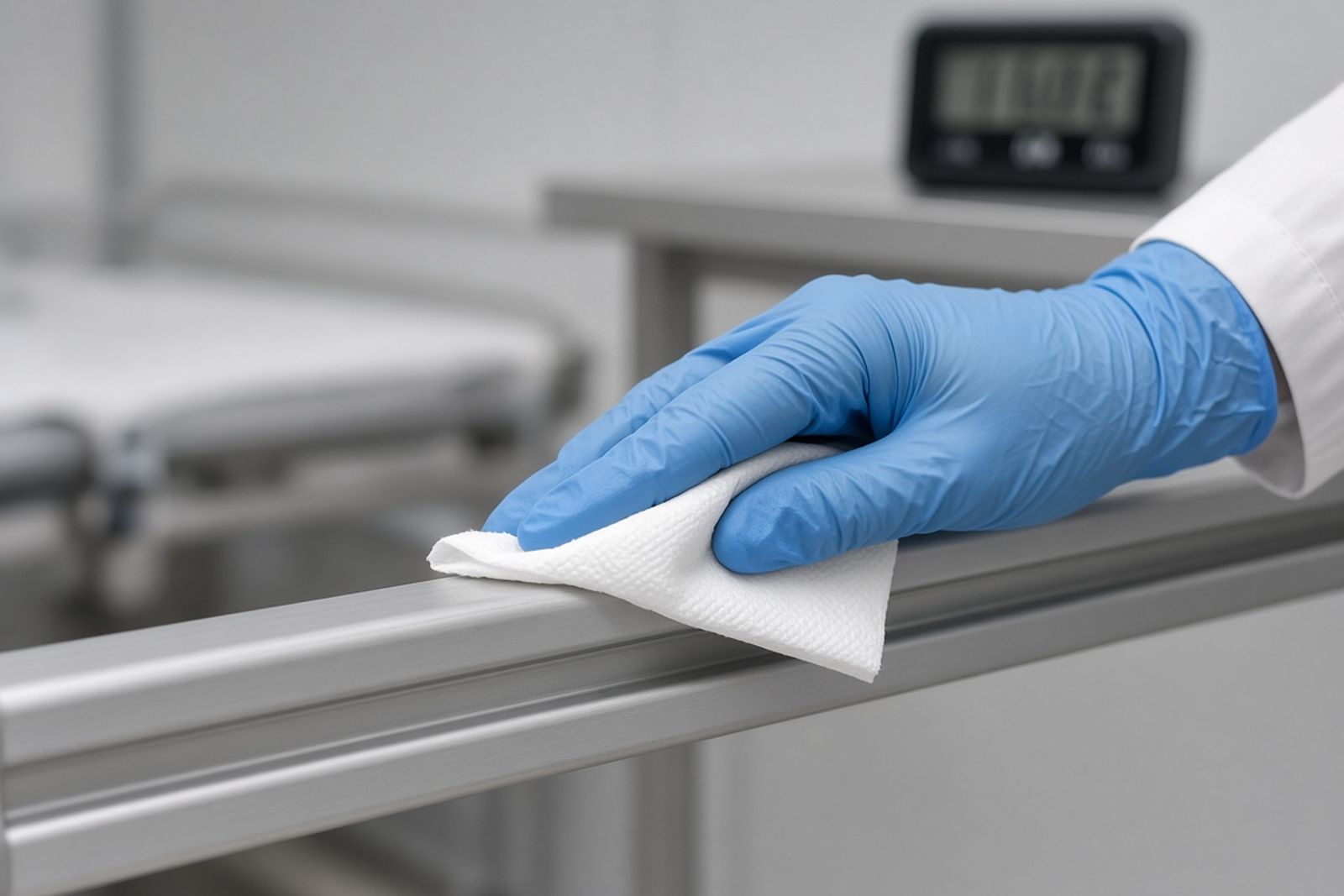
Cleaning and disinfecting are separate steps with separate jobs. Cleaning uses detergent, friction, and rinsing to lift blood, mucus, vomit, and dirt off a surface. Disinfection uses a registered chemical to inactivate the organisms that remain.
Skipping the first step undermines the second. Proteins in blood and other body fluids can bind to or neutralize some active ingredients, and a thin film of residue can shield organisms underneath it. A disinfectant sprayed over dried fluid in a floor track may never touch the microbes sitting beneath it.
This is also why many vehicle programs favor pre-saturated wipes or a two-bucket approach for heavily soiled units. The first pass removes load; the second pass delivers the active ingredient to a surface that can actually receive it.
Soil load also changes how much product you need. A wipe that is already saturated with blood or vomit stops delivering fresh chemistry and starts spreading residue instead. Swapping wipes often, and working from the least soiled areas toward the most soiled, keeps the chemistry doing its job across the whole compartment.
Contact time in a moving fleet
Every registered disinfectant carries a label stating how long the surface must stay visibly wet to achieve the claimed kill. That number comes from testing against specific organisms under specific conditions. If the surface dries early, the label claim no longer applies.
Vehicles make that harder than a building does. A compartment warmed by the sun or by the heater can dry a wet surface quickly, and the pressure to return a unit to service tempts crews to wipe and go. Vertical surfaces and smooth plastics shed liquid faster than flat ones.
Good programs solve this with process rather than hope. They choose products whose contact times fit their workflow, reapply when surfaces dry early, and treat the dwell time as a hard gate before a unit is marked available.
How vehicle materials change the chemistry
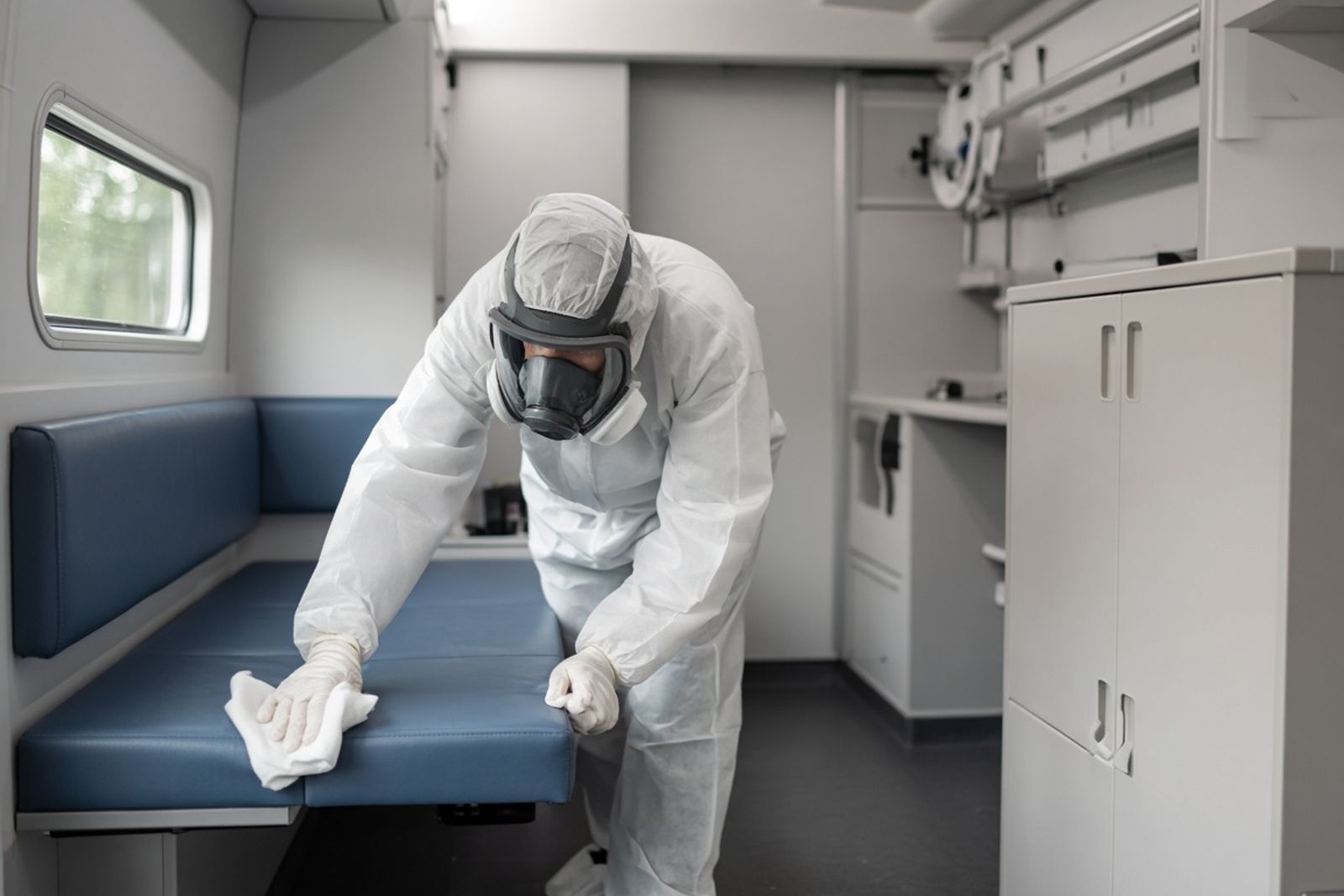
Ambulance interiors mix vinyl upholstery, polycarbonate, aluminum, stainless steel, rubber seals, and sensitive electronics. Each responds differently to oxidizers, alcohols, quaternary ammonium compounds, and chlorine. A product that works well on a steel rail can cloud a monitor screen or crack a plastic housing over months of use.
Material damage is not only cosmetic. Cracked vinyl and crazed plastic create pores and fissures that hold soil and resist later cleaning, so a harsh product can make future decontamination harder. Equipment manufacturers publish compatibility guidance for their devices, and those instructions should shape product choice.
Soft goods add another layer. Cot straps, seat belts, and cloth restraints absorb fluids. Many agencies treat them as launder-or-replace items rather than trying to disinfect fabric in place.
Do spores and resistant organisms change the chemistry?
Yes, and this is where product selection stops being a purchasing decision and becomes a clinical one. Organisms differ in how hard they are to inactivate. Enveloped viruses tend to give way to most registered disinfectants. Non-enveloped viruses such as norovirus are tougher, and bacterial spores such as those produced by C. difficile are among the hardest targets of all.
A general-purpose quaternary ammonium wipe may carry strong claims against many bacteria and viruses yet have no claim at all against spores. If your crew transports a patient with known or suspected C. difficile, the product on the shelf may not be the right one for that terminal clean. Sporicidal products, often based on chlorine or peracetic acid chemistry, usually bring longer contact times and harsher effects on materials.
Multidrug-resistant bacteria such as MRSA are a different issue. Antibiotic resistance does not generally mean disinfectant resistance, so a correctly used registered product will typically still work. The risk with these organisms is persistence and spread, which brings the conversation back to coverage and technique rather than a special chemical.
The practical approach is to keep a small decision table in the station: routine calls use the standard product, while specific flagged exposures trigger a named alternative with its own contact time and materials precautions.
Research on service-ready units
Studies of real fleets suggest that a unit marked ready is not always as clean as its crew believes. In a 2026 study, Schaps and colleagues reported that 60% of ambulances labelled service-ready had at least one targeted pathogen on sampled surfaces.
Earlier surveillance work points the same way. Noh and colleagues sampled 13 ambulances in Seoul in 2011 and found that 214 of 429 samples grew bacteria, though the authors noted that most isolates were environmental flora and that detection does not mean infection.
The practical lesson is not alarm but humility. Visual inspection cannot confirm microbial cleanliness, which is why some agencies add periodic audits, fluorescent marker checks, or ATP testing to see whether their routine is reaching the surfaces it is meant to reach.
Where organisms hide inside a unit
The high-risk list in most ambulances looks similar. It includes surfaces people touch without thinking and places where fluid can pool or wick.
Police and fire apparatus have their own versions: prisoner-seat seams and partitions in patrol cars, and SCBA seats, cab grab handles, and medical bags in engines.
- Cot rails, mattress seams, and the cot mounting track in the floor
- Cabinet latches, drawer pulls, and the edges of sliding doors
- Monitor cables, blood pressure cuffs, and pulse oximeter clips
- Suction units, oxygen regulators, and cylinder bodies
- Grab handles, ceiling rails, and seat belt buckles
- Radio handsets, keyboards, and tablet mounts
- Floor seams, drain channels, and the step well at the rear doors
- Ventilation intakes and the areas directly around them
Illustration: a unit that fails a fluorescent audit
Here is an illustrative example of a common audit result. A county agency runs a quarterly audit using invisible fluorescent gel. A supervisor dots the gel on 20 surfaces in a unit, the crew completes its standard between-call clean, and the supervisor checks the dots with a UV light afterward.
The stretcher, the bench seat, and the countertop come back clean. The dots on the suction canister bracket, the underside of the cot rail, the cabinet latch nearest the airway seat, and the radio handset remain. None of those surfaces looked dirty, and the crew had no reason to skip them. They simply were not part of the habit.
The agency responds by rewriting its wipe sequence as a top-to-bottom, clean-to-dirty route, adding the missed surfaces to a laminated card, and retesting a month later. The point of the exercise is not to blame the crew but to make the invisible part of the job visible.
Putting the science into your program
Build your process around what the evidence shows. Remove soil first. Choose registered products whose label claims match the organisms you worry about and whose contact times your crews can realistically meet. Confirm material compatibility with vehicle and equipment manufacturers before switching chemistries.
Measure rather than assume. A simple audit tool tells you far more than a checklist signed at the end of a shift. When exposures are heavy, such as major bleeding, a known resistant organism, or a crash that scattered supplies, consider a full terminal clean or an outside provider with vehicle-specific experience.
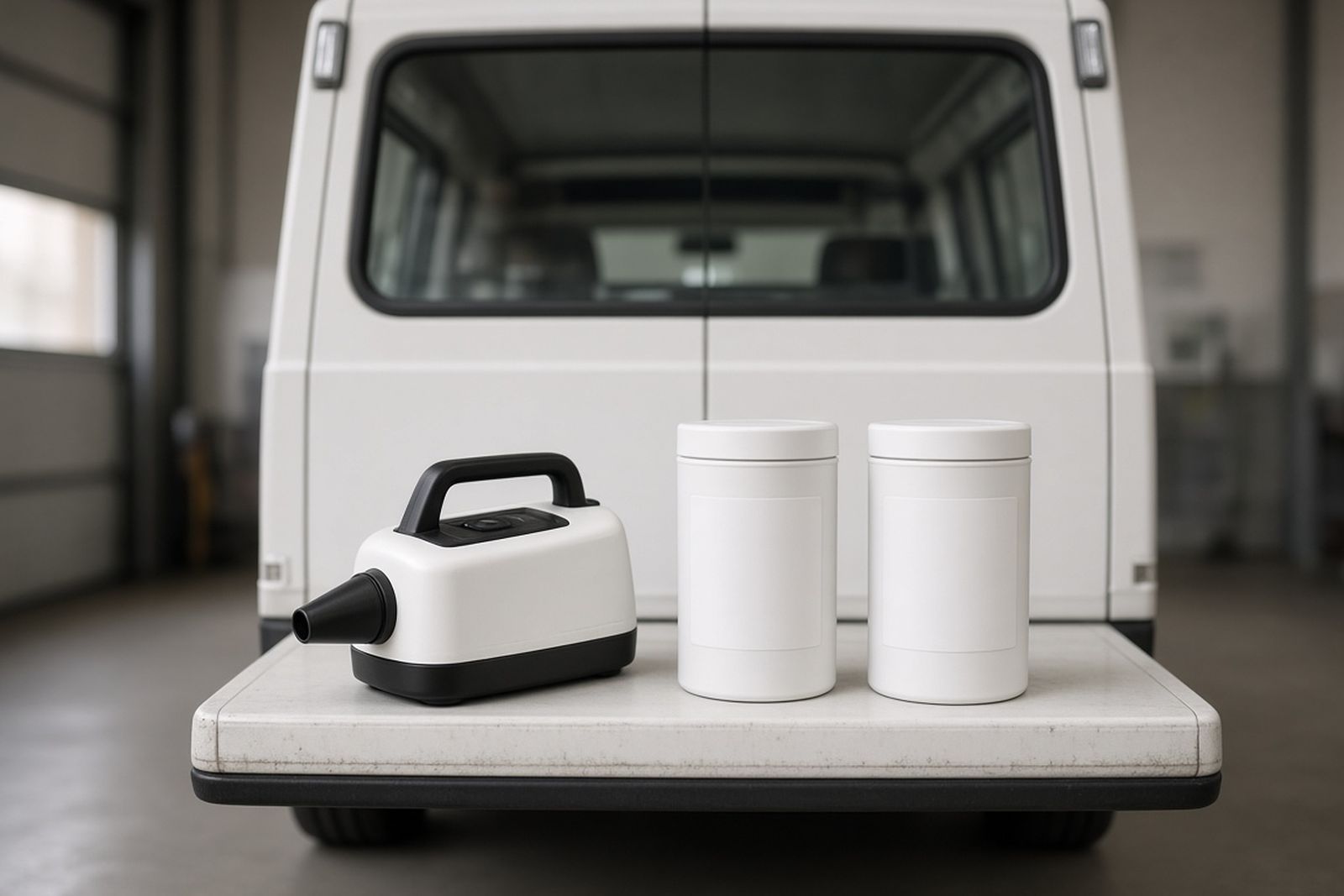
Finally, treat fogging, UV devices, and electrostatic sprayers as supplements rather than substitutes. They can reach air handling areas and complex geometry, but none of them lifts dried fluid off a cot rail. Manual cleaning still has to come first, and the device only earns its place when it is used on surfaces that are already free of visible soil.
Your medical director, your state EMS office, and the manufacturers of your vehicles and equipment should all have a voice before you finalize a written protocol.
Sources
- Valdez et al. — Spread of infectious microbes during emergency medical response
- Schaps et al. — Service Ready Ambulance Surfaces and Emergency Medical Services Clinicians are Routinely Contaminated
- Noh et al. — Risk Stratification-based Surveillance of Bacterial Contamination in Metropolitan Ambulances