Short answer
How long emergency vehicle decontamination takes depends on the level of clean, not the vehicle alone. A between-call wipe is brief, a scheduled terminal clean takes a unit out of service longer, and a gross contamination or crash event takes longest because soft goods, equipment, and hidden areas must be addressed. Disinfectant contact time, drying, restocking, and inspection all add to the total.
Three tiers of decon, three timelines
Most fleets work with at least three tiers, even if they name them differently. The first is the routine between-call clean: crews wipe the cot, high-touch surfaces, and any equipment used on the patient before taking the next assignment. The second is the scheduled terminal clean, where the unit is emptied and treated from ceiling to floor on a set cycle. The third is the exposure-driven or gross contamination clean after heavy fluids, a known high-risk organism, or a crash.
Each tier covers more surfaces, involves more removal, and requires more checking than the one before it. That is the main reason time estimates vary so widely.
If you are trying to plan out-of-service time, begin by agreeing which tier a situation requires. Arguments about duration often turn out to be disagreements about scope.
Vehicle type changes the picture too. A patrol car's rear compartment is small but full of hard-to-reach seams, and a fire engine's cab has SCBA brackets, medical bags, and radio gear that all need attention. A mobile intensive care unit or a bariatric ambulance carries more equipment and more surface area than a standard unit, so the same tier of clean will simply take longer.
The between-call clean, and what slows it down
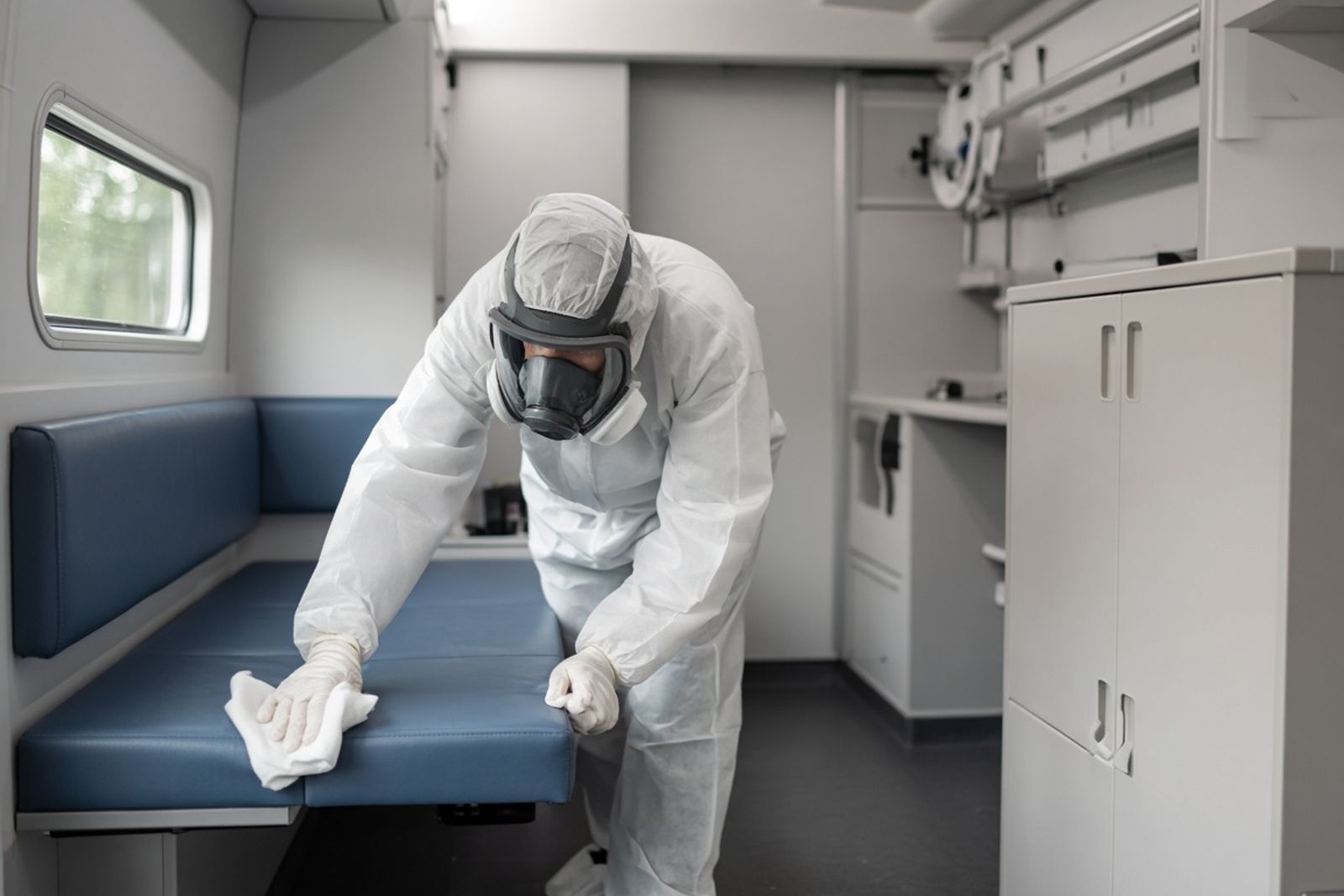
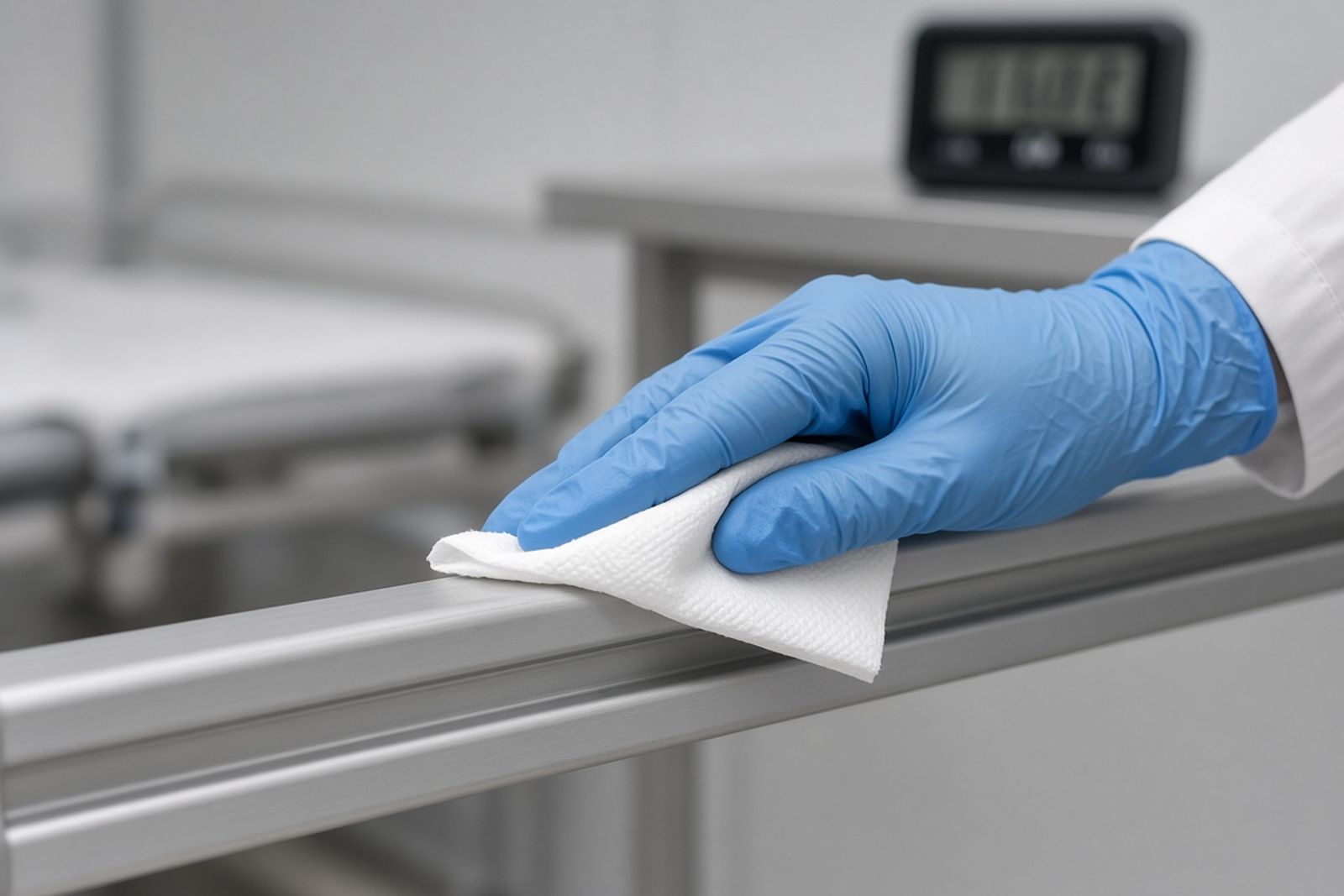
A between-call clean focuses on what the patient and crew touched. That includes the cot mattress and rails, the bench seat, the monitor, blood pressure cuff, cables, and door handles. Used disposables are discarded, and sharps go into the container.
Speed depends on how the call went. A short transport of a stable patient leaves little behind. A long transport with airway management or bleeding leaves much more. The disinfectant's contact time is the main fixed constraint: surfaces have to stay wet for the labeled period before the unit is truly ready, even if the crew is fast.
Crew habits matter as well. Units with a clear wipe sequence and a stocked decon kit tend to move faster than units where supplies are scattered or low.
One of the most common delays is discovering, midway through, that a between-call clean is not enough. Fluid under the mattress or inside a cabinet turns a quick wipe into a larger job. Training crews to check those spots first, before they start wiping, lets a supervisor decide early whether to pull the unit rather than halfway through.
Why does a terminal clean take a unit out of service for longer?
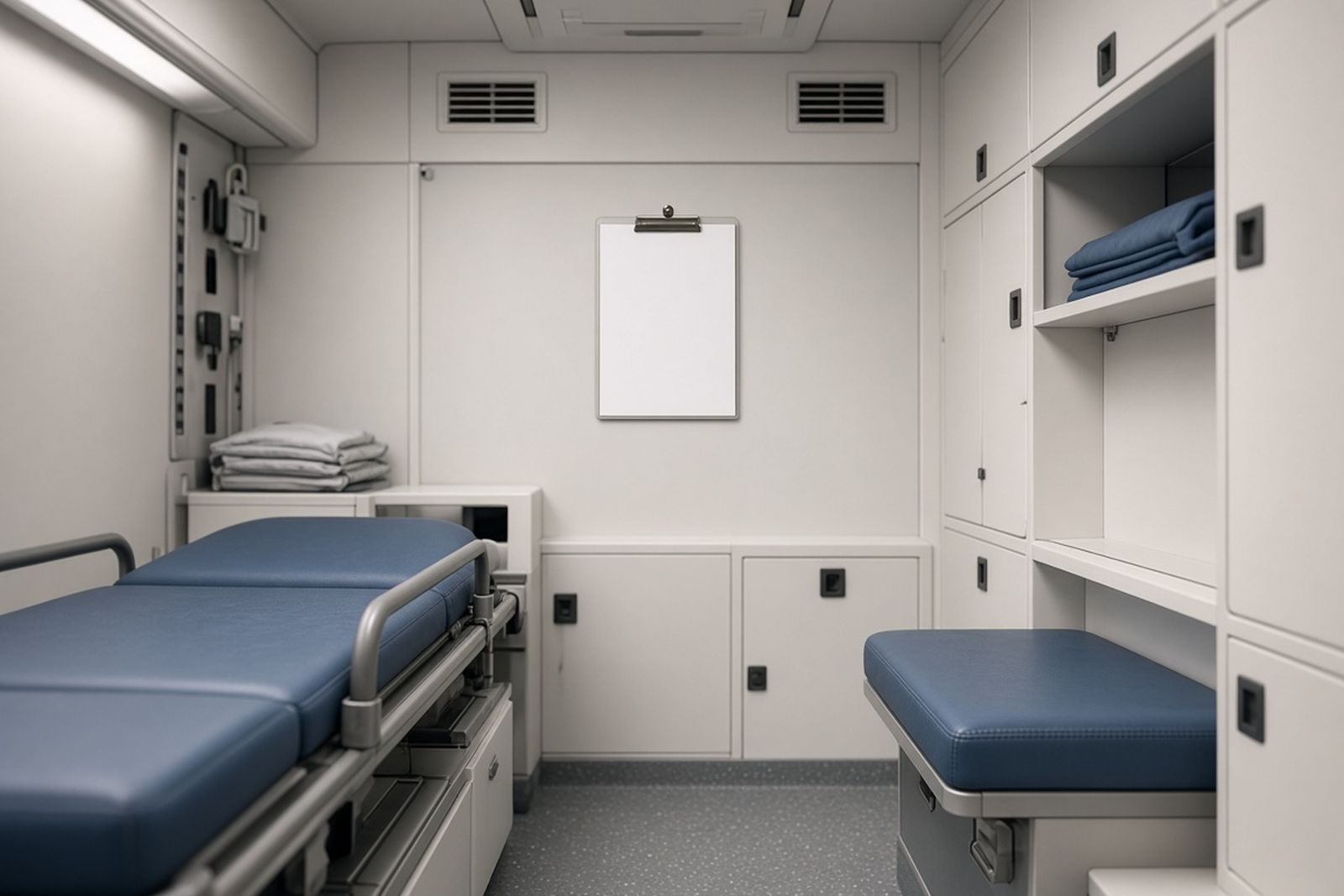
A terminal clean is thorough by design. Cabinets are emptied, removable equipment comes out, and every surface is cleaned and disinfected, including ceilings, walls, floor seams, cabinet interiors, and the cot mounting system. Soft goods are inspected and laundered or replaced. The unit is restocked and inspected before returning to service.
It is also the step most likely to be shortened when call volume is high. A 2018 cross-sectional study in BMC Infectious Diseases of 80 Danish ambulances found crews adhered to thorough-cleaning guidelines only 35% of the time, though between-patient moderate cleaning adherence was 100%. Time pressure is a plausible reason thorough cleans slip.
Scheduling terminal cleans around shift changes or low-demand periods, and having a spare unit available, helps protect the time these cleans actually need.
Gross contamination events
Heavy bleeding, vomiting, or incontinence, especially during a long or rough transport, spreads fluid into places a routine clean never reaches. Liquids can run under the cot, into floor tracks, behind bench seat cushions, and into cabinet seams. A crash can scatter supplies, glass, and sharps across the compartment.
In these cases, the job involves removal before cleaning. Seat cushions may come out. Floor coverings may need to be lifted where fluid got underneath. Straps, restraints, and fabric covers are often replaced rather than cleaned. Each of those steps adds time, and some depend on parts being available.
A crash-related decon can also depend on others. Investigators, insurers, or the fleet's mechanics may need to inspect the vehicle before cleaning begins, which can shift the start of work.
Sharps recovery also takes patience. After a chaotic call or a collision, needles and broken ampules can end up under equipment, between cushions, or inside floor channels. A careful sweep with tools rather than hands is slower, but it protects everyone who works in the vehicle afterward.
Does the organism involved change how long you need?
Yes. Different disinfectants carry different contact times, and the time listed for a particular organism can be much longer than the general claim. When a crew transports a patient with a suspected or confirmed organism such as C. difficile or norovirus, the right product may have a longer dwell than the one normally used.
Sporicidal products also tend to require extra rinsing or wiping afterward to protect materials, which adds another step. Some agencies keep a separate kit and product for these cases so crews do not have to hunt for the right supplies.
Air in the compartment matters for certain airborne illnesses. Your infection control plan may call for leaving doors open or running ventilation for a period before and during cleaning, which also affects total time.
The most underestimated steps
People tend to focus on wiping. In practice, several other steps take real time and are easy to leave out of an estimate.
- Emptying and sorting cabinet contents before cleaning
- Waiting out the labeled contact time on each surface
- Drying soft goods or allowing surfaces to air dry before restocking
- Cleaning and disinfecting reusable equipment such as monitors, suction units, and backboards
- Replacing damaged or contaminated straps, covers, and restraints
- Documenting the clean and signing off on inspection
- Restocking to the unit's checklist before it returns to service
A gross contamination turnaround, in order
When fluid reaches floor tracks, seat edges, or open drawers after a long transport, the clean follows a predictable sequence. Knowing that sequence in advance is the most reliable way to estimate how long the unit will be gone.
- A supervisor classifies the event as gross contamination and arranges coverage through a spare unit or mutual aid
- The crew empties the compartment, bags soft goods, and pulls any cushion the fluid has reached
- Floor tracks, seat edges, and any drawer that was open during the call are cleaned before disinfection begins
- If the patient's diagnosis is unclear, the product may be one with a broader label claim, such as norovirus, which usually means waiting out a longer contact time before wiping and rinsing
- Damaged cushions are set aside for replacement and spares installed
- A supervisor inspects with a flashlight, checks tracks and drawers, and signs the decon log
- The crew records the supplies used so the station can reorder
Checking that the time made a difference
Duration alone does not prove results. Some fleets use fluorescent markers, ATP swabs, or periodic culture sampling to confirm that their routines reach the surfaces they are supposed to.
If audits show a routine is being rushed, the fix is often scheduling rather than training alone. Give crews the time the process actually requires, and results tend to follow.
How can you reduce downtime without cutting corners?
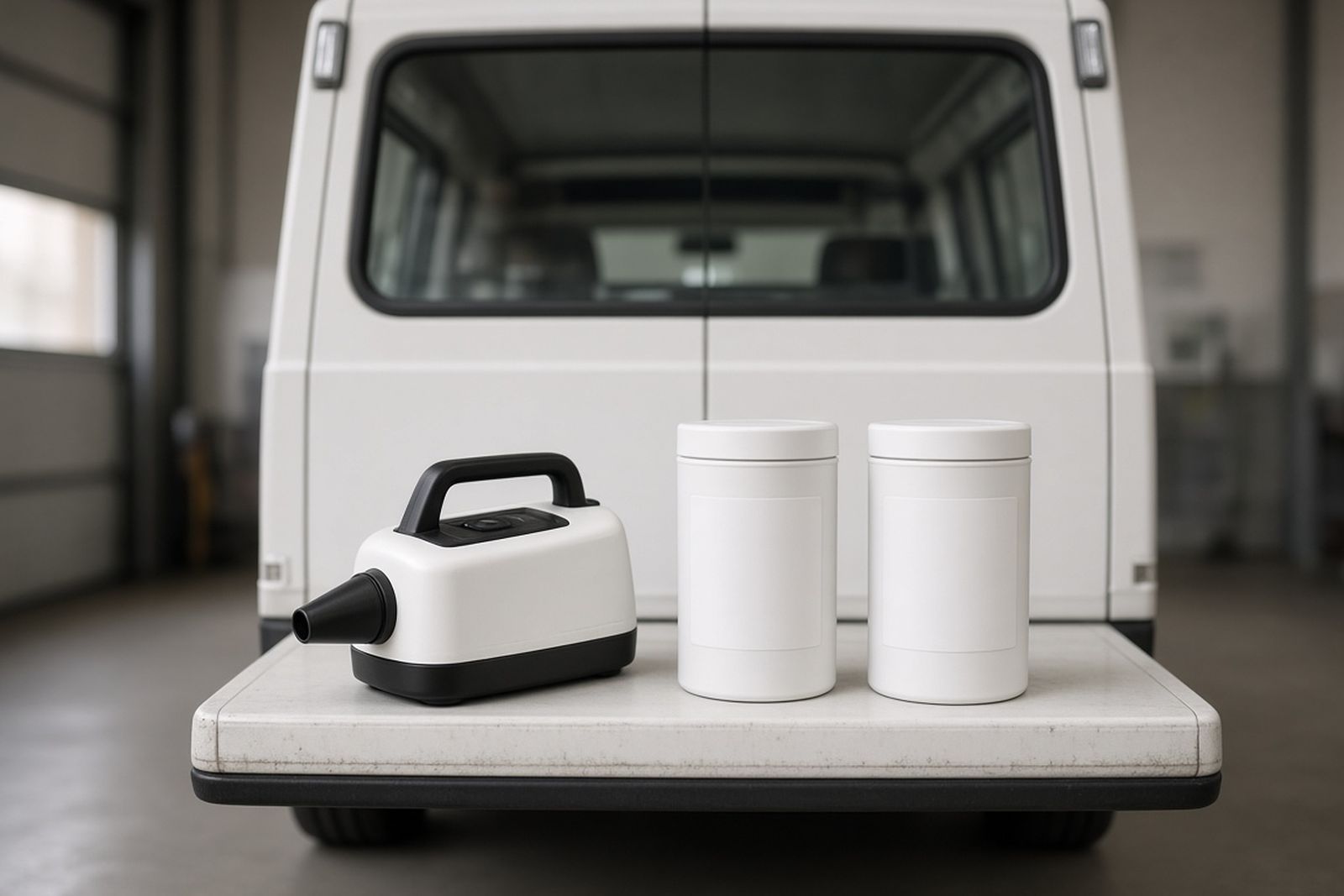
Downtime is expensive, especially for small fleets. You can shorten it in ways that do not compromise safety. Choose products whose contact times fit your workflow, and train crews to apply enough to stay wet. Keep a stocked decon kit at every station. Maintain spare soft goods and cushions so replacement does not wait for an order. Use a written wipe sequence so crews do not have to think through each step.
For heavy events, arranging an outside provider in advance can shorten the scramble. Agree on what they will handle, how they will document it, and how the unit will be released back to you.
Tracking your own numbers helps, too. Log when each unit went out of service for decon, what tier of clean it received, and when it returned. After a few months, you will have a realistic picture of your own timelines instead of relying on general estimates, and you can spot stations or shifts where the process routinely stalls.
Bring your state EMS office and medical director into the conversation before setting minimum decon standards or return-to-service criteria.