Emergency Vehicle Decontamination: Education
Science and technology used in some emergency vehicle decontamination scopes, with explicit limits for ATP, disinfectants, enzymes, fogging, air equipment, and moisture tools.
The education category explains the reasons behind vehicle cleaning. Then crews and officers can make sound choices under pressure. Posts explain why cleaning must come before disinfecting. They show how blood and dirt shield germs from a product. They explain why the contact time on the label matters more than how wet a surface looks. You will also find articles on judging gear and new tech sold to agencies, such as UV light devices and fogging systems. Other articles cover when surface testing tells you something useful about a patient area. They also cover when it just gives you a number with no context.
Get an email reply about emergency vehicle decontamination
Send a short message to the follow-up inbox. A coordinator can reply by email. This form does not send emergency help; call 911 first if anyone is in danger.
This background matters because vehicle interiors mix materials that react differently to the same product. They range from vinyl seat covers and metal cabinets to touchscreens and radio handsets. Knowing the science helps you pick products that work without cracking seats or clouding screens. It also helps infection control officers judge a vendor's pitch with a critical eye. They can ask how a new tool fits their rules. They can train new members with reasons, not just rules to memorize. Officers who can explain the why behind each step also find that crews follow the rules better on busy nights.
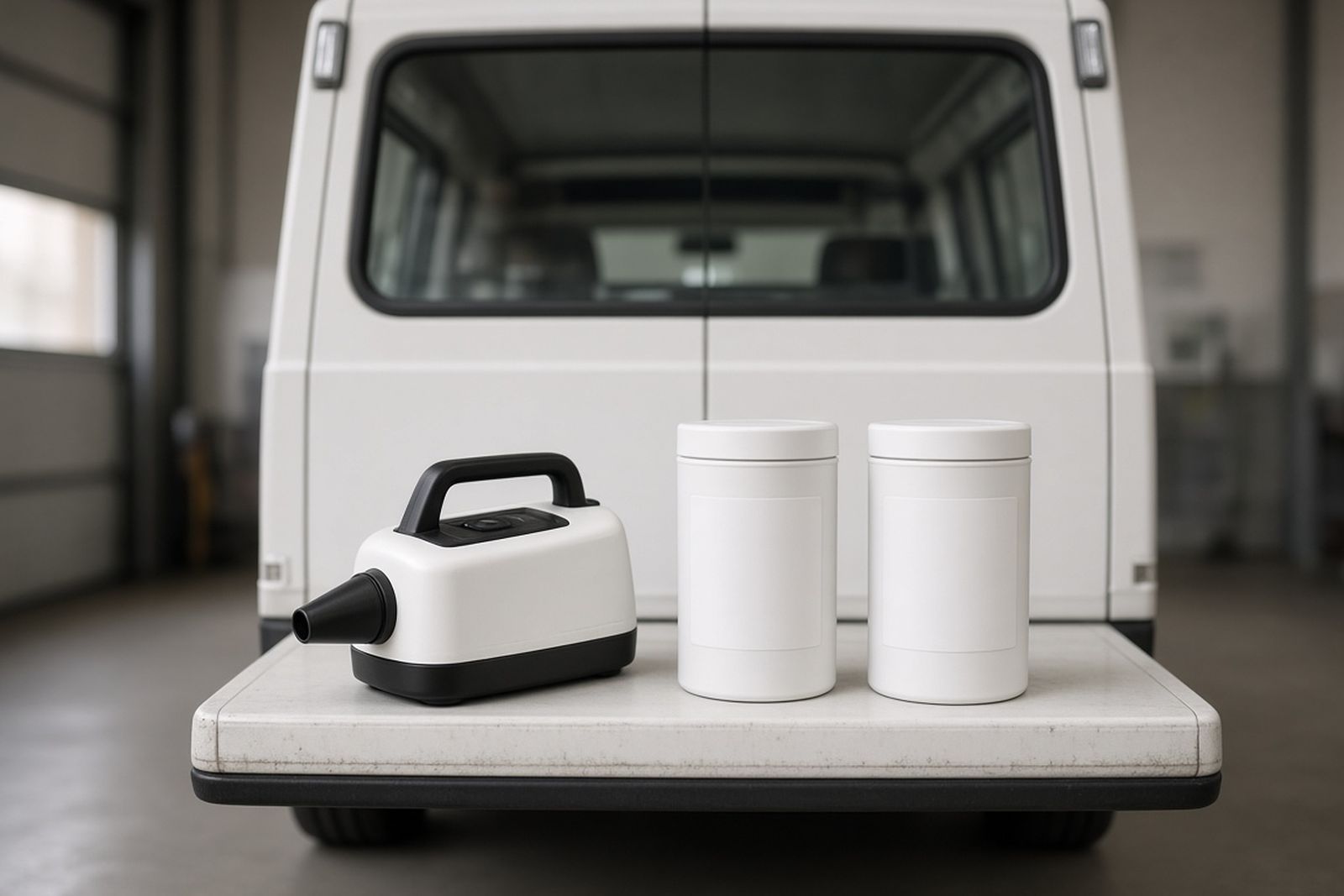
The Science Behind Emergency Vehicle Decontamination
Why ambulance and patrol-car surfaces stay contaminated after a quick wipe, and how soil, contact time, and material science decide whether a unit is ready.
Emergency vehicle decontamination works when three things happen in order: organic soil is physically removed, a registered disinfectant stays wet on every surface for its labeled contact time, and the product suits the vinyl, plastics, and electronics it touches. Contamination spreads quickly through a patient compartment, so the science is about reaching hidden touch points, not just visible ones.
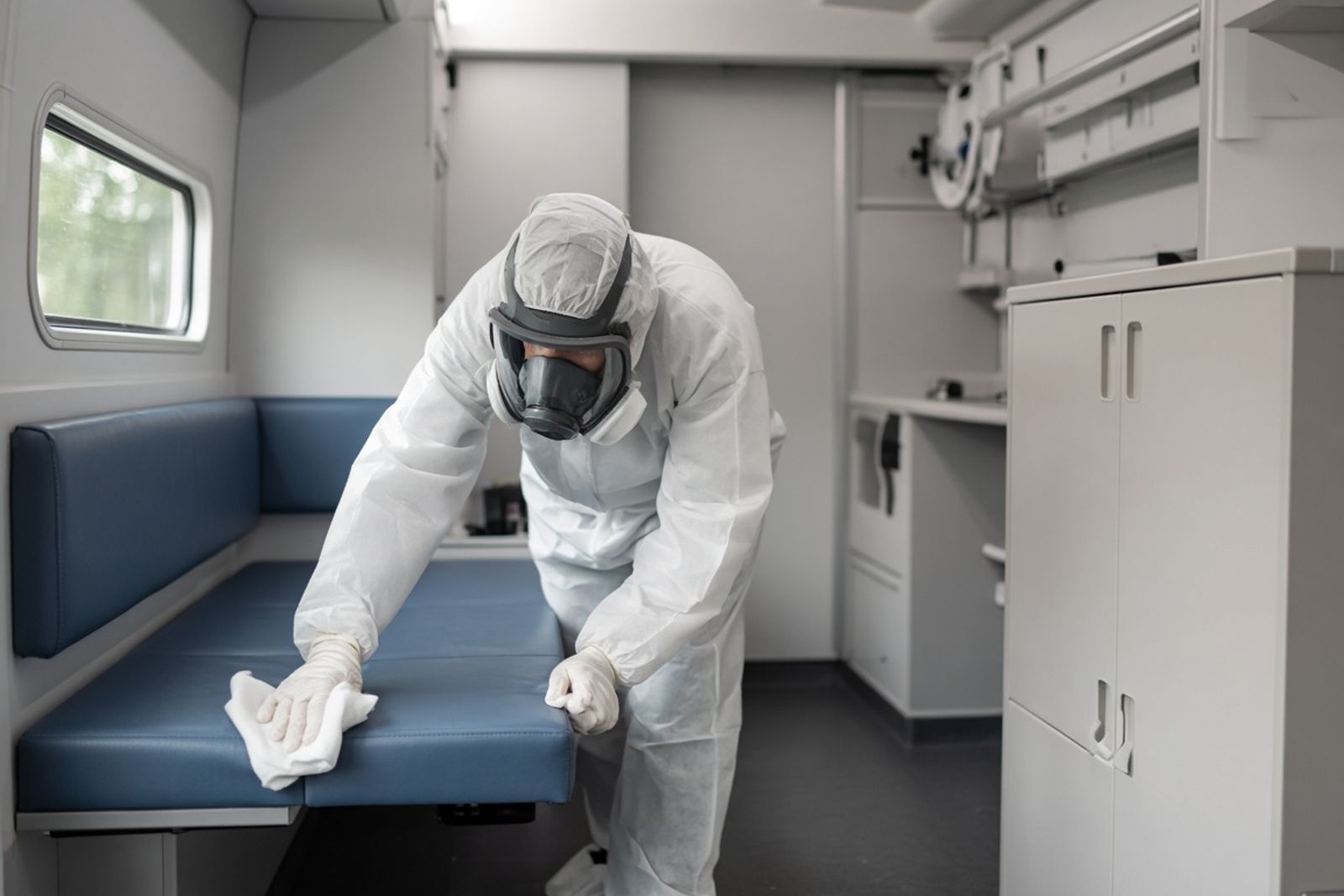
How to Evaluate Equipment Proposed for Emergency Vehicle Decontamination
Wipes, sprayers, UV units, and hydrogen peroxide vapor all get pitched to fleets. Here is how to judge whether proposed decon equipment fits your vehicles.
To evaluate equipment proposed for emergency vehicle decontamination, check that every chemical is EPA-registered for the organisms and application method involved, that it is compatible with your vehicle interiors and medical devices, that its contact time fits your workflow, and that any device supplements rather than replaces manual cleaning. Ask for manufacturer compatibility statements, re-entry intervals, and evidence the method reaches hidden touch points.
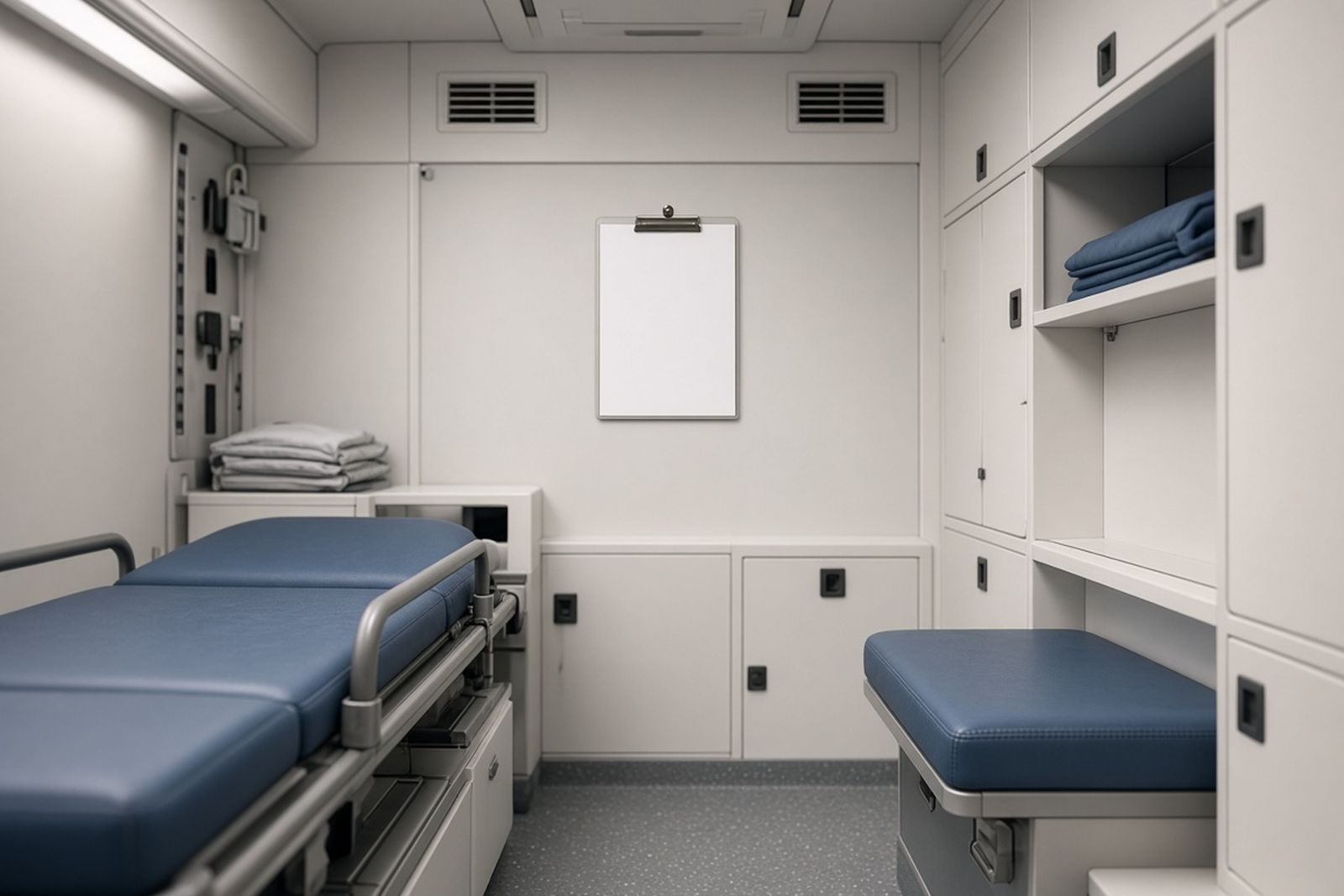
The Difference Between Cleaning and Disinfection in Emergency Vehicle Decontamination
Why ambulance and patrol car decon has to remove blood and grime before any disinfectant goes on, and how crews can confirm both steps on every unit.
In emergency vehicle decontamination, cleaning is the physical removal of blood, vomit, dirt, and residue from compartment and cab surfaces; disinfection is the application of a registered product that inactivates remaining pathogens when kept wet for its labeled contact time. Both are needed, in that order, and both must respect device and upholstery compatibility. Soft goods that absorbed fluid are usually laundered or replaced.
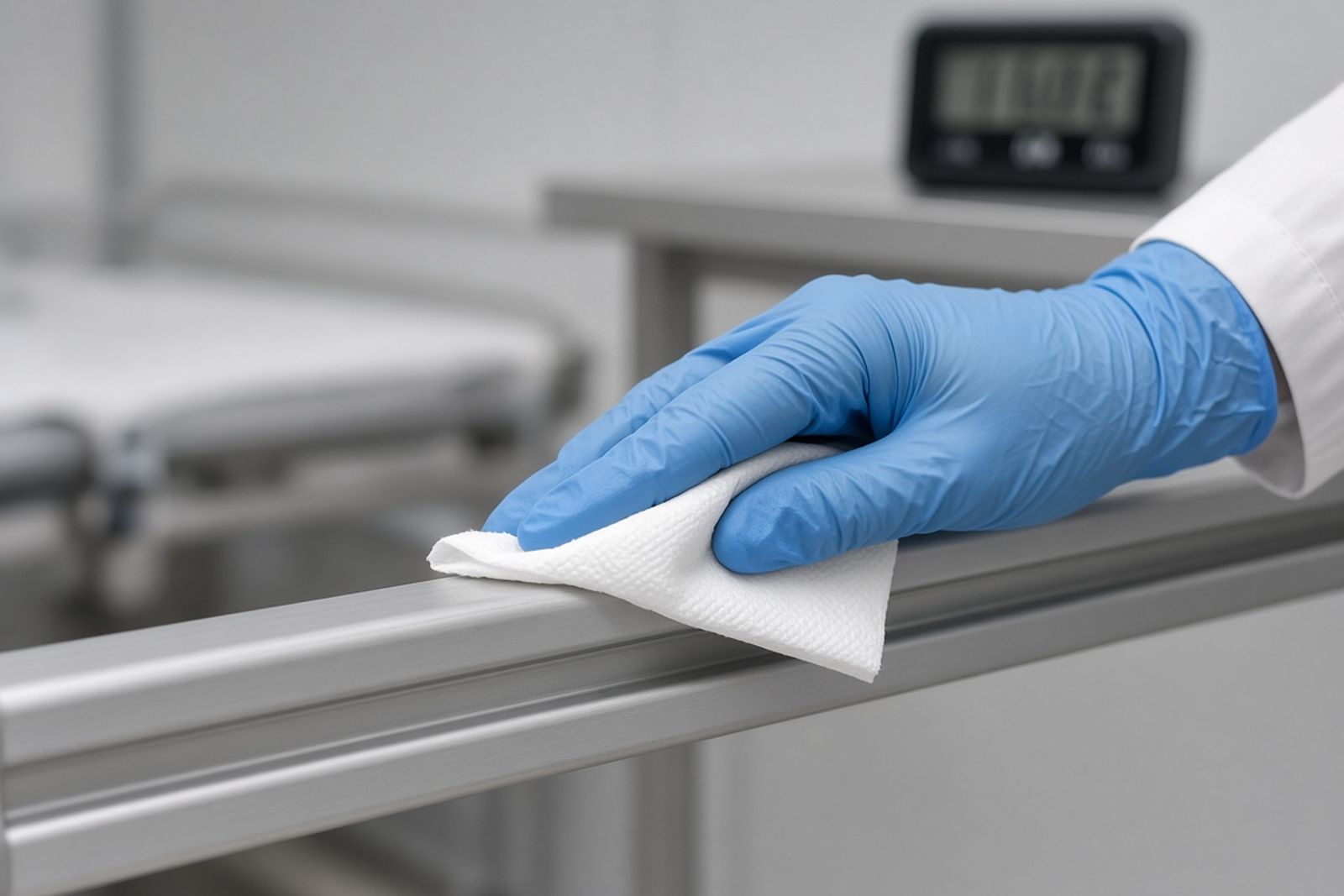
When ATP Testing Helps—and When It Does Not—in Emergency Vehicle Decontamination
ATP swabs can show whether an ambulance was actually cleaned, but they cannot prove a unit is pathogen-free. Here is how EMS fleets use them wisely.
ATP testing measures leftover organic material on a surface, so it is a quick check on whether cleaning removed soil from stretcher rails, monitor keys, and cabinet handles. It helps with training, spot audits, and trend tracking across a fleet. It does not identify pathogens, cannot confirm disinfection, and readings vary by device and technique, so treat it as one tool alongside visual inspection and good procedure.
How to Evaluate Technology Used in Emergency Vehicle Decontamination
UV-C lamps, vapor systems, electrostatic sprayers, and coatings all promise faster ambulance decon. Here is how to test those claims before you buy.
To evaluate decontamination technology for ambulances and other emergency vehicles, ask what the device or product actually claims, whether independent evidence supports that claim in a vehicle setting, whether it still requires manual cleaning first, how it affects turnaround time, crew safety, and interior materials, and how you will verify results. Technology can add to a strong manual process, but it rarely replaces one.
When Enzymes or Microbial Products Fit Emergency Vehicle Decontamination
Enzyme cleaners can lift dried blood from stretcher tracks and fabric; live-microbe products rarely belong in a patient compartment. Where each one fits.
Enzymatic cleaners break down proteins, fats, and starches in blood, vomit, and other body fluids, so they help with dried soil in stretcher mechanisms, seat fabric, and some reusable equipment when the manufacturer allows. They are cleaners, not disinfectants, so a registered disinfectant must follow. Live-microbe products suit drains and odor control in bays, but seldom belong inside a patient compartment where you are trying to reduce microbes.
Sourced figures on education
- 214
214 of 429 samples grew bacteria.
Read with care: Detection is not infection; small local fleet; most isolates were environmental flora.
Source: Noh et al. (2011)13 Seoul ambulances; 33 sites each, 429 samples.
- 52%
The reported contamination rate fell from 52% before disinfection to 8% afterwards.
Read with care: Abstract does not provide sample count; product-specific; contamination is not infection.
Source: Farhadloo et al. (2018)Ambulance cabins and equipment in Qom, Iran, treated with one named disinfectant.
- 18.5%
18.5% of all samples contained at least one targeted clinically important pathogen.
Read with care: Detection of selected pathogens is not measured patient transmission.
Source: Schaps et al. (2026)20 ambulances and 27 clinicians from two US agencies; 941 samples, 2021–2022.
These figures are public research and agency data, not this network's own job records. Keep each number with its population, year and limits; none of them predicts cost, timing or outcome at a specific property.
What research has found
Findings from published studies of people and properties in situations like this one. They describe what researchers observed in a specific group; they are not predictions for your case.
All sampled equipment categories showed significantly lower contamination after treatment.
Residual bacteria remained on an oxygen-saturation sensor and stretcher handle.
Education: common questions
Why must you clean a patient area before you disinfect it?
Blood, vomit, and dirt can shield germs from a disinfectant. They can also stop some products from working. Removing visible dirt first lets the disinfectant reach the surface and work the way its label says. Skipping that step can leave a surface that looks treated. But it never got the product for the time it needs.
Do UV light or fogging devices replace hand cleaning of an ambulance?
These tools may be used as an extra step in some programs. But they do not remove dirt. They also cannot reach shaded spaces behind gear or inside cabinets. Cleaning and disinfecting by hand is still the base. If your agency is thinking about such a device, ask how it fits your rules. Also ask what proof supports its use in vehicles.
How do I know a disinfectant will not damage vehicle surfaces?
Check the vehicle and equipment makers' cleaning instructions for the types of products that are safe to use. Compare them with the disinfectant label. Some chemicals can dull plastics, dry out vinyl, or harm electronics over time. Your agency's approved product list should reflect both infection control needs and what the materials can handle.
What does contact time mean on a disinfectant label?
It is the length of time a surface must stay visibly wet with the product to achieve the kill claims on the label. If the surface dries sooner, the product may not have worked as described. Contact times can differ for different organisms on the same label. Crews should know the contact time for each product they use and use a timer rather than guessing.
Why are soft goods treated differently from hard surfaces?
Hard surfaces that do not soak things up can be cleaned and then kept wet with a disinfectant. So you can confirm the process worked. Fabric, foam, and straps soak up fluid below the surface, where wiping cannot reach. That is why soft items are checked first. Then they are washed in a proper laundry process, cleaned if the cover is whole and fluid-proof, or replaced when fluid has gone past a seam or tear.
What is a touch-point map, and why do agencies use one?
A touch-point map is a list or drawing of the surfaces in one type of vehicle that crews touch during calls. These should be cleaned every time. It covers things people forget, such as buckles, latches, radio controls, and vents. Using a map keeps coverage the same no matter who is cleaning. It also gives supervisors something clear to check against.
Where can crews learn more about the products they use?
Start with the product label and safety data sheet. They list approved surfaces, contact times, protective gear, and first aid. Your infection control officer can explain why each product was picked. Equipment makers publish cleaning guidance for monitors, stretchers, and other devices. Keep these papers together in the station's cleaning area so they are easy to find during a clean.
Related community polls
Every count is a real visitor vote; nothing is seeded or padded. One vote per poll per device, and you can change your answer.
After a bloody transport, what usually decides whether your unit gets a full deep clean?
Who performs terminal cleans on your fleet most of the time?
More on emergency vehicle decontamination
Emergency Vehicle Decontamination services
Learn how deep cleans of ambulances, fire trucks, and police cars are planned. See needle sweeps, choices about soft items, and records by unit number.
Costs explained
What drives the price, published cost ranges, and how to read a written quote line by line.
Insurance and payment
Which policies may respond, how to document a claim, and what to do if coverage is denied.
Planning tools
Guided planners for fleet managers. Get cost ranges, vendor checks, insurance steps, first-day actions, waste sorting, and in-house versus vendor risk.
Community polls
See how other EMS, fire, and police fleets handle time pressure, new soft items, records, and product choices in their own bays.
Knowledge quiz
Test what you know about cabin hazards, who pulls a unit from service, containment, contact time, waste, and cleaning records before the next hard call.